What Does Purple Mean on a Mood Necklace? 2026 Style Guide
Discover what does purple mean on a mood necklace, the science of thermochromic crystals, and how to style this Y2K trend in 2026.

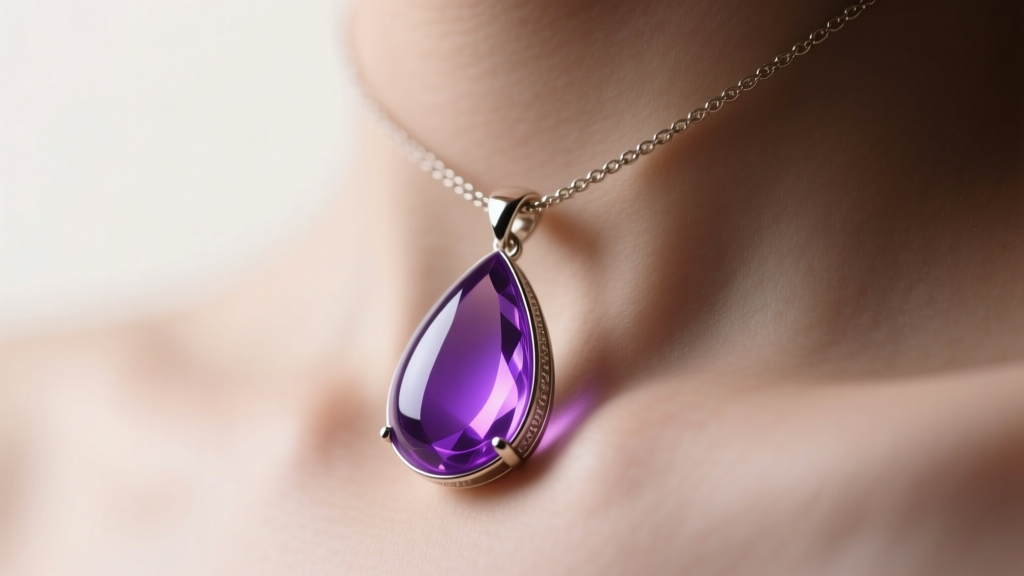
The resurgence of Y2K fashion has brought a wave of nostalgia-driven accessories back to the forefront of 2026 style, and sitting right at the center of this revival is the iconic mood necklace. Originally invented in 1975 by Josh Reynolds and Maris Ambats, these temperature-sensitive pendants have evolved from cheap mall-kiosk novelties into sophisticated, high-fashion statement pieces. But as you layer these thermochromic gems with your everyday wardrobe, you might find yourself asking: what does purple mean on a mood necklace? Is it a sign of romance, a spike in body heat, or simply a quirk of the pendant's chemical calibration?
In this comprehensive guide, we decode the science, the style, and the 2026 trend forecasts surrounding the elusive purple mood necklace hue.
The Short Answer: Decoding the Purple Hue
In the traditional marketing lore of mood jewelry, purple or violet signifies romance, passion, or deep emotional connection. When the pendant turns a rich, deep purple, the accompanying pamphlets from the 1970s and 80s claimed you were feeling amorous or deeply engaged with your surroundings.
However, from a scientific perspective, the color purple indicates a specific surface temperature. Mood necklaces utilize thermochromic liquid crystals that react to heat. A purple hue typically manifests when the pendant reaches a surface temperature between 29°C and 32°C (84°F to 90°F). Because human skin temperature naturally rises when we are excited, passionate, or physically active due to increased blood flow (vasodilation), the "romantic" association is actually rooted in a real physiological response.
The Physics of the Purple Shift
To truly understand what does purple mean on a mood necklace, we have to look at the microscopic level. Modern mood pendants contain cholesteric liquid crystals. These molecules arrange themselves in a helical (spiral) structure. The distance between the layers of this spiral—known as the "pitch"—determines the wavelength of light that is reflected back to your eye.
- Cooler Temperatures: The helical structure is tighter, reflecting longer wavelengths (reds and yellows, which usually appear as dark brown or black to the human eye when mixed with the dark backing).
- Warm Temperatures: As heat is applied, the molecules expand and the pitch lengthens. The reflected light shifts through the spectrum: green, blue, and finally, at the highest temperatures, violet and deep purple.
When your mood necklace turns purple, the liquid crystals have expanded to their maximum calibrated pitch, reflecting the shortest visible wavelengths of light before the material potentially shifts into a clear state (which appears black due to the dark backing plate).
The Complete Mood Necklace Color Spectrum
While exact calibrations vary by manufacturer and the specific chemical mixture used in the resin, here is the industry-standard temperature-to-color matrix for high-quality thermochromic jewelry in 2026.
| Pendant Color | Temperature Range | Marketed "Mood" | Physiological Reality |
|---|---|---|---|
| Black / Brown | < 24°C (75°F) | Stressed, Anxious, Cold | Poor peripheral circulation; cold extremities. |
| Amber / Orange | 24°C - 26°C (75°F - 79°F) | Unsettled, Nervous | Slightly below average resting skin temperature. |
| Green | 26°C - 28°C (79°F - 82°F) | Relaxed, Average, Calm | Normal resting skin temperature; homeostasis. |
| Blue | 28°C - 29°C (82°F - 84°F) | Peaceful, Serene | Slightly elevated surface heat; comfortable environment. |
| Purple / Violet | 29°C - 32°C+ (84°F - 90°F+) | Romantic, Passionate | High surface heat; increased blood flow from excitement or warmth. |
2026 Trend Analysis: The Neo-Y2K Revival
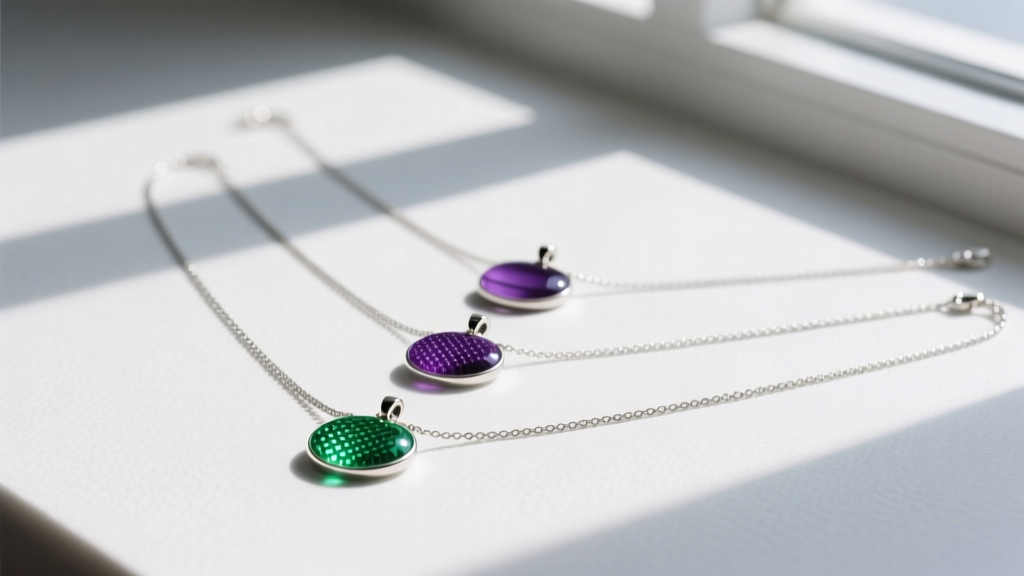
In 2026, the mood necklace has transcended its novelty roots. High-fashion houses and indie artisan jewelers are integrating thermochromic resins into avant-garde designs. The "Neo-Y2K" aesthetic champions hyper-personalized, reactive accessories that blur the line between jewelry and wearable biometrics.
How to Style a Purple Mood Pendant
Because a purple mood pendant acts as a vibrant, shifting focal point, styling it requires a balance of static and dynamic elements. Here are three expert-approved layering techniques for the current season:
- The Asymmetrical Cascade: Pair a 16-inch sterling silver mood choker with a static 20-inch 14k gold paperclip chain and a 24-inch lariat necklace. The mixed metals highlight the shifting purple hues of the choker.
- The Texture Clash: Contrast the smooth, glass-like surface of the thermochromic cabochon with a matte, oxidized silver chain or a strand of irregular baroque freshwater pearls.
- The Monochromatic Illusion: Wear a deep violet mood pendant over a plum or aubergine silk blouse. When the pendant shifts to purple, it creates a seamless, high-fashion camouflage effect.
Material Science: Why Chain Metals Matter
A common complaint among consumers is that their mood necklace remains "stuck" on black or brown, never reaching the coveted purple state. This is rarely a defect in the liquid crystals; rather, it is an issue of thermal conductivity linked to the chain and bezel materials.
According to metallurgical standards referenced by institutions like the Gemological Institute of America (GIA), the metal housing the pendant dictates how quickly ambient and body heat transfers to the thermochromic core.
- Zinc Alloy / Base Metals: Often used in fast-fashion jewelry, these dense alloys act as heat sinks. They draw heat away from the skin and dissipate it into the air, making it nearly impossible for the pendant to reach the 29°C threshold required for a purple shift unless you are in a very hot environment.
- Sterling Silver (925): Silver is highly thermally conductive. A sterling silver bezel and chain will rapidly transfer your body heat to the liquid crystal layer, resulting in faster, more vibrant color shifts, including deep purples and violets.
- Thermochromic Resin Encasement: In 2026, many artisan jewelers bypass metal bezels entirely, suspending the liquid crystal powder directly within a UV-stable jeweler's resin. This allows the entire surface area of the pendant to react to skin contact.
Price Tiers and Buying Guide
If you are shopping for a mood necklace that reliably displays the full spectrum of colors, it is crucial to understand the market tiers.
Tier 1: Fast Fashion & Novelty ($12 - $30)
These pieces feature a thin sheet of liquid crystal sealed beneath a glass or quartz cabochon, set in brass or zinc alloy. They are prone to water damage and rarely reach the purple spectrum due to poor heat transfer. Best for occasional wear or costume styling.
Tier 2: Mid-Tier Artisan ($65 - $150)
Crafted with 925 sterling silver chains and bezels. The thermochromic elements are often mixed directly into a durable, waterproof epoxy resin. These pendants react quickly to body heat and reliably display the purple/violet hues when the wearer is warm or active.
Tier 3: High-Fashion & Luxury ($250 - $800+)
Luxury brands are now utilizing precision-calibrated cholesteric liquid crystals encased in 18k gold vermeil or recycled titanium, sometimes accented with lab-grown sapphires or diamonds. These pieces offer a sophisticated, subtle color shift that leans toward deep magenta and rich violet, treating the thermochromic reaction as a genuine gemstone alternative.
Care and Maintenance: Protecting the Purple
The number one enemy of thermochromic jewelry is moisture. If water breaches the seal of the glass cabochon or degrades the resin over time, the liquid crystals will delaminate. This results in a permanent "cloudy" appearance, and the pendant will lose its ability to shift to purple or any other color.
Expert Care Tips:
- Never wear your mood necklace in the shower, pool, or ocean.
- Apply perfumes, lotions, and hairsprays before putting on the necklace to prevent chemical degradation of the resin or glass sealant.
- Store the pendant in a temperature-stable environment; leaving it on a car dashboard in direct sunlight can permanently damage the molecular structure of the liquid crystals, "freezing" them in a single color state.
Final Thoughts
So, what does purple mean on a mood necklace? It means your pendant is functioning exactly as intended, reacting to a spike in surface heat that correlates with excitement, passion, or simply a warm summer day. By understanding the science of thermochromism and investing in high-quality, thermally conductive metals like sterling silver, you can ensure your jewelry remains a vibrant, reactive accessory for years to come. As the Neo-Y2K trend continues to dominate 2026, the mood necklace proves that sometimes, the most personal statement piece is the one that literally reflects your energy.


