Ultimate Jadeite Necklace Care: Cleaning & Maintenance Guide
Learn how to safely clean, maintain, and store your jadeite necklace. Expert tips on Type A, B, and C treatments, restringing, and avoiding damage.

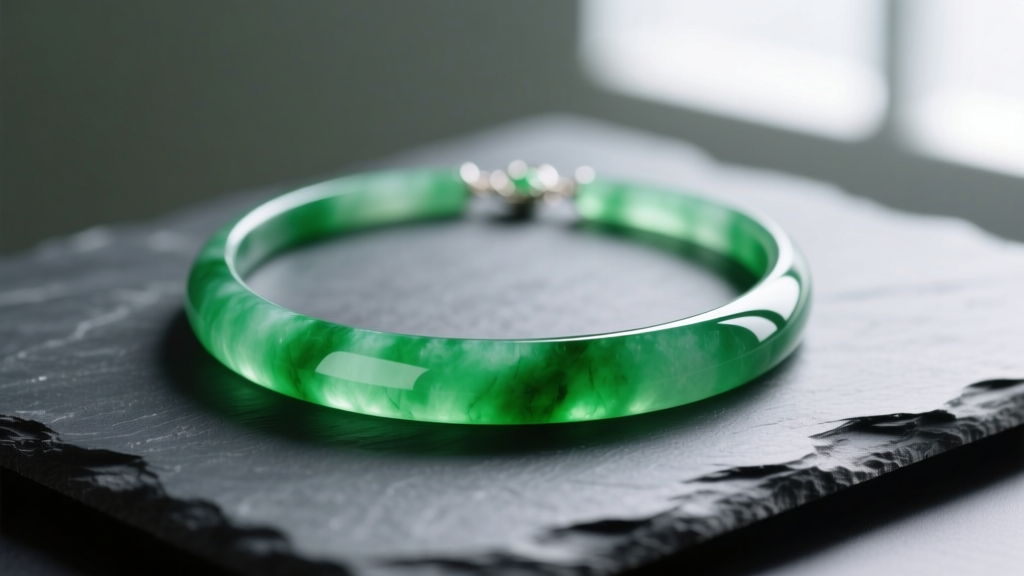
The Complexity of Jadeite: Why Care is Not One-Size-Fits-All
Jadeite is one of the most culturally revered and visually captivating gemstones in the world. With a Mohs hardness of 6.5 to 7 and exceptional toughness derived from its interlocking granular crystalline structure, a jadeite necklace can easily become a multi-generational heirloom. However, treating all jadeite jewelry with the same cleaning protocol is a critical mistake that can permanently ruin your piece.
The care and maintenance of your jadeite necklace depend entirely on its treatment grade. In the modern gemological market, jadeite is categorized into three distinct types: Type A (natural, traditionally waxed), Type B (acid-bleached and polymer-impregnated), and Type C (chemically dyed). Understanding which type rests against your collarbone is the first and most vital step in preserving its structural integrity and glassy luster.
The Jadeite Treatment Safety Matrix
Before applying any water, soap, or cloth to your jewelry, consult this matrix to ensure your cleaning method aligns with the gemological reality of your necklace.
| Treatment Grade | Gemological Process | Safe Cleaning Methods | Strictly Avoid |
|---|---|---|---|
| Type A | Natural; polished with beeswax or carnauba wax. | Lukewarm water, pH-neutral soap, soft microfiber cloth. | Ultrasonic cleaners, steam, harsh solvents, prolonged soaking. |
| Type B | Acid-bleached to remove impurities, then filled with polymer resin. | Damp microfiber cloth only. Gentle wiping. | ALL liquids, heat, ultrasonic vibrations, alcohol, acids. |
| Type C | Chemically dyed to enhance or alter color. | Dry, soft brushing. Mildly damp cloth if necessary. | Hot water, direct sunlight, chemical cleaners, ultrasonic. |
As noted by the Gemological Institute of America (GIA), the polymer resins used in Type B jadeite have a different refractive index than natural jade and are highly susceptible to degradation from heat and solvents. Submerging a Type B jadeite necklace in soapy water will eventually cause the resin to cloud, crack, and leach out, leaving the stone brittle and porous.
Step-by-Step Cleaning Guide for Type A Jadeite
If you possess a certified Type A jadeite necklace, you can safely perform a deep clean at home to remove accumulated sebum, cosmetics, and environmental dust. Follow this precise methodology to protect the traditional wax polish:
- Prepare a Mild Solution: Mix a few drops of pH-neutral, non-detergent liquid soap (such as a mild castile soap) into a bowl of lukewarm distilled water. Avoid hard tap water, as mineral deposits can leave a microscopic film on the jade's surface.
- The 60-Second Dip: Submerge the necklace for no longer than 60 seconds. Prolonged exposure to water can weaken the silk or nylon threading hidden inside the bead drill holes.
- Agitate Gently: Use a clean, ultra-soft baby toothbrush to gently sweep around the clasp mechanisms and the knots between beads. Never scrub the face of the jadeite beads aggressively; the wax polish can be stripped by friction.
- Rinse and Dry: Rinse briefly under a gentle stream of lukewarm distilled water. Pat dry immediately with a lint-free microfiber cloth. Allow the necklace to air-dry completely flat on a towel for 24 hours before wearing or storing to ensure the internal cord is fully dry.
The Hidden Dangers of Ultrasonic and Steam Cleaners
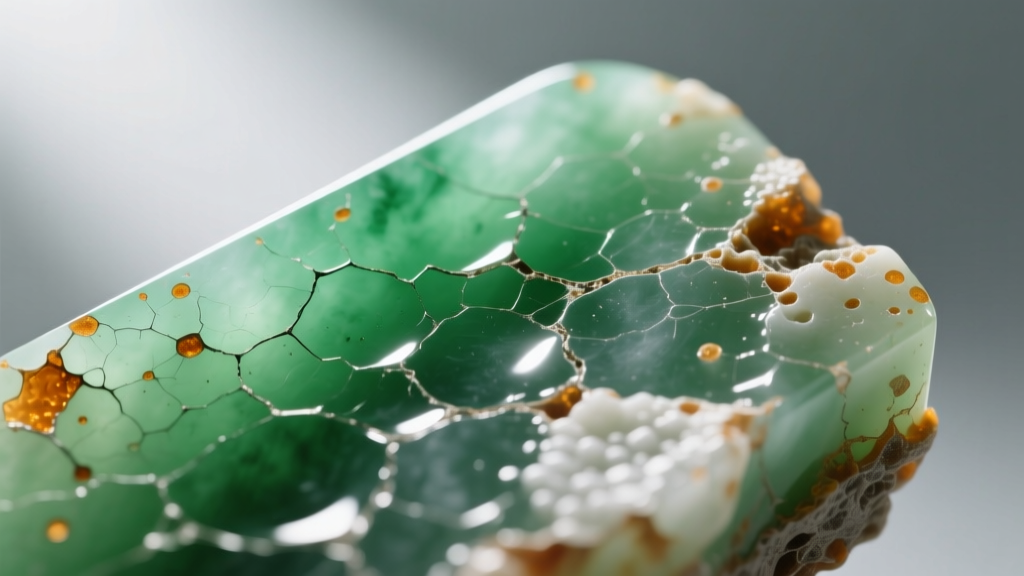
Many commercial jewelers rely on ultrasonic and steam cleaners for diamonds and corundum. Never allow a jeweler to place your jadeite necklace in these machines. Ultrasonic waves create high-frequency cavitation bubbles that can exploit microscopic internal cleavage planes in Type A jade, causing catastrophic fracturing. For Type B and C jade, the heat from a steam cleaner (often exceeding 100°C) will instantly melt or warp the polymer fillers and cause chemical dyes to bleed or fade. According to the GIA's Jade Care and Cleaning guidelines, warm soapy water remains the only universally endorsed liquid cleaning method for natural jade.
Maintenance: Restringing and Structural Checks
The most common point of failure in a beaded jadeite necklace is not the stone itself, but the cord holding it together. Jadeite is dense, with a specific gravity of 3.30 to 3.38, meaning a 30-bead necklace carries significant weight. This weight places constant tension on the stringing material.
Silk vs. Synthetic Cords
Traditional jadeite necklaces are strung on natural silk cord. While silk offers a beautiful, supple drape, it is highly porous. It absorbs skin oils, sweat, and perfumes, which break down the protein fibers over time. If you wear your Type A jadeite necklace daily, it must be restrung every 12 to 18 months. Synthetic alternatives, like bonded nylon (e.g., Griffin Power or Silkon), offer superior tensile strength and moisture resistance, though they lack the traditional prestige of pure silk.
The Importance of Inter-Bead Knotting
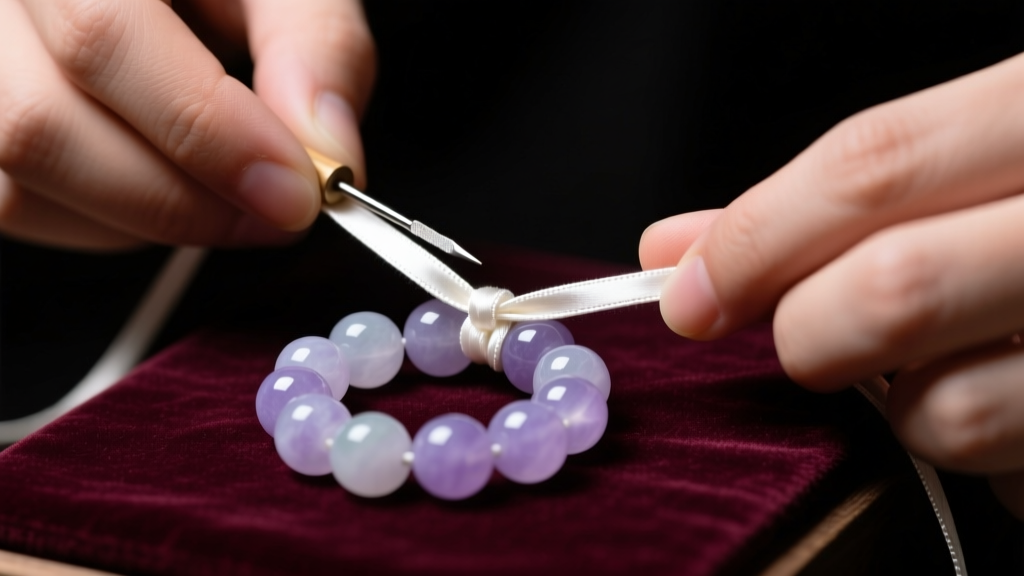
A high-quality jadeite necklace will feature hand-tied knots between every single bead. This serves two critical purposes:
- Damage Containment: If the cord snaps, the knots prevent the heavy jadeite beads from cascading onto a hard floor, which would instantly chip or shatter them.
- Abrasion Prevention: Knots act as spacers. Without them, the drill holes of adjacent beads will grind against each other. Over a decade, this bead-on-bead friction will widen the drill holes and create unsightly, permanent chalky wear marks around the bead channels.
When commissioning a restringing, ensure the jeweler uses a beading awl to pull the knots within 0.5mm of the bead surface. Excessive slack allows the beads to shift and strike one another during movement.
Environmental Hazards and Proper Storage
Jadeite is remarkably tough, but it is not invincible. To maintain the pristine surface of your jadeite necklace, you must navigate environmental hazards carefully:
- Chlorine and Sulfur: Never wear jadeite in chlorinated swimming pools or sulfurous hot springs. Chlorine can react with the trace minerals (like chromium and iron) that give jadeite its color, potentially causing localized dulling or pitting over time.
- Cosmetics and Aerosols: Always put your jadeite necklace on after applying perfumes, hairsprays, and lotions. The alcohol and volatile organic compounds (VOCs) in cosmetics can strip the protective wax coating of Type A jade and dissolve the polymers in Type B jade.
- Storage Isolation: While jadeite is harder than pearls, opals, and gold, it is softer than diamonds, sapphires, and rubies. Store your jadeite necklace in a dedicated, soft flannel pouch or a lined jewelry box compartment. Tossing it into a communal jewelry box will result in micro-scratches from harder gems, permanently clouding the glassy luster of the cabochons or beads.
Summary Checklist for Longevity
Preserving a jadeite necklace requires a shift in perspective: you are not just maintaining a stone, but a complex assembly of gemology, traditional craftsmanship, and delicate stringing materials. Verify your jade's treatment grade, adhere strictly to the 60-second lukewarm cleaning rule for Type A pieces, avoid all mechanical and thermal cleaners, and commit to an annual restringing schedule. By following these expert parameters, your jadeite necklace will retain its vibrant translucency and structural integrity for generations to come.


