The Gold Whistle Necklace Buying Guide: What to Look For
Discover what to look for in a gold whistle necklace. Compare solid gold vs. vermeil, chain gauges, and acoustic designs for functional luxury jewelry.

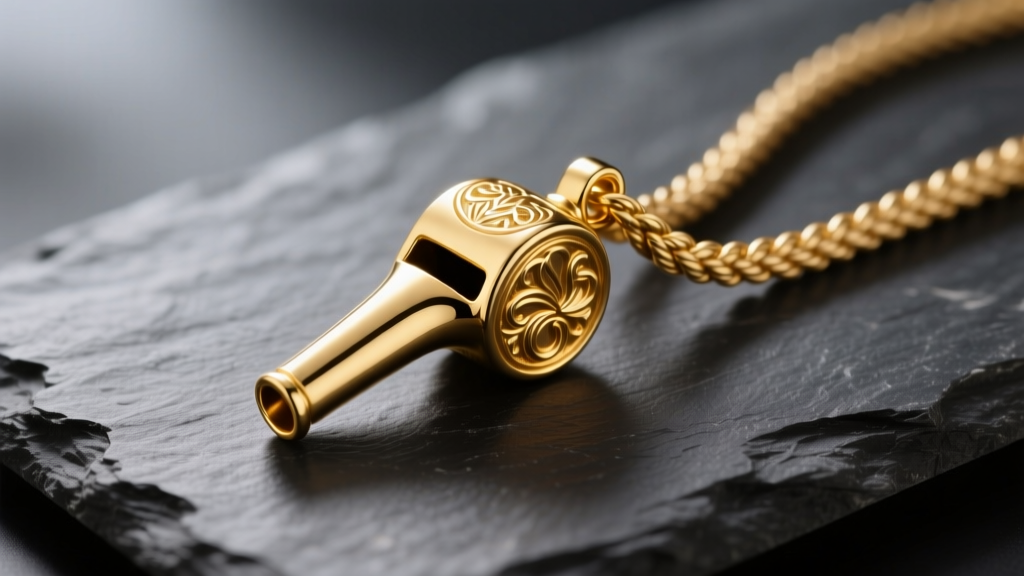
The Intersection of Function and Luxury
Once reserved strictly for sports officials and maritime safety, the whistle pendant has evolved into a striking piece of functional streetwear and luxury athletic gear. A gold whistle necklace bridges the gap between utilitarian safety equipment and high-end horology-style accessories. However, purchasing a functional instrument crafted from precious metal requires a deep understanding of metallurgy, acoustic engineering, and tensile mechanics. This buying guide breaks down exactly what to look for when investing in a gold whistle necklace, ensuring your piece sounds as good as it looks.
Metallurgy Matters: Choosing the Right Gold Alloy
When evaluating a gold whistle necklace, the karat weight dictates both the aesthetic warmth and the structural integrity of the piece. Because whistles are frequently dropped, subjected to impact, and exposed to moisture, pure 24k gold is entirely unsuitable. Its Vickers hardness (HV) of roughly 25 makes it prone to severe denting and deformation.
Why 14k Gold is the Sweet Spot
For daily active use, 14k gold is the industry standard for functional jewelry. Alloyed with copper, silver, and zinc, 14k gold achieves a Vickers hardness of approximately 160 HV. This provides the necessary rigidity to withstand being dropped on concrete or bitten during intense sporting events without warping the critical airway chamber. According to the Gemological Institute of America (GIA), the alloy mix in 14k gold also offers superior resistance to the corrosive effects of sweat and saliva compared to higher-karat alternatives.
The Vermeil vs. Solid Gold Debate
Gold vermeil (a thick layer of gold over sterling silver) is a budget-friendly alternative, but it comes with significant caveats for whistle jewelry. The Federal Trade Commission (FTC) Jewelry Guides stipulate specific thickness requirements for vermeil, but constant exposure to oral moisture and the friction of cleaning will eventually wear through the plating on the mouthpiece. If you plan to actually blow the whistle, solid 14k or 18k gold is mandatory.
| Material Grade | Vickers Hardness (HV) | Moisture Resistance | Best Use Case |
|---|---|---|---|
| 24k Solid Gold | ~25 HV | Excellent | Display only (Too soft for use) |
| 18k Solid Gold | ~120 HV | Very Good | Occasional use, luxury fashion |
| 14k Solid Gold | ~160 HV | Excellent | Daily active use, sports, boating |
| Gold Vermeil | ~60 HV (Silver core) | Poor (Plating degrades) | Fashion-only, non-functional wear |
Acoustic Engineering: Pea vs. Pealess Chambers
The internal architecture of a whistle determines its decibel output and acoustic profile. Gold is a highly dense metal (approximately 14 g/cm³ for 14k alloys), which subtly dampens high-frequency overtones compared to traditional brass or polycarbonate. This results in a slightly warmer, more resonant tone, provided the chamber is milled correctly.
The Problem with Traditional Pea Whistles
Traditional whistles use a small cork or synthetic 'pea' inside the chamber to create the trilling sound. In a gold whistle necklace, moisture from breath and saliva is inevitable. Over time, cork peas absorb this moisture, leading to mold growth, rot, and eventual failure. Furthermore, the internal casting of gold pendants can sometimes leave microscopic porosity. A pea can easily become lodged in these imperfections, silencing the whistle entirely.
The Pealess Advantage
For a gold whistle necklace, a pealess design (often utilizing a dual-chamber or triple-chamber airway) is vastly superior. Pealess whistles rely on precise geometric slots to create sound frequencies that harmonize, often exceeding 110 decibels. Without a moving internal part, there is zero risk of mechanical failure due to moisture or debris, making it the only reliable choice for functional gold jewelry.
Expert Insight: When testing a solid gold pealess whistle, ensure the airway slot is CNC-milled rather than cast. Cast gold can shrink microscopically during cooling, altering the airway tolerances and resulting in a weak, breathy sound. CNC milling guarantees the precise .080-inch slot width required for optimal acoustic resonance.
Chain Mechanics and Safety Breakaways
A solid 14k gold whistle pendant typically weighs between 18 grams and 45 grams. When worn during physical activity, the dynamic force exerted on the chain during sudden stops or accidental snags can be immense. Selecting the correct chain gauge and style is critical to prevent loss or injury.
Recommended Chain Styles and Gauges
- 3.0mm - 4.0mm Rope Chain: Offers excellent tensile strength (often exceeding 40 lbs of break strength) and a classic, durable aesthetic that resists kinking.
- 4.0mm Cuban Link: Highly robust with a bold streetwear profile. The interlocking flat links distribute weight evenly, reducing stress on individual solder points.
- 2.5mm Figaro Chain: A good middle-ground for lighter whistles (under 20g), offering a mix of visual interest and adequate structural support.
The Safety Breakaway Requirement
If you are wearing your gold whistle necklace for active sports, boating, or officiating, a standard lobster clasp is a choking hazard. Look for chains equipped with a magnetic breakaway clasp or a specialized tension-release safety link. These mechanisms are designed to snap open when subjected to 15–20 lbs of sudden lateral force, protecting your neck while allowing you to retrieve the dropped pendant via a secondary safety lanyard or simply picking it up from the turf.

Pricing Tiers and Market Value
Understanding the pricing landscape helps you identify genuine craftsmanship versus overpriced novelty items. The cost of a gold whistle necklace is driven primarily by the gold weight, the complexity of the acoustic milling, and the hardware quality.
| Tier | Material | Weight Range | Estimated Price Range | What to Expect |
|---|---|---|---|---|
| Entry-Level | Gold Vermeil / Plated | 10g - 15g | $80 - $250 | Fashion pieces; not recommended for actual blowing due to plating wear. |
| Mid-Tier | 10k or 14k Hollow Gold | 8g - 12g | $300 - $600 | Lightweight, prone to denting if dropped. Acoustic resonance may be thin. |
| Premium | 14k Solid Gold (CNC Milled) | 20g - 35g | $1,200 - $2,500 | Professional grade, rich tone, highly durable, pealess chamber. |
| Bespoke / Luxury | 18k Solid Gold + Gems | 35g - 50g+ | $3,500 - $8,000+ | Custom casts, diamond accents, luxury packaging, often display-only. |
Care and Maintenance for Functional Gold
Maintaining a gold whistle necklace requires addressing both the exterior polish and the interior hygiene. Because the mouthpiece is exposed to oral bacteria and acidic saliva, a strict cleaning regimen is necessary.
- Post-Use Rinse: Immediately after use, flush the internal chambers with warm water to remove saliva residue. Avoid hot water, which can weaken certain solder points on the chain.
- Ultrasonic Cleaning: Once a month, use an ultrasonic jewelry cleaner with a mild ammonia-free solution to dislodge microscopic debris from the chain links and the whistle's exterior engraving.
- Sanitization: Wipe the mouthpiece with a 70% isopropyl alcohol pad before and after use. This will not harm 14k or 18k gold but will effectively neutralize bacteria.
- Polishing: Use a treated jeweler's cloth to restore the high-shine finish. Avoid liquid dips, which can leave a chemical residue inside the acoustic chamber that alters the taste and sound.
Investing in a gold whistle necklace is a commitment to functional luxury. By prioritizing 14k solid gold, demanding CNC-milled pealess chambers, and selecting a high-gauge chain with safety features, you secure a piece of jewelry that commands attention and performs flawlessly when it matters most.


