The Wild Boar Tooth Necklace: 2026 Primal Trend Guide
Explore the 2026 wild boar tooth necklace trend. Discover ethical sourcing, mounting techniques, chain pairings, and avant-garde styling tips.

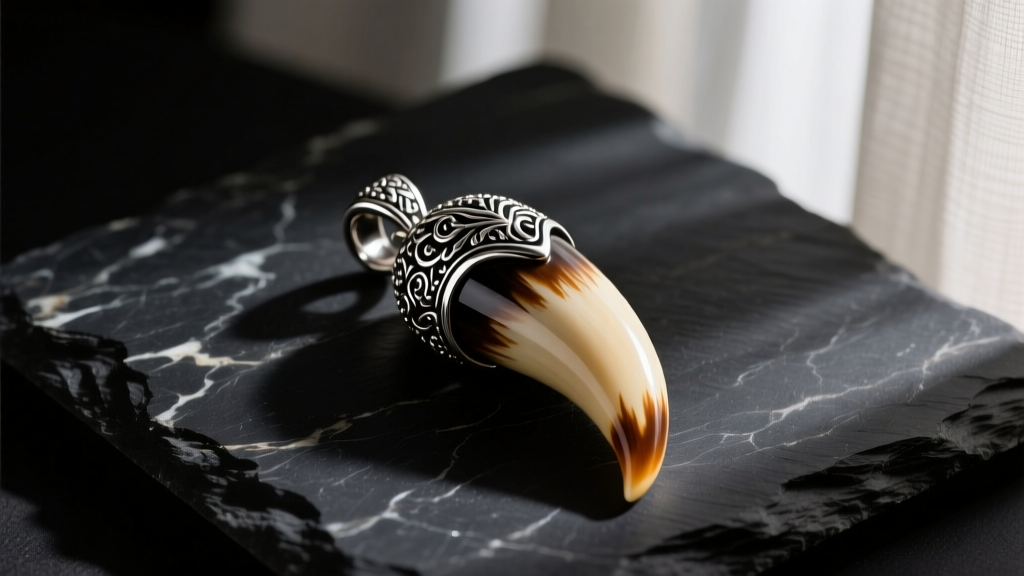
The wild boar tooth necklace has transcended its historical roots as a hunter's talisman to become a cornerstone of the 2026 "dark organic" and "feral core" aesthetics. As the jewelry industry pivots away from the hyper-polished, mass-produced minimalism of the early 2020s, collectors and avant-garde stylists are gravitating toward raw, asymmetrical, and historically charged organic materials. The elongated canine tusks of the wild boar (Sus scrofa) offer a striking juxtaposition when paired with high-end metallurgy, creating a bold statement piece that bridges the gap between primal history and contemporary high fashion.
The Resurgence of Primal Motifs in 2026 Jewelry
In 2026, the jewelry market is heavily influenced by the "Gothic Revival" and "Neo-Pagan" movements. Runways from Paris to Milan have featured models adorned with bone, horn, and tooth pendants, signaling a collective desire for grounding, earth-centric accessories. The wild boar tooth necklace is particularly prized for its natural curvature, unique enamel striations, and formidable presence. Unlike the delicate pearl or diamond solitaires that dominated the previous decade, a boar tusk pendant commands attention through its sheer architectural volume and organic imperfection.
Historically, boar tusks were worn across Celtic and Germanic cultures as symbols of courage and protection. Today, modern artisans are reinterpreting these ancient amulets by integrating them with GIA-recognized accent gemstones like raw black tourmaline, uncut sapphires, or salt-and-pepper diamonds, elevating the rustic tooth into a piece of wearable fine art.
Ethical Sourcing and Material Authenticity
The most critical conversation surrounding organic jewelry in 2026 is ethical sourcing. Consumers are highly educated and demand full supply-chain transparency. While wild boars are not listed as an endangered species under the CITES appendices, the ethical harvesting of their tusks is strictly regulated by regional wildlife management authorities.
Authentic wild boar tooth necklaces are sourced primarily through three ethical channels:
- Population Control Culls: In regions like Germany, France, and parts of the American South, wild boar populations are aggressively managed to prevent agricultural destruction and ecological imbalance. Tusks are harvested as a byproduct of these necessary, state-regulated culls.
- Naturally Shed Canines: Older boars occasionally shed or break their tusks in the wild. Foragers and wildlife trackers collect these naturally dropped specimens, which are highly prized for their weathered, sun-bleached patina.
- Antique and Heritage Reclamation: Many artisans source vintage hunting trophies from estate sales, repurposing the teeth into modern jewelry and preventing the demand for newly harvested specimens.
Mounting Techniques and Hardware Specifications
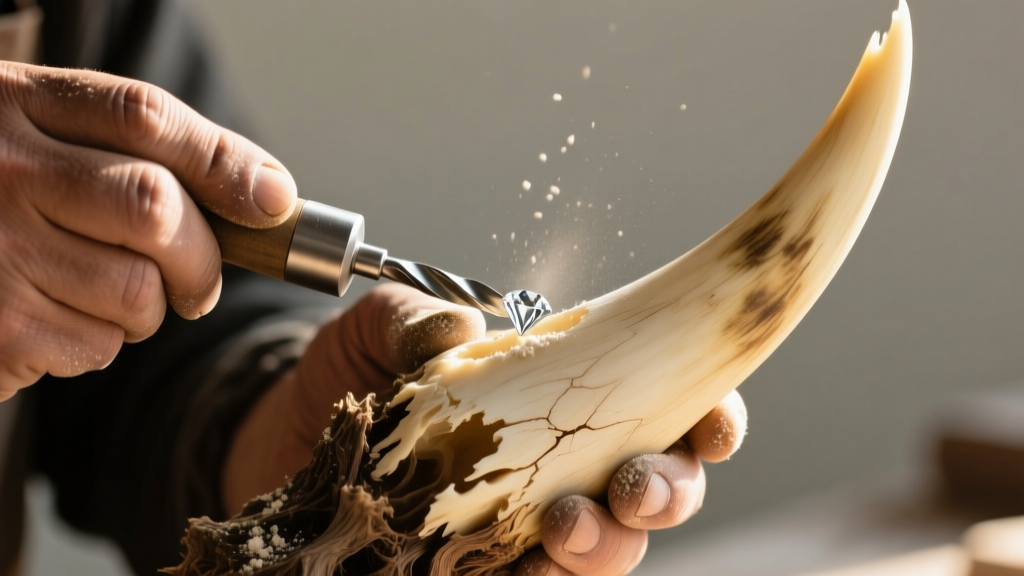
Working with dentin and enamel requires specialized lapidary skills. The outer layer of a boar tusk is composed of enamel (Mohs hardness of 5), while the inner core is dentin (Mohs 3-4). This disparity in hardness means that improper drilling can cause micro-fractures, leading to catastrophic shear failure over time.
Master jewelers employ specific mounting techniques to ensure the longevity of a wild boar tooth necklace:
- Water-Cooled Diamond Burrs: Artisans use low-RPM rotary tools with diamond-coated burrs and continuous water cooling. This prevents the dentin from scorching, which would otherwise make the root brittle and prone to cracking.
- Cast Metal Caps (Bezels): Instead of drilling through the tooth, many high-end designers cast a custom 925 sterling silver or 14k gold cap that fits snugly over the root of the tusk, secured with a hidden, jewelry-grade epoxy resin. This preserves the structural integrity of the organic material.
- Heavy-Gauge Wire Wrapping: For a more rustic aesthetic, 16-gauge or 14-gauge dead-soft wire is woven around the base of the tusk. Thinner gauges (like 20g or 22g) are strictly avoided as they lack the tensile strength to support the heavy pendant.
Chain Pairings: A Structural Framework
A wild boar tusk can weigh anywhere from 15 to 45 grams, depending on its size and the metal hardware used. Selecting the correct chain is not merely an aesthetic choice; it is a structural necessity. A delicate chain will snap under the dynamic load of a swinging tusk pendant.
| Chain Type | Recommended Gauge | Material Pairing | Best Tusk Profile |
|---|---|---|---|
| Wheat Chain | 18g - 20g | Oxidized 925 Silver | Large, heavy upper canines (3+ inches) |
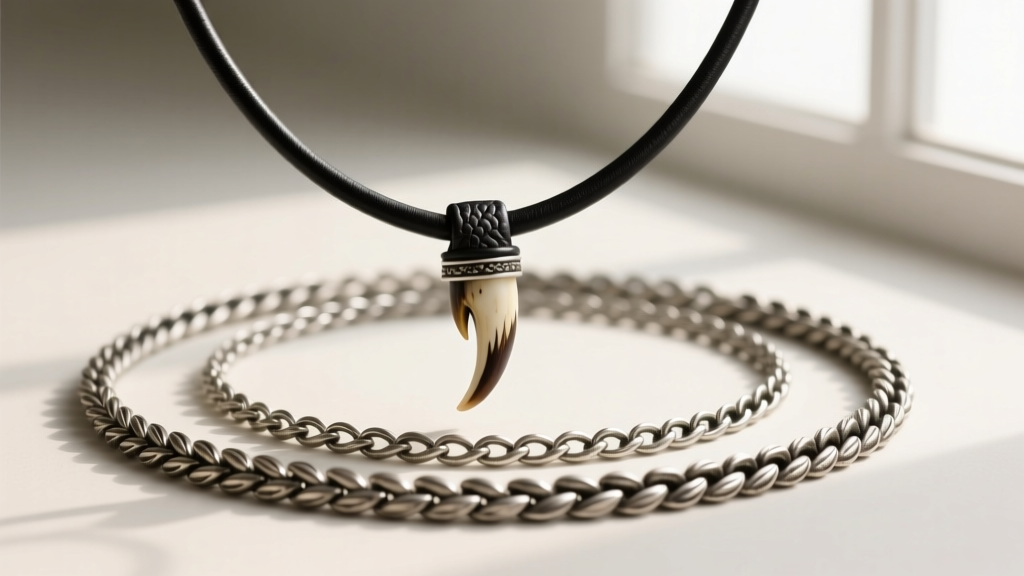
| Braided Leather Cord | 3mm - 5mm | Black Calfskin / Vegan Leather | Medium tusks with rustic wire wraps |
| Rope Chain | 16g - 18g | 14k Gold Vermeil | Small fragments or lower incisors |
| Box Chain | 20g - 22g | Grade 23 Titanium | Delicate, whittled, or resin-cast teeth |
Price Tiers and Artisan Valuation
The market for a wild boar tooth necklace in 2026 is segmented by craftsmanship, metal purity, and the provenance of the organic material. Understanding these tiers helps collectors identify fair market value and avoid mass-produced, ethically dubious imitations (often carved from bone or synthetic resins).
Tier 1: Artisan & Rustic ($45 - $120)
These pieces typically feature naturally shed or cull-sourced teeth, mounted using traditional wire-wrapping techniques or simple leather cord knots. The metals are usually brass, copper, or lower-grade sterling silver. The appeal here lies in the raw, unpolished aesthetic and direct-to-consumer artisan platforms.
Tier 2: Contemporary Designer ($150 - $450)
At this level, you will find custom-cast silver or gold bezels, professional lapidary polishing of the enamel, and the integration of accent gemstones. Designers in this tier provide certificates of ethical sourcing and utilize heavy-duty, soldered jump rings (minimum 16-gauge) to ensure the pendant is secure.
Tier 3: Avant-Garde Fine Jewelry ($500 - $1,500+)
High-end fashion houses and specialized avant-garde jewelers treat the boar tusk as a rare canvas. These necklaces feature 18k solid gold hardware, pavé diamond accents, and intricate engraving on the metal caps. The tusks are often paired with rare, ethically sourced minerals, transforming the primal tooth into a luxury gallery piece.
Preservation: Caring for Dentin and Enamel
Organic jewelry requires a radically different care regimen than traditional metallurgic pieces. Dentin is highly porous and sensitive to rapid changes in humidity, which can cause the tooth to warp or develop hairline fractures over time.
To preserve the structural and aesthetic integrity of your wild boar tooth necklace, adhere to the following maintenance protocols:
- Never Use Ultrasonic Cleaners: The high-frequency vibrations will shatter the dentin core. Clean the metal hardware separately using a soft polishing cloth.
- Seal the Dentin: If the root of the tooth is exposed, apply a micro-thin layer of microcrystalline wax (such as Renaissance Wax) every six months. This seals the pores against moisture and skin oils without altering the natural matte finish of the bone.
- Climate Control: Store the necklace in a cedar-lined box with a silica gel desiccant packet. Avoid leaving the piece in direct sunlight or in highly humid environments like a bathroom, as UV exposure will yellow the enamel, and moisture will degrade the dentin.
By understanding the material science, ethical imperatives, and structural requirements of organic pendants, collectors can confidently navigate the 2026 primal jewelry trend. A well-crafted wild boar tooth necklace is not just a fleeting fashion statement; it is a durable, historically resonant artifact that bridges the natural world with human artistry.


