Ruby Necklace Vintage Gift Guide: Match Eras to Occasions
Discover the perfect ruby necklace vintage piece for every occasion. Our gift guide breaks down eras, carat weights, and gold settings for gifting.

The Enduring Allure of Gifting a Ruby Necklace Vintage Piece
Gifting fine jewelry is an exercise in emotional translation, and few gems communicate passion, vitality, and enduring commitment quite like the ruby. As we navigate the 2026 estate jewelry market, the demand for historically significant, unheated rubies has pushed auction prices to record highs. However, the true value of a ruby necklace vintage piece lies not just in its carat weight, but in its historical narrative and gemological integrity.
Unlike emeralds or opals, rubies are a variety of corundum, ranking at a 9 on the Mohs hardness scale. This exceptional durability makes them ideal for necklaces, which are prone to swinging and impacting surfaces during daily wear. When selecting a vintage piece, you are not merely buying a gemstone; you are acquiring a survivor of history. Whether you are celebrating a milestone anniversary, a major career achievement, or a landmark birthday, matching the historical era of the necklace to the personality of the recipient and the gravity of the occasion is the hallmark of a masterful gift.
Decoding Eras: Which Vintage Style Fits Her Occasion?
The term 'vintage' spans over a century of distinct design philosophies. Understanding these eras is critical for aligning the piece with your recipient's aesthetic and the specific milestone you are celebrating.
Victorian (1837–1901): The Ultimate Anniversary Heirloom
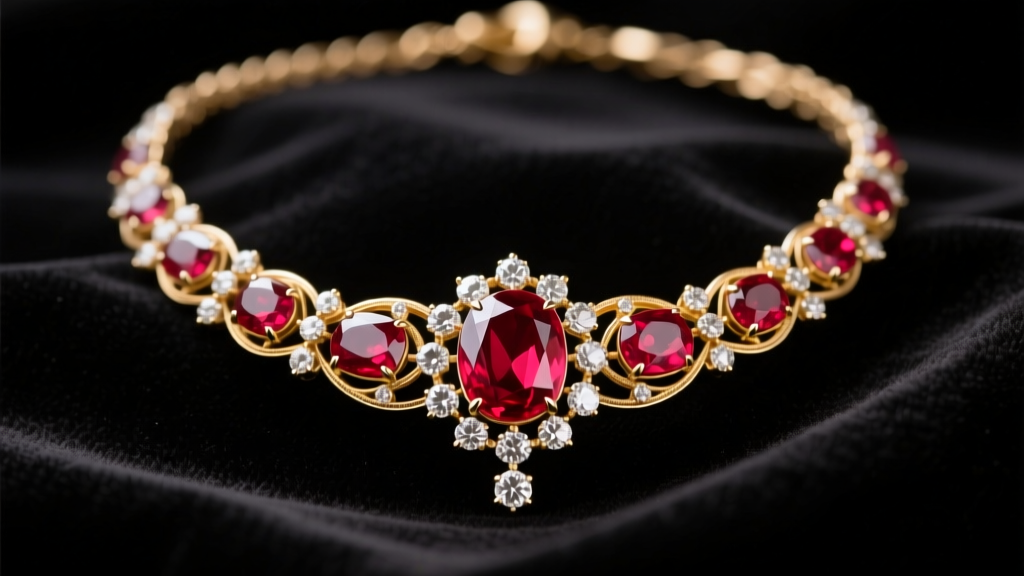
The Victorian era is defined by romantic symbolism, intricate metalwork, and the use of 15k or 18k yellow gold. Motifs often include serpents (symbolizing eternity), stars, and floral clusters. Rubies from this period were typically sourced from Burma and set alongside old-mine cut or rose-cut diamonds. Best Occasion: A 15th, 20th, or 40th wedding anniversary. The deeply romantic, sentimental nature of Victorian design makes it the ultimate heirloom to pass down through generations.
Art Deco (1920s–1930s): For the Bold, Modern Milestone
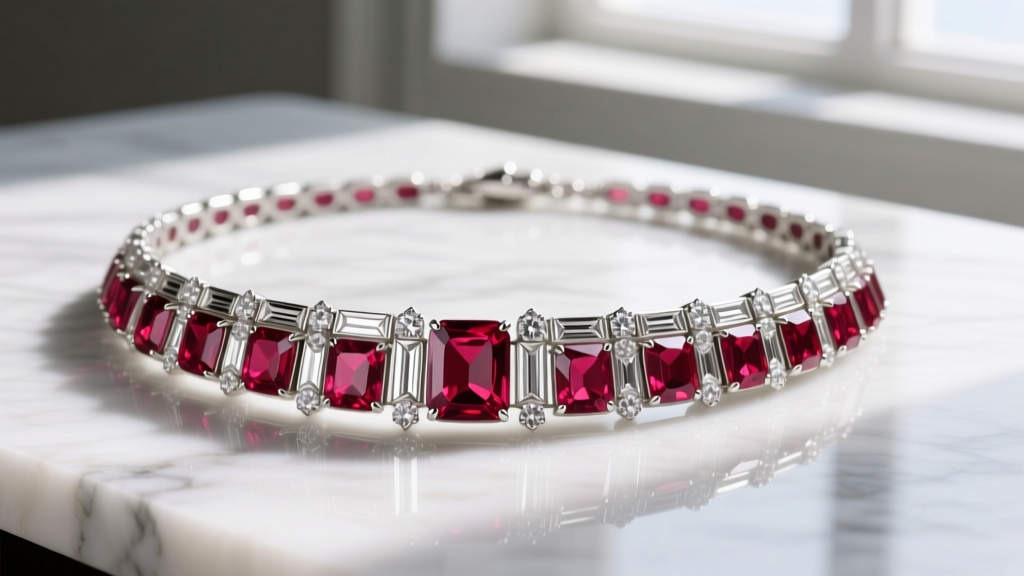
Art Deco jewelry is the antithesis of Victorian romance. It is characterized by stark geometric lines, high-contrast color blocking, and the extensive use of platinum. Rubies were often calibré-cut (custom-cut to fit seamlessly into geometric channels) and paired with baguette diamonds. Best Occasion: A major career promotion, a 10th anniversary, or a milestone birthday for a woman with a sharp, modern, and architectural sense of style. The structured elegance of Art Deco commands attention in boardrooms and gala dinners alike.
Retro (1940s–1950s): Statement Birthdays & Graduations
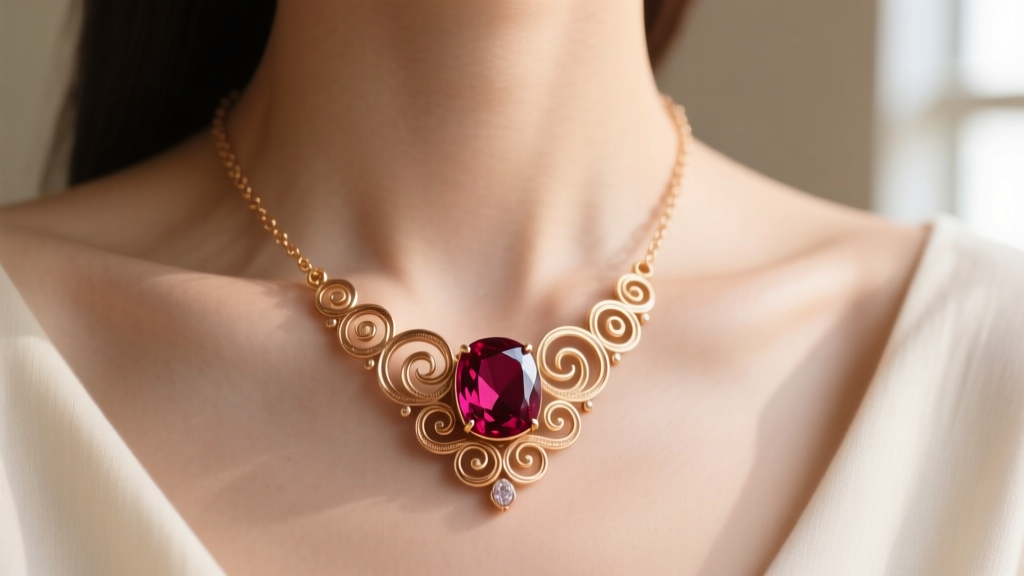
Born out of the metal rationing of World War II, Retro jewelry is bold, three-dimensional, and heavily reliant on rose gold, as platinum was reserved for the war effort. Rubies were frequently cut en cabochon (smooth and domed) and set in massive, scrollwork designs that resembled ribbons or bows. Best Occasion: A 30th or 40th birthday, or a Ph.D. graduation. Retro pieces are unapologetically large and vibrant, perfect for celebrating a vibrant, confident personality stepping into a new chapter of life.
Technical Buying Guide: Carats, Treatments, and Origins
When evaluating a ruby necklace vintage provenance and gemological treatment dictate both the price and the longevity of the stone. According to GIA's Ruby Quality Factors, origin and treatment are the primary drivers of value in the colored gemstone market.
| Treatment Type | Durability Impact | Price per Carat (1-2ct) | Gifting Verdict |
|---|---|---|---|
| Unheated (Burmese) | None (Excellent) | $10,000 - $50,000+ | Ultimate heirloom investment; highly fluorescent. |
| Heated (Mozambican) | None (Excellent) | $1,500 - $5,000 | Best balance of clarity, size, and long-term value. |
| Glass-Filled (Lead) | High Risk (Poor) | $20 - $100 | Avoid entirely; highly unstable and easily damaged. |
The Origin Factor: Burmese rubies are prized for their low iron content, which allows them to fluoresce brilliantly under ultraviolet light (and sunlight), giving them an internal 'glow.' Conversely, Mozambican rubies, which dominate the modern market, have higher iron content. While they lack the intense fluorescence of Burmese stones, they often boast superior clarity and are available in larger carat weights, making them an excellent choice for statement Retro or Art Deco pieces.
Sizing, Bails, and Chain Considerations for Vintage Pendants
One of the most common mistakes buyers make when gifting a vintage pendant is overlooking the mechanics of the chain and bail. Vintage pendants were designed for the silk cords or fine chains of their respective eras. Consequently, the integrated bails (the loop that holds the pendant) are often incredibly small.
- Bail Clearance: Measure the inner diameter of the bail. Many Victorian and Art Deco pendants will only accommodate chains up to 1.2mm or 1.5mm in width.
- Chain Selection: Avoid modern, heavy box chains or thick rope chains. Instead, opt for a period-appropriate 1.2mm wheat chain or a delicate cable chain in 14k or 18k gold.
- Length Matters: A 16-inch chain sits at the collarbone (choker style), ideal for showcasing Victorian clusters. An 18-inch chain falls at the neckline, perfect for elongated Art Deco pendants.
Pro-Tip: Original vintage chains are often brittle and prone to snapping due to decades of wear. It is standard industry practice, and highly recommended for gifting, to pair a vintage pendant with a brand-new, high-quality chain that matches the karat and color of the antique setting.
Authentication and Provenance: Protecting Your Investment
The vintage jewelry market is unfortunately rife with synthetic rubies (created in labs using the Verneuil process) and misrepresented treatments. When spending over $2,000 on a vintage ruby, independent laboratory certification is non-negotiable.
While the GIA provides excellent identification, the American Gemological Laboratories (AGL) is widely considered the gold standard for colored gemstone origin and treatment reports in the estate market. An AGL report will definitively state whether the ruby is natural, identify its geographic origin (e.g., Burma/Myanmar, Mozambique, or Thailand), and detail any heat or clarity enhancements. If a seller cannot provide a recent, verifiable lab report, walk away.
Final Gifting Checklist
Before you finalize your purchase and wrap the box, run through this essential checklist to ensure your gift is both historically authentic and practically wearable:
- Verify the Hallmarks: Look for period-correct stamps, such as the French eagle head for 18k gold or British leopard heads for London-made pieces.
- Inspect the Prongs: Vintage prongs can wear thin over a century. Ensure the ruby is secure and budget $100-$200 for a professional jeweler to re-tip the prongs before gifting.
- Match the Era to the Wardrobe: Ensure the recipient's daily style aligns with the era; Art Deco suits minimalist/modern dressers, while Victorian suits romantic/bohemian styles.
- Include the Provenance: Present the AGL or GIA report alongside any historical documentation or original antique boxes the piece may have come with to elevate the unboxing experience.
By treating the selection of a vintage ruby necklace as a curation of history rather than a simple transaction, you provide a gift that carries the weight of the past and the brilliance of the future.