Squash Blossom Necklace Turquoise: 2026 Style Guide
Discover how the squash blossom necklace turquoise trend is evolving in 2026. Learn to identify authentic stones, silver grades, and modern styling tips.

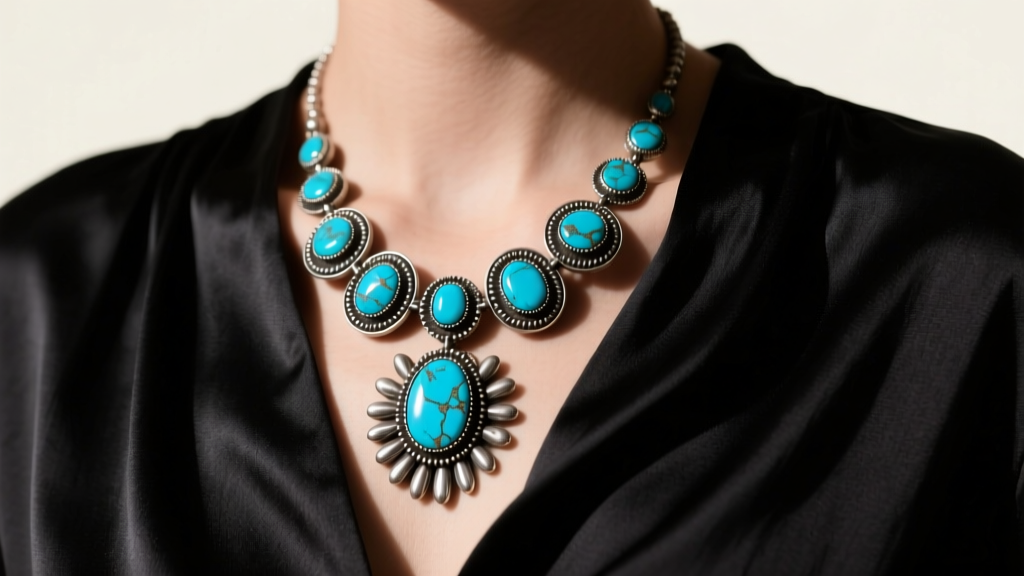
The Enduring Allure of Southwestern Heritage
In the ever-shifting landscape of fine jewelry, few pieces command the respect, historical weight, and stylistic versatility of the traditional Navajo necklace. As we navigate the 2026 fashion cycle, the search for an authentic squash blossom necklace turquoise piece has transitioned from a niche vintage pursuit to a mainstream luxury obsession. Collectors and style connoisseurs are increasingly rejecting mass-produced, sterilized accessories in favor of heritage items that carry a palpable sense of place, history, and artisanal mastery. According to the Smithsonian National Museum of the American Indian, these necklaces are not merely decorative; they are wearable archives of cross-cultural exchange, metallurgical innovation, and indigenous resilience.
However, the surge in demand has also saturated the market with replicas, stabilized stones, and misrepresented silver grades. To truly appreciate and invest in this iconic silhouette, one must understand the deep gemological and historical nuances that separate a genuine heirloom from a tourist-trap trinket. This comprehensive guide breaks down the anatomy, market value, and contemporary styling frameworks for the modern collector.
The Historical Misnomer: Pomegranates, Not Squash
Before diving into gemology, it is crucial to address a centuries-old linguistic error. The iconic fluted beads that give the necklace its name are not actually modeled after squash blossoms. When Spanish conquistadors and missionaries arrived in the American Southwest in the 16th century, they brought with them Moorish-influenced silverwork and pomegranate motifs. The indigenous Navajo (Diné) silversmiths, who began working with silver in the mid-19th century, adapted these pomegranate blossom designs. Over time, Anglo traders and settlers misidentified the unfamiliar flower as a local squash blossom, and the misnomer was permanently cemented in the lexicon of Southwestern jewelry.
At the center of the necklace hangs the naja, a crescent-shaped pendant. The naja's origins trace back to the Moors of North Africa, who used the crescent symbol on horse bridles to ward off the evil eye. The Spanish adopted this equestrian adornment, and the Navajo eventually incorporated it into their own ceremonial and trade jewelry, transforming a functional talisman into a profound symbol of beauty and status.
Decoding the Anatomy: Silver and Stones
Turquoise Grading, Mines, and Matrix
Turquoise is a hydrous phosphate of copper and aluminum, ranking between 5 and 6 on the Mohs hardness scale. Its porosity makes it highly susceptible to oils, cosmetics, and environmental factors, which is why understanding its origin and treatment is paramount. The Gemological Institute of America (GIA) notes that natural, untreated turquoise with a striking matrix (the host rock webbing) commands the highest premiums in the 2026 market.
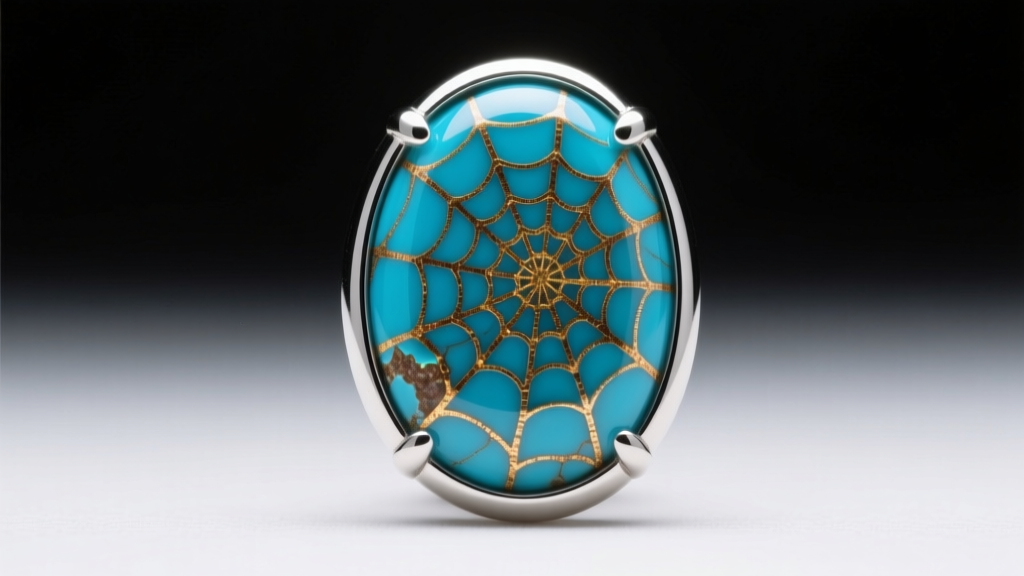
- Kingman Mine (Arizona): Famous for its deep, vibrant blues and striking golden-brown or black spiderweb matrix. Kingman stones are highly prized by contemporary master silversmiths.
- Sleeping Beauty Mine (Arizona): Known for its pure, robin's-egg blue color with little to no matrix. Though the mine closed in 2012, its stones remain a benchmark for classic, uniform color.
- Royston Mine (Nevada): Yields stunning two-tone stones featuring rich emerald greens transitioning into light blues, often with heavy, dramatic brown matrix.
- Persian (Iranian): Historically, some early 20th-century Navajo pieces incorporated Persian turquoise due to trade routes, characterized by a brilliant, matrix-free sky blue.
Silver Purity: Coin Silver vs. Sterling
The metalwork is just as critical as the stones. Early vintage pieces (pre-1930s) were often crafted from 'coin silver.' Artisans melted down US silver coins, which contained approximately 90% silver and 10% copper (compared to the 92.5% silver in modern sterling). This higher copper content makes coin silver softer to forge but gives it a distinct, warm undertone and a propensity to develop a deep, rich, multi-tonal patina over decades of wear. Modern contemporary pieces typically utilize .925 sterling silver or .999 fine silver for intricate bezel work and stamping, offering a brighter, more reflective finish.
2026 Market Analysis and Pricing Tiers
The valuation of a squash blossom necklace depends heavily on the era of creation, the fame of the silversmith (if hallmarked), the quality of the turquoise, and the weight of the silver. Below is a breakdown of current market tiers for 2026.
| Category | Era / Style | Material Profile | Estimated Price Range (USD) |
|---|---|---|---|
| Vintage Fred Harvey Era | 1930s - 1950s | Coin silver, small natural turquoise, lightweight | $800 - $2,500 |
| Mid-Century Masterwork | 1960s - 1980s | Heavy .925 sterling, large high-grade stones, hallmarked | $3,500 - $15,000+ |
| Contemporary Artisan | 2020s | Custom .925/.999, rare mine turquoise, intricate stamp work | $1,800 - $9,000 |
| Commercial Replica | Modern Mass-Market | Silver-plated brass, block turquoise or dyed howlite | $50 - $250 |
Authentication: Spotting Fakes and Synthetics
As prices for high-grade natural turquoise have skyrocketed, the market has been flooded with imitations. Block turquoise (pulverized turquoise dust mixed with epoxy resin and dye) and dyed howlite or magnesite are common substitutes. To authenticate a piece, examine the matrix closely; natural matrix features sharp, distinct boundaries and depth, whereas dyed stones often show color pooling in the cracks. Furthermore, the Indian Arts and Crafts Board strictly regulates the marketing of Native American jewelry; reputable dealers will provide provenance, mine origins, and the artist's tribal affiliation and hallmark.
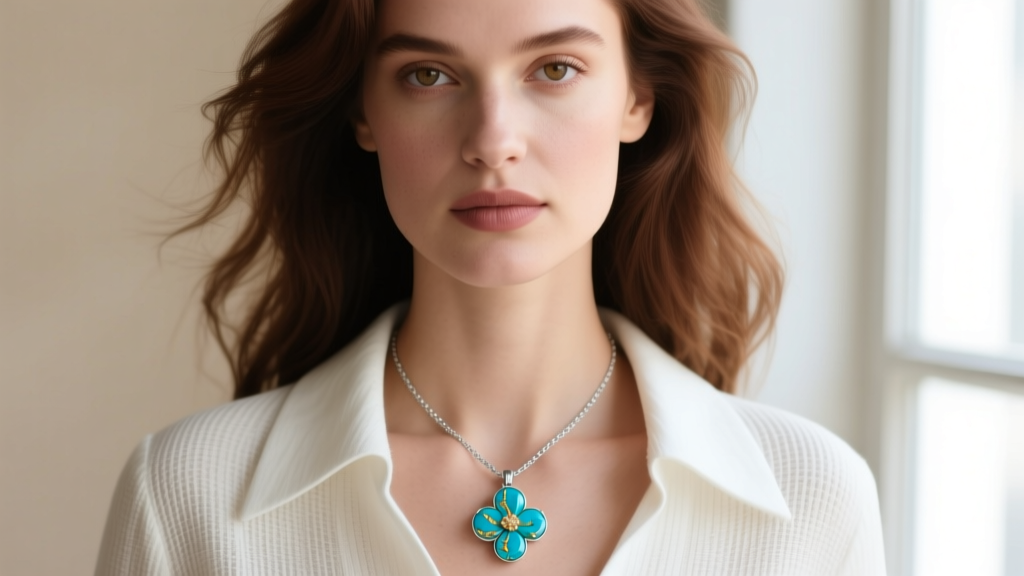
Modern Styling: Breaking the Southwestern Stereotype
The most significant shift in 2026 is how these necklaces are styled. The era of wearing a heavy squash blossom as part of a head-to-toe 'costume' Southwestern look is over. Today's style radar favors stark juxtaposition and quiet luxury.
The Deconstructed Approach
Many collectors are carefully unhooking the heavy, multi-strand squash blossom beads and wearing the naja pendant solo on a heavy, contemporary oxidized Cuban link chain. This bridges the gap between 19th-century indigenous heritage and modern streetwear aesthetics. Alternatively, the fluted blossom beads are being restringing into minimalist, single-strand chokers that sit high on the collarbone, completely altering the traditional visual weight of the piece.
Juxtaposing Textures
Pairing a massive, 100-gram vintage sterling and turquoise necklace with a stark, minimalist silk slip dress or a sharply tailored, oversized blazer creates a breathtaking visual tension. The organic, asymmetrical webbing of the turquoise and the hand-hammered imperfections of the silver serve as a grounding, earthy counterpoint to the sleek, manufactured perfection of modern European tailoring.
Archival Care and Maintenance
Preserving a vintage or contemporary squash blossom necklace requires strict environmental control. Because turquoise is highly porous, it should never be exposed to ultrasonic cleaners, harsh chemicals, perfumes, or prolonged moisture. The natural oils from your skin will gradually enhance the color of untreated stones, but excessive exposure to cosmetics can permanently discolor the matrix. Store the necklace flat in a climate-controlled environment; hanging heavy vintage pieces can cause the traditional cotton or leather stringing to stretch, warp, or snap over time, risking the loss of irreplaceable beads.
"A true squash blossom is not just jewelry; it is a ledger of the earth's geology and the artisan's hand. When you wear natural Kingman turquoise set in hand-stamped coin silver, you are wearing a piece of time itself." — Dr. Aris Thorne, Southwestern Metallurgical Historian
Whether you are hunting for a rare mid-century hallmark or commissioning a contemporary Navajo master to set a rare cache of Royston stones, the squash blossom necklace remains an unparalleled investment in wearable art. By understanding the deep material realities and embracing modern, deconstructed styling, you ensure this historic silhouette continues to thrive in the contemporary wardrobe.


