James Avery Cross Necklace: Troubleshooting & Care Guide
Learn how to troubleshoot tarnish, fix broken clasps, and clean your James Avery cross necklace with expert silversmith care tips and repair guides.

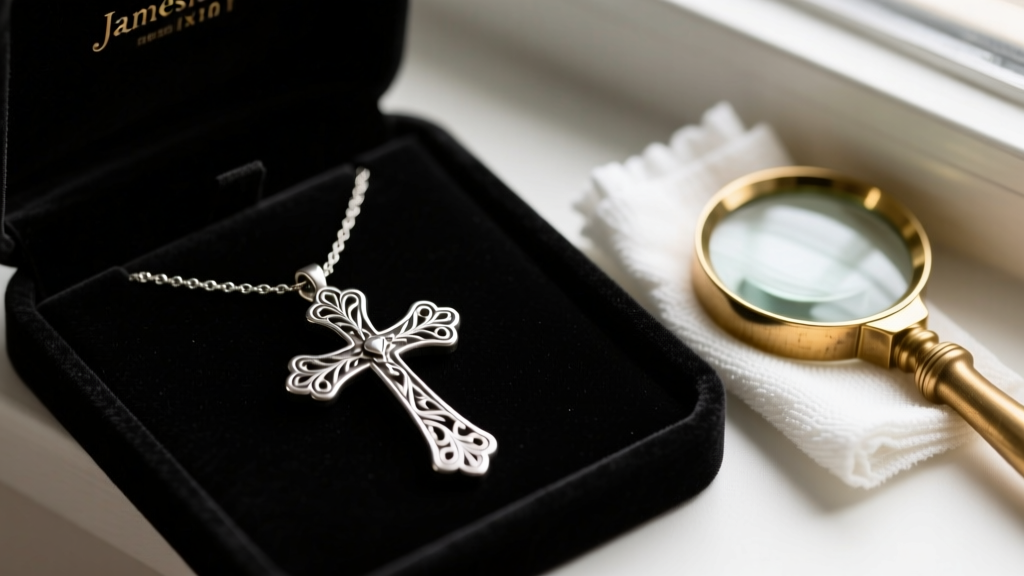
Owning a James Avery cross necklace is often a deeply personal experience. Whether it was a gift for a baptism, a graduation milestone, or a personal affirmation of faith, these pieces carry immense sentimental weight. However, because James Avery Artisan Jewelry utilizes specific casting techniques, heavy-gauge metals, and intentional antiquing processes, maintaining and repairing these necklaces requires specialized knowledge. Standard jewelry cleaning hacks can permanently damage the factory finish, and improper handling of the chain components can lead to irreversible wear.
In this comprehensive troubleshooting guide, we will explore the exact metallurgy of James Avery crosses, how to safely remove silver sulfide tarnish without stripping the patina, how to diagnose clasp and bail failures, and how to authenticate your piece against an increasingly sophisticated counterfeit market.
Identifying Your Materials and Hallmarks
Before applying any polishing compounds or attempting repairs, you must accurately identify the metal composition of your specific James Avery cross necklace. The brand primarily works with two base metals for their religious pendants:
- Sterling Silver (925): Composed of 92.5% pure silver and 7.5% copper alloy. The copper provides structural integrity but is also the primary catalyst for oxidation and tarnishing when exposed to sulfur and moisture in the air.
- 14K Yellow or White Gold: An alloy containing 58.3% pure gold mixed with metals like zinc, nickel, or silver. While highly resistant to tarnish, 14K gold is susceptible to surface scratching and can lose its high-polish luster over years of friction against the skin and clothing.
James Avery crosses are notably heavier than standard mall-brand jewelry. A medium-sized solid sterling silver cross pendant, such as the classic Open Heart Cross or the Scripture Cross, typically weighs between 8 and 15 grams. This substantial weight is a crucial factor in how the pendant interacts with the chain and the bail loop over time, a topic we will address in the repair section.
The Tarnish Dilemma: Cleaning Without Stripping Patina
The most common mistake owners make when cleaning a sterling silver James Avery cross necklace is using liquid chemical silver dips (such as Tarn-X) or ultrasonic cleaners. Never use these methods on James Avery jewelry.
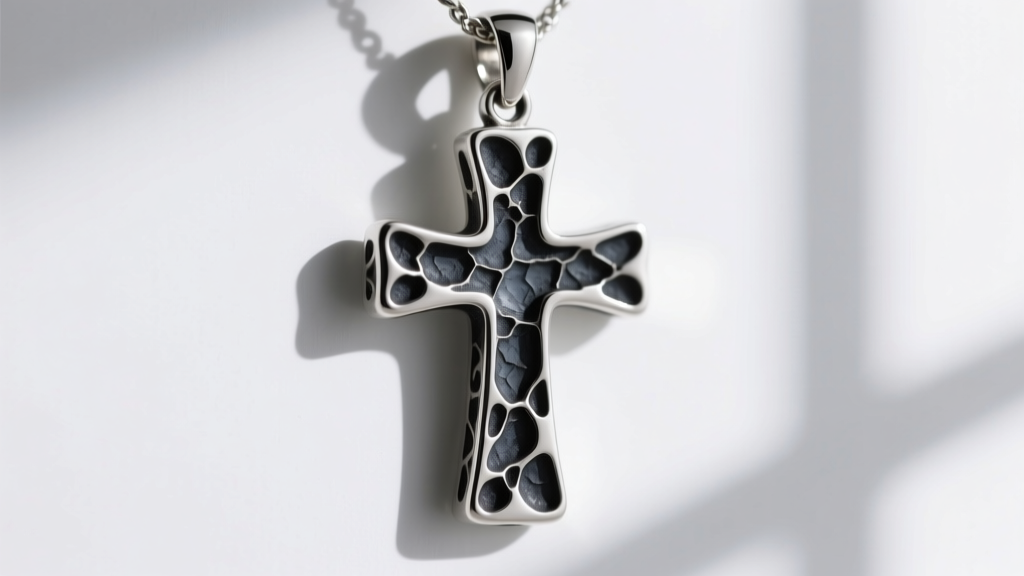
Many James Avery crosses feature intentional oxidation—a process where the jeweler applies a chemical (often liver of sulfur) to darken the recessed areas of the casting. This creates a high-contrast, three-dimensional effect that highlights the intricate detailing of the cross. Liquid silver dips contain thiourea and hydrochloric acid, which will instantly strip this dark antiquing, leaving the piece looking flat, chalky, and unnaturally white. Furthermore, the Gemological Institute of America (GIA) warns that repeated use of chemical dips can cause microscopic pitting in the silver surface.
The Safe Cleaning Protocol
To safely remove silver sulfide (tarnish) while preserving the dark patina in the crevices, follow this bench-jeweler-approved method:
- Use a Treated Polishing Cloth: Opt for a high-quality impregnated cloth, such as a Sunshine Cloth. These cloths contain microscopic jeweler's rouge and mild tarnish-removing agents.
- Polish Only the High Spots: Gently rub the raised, flat surfaces of the cross. Avoid pressing the cloth deep into the engraved lines or crevices where the dark antiquing lives.
- Mild Soap Wash: If the piece has accumulated skin oils and lotion buildup, wash it in warm water with a few drops of phosphate-free dish soap (like Dawn). Use an extra-soft baby toothbrush to gently agitate the dirt, but do not scrub the darkened areas aggressively.
- Dry Thoroughly: Moisture trapped in the bail loop or chain links will accelerate future tarnishing. Dry completely with a lint-free microfiber cloth or use a hairdryer on a cool setting.
Chain Tangling and Lobster Clasp Mechanics
James Avery typically pairs their cross pendants with sturdy sterling silver box chains or rope chains. While these chains are highly resistant to snapping, the lobster claw clasps can develop mechanical issues over time.
Troubleshooting a Stiff or Stuck Lobster Clasp
If the lever on your lobster clasp is difficult to pull back or fails to snap shut completely, the internal spring mechanism is likely clogged with microscopic debris, skin cells, or dried lotion. Do not use WD-40, as it contains harsh solvents that can degrade the metal and leave a foul-smelling residue on your skin.
Instead, apply a single, microscopic drop of sewing machine oil or mineral oil directly into the hinge of the clasp using a toothpick. Work the lever back and forth a dozen times to distribute the lubricant. Wipe away any excess oil with a cotton swab dipped in rubbing alcohol. If the spring tension is completely gone and the lever flops loosely, the clasp must be replaced by a jeweler, as the internal spring cannot be repaired.
Untangling Fine Box Chains
Box chains are notorious for kinking. If your chain has developed a tight knot, lay it flat on a glass surface. Apply a drop of baby oil to the knot to reduce friction. Using two fine-tipped jeweler's tweezers or sewing needles, gently work the center of the knot outward. Never pull the ends of the chain, as this will tighten the kink and potentially warp the square links permanently.
Bail Wear and Soldered Jump Ring Failures
The bail is the loop at the top of the cross pendant that threads onto the chain. Because James Avery crosses are solid and heavy, the constant friction of the metal chain sliding through the silver or gold bail acts like a very slow saw. Over 5 to 10 years of daily wear, this friction can wear a "flat spot" into the top of the bail, eventually causing it to snap and the pendant to fall off.
"A heavy solid silver cross pendant weighing over 10 grams will generate significant kinetic friction against a standard 1.5mm box chain. Inspecting the interior roof of the bail with a 10x loupe every two years is critical to preventing the loss of the pendant." — Master Bench Jeweler Insights
Similarly, the jump ring (the small circular ring connecting the bail to the pendant body, if applicable) can pull apart if it was not properly soldered at the factory or if it catches on a heavy sweater.
| Component | Common Failure Mode | DIY Fix? | Professional Repair Cost (Est.) |
|---|---|---|---|
| Pendant Bail | Friction wear / thinning at the apex | No | $45 - $85 (Laser welding a new bail) |
| Jump Ring | Pulling open due to snagging | Yes (Pliers) | $15 - $30 (Re-soldering the seam) |
| Lobster Clasp | Spring tension loss / bent lever | No | $25 - $45 (Complete clasp replacement) |
| Box Chain Link | Crushed or warped link from pulling | No | $30 - $60 (Micro-soldering the link) |
When repairing a worn bail on a James Avery cross, insist that your jeweler uses laser welding rather than a traditional torch. Torch soldering requires heating a large area of the silver, which can melt or blister the intricate casting details and destroy the factory-applied antiquing. Laser welding uses a highly focused beam of light to melt a tiny piece of filler wire directly onto the worn area, keeping the surrounding metal completely cool.
Authenticity Verification: Spotting the Fakes
Due to the high resale value and emotional significance of James Avery jewelry, the secondary market (including online auction sites and flea markets) is flooded with counterfeit pieces. Troubleshooting a suspected fake requires a close examination of the hallmarks and casting quality.
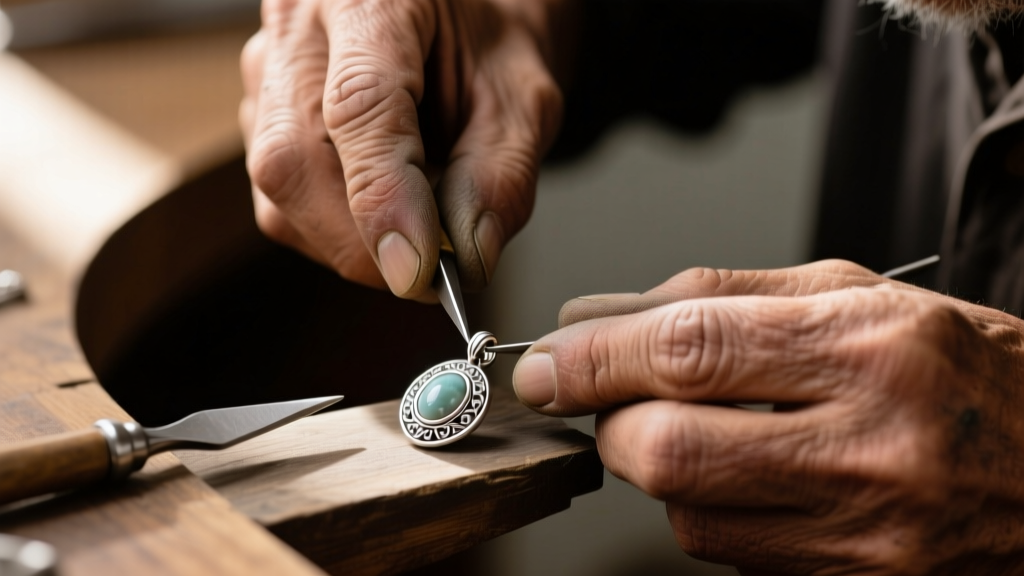
Authentic James Avery pieces feature a very specific maker's mark. Look for the cursive letter 'A' with a small 'J' nestled inside or beside it, accompanied by the copyright symbol (©). Below or beside this, you will find the metal purity stamp (e.g., '925' or '14K').
Key Authentication Indicators:
- Stamp Depth: Authentic stamps are struck deeply and cleanly into the metal using a steel punch. Counterfeit pieces often feature shallow, blurry, or laser-etched stamps that look like they were merely printed on the surface.
- Casting Porosity: Examine the back and edges of the cross under a 10x jeweler's loupe. Authentic JA pieces are cast using high-quality investment casting techniques, resulting in a dense, smooth surface. Fakes are often cast in cheap molds that leave behind microscopic pits, bubbles (porosity), or rough, unfinished seams along the edges.
- The Antiquing Test: As mentioned earlier, JA's oxidation is deeply set into the crevices. On fakes, the "tarnish" is often just a layer of black paint or cheap chemical wash that rubs off easily with a cotton swab and rubbing alcohol, or it is applied haphazardly over the high-polish areas.
Official Repair Center vs. Local Bench Jeweler
When your James Avery cross necklace requires professional intervention, you must decide between sending it to the official James Avery Repair Center or taking it to a local, certified bench jeweler. The Jewelers of America network is a great resource for finding qualified local professionals.
Use the Official James Avery Repair Center if:
- The piece is under warranty or you have a valid proof of purchase for a manufacturing defect.
- The chain has completely shattered and requires a proprietary replacement chain that matches the exact gauge and link style of the original.
- The piece requires a complete re-antiquing and professional tumbling to restore the factory finish.
Use a Local Bench Jeweler if:
- You need a quick turnaround (official repairs can take 4 to 8 weeks).
- The repair is a simple jump-ring solder, clasp replacement, or laser-welding a worn bail.
- The piece is a retired, vintage design that the official factory may no longer have the original molds or chain stock to service.
By understanding the specific metallurgy and mechanical vulnerabilities of your James Avery cross necklace, you can ensure that this meaningful piece remains structurally sound and visually stunning for decades, ready to be passed down as a pristine family heirloom.


