Aztec Necklace Tattoo Design: Skin & Jewelry Care Guide
Learn how to protect your aztec necklace tattoo design from fading while maintaining and cleaning the physical metal collar necklaces you wear over it.

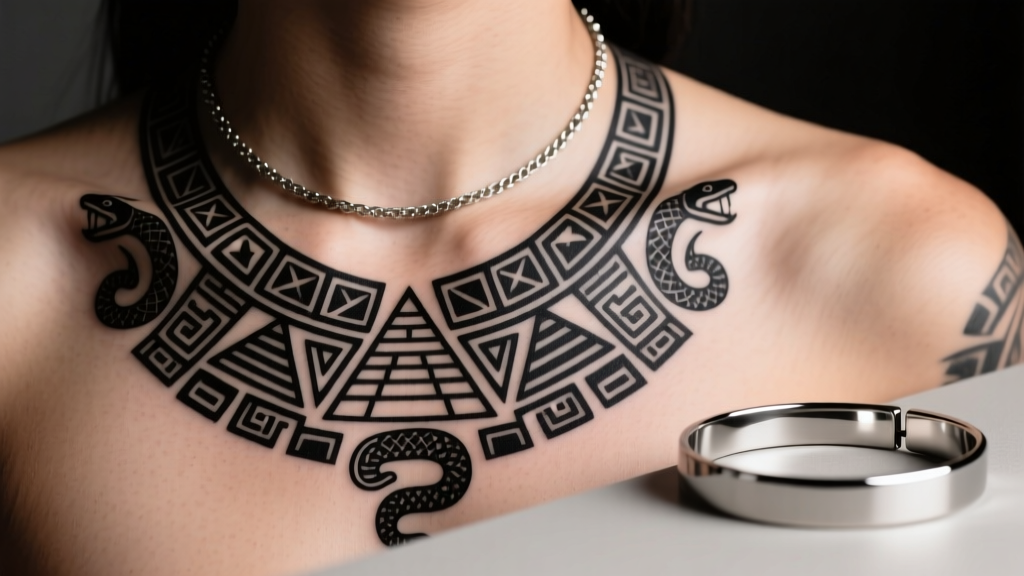
The clavicle and sternum provide a striking canvas for body art, and the aztec necklace tattoo design has surged in popularity for its bold, geometric symmetry and intricate blackwork. However, a unique dermatological and metallurgical challenge arises when enthusiasts choose to layer physical jewelry—such as heavy sterling silver collars, chokers, or pendant chains—directly over these fresh or healed tattoos. The intersection of ink preservation and metal maintenance requires a highly specific care protocol to prevent both the degradation of your body art and the tarnishing of your jewelry.
The Friction Factor: How Metal Degrades Tattoo Ink
To understand why your jewelry care routine must adapt to your body art, we must look at the anatomy of a tattoo. Ink is deposited into the dermis, approximately 1.5 to 2 millimeters below the epidermis. When a heavy physical necklace (particularly a 12-gauge or 10-gauge metal collar) rests against an aztec necklace tattoo design, the constant micro-friction causes low-grade epidermal inflammation.
This triggers macrophage phagocytosis. White blood cells, responding to the friction-induced micro-trauma, become hyperactive in the dermal layer. These macrophages slowly engulf the tattoo ink particles and carry them away to the lymphatic system, leading to premature fading, blurring of sharp Aztec line-work, and the dreaded "blowout" effect in delicate dotwork shading. According to the American Academy of Dermatology, minimizing mechanical friction is paramount to preserving the crisp contrast of blackwork tribal and Aztec patterns.
Metal Grades & Tattoo Safety Matrix
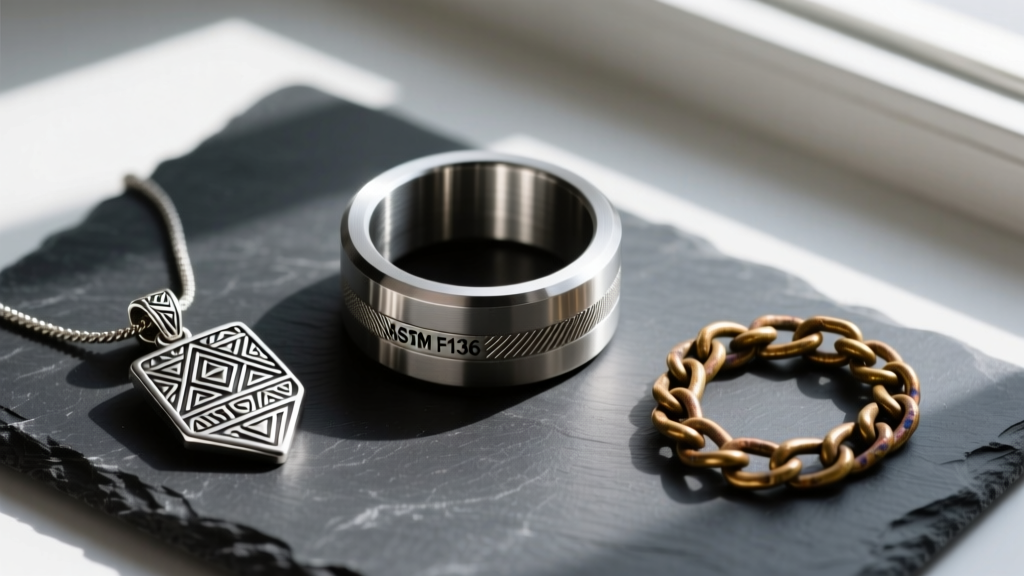
Not all metals interact safely with tattooed skin. The alloy composition of your necklace dictates both its tarnish rate and its potential to cause contact dermatitis, which can severely damage the visual integrity of the ink beneath it. Below is a comparative matrix for selecting jewelry to wear over an aztec necklace tattoo design.
| Metal Grade | Nickel Content | Oxidation / Tarnish Risk | Tattoo Safety Rating |
|---|---|---|---|
| Implant-Grade Titanium (ASTM F136) | 0% | None | Excellent (Safe for healing ink) |
| 925 Sterling Silver | 0% (Usually) | High (Copper alloy reacts to sweat) | Good (Requires strict cleaning) |
| 14k Solid Gold | Varies by alloy | Low | Very Good |
| Brass / Bronze | 0% | Very High (Creates copper salts) | Poor (Causes skin staining & irritation) |
Cleaning Protocols: Protecting Both Silver and Skin
Wearing 925 sterling silver over a tattoo presents a specific chemical hazard. Sterling silver is 92.5% pure silver and 7.5% copper. When copper mixes with the urea and salts in human sweat, it creates copper chloride—a greenish compound that stains the skin and can cause localized inflammation, threatening the sharp edges of your aztec necklace tattoo design. Therefore, rigorous, safe cleaning of the physical necklace is mandatory.
The Danger of Chemical Silver Dips
Never use liquid silver dips (like Tarn-X) if you plan to wear the necklace immediately over a tattoo. These solutions rely on thiourea and ammonium compounds to strip tarnish. If residual chemicals remain in the crevices of an intricate Aztec pendant and transfer to your skin, they can cause severe chemical burns or allergic contact dermatitis, which will permanently distort the tattoo ink during the healing cascade.
Step-by-Step Safe Cleaning Method
To maintain your jewelry without risking your body art, follow this mechanical cleaning protocol recommended by experts at Jewelers of America:
- Step 1: Remove the necklace and lay it on a microfiber towel.
- Step 2: Apply a pea-sized amount of non-ammonia, thiourea-free silver polish (such as Wright's Silver Cream) to a soft-bristled detailing brush.
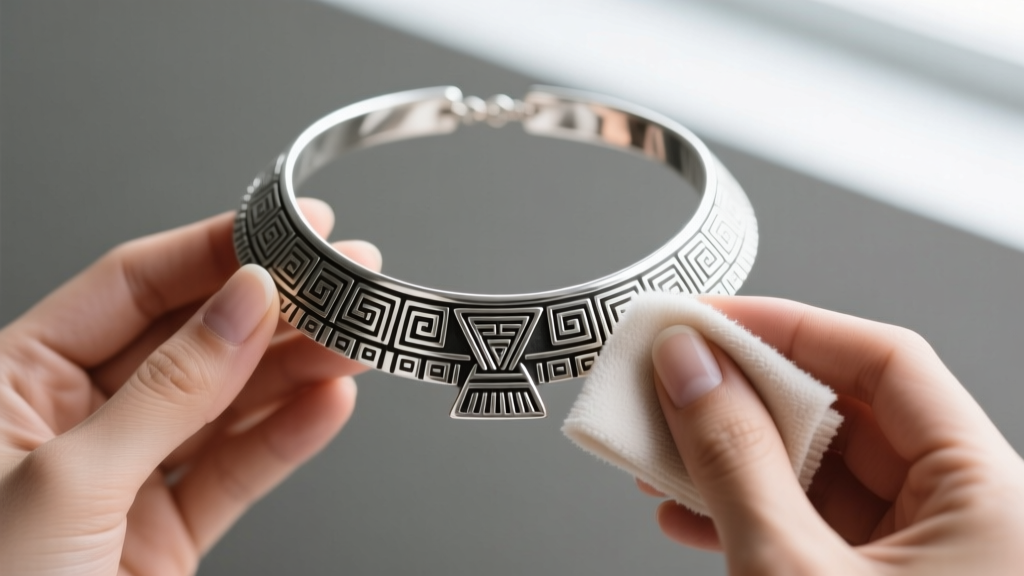
- Step 3: Gently agitate the brush into the deep geometric grooves of the Aztec pendant or collar to lift oxidized copper compounds.
- Step 4: Rinse thoroughly under lukewarm distilled water to ensure zero tap-water minerals are left behind.
- Step 5: Dry completely with a lint-free cloth. Crucial: Allow the jewelry to air out for 2 hours before wearing it against the tattoo to ensure all moisture has evaporated from the clasps and jump rings.
Barrier Methods & Moisture Control
If you insist on wearing a heavier brass or mixed-metal collar over your aztec necklace tattoo design for a specific aesthetic or event, you must employ a barrier method to prevent galvanic corrosion and ink degradation. Applying a thin layer of clear, hypoallergenic nail polish to the inner curve of the metal collar creates a temporary polymer shield. This prevents the metal's copper alloys from reacting with your skin's microbiome and sweat, keeping the skin beneath the tattoo calm and free from the micro-inflammation that leads to ink fading.
Alternatively, consider a physical fabric barrier. A sheer, 100% silk ribbon tied at the nape of the neck can act as a friction-reducing buffer between a heavy pendant chain and the delicate dotwork shading on your sternum.
Long-Term Maintenance Schedule
Preserving the stark contrast of an aztec necklace tattoo design while enjoying a curated jewelry collection requires a disciplined maintenance schedule. Treat your skin and your metals as an interconnected ecosystem.
"The longevity of high-contrast blackwork tattoos on the chest and collarbone relies heavily on minimizing chronic friction and avoiding heavy metal oxidation against the dermis." — Board-Certified Dermatological Insight
Daily Care
- Wipe down physical collars with a dry microfiber cloth immediately after removal to strip away daily sweat and skin oils.
- Apply an unscented, tattoo-safe moisturizer (like Hustle Butter or plain Lubriderm) to the aztec necklace tattoo design to keep the epidermis plump and resilient against incidental jewelry contact.
Monthly Care
- Perform the non-ammonia mechanical cleaning protocol on all silver and gold pieces that rest near the clavicle.
- Inspect the jump rings and clasps of your necklaces. A frayed or sharp clasp can act like a micro-blade, scratching the epidermis and triggering macrophage activity that fades the ink.
Annual Care
- Take your physical jewelry to a professional bench jeweler for an ultrasonic clean and a high-polish buff. This removes microscopic burrs on the metal that cause friction against your tattoo.
- Assess the ink saturation of your aztec necklace tattoo design. If the dotwork has softened due to unavoidable friction, schedule a touch-up session with your blackwork specialist.
By understanding the biological and chemical interactions between your skin, your ink, and your metals, you can confidently wear stunning physical necklaces without sacrificing the breathtaking precision of your aztec necklace tattoo design.


