Nautilus Necklace Metals: Silver, Gold, and Brass Compared
Compare silver, gold, and brass for your nautilus necklace. Discover which metal best preserves the Fibonacci spiral's intricate details.

The Geometry of the Shell: Why Material Matters for Nautilus Pendants
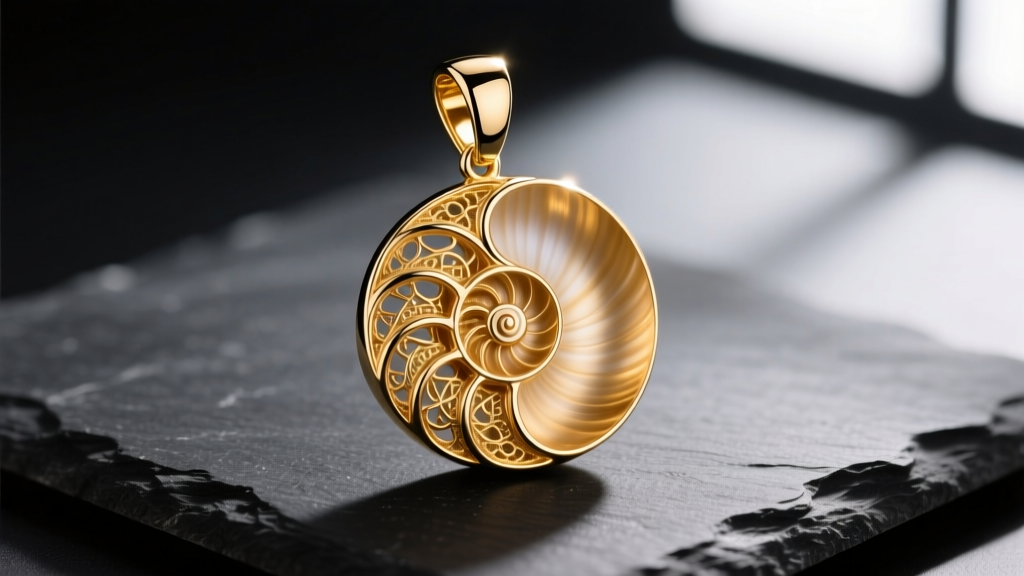
The nautilus shell is nature’s masterpiece of engineering, defined by a precise logarithmic spiral that perfectly mirrors the Fibonacci sequence. When translated into jewelry, this mathematical beauty presents unique metallurgical challenges. A high-quality nautilus necklace features deep undercuts, razor-thin chamber walls, and sweeping outer lips. The metal chosen for the pendant dictates not only its aesthetic warmth and price point but also its structural integrity and how well it captures the microscopic details of the shell's ridges during the lost-wax casting process.
As we navigate the jewelry landscape in 2026, consumers are increasingly looking beyond simple karat counts, focusing instead on Vickers hardness (HV), casting fidelity, and long-term patina behavior. Whether you are drawn to the bright flash of precious metals or the earthy evolution of base alloys, understanding the material science behind your nautilus pendant is critical for making an informed purchase.
Sterling Silver (925): The Classic Choice for Intricate Spirals
Sterling silver remains the most popular medium for nautilus necklaces, offering an exceptional balance of affordability, brilliant luster, and casting fluidity. Composed of 92.5% pure silver and 7.5% copper, this alloy possesses a Vickers hardness of approximately 60-70 HV in its annealed state. This relative softness allows the molten metal to flow seamlessly into the finest crevices of a silicone mold, capturing the microscopic growth lines of the shell with stunning accuracy.
Tarnish, Patina, and Detail Retention
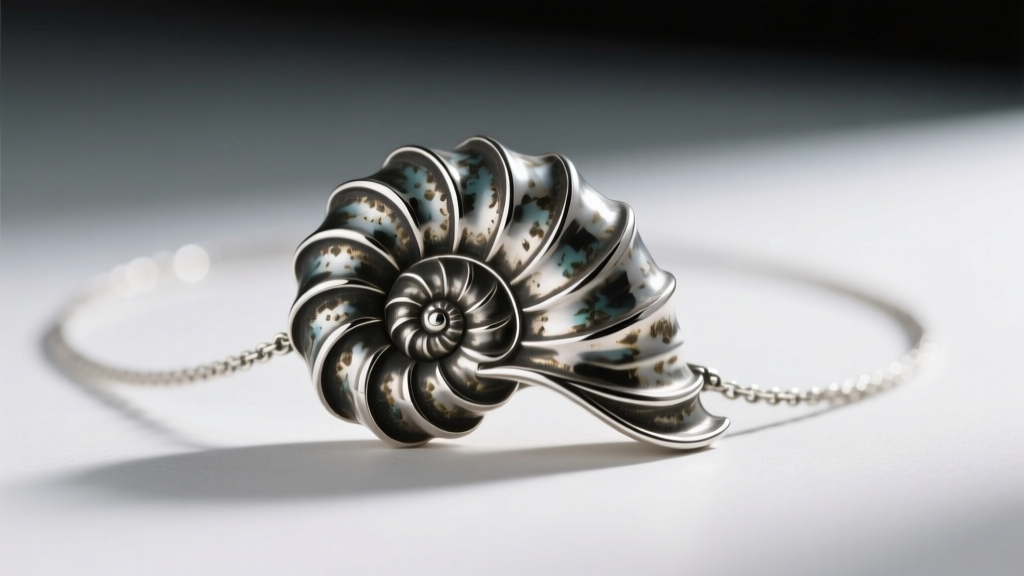
The primary drawback of sterling silver is its susceptibility to tarnish. The copper content reacts with sulfur compounds in the air and on the skin, forming silver sulfide. In a nautilus pendant, this tarnish rapidly accumulates in the deep recesses of the spiral chambers. However, master jewelers often use this to their advantage through a process called antiquing or oxidation. By deliberately darkening the recesses with liver of sulfur and then polishing the raised ridges, the 3D topography of the Fibonacci spiral is dramatically enhanced.
Expert Care Tip: Never place an oxidized sterling silver nautilus necklace in an ultrasonic cleaner or use harsh silver dip solutions. These methods will strip the deliberate dark patina from the chamber recesses, leaving the pendant looking flat and one-dimensional.
Solid Gold: Premium Durability and the 14k vs. 18k Debate
For heirloom-quality pieces, solid gold is the undisputed champion. However, the specific karat weight drastically alters the physical properties of the nautilus pendant. According to the Gemological Institute of America (GIA), pure 24k gold is far too soft for intricate jewelry, necessitating the addition of alloy metals like copper, zinc, and silver to increase durability and alter color.
The Hardness Factor: 14k vs. 18k for Filigree Shells
When selecting a gold nautilus necklace, the debate between 14k and 18k is largely a question of structural engineering. 18k gold (75% pure gold) has a Vickers hardness of roughly 120 HV. It offers a richer, deeper yellow hue but is more prone to denting. The delicate outer lip of the nautilus shell—the thinnest and most exposed part of the casting—is highly vulnerable to impact in 18k gold.
Conversely, 14k gold (58.5% pure gold) boasts a higher hardness rating, often exceeding 135 HV depending on the specific alloy mix. This increased rigidity makes 14k gold vastly superior for preserving the sharp, fragile edges of the shell's chambers over decades of daily wear. For white gold nautilus pendants, 14k is also preferred, as the higher nickel or palladium content provides a naturally whiter base that requires less frequent rhodium replating.
Brass and Bronze: The Budget-Friendly Patina Play
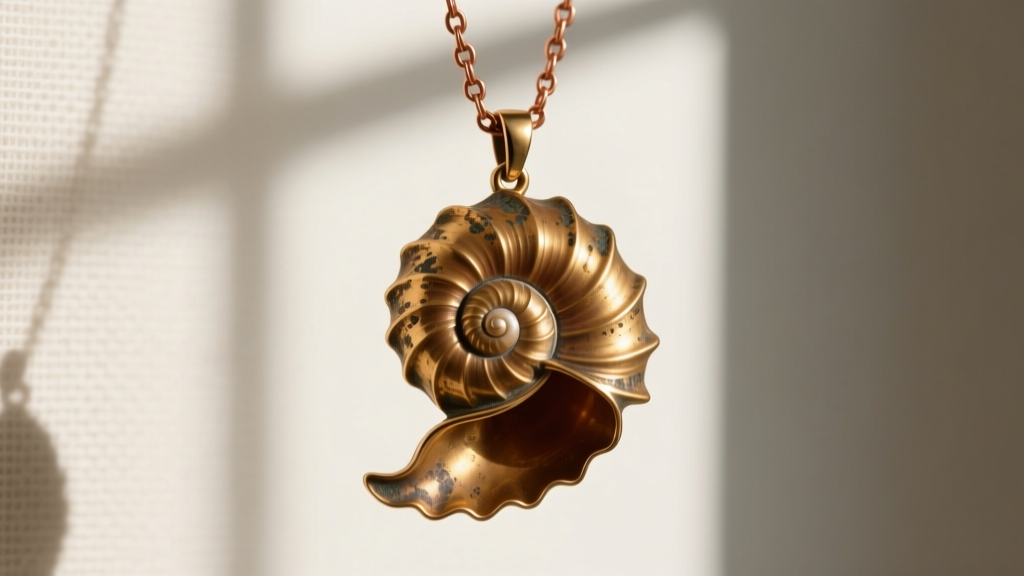
For those who prefer an organic, vintage, or steampunk aesthetic, brass (copper and zinc) and bronze (copper and tin) offer compelling alternatives. These base metals are exceptionally affordable and cast with a heavy, satisfying density that mimics the weight of solid gold. Jewelry manufacturing suppliers like Rio Grande frequently supply specialized brass casting grains that yield incredibly sharp detail straight out of the flask, requiring minimal bench time for finishing.
Skin Sensitivities and the 'Green Neck' Phenomenon
The primary failure mode of brass and bronze nautilus necklaces is chemical reactivity. The high copper content reacts with the chlorides, salts, and lactic acid in human sweat, producing copper chloride—a compound that leaves a harmless but unsolicited green or black stain on the skin. To mitigate this, manufacturers often apply a micro-thin layer of clear electrophoretic lacquer or advise the wearer to periodically buff the pendant with a micro-crystalline wax, such as Renaissance Wax, to create a moisture barrier.
Comprehensive Material Comparison Matrix
To help you weigh the metallurgical trade-offs, refer to the data matrix below. This framework synthesizes hardness, maintenance requirements, and current market pricing for standard 1-inch (25mm) nautilus pendants.
| Material | Composition | Hardness (HV) | Tarnish / Patina Risk | Casting Fidelity | Avg. Price Range (2026) |
|---|---|---|---|---|---|
| Sterling Silver (925) | 92.5% Ag, 7.5% Cu | 60 - 70 | High (Silver Sulfide) | Excellent | $85 - $250 |
| 14k Yellow Gold | 58.5% Au, Cu/Zn/Ag | 130 - 145 | Very Low | Very Good | $450 - $800 |
| 18k Yellow Gold | 75.0% Au, Cu/Ag | 115 - 125 | None | Excellent | $700 - $1,400 |
| Jeweler's Brass | 85% Cu, 15% Zn | 90 - 110 | High (Oxidation/Verdigris) | Superior | $35 - $90 |
Chain Pairings and Bail Mechanics
The material of your nautilus pendant must dictate the chain it hangs from. A solid 14k gold nautilus shell can easily weigh between 8 and 14 grams. Suspending this weight on a delicate 0.8mm cable chain will inevitably lead to chain stretch, kinking, or bail failure. For heavy gold or dense bronze pieces, opt for a 1.5mm to 2.0mm box chain or a wheat chain, which offer high tensile strength and resist tangling in the spiral grooves of the pendant.
Furthermore, inspect the bail (the loop connecting the shell to the chain). In premium nautilus necklaces, the bail should be soldered directly to the top of the shell's spiral axis, ensuring the pendant lays perfectly flat against the sternum. Avoid pendants where the bail is merely glued or attached via a weak jump ring, as the torque from daily movement will eventually snap the connection point.
Final Verdict: Choosing Your Perfect Metal
Ultimately, the best material for your nautilus necklace depends on your lifestyle and aesthetic preferences. If you desire a brilliant, highly detailed piece that embraces a bit of vintage character over time, oxidized sterling silver is unmatched in its visual depth. If you are investing in a lifelong, daily-wear talisman that must withstand the rigors of an active lifestyle without losing its delicate outer lip, 14k gold provides the necessary structural hardness. Finally, for those who view jewelry as an evolving, organic canvas, raw brass offers a beautiful, interactive patina at an accessible entry point. By prioritizing metallurgical properties over mere appearance, you ensure your Fibonacci masterpiece endures for generations.


