Sourcing a Diamond Necklace in Indiana: 2026 Buying Guide
Discover expert insights on sourcing a diamond necklace in Indiana. We break down local pricing, diamond grading, and chain metallurgy for 2026 buyers.

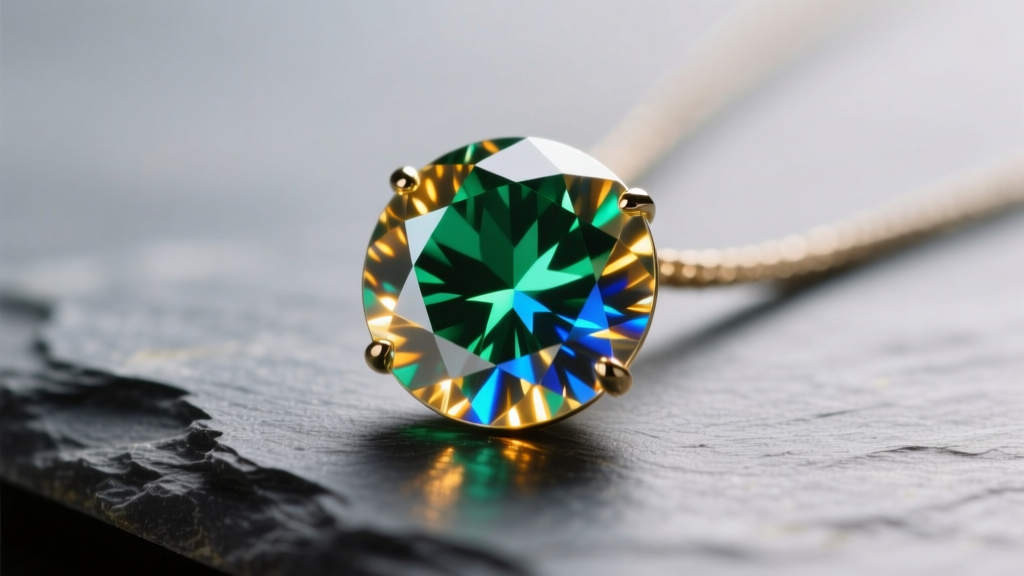
The luxury jewelry market in the Midwest has evolved significantly over the last decade. When sourcing a diamond necklace in Indiana, consumers must navigate a complex landscape ranging from high-volume mall retailers in Castleton and Greenwood to elite, independent bench jewelers in Carmel’s Arts & Design District and Zionsville. As we move through 2026, the disparity in diamond sourcing, chain metallurgy, and setting engineering between these retail tiers has never been more pronounced. This expert guide bypasses the marketing fluff to deliver the technical specifications, market pricing, and metallurgical realities you need to make an informed, high-value acquisition in the Hoosier State.
Navigating Indiana’s Retail Tiers: Mall Chains vs. Independent Benches
The first critical decision when evaluating a diamond necklace in Indiana is choosing your retail environment. National chain stores, which dominate major shopping centers like Keystone Fashion Mall and The Fashion Mall at Keystone, operate on a high-volume, low-margin model. Their inventory is typically sourced from global diamond cutters via bulk parcel buys. Consequently, their solitaire pendants often feature diamonds with lower clarity grades (SI2 to I1) and strong to very strong fluorescence, which allows them to advertise higher carat weights at accessible price points.
Conversely, independent bench jewelers—particularly those clustered in affluent Indianapolis suburbs like Carmel and Fishers—operate on a bespoke or low-volume curation model. These jewelers frequently source stones directly from Antwerp or Mumbai cutters, prioritizing optical performance over mere paper weight. According to the Jewelers of America, independent retailers are significantly more likely to provide advanced light performance data, such as Sarine or Ideal-Scope images, which are critical for assessing a diamond's true brilliance.
Technical Diamond Grading for Pendants and Tennis Chains
Evaluating a diamond for a necklace requires a different technical approach than evaluating one for an engagement ring. Because a pendant rests against the décolletage and is viewed from a distance of two to three feet, certain optical characteristics take precedence.
Solitaire Pendants: Depth and Table Percentages
For a round brilliant solitaire pendant, light return is paramount. You want a diamond that acts as a mirror, reflecting ambient light back to the observer. According to the Gemological Institute of America (GIA), the ideal table percentage for a round brilliant is between 54% and 57%, with a total depth percentage between 59% and 62.5%. Diamonds with depths exceeding 64% will suffer from light leakage, appearing dark or 'dead' in the low-light environments typical of evening wear.
Tennis Necklaces: The 'Melee' Quality Problem
If you are investing in a diamond tennis necklace, the primary technical failure point in the Indiana market is the quality of the melee diamonds (stones ranging from 0.01 to 0.15 carats). Many mid-tier retailers use commercial-grade melee (I1-I2 clarity, M-N color) to keep the overall necklace price under $10,000. This results in a muddy, yellowish chain that severely detracts from the center stones. Always demand an invoice that explicitly guarantees F-G color and VS clarity for all melee stones in the piece.
Chain Metallurgy: Gauge, Tensile Strength, and Clasp Engineering
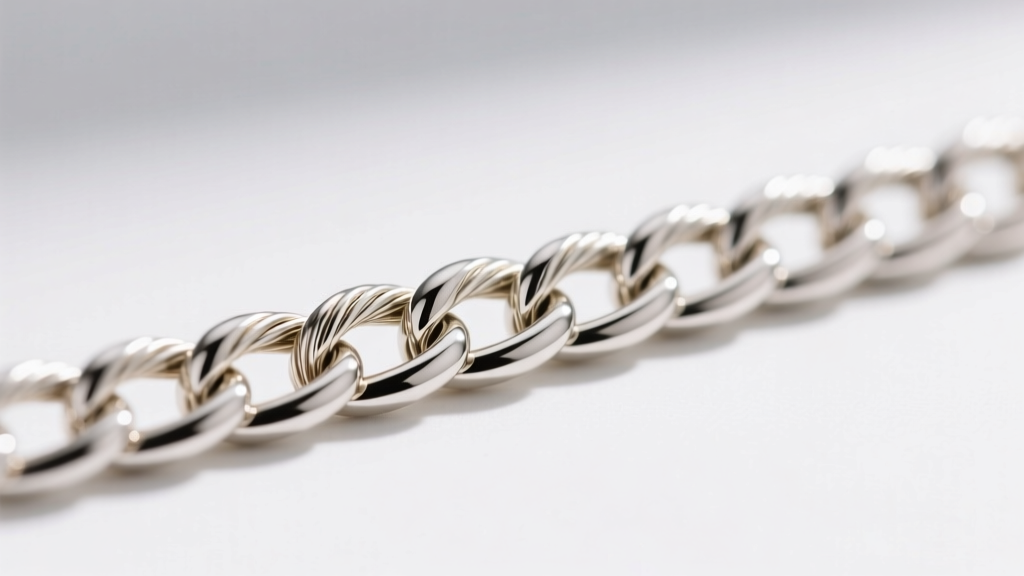
The most overlooked component of any diamond necklace is the chain. A 1.50-carat diamond pendant weighs approximately 0.3 grams, but the dynamic load placed on the chain during daily wear—catching on clothing, sudden movements, and sleeping—requires immense tensile strength.
- Gauge Thickness: Never pair a diamond over 0.50 carats with a chain thinner than 0.8mm. For stones between 1.00ct and 2.00ct, a 1.0mm to 1.2mm cable or wheat chain is mandatory to prevent micro-fractures and eventual snapping.
- Alloy Selection: 14-karat white gold is the standard in Indiana due to its durability and lower price point, but it requires rhodium plating every 12 to 18 months to maintain its bright white appearance. 18-karat white gold offers a richer luster but is slightly softer. Platinum (950Pt) is the ultimate choice for heirloom pieces; it is hypoallergenic, denser, and displaces rather than loses metal when scratched.
- Clasp Mechanics: The standard spring-ring clasp is a notorious failure point for heavy pendants. Upgrade to a solid lobster clasp with a reinforced jump ring. For tennis necklaces, insist on a custom fold-over box clasp equipped with a figure-8 safety catch and a secondary security chain.
When evaluating a diamond necklace in Indiana, always request to see the chain's soldering points under a 10x triplet loupe. Poorly soldered links will show excess solder bloom, which weakens the structural integrity of the precious metal over time.
2026 Indiana Market Pricing Matrix
Understanding what you should actually pay is critical. The following matrix compares the estimated 2026 retail pricing for a classic 1.00-carat Round Brilliant solitaire pendant (G Color, VS2 Clarity, Excellent Cut, GIA Graded) set on a 16-inch, 1.0mm 14k white gold cable chain. Prices reflect the distinct retail environments found across the state.
| Retail Environment | Average Price Range | Melee/Chain Quality | Post-Sale Bench Support |
|---|---|---|---|
| National Online Retailer | $5,100 - $5,600 | Standard 14k, 0.8mm chain | Mail-in repair (2-4 weeks) |
| Indiana Mall Chain Store | $6,200 - $7,100 | Commercial chain, spring clasp | Outsourced regional repair |
| Indy Independent Bench (Carmel/Zionsville) | $6,800 - $7,900 | Premium wheat chain, lobster clasp | In-house laser welding & polishing |
| Custom CAD/Hand-Forged (Bloomington/Indianapolis) | $7,500 - $8,500+ | Platinum or 18k, custom box clasp | Lifetime in-house bench warranty |
Vetting the Bench: Questions to Ask Local Indiana Jewelers
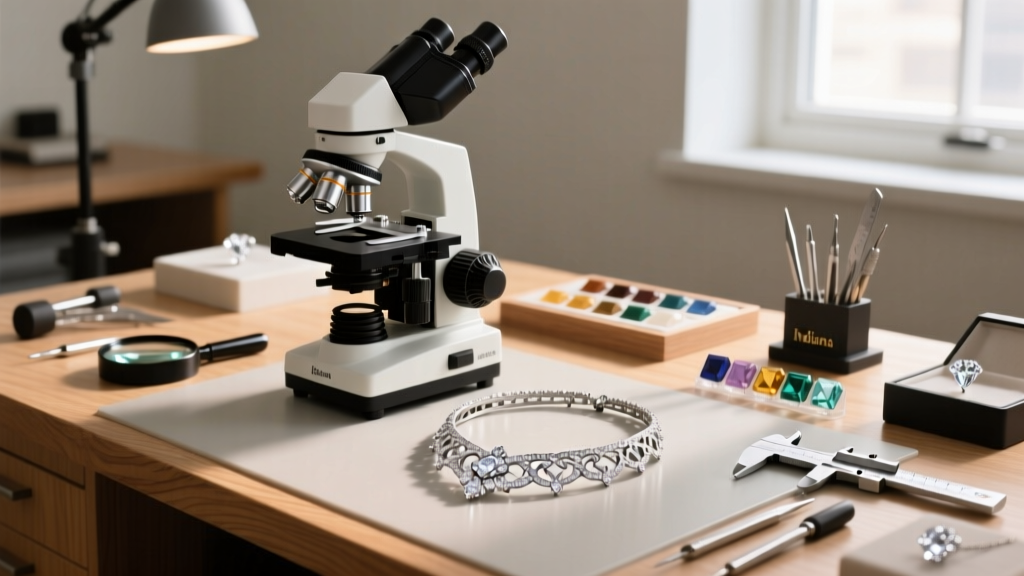
If you are commissioning a custom diamond necklace or purchasing a high-value estate piece in Indiana, the capabilities of the jeweler's bench are just as important as the quality of the diamond. A true master bench jeweler will possess specific equipment and expertise that mass-market retailers lack.
1. Laser Welding Capabilities
Ask the jeweler if they utilize a laser welder for chain repairs and prong re-tipping. Traditional torch soldering requires heating a large area of the chain, which can melt delicate links or cause thermal shock to nearby diamonds, resulting in internal fracturing. Laser welding isolates the heat to a microscopic point, preserving the integrity of both the metal and the stone.
2. Prong Engineering and Re-tipping
For solitaire pendants, the prongs take the brunt of the wear as the stone swings and rubs against the skin and clothing. Inquire about their prong re-tipping process. A skilled jeweler will not simply melt a bead of gold onto a worn prong; they will use a burr to carve a precise seat, ensuring the diamond is locked in with even pressure across all four or six prongs. Uneven pressure is the leading cause of stones popping out of pendant settings.
3. In-House CAD vs. Outsourced Casting
Many jewelers claim to do 'custom design' but simply email a CAD file to a massive casting house in New York or Los Angeles. While the CAD design might be local, the casting, polishing, and stone setting are done on an assembly line. For true bespoke quality, seek out Indiana jewelers who mill their own waxes, cast in-house using a controlled vacuum environment, and perform all stone setting under a microscope at their local bench.
By prioritizing technical specifications, metallurgical integrity, and bench expertise over flashy storefronts, you can secure a diamond necklace in Indiana that is not only breathtaking but engineered to last generations.


