The Vintage Watch Pendant Necklace: 2026 Trend Guide
Discover how the vintage watch pendant necklace is redefining 2026 heirloom jewelry. Explore styling, chain gauges, and buying tips.

The Renaissance of Horological Jewelry
In 2026, the jewelry landscape has shifted decisively away from mass-produced minimalism toward pieces with provenance, mechanical intrigue, and narrative weight. At the forefront of this movement is the vintage watch pendant necklace. No longer confined to steampunk costumes or eccentric thrift-store finds, repurposed timepieces have been elevated into the realm of quiet luxury and horological heritage. Designers and collectors are salvaging antique pocket watch movements, mid-century wristwatch dials, and Art Deco cases, transforming them into wearable heirlooms. According to industry analysts at Hodinkee, the intersection of haute horlogerie and fine jewelry is one of the fastest-growing secondary market categories, driven by consumers seeking sustainable, one-of-a-kind accessories that tell a literal and figurative story.
However, integrating mechanical history into daily wear requires a deep understanding of metallurgy, chain engineering, and structural integrity. A vintage watch pendant necklace is not merely a charm on a string; it is a marriage of precision micro-mechanics and jewelry design. This guide dissects the anatomy, structural requirements, and styling frameworks necessary to curate and wear these exceptional pieces.
Anatomy of a Timepiece Pendant: What to Look For
When evaluating a vintage watch pendant necklace, the untrained eye focuses solely on the dial's aesthetics. The expert eye, however, scrutinizes the case material, the crystal composition, and the movement housed within.
Case Materials and Hallmarks
True vintage cases (pre-1970s) were crafted from a variety of metals, each with distinct wear characteristics. Solid gold cases are typically stamped 9k, 14k, or 18k. The Gemological Institute of America (GIA) notes that 14k gold offers the optimal balance of rich color and tensile strength for pendants, whereas 18k is softer and more prone to denting if the pendant swings and strikes a hard surface. Many mid-century pieces utilize Rolled Gold Plate (RGP) or Gold Filled (GF) constructions, marked as '1/20 14K GF'. These offer exceptional durability and will not flake like modern electroplated base metals, making them highly desirable for vintage purists on a moderate budget.
The Crystal: Hesalite vs. Mineral vs. Sapphire
The transparent cover protecting the dial dictates the pendant's maintenance needs. Most vintage pieces feature Hesalite (acrylic) crystals. While prone to micro-scratches, Hesalite is shatter-resistant and can be easily restored to factory clarity using specialized polishing compounds like Polywatch. Mineral glass, common in 1970s wristwatch conversions, resists scratching but will shatter upon impact. Sapphire crystals are virtually scratch-proof but are rarely found in true vintage pieces unless the watch is a high-end modern reissue.
The Movement: Quartz vs. Mechanical
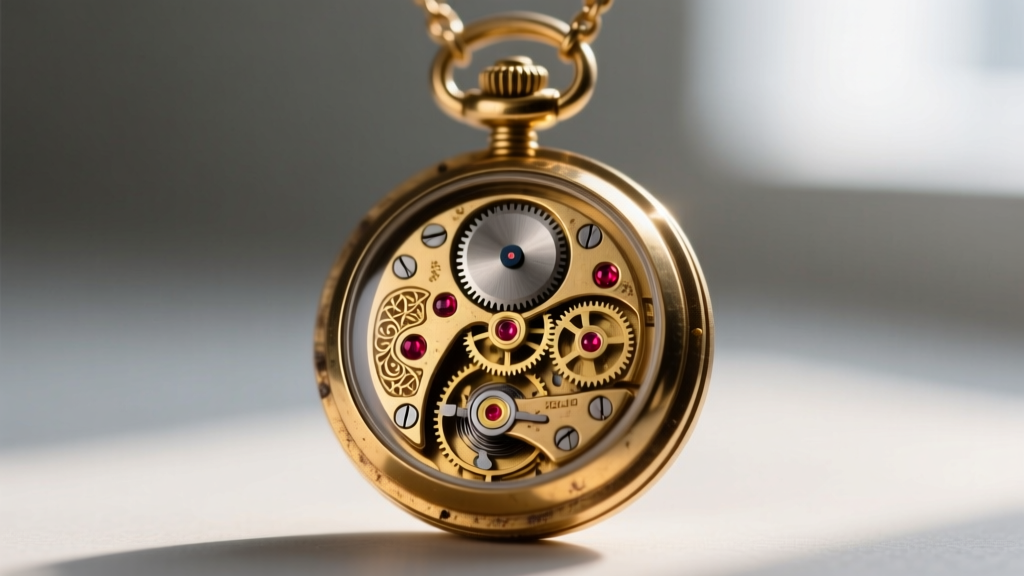
A genuine vintage watch pendant necklace often houses a manual-wind mechanical movement, such as a Swiss ETA or an American Waltham caliber. The sweeping second hand and visible escapement through a skeletonized dial provide unmatched visual poetry. However, mechanical movements are highly sensitive to the kinetic shock of walking and the magnetic fields of modern electronics. For daily wear, many contemporary jewelers retrofit vintage cases with Japanese Miyota quartz movements. While purists may scoff, a quartz retrofit guarantees accuracy and eliminates the risk of snapping a fragile vintage mainspring.
Chain Engineering: Gauges, Links, and Bails
The most common failure mode in horological jewelry is chain breakage. A standard pocket watch case housing a mechanical movement can weigh between 25 and 45 grams. Suspending this weight requires specific chain gauges and clasp mechanisms.
Selecting the Correct Chain Gauge
A delicate 1.5mm cable chain will inevitably snap at the clasp weld under the pendulum effect of a 30-gram watch pendant. You must scale the chain gauge to the pendant's mass. Below is a structural framework for pairing chains with timepiece pendants:
| Chain Style | Recommended Gauge | Tensile Capacity | Ideal Pendant Weight |
|---|---|---|---|
| Wheat (Spiga) | 2.5mm - 3.5mm | High | 20g - 40g |
| Rope (Twisted) | 3.0mm - 4.5mm | Very High | 30g - 60g |
| Figaro | 3.5mm - 5.0mm | High | 35g - 70g |
| Curb (Flat) | 4.0mm+ | Moderate | 40g+ (Lay flat only) |
Always opt for a lobster claw clasp rather than a spring ring. Spring rings rely on a tiny internal coil spring that degrades over time, whereas a solid lobster clasp provides a secure, mechanical lock capable of bearing the dynamic load of a swinging watch case.
The Bail: The Critical Connection Point
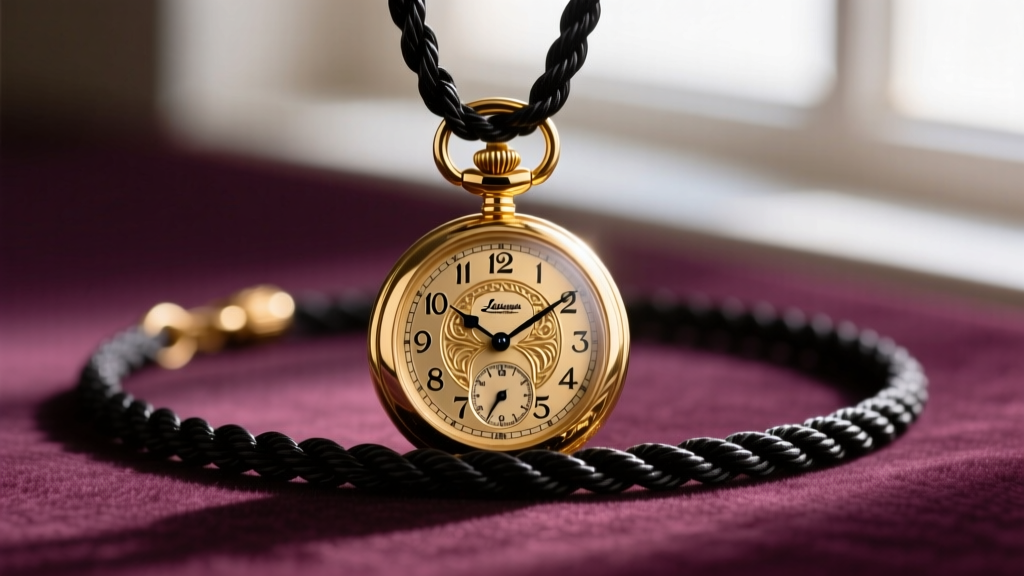
The bail connects the watch case to the chain. Avoid 'glue-on' cap bails at all costs; the cyanoacrylate adhesives used will degrade within six months due to skin oils and temperature fluctuations, resulting in the loss of the pendant. The gold standard is a soldered jump ring, where a jeweler drills a microscopic hole into the top lug of the watch case and solders a solid gold ring directly to the metal. For cases that cannot be drilled, a bezel-crimp bail or a heavy-duty pinch bail with rubber O-ring inserts should be utilized to prevent the metal from gouging the vintage case.
Styling the Vintage Watch Pendant Necklace in 2026
Styling a timepiece pendant requires balancing its inherent visual weight and historical gravitas with contemporary silhouettes. The era of wearing these pieces exclusively with bohemian maxi dresses is over. In 2026, the styling paradigm is rooted in juxtaposition and structured layering.
- The Turtleneck Canvas: A heavy, 16-inch 14k gold rope chain suspending an open-face enamel dial pendant rests perfectly against a fine-gauge merino wool turtleneck. The dark, solid fabric allows the intricate guilloché patterns on the watch dial to command attention.
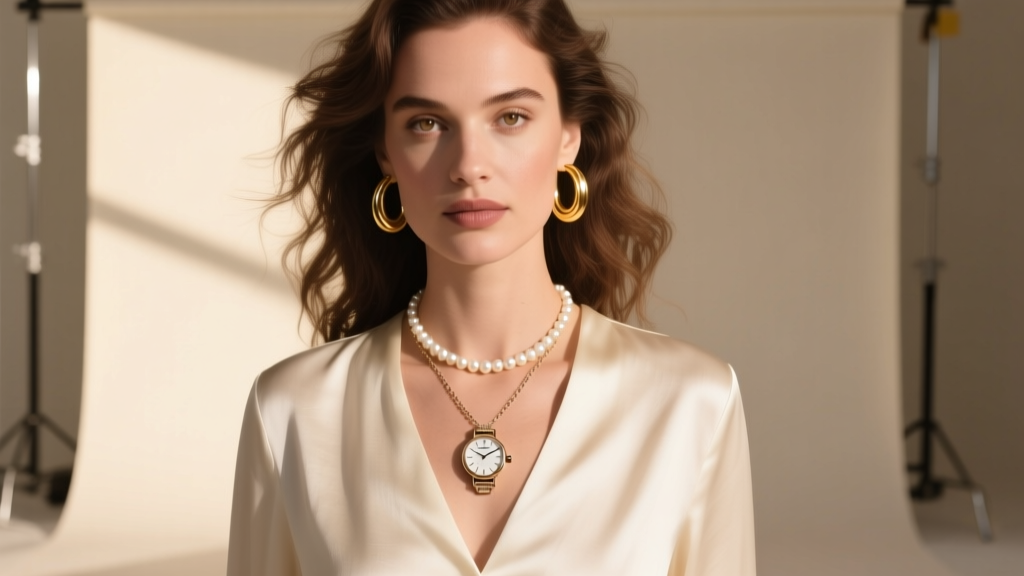
- Asymmetrical Layering: Pair a 20-inch vintage watch pendant necklace with an 18-inch strand of irregular baroque pearls. The contrast between the organic, luminescent pearls and the rigid, mechanical geometry of the watch case creates a sophisticated, curated aesthetic.
- The Deep V-Neck Anchor: For evening wear, utilize a longer 24-inch wheat chain that allows the watch pendant to rest at the sternum. This draws the eye vertically, elongating the torso while showcasing a skeletonized movement that catches ambient candlelight.
Maintenance and Failure Modes
Owning a vintage watch pendant necklace requires proactive maintenance to preserve both the jewelry and the horology. Moisture ingress is the primary enemy. Unlike modern wristwatches, vintage pocket watch cases lack rubber gaskets. Exposure to high humidity, rain, or perspiration will cause the steel gears to rust and the paper or enamel dial to stain. Always remove the pendant before showering or engaging in strenuous activity.
Additionally, the winding stem (the crown used to set the time) is a structural weak point. On a wristwatch, the crown is protected by the wrist's movement. On a pendant, the crown protrudes outward and can easily snag on clothing, bending the stem and destroying the internal setting lever. Ensure your jeweler has filed down any excessively protruding crowns or installed a protective bail cage over the top lug.
Market Pricing and Sourcing
The market for vintage watch pendant necklaces is highly stratified based on material, movement complexity, and brand provenance. Understanding these tiers prevents overpaying for base-metal novelties or undervaluing high-horology artifacts.
- Tier 1: Base Metal & Quartz Retrofits ($50 - $150): Typically features brass or nickel cases with modern quartz movements. Excellent for trend-driven styling, but lacks long-term heirloom value.
- Tier 2: Gold-Filled & Mechanical ($200 - $600): The sweet spot for collectors. Features 14k gold-filled cases housing original, serviced Swiss or American manual-wind movements. These offer genuine history and exceptional durability.
- Tier 3: Solid Gold & High Horology ($1,200 - $5,000+): Solid 18k gold hunter cases, skeletonized tourbillons, or pieces from heritage houses like Patek Philippe or Vacheron Constantin. These are investment-grade assets that require specialized insurance and climate-controlled storage when not worn.
Ultimately, the vintage watch pendant necklace is a masterclass in wearable history. By prioritizing structural engineering, understanding horological nuances, and embracing modern styling frameworks, you can transform a relic of the past into the cornerstone of your 2026 jewelry wardrobe.