James Avery Mom Necklace Guide: Styles, Charms & Sizing
Discover how to build the perfect James Avery mom necklace. Learn about chain types, charm weights, metal mixes, and sizing in our beginner guide.

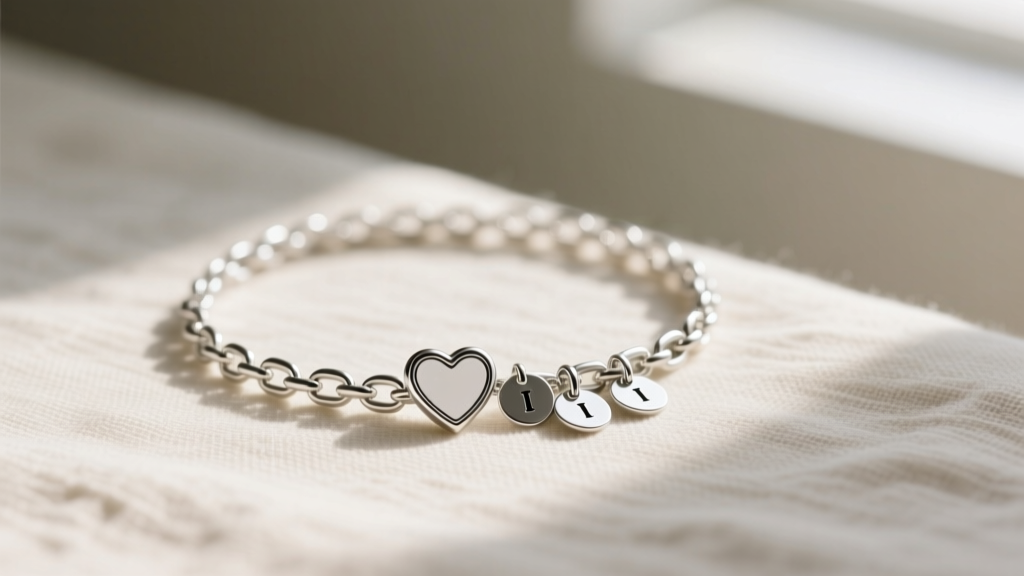
Building a personalized jewelry collection is a rite of passage for many mothers, and few pieces capture the sentimental journey of motherhood quite like a custom charm necklace. If you are exploring the world of artisan jewelry, you have likely encountered the iconic james avery mom necklace. Known for its exceptional craftsmanship, modular design, and deep emotional resonance, this style of necklace allows you to tell your family's unique story through carefully curated pendants, birthstones, and initials.
However, for beginners, navigating the myriad of chain styles, metal finishes, and charm weights can feel overwhelming. How do you prevent a heavy pendant from snapping a delicate chain? Which chain style lays flat against the collarbone? In this comprehensive, beginner-friendly explainer, we will decode the anatomy of a charm necklace, providing you with the expert insights needed to build a durable, beautiful, and deeply personal heirloom.
The Foundation: Decoding Chain Styles and Metallurgy
The most critical mistake beginners make is selecting a chain based solely on aesthetics rather than structural integrity. A charm necklace is a dynamic piece of jewelry; it experiences constant friction, pulling, and weight distribution. Understanding the metallurgy and mechanics of your base chain is essential.
Most artisan chains are crafted from sterling silver, an alloy consisting of 92.5% pure silver and 7.5% copper. Pure silver is too soft for everyday wear, so the copper adds vital tensile strength. However, the structural design of the chain links dictates how well it will support heavy mom-themed charms, such as solid heart pendants or multi-stone family tree motifs.
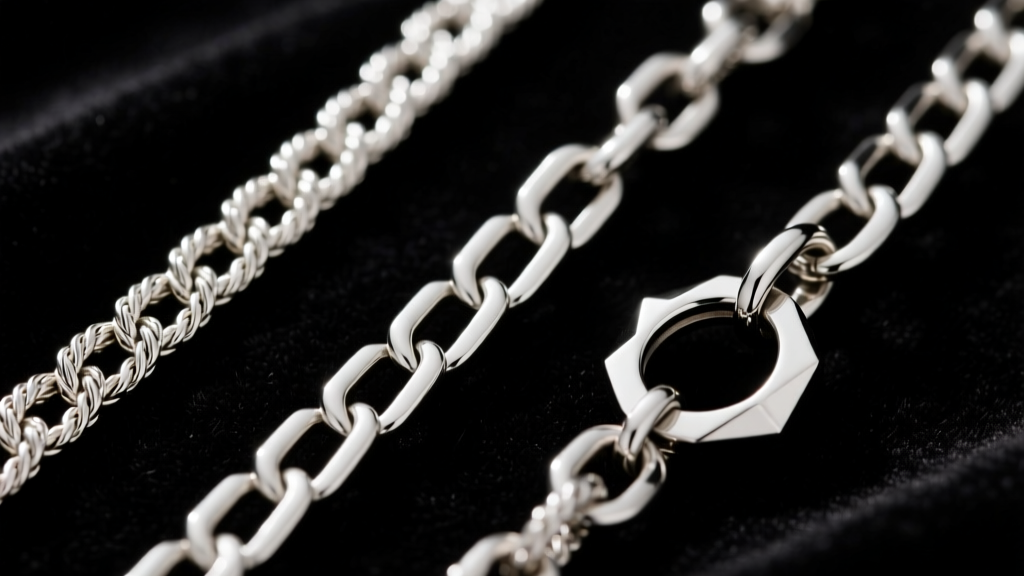
| Chain Style | Link Structure | Weight Capacity | Best Use Case |
|---|---|---|---|
| Box Chain | Interlocking square links | High (Up to 45g) | Heavy pendants, everyday wear, highly durable |
| Omega Chain | Smooth, rigid metal plates | Low (Under 15g) | Lightweight beads, standalone wear (prone to kinking) |
| Rope Chain | Twisted, woven oval links | Medium (Up to 25g) | Medium charms, adds visual texture and sparkle |
| Snake Chain | Tightly joined wavy rings | Medium (Up to 20g) | Sleek, modern look, but can catch on fine hairs |
For a classic mom necklace that will hold multiple heavy charms over the years, a box chain in a 1.5mm to 2.0mm thickness is the gold standard. Its welded, pivoting links distribute weight evenly and resist snapping. Conversely, while the Omega chain offers a beautiful, mirror-like finish, its rigid plate structure makes it highly susceptible to permanent kinking if bent or slept in, making it a poor choice for heavy, dangling charms.
Curating Charms: Weight, Jump Rings, and Metal Mixes
Once your foundation is set, the true storytelling begins. A traditional mom necklace often features a central focal pendant—such as a 'Mom' script heart or a family tree—flanked by smaller accent charms like children's initials or birthstone beads.
The Mechanics of Jump Rings
Every charm attaches to the chain via a jump ring (the small metal loop at the top of the pendant). Standard artisan charms typically utilize a 5mm or 6mm soldered or split jump ring. When mixing and matching, ensure your chain's end links or clasps can pass through the charm's jump ring. If you are adding aftermarket charms to your necklace, you may need a jeweler to carefully file or replace the jump ring to ensure a seamless fit without compromising the structural integrity of the silver.
Mastering the Two-Tone Aesthetic
One of the most popular design choices is mixing sterling silver with 14k yellow or rose gold accents. According to James Avery Artisan Jewelry, two-tone pieces are crafted by either soldering gold elements onto a silver base or using gold-plated beads. When wearing mixed metals, be aware that the silver portions will naturally oxidize and darken over time, while the gold will remain bright. This contrast can actually enhance the intricate details of oxidized charms, giving them a vintage, heirloom appearance.
Birthstones and Gemstone Hardness
Incorporating children's birthstones is a hallmark of the mom necklace. However, not all gemstones are created equal when it comes to daily wear and tear. As detailed by the GIA Gem Encyclopedia, gemstones are rated on the Mohs scale of mineral hardness. Understanding this scale is crucial for preventing scratched or shattered stones.
- Diamond (April) - Mohs 10: Virtually scratch-proof, ideal for everyday wear and active mothers.
- Sapphire (September) - Mohs 9: Highly durable, excellent for dangling charms that may bump against surfaces.
- Amethyst (February) - Mohs 7: Moderately durable, but can scratch if knocked against harder materials.
- Opal (October) - Mohs 5.5-6.5: Very fragile and sensitive to temperature changes. Best used in stationary bead charms rather than dangling pendants.
If you have a child born in October, consider substituting a delicate natural opal with a pink tourmaline (the alternative October birthstone), which offers greater durability for a piece of jewelry meant to be worn daily.
Sizing and Drape: Finding Your Perfect Length
The length of your chain dramatically alters how the charms lay against your body and how the weight is distributed across your neck. Because charms add physical weight, a chain that sits perfectly when empty may droop uncomfortably once fully loaded.
The 16-Inch Choker
Sits snugly at the base of the neck. This length is best reserved for lightweight, single-pendant necklaces. Adding multiple heavy charms to a 16-inch chain will cause the pendants to cluster tightly together and pull uncomfortably on the back of the neck.
The 18-Inch Princess (The Sweet Spot)
Falling right on the collarbone, the 18-inch chain is the most versatile and popular choice for a mom necklace. It provides enough surface area to comfortably space out a central pendant and two to three smaller initial or birthstone charms without them tangling.
The 20-Inch Matinee
Dropping just below the collarbone, this length is ideal for statement pieces. If you plan to curate a necklace with five or more charms, or if you are using large, solid-cast pendants, the 20-inch length allows the weight to distribute evenly across the upper chest, preventing the chain from riding up.
Care, Maintenance, and Tarnish Prevention
Sterling silver is a living metal. The copper alloyed within it reacts with sulfur and moisture in the air to create silver sulfide, which manifests as black tarnish. According to The Silver Institute, environmental factors like humidity, lotions, and even your natural skin pH can accelerate this process.
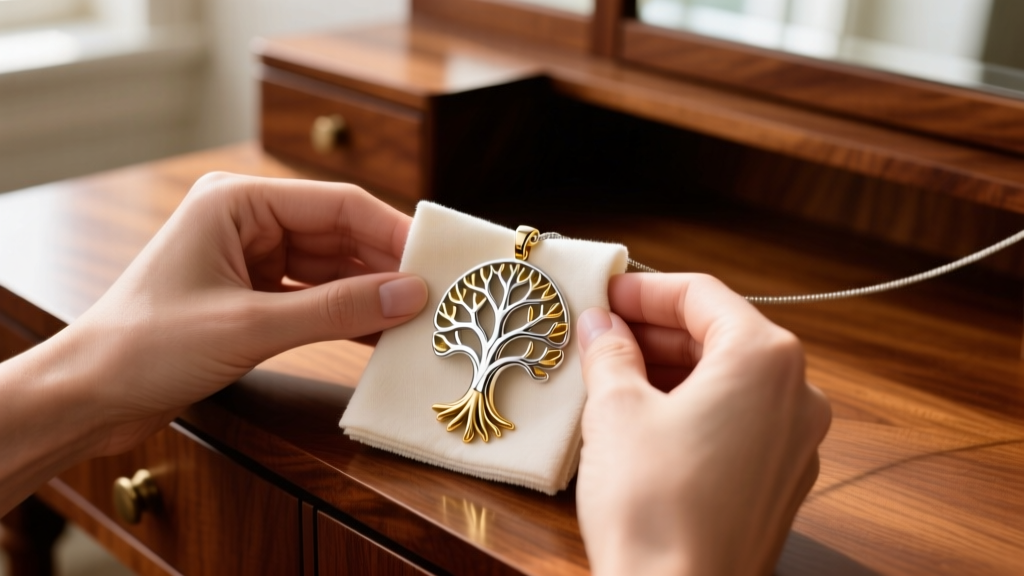
To maintain the brilliance of your necklace, follow these expert care protocols:
- Daily Polishing: Keep a treated, non-abrasive jeweler's cloth on your vanity. A quick 10-second wipe after wearing removes the microscopic layer of sulfur before it can bond deeply into the metal.
- Avoid Liquid Dips: Never use harsh chemical silver dips on artisan charms. Many high-end charms feature intentional oxidation (blackening) in the crevices to highlight the engraved details. Liquid dips will strip this patina, leaving the charm looking flat and washed out.
- The 'Last On, First Off' Rule: Always put your necklace on after applying perfumes, hairsprays, and lotions, and take it off before showering or swimming. Chlorine and saltwater are highly corrosive to the copper in sterling silver and can cause irreversible pitting.
- Proper Storage: Store your necklace in an anti-tarnish flannel pouch or a sealed ziplock bag with a silica gel packet to absorb ambient moisture. Never toss it loosely into a jewelry box where the chains can knot and the charms can scratch one another.
Final Thoughts on Building Your Heirloom
A thoughtfully curated mom necklace is more than just an accessory; it is a wearable archive of your family's history. By prioritizing structural integrity with a robust box chain, understanding the physical properties of your chosen gemstones, and committing to proper metallurgical care, you ensure that your necklace will remain a beautiful, enduring symbol of motherhood for decades to come. Start with a strong foundation, add your story one charm at a time, and wear it with pride.


