Anatomy of a Jesus Piece Necklace: Metals, Stones & Craft
Discover the technical anatomy of a Jesus piece necklace. Explore gold purities, stone-setting methods, chain pairings, and expert buying advice.

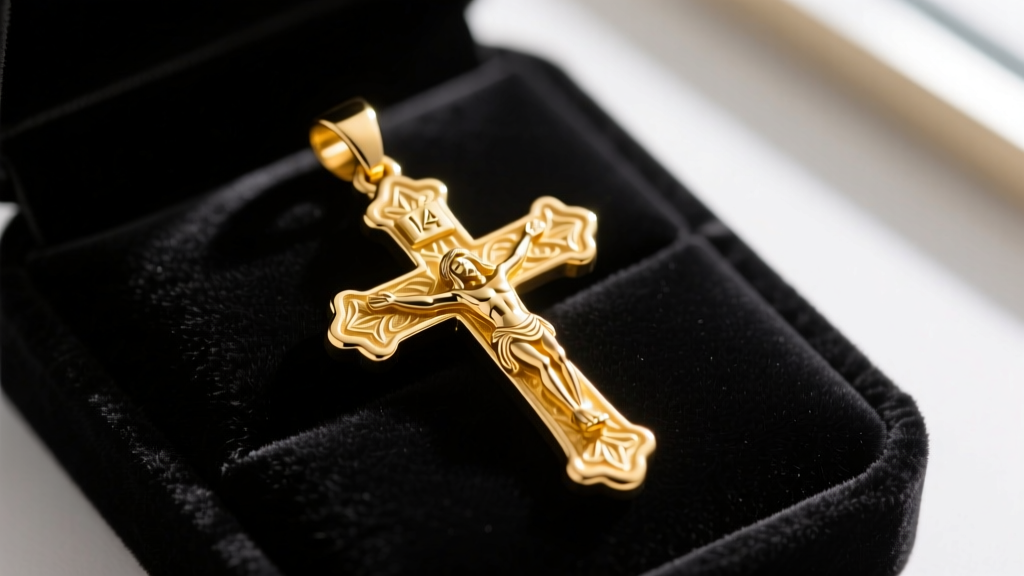
The Evolution of High-Relief Sculptural Jewelry
The Jesus piece necklace transcends its origins in 1990s hip-hop culture to stand as a masterpiece of high-relief sculptural jewelry. Unlike flat-stamped pendants, a premium Jesus piece requires intricate three-dimensional modeling to capture the nuanced textures of facial features, hair, and the crown of thorns. In 2026, advancements in CAD (Computer-Aided Design) and high-resolution 3D resin printing have allowed master jewelers to achieve unprecedented anatomical accuracy and micro-detailing before the metal is even cast. However, the true value and longevity of these necklaces depend entirely on the underlying metallurgy, stone-setting mechanics, and structural pairing with the correct chain. This technical deep dive explores the exact specifications you need to evaluate when investing in a high-tier Jesus piece pendant.
Metallurgy and Casting: Solid Gold vs. Plating
The structural integrity of a high-relief pendant is dictated by its alloy composition. Because the nose, cheekbones, and thorns of a Jesus piece protrude significantly from the base, they are highly susceptible to edge wear and impact deformation. According to the Gemological Institute of America (GIA), the karat weight of gold directly correlates to its Vickers hardness, making the choice of alloy critical for daily wear.
| Karat | Gold Purity | Alloy Composition | Durability & Wearability |
|---|---|---|---|
| 10k Gold | 41.7% | 58.3% Copper/Silver/Zinc | Exceptional hardness; highly resistant to bending, but prone to oxidation and tarnish over time. |
| 14k Gold | 58.5% | 41.5% Copper/Silver | The industry standard for hip-hop jewelry. Balances rich color with the structural rigidity needed for high-relief edges. |
| 18k Gold | 75.0% | 25.0% Copper/Silver | Softer and more malleable. Not recommended for heavy, unworn Jesus pieces as protruding details will scratch and warp easily. |
| Vermeil | N/A | Sterling Silver base + 2.5μm Gold | Affordable, but the gold layer will inevitably wear off the high-relief friction points (nose, beard) within months of daily wear. |
Authentic luxury Jesus pieces are created using the lost-wax casting method. A CAD-designed wax model is encased in a plaster-like investment material, burned out in a kiln, and replaced with molten gold via centrifugal force. This ensures the metal fills the deepest micro-crevices of the facial mold. Beware of cheap, mass-market alternatives that utilize die-striking or hollow electroforming; these lack the weight, depth, and structural density required for a premium pendant.
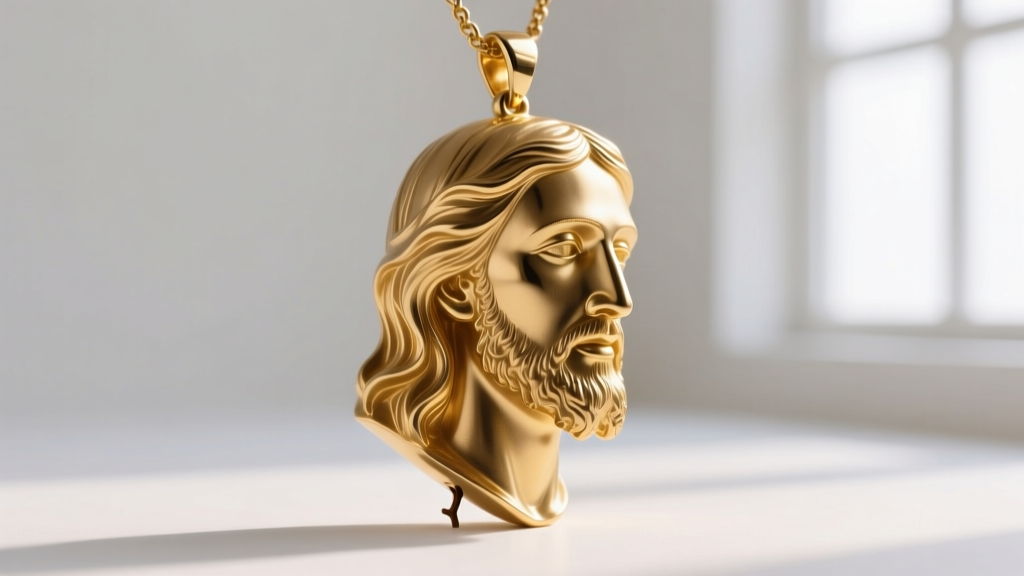
Stone Setting Techniques: Prong, Bezel, and Pavé
When a Jesus piece is "iced out," the method used to secure the gemstones dictates both the visual brilliance and the lifespan of the piece. The crown of thorns and the halo typically utilize micro-pavé setting, where small stones (usually 1.0mm to 1.5mm) are held in place by tiny metal beads pushed up from the surrounding gold. The bust or central robes may feature larger stones secured by prong setting.
Cubic Zirconia vs. Moissanite vs. Natural Diamonds
The gemstone material drastically alters the price point and light refraction. Cubic Zirconia (CZ) is the most common in entry-level pieces but possesses a lower refractive index (2.15) and will cloud over time as it absorbs skin oils and lotions. Moissanite, with a refractive index of 2.65, offers superior brilliance and fire, making it the preferred choice for mid-tier luxury pieces in 2026. The GIA notes that moissanite is exceptionally hard (9.25 on the Mohs scale), meaning it will not scratch or dull during routine polishing of the gold setting. Natural diamonds (VVS1/VS2 clarity) remain the apex choice for investment-grade pieces, requiring precise hand-cut prongs rather than cast-in-place settings.
Expert Warning: Avoid "glue-set" stones. Many mass-produced silver Jesus pieces use industrial adhesive to hold CZ stones in cast holes. These stones will inevitably fall out when exposed to heat, ultrasonic cleaners, or minor impacts. Always inspect the piece under a loupe to ensure physical metal prongs or beads are securing the stones.
Chain Pairing: Weight Ratios and Clasp Mechanics
A 20-gram to 40-gram solid gold Jesus piece requires a chain engineered for high tensile strength. The bail—the loop connecting the pendant to the chain—is the most critical failure point. A premium bail should be solid-cast and seamlessly integrated into the pendant's base, not merely soldered on as an afterthought.
"A heavy pendant on a hollow chain is a catastrophic failure waiting to happen. The chain must possess at least 60% of the pendant's visual weight for aesthetic balance, but more importantly, the links must be solid-core to prevent warping under the pendulum effect of daily movement." — Master Bench Jeweler
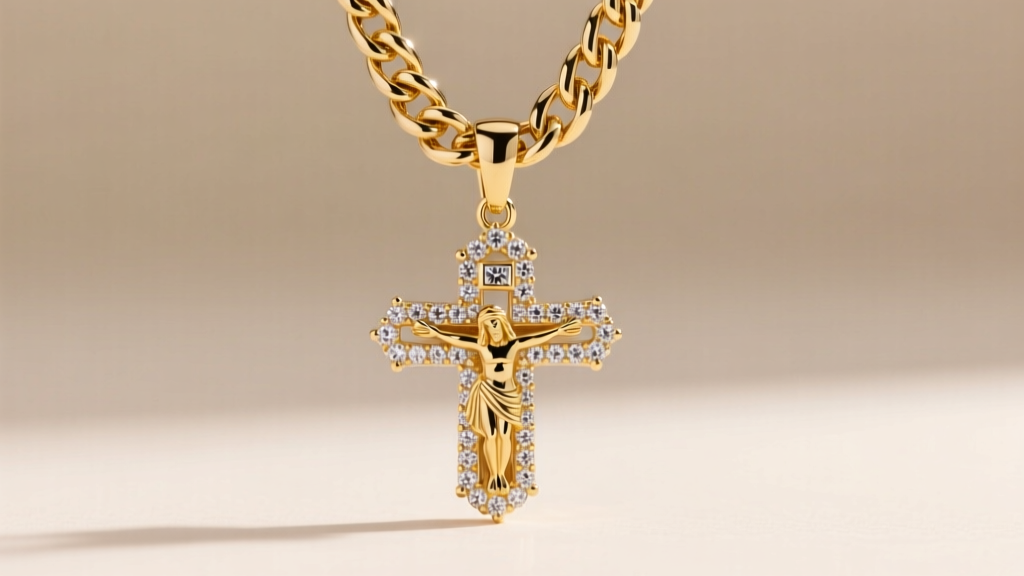
Recommended Chain Styles:
- Solid Cuban Link (4mm - 6mm): The interlocking, flat-surfaced links distribute weight evenly and resist kinking. Ensure the links are diamond-cut for added brilliance that complements the pendant.
- Franco Chain (3mm - 5mm): Features a V-shaped, four-sided weave that is virtually indestructible and prevents the heavy bail from rubbing through the metal.
- Avoid Hollow Rope Chains: While they look thick, hollow ropes are easily crushed by the heavy bail of a Jesus piece and are nearly impossible to repair once snapped.
Furthermore, the clasp must be a solid-cast lobster clasp or a custom box clasp with dual safety catches. Stamped sheet-metal clasps will bend open under the dynamic load of a heavy pendant.
Pricing Tiers and Authenticity Verification
Navigating the market requires an understanding of current pricing metrics based on material and labor. In 2026, the baseline pricing for a standard 40mm x 60mm Jesus piece breaks down as follows:
- Entry-Level (Vermeil/Sterling Silver with CZ): $150 – $400. Expect cast-in-place stones and potential tarnishing.
- Mid-Tier (Solid 10k/14k Gold with Moissanite): $1,200 – $3,500. Hand-set stones, solid cast bail, excellent daily wearability.
- High-End (Solid 14k/18k Gold with Natural VS Diamonds): $5,000 – $15,000+. Custom CAD modeling, micro-pavé craftsmanship, and investment-grade materials.
To verify authenticity, always demand a hallmark stamp (e.g., 14K, 585) and a certificate of authenticity for the diamonds. The Federal Trade Commission (FTC) Jewelry Guides strictly regulate gold purity stamping and diamond grading claims, providing legal recourse if a piece is misrepresented.
Care and Maintenance for High-Relief Pendants
The deep crevices of a Jesus piece—particularly around the eyes, beard, and thorns—act as traps for sebum, dead skin cells, and cosmetic lotions. Over time, this buildup dulls the gold and obscures the gemstones. Proper maintenance requires a specific protocol:
- Gentle Agitation: Mix warm water with a few drops of phosphate-free dish soap. Submerge the pendant for 10 minutes.
- Soft Bristle Brushing: Use a baby-soft toothbrush to gently agitate the crevices. Never use stiff bristles, which can scratch high-polish gold surfaces or loosen micro-pavé stones.
- Avoid Ultrasonic Cleaners: Unless you are 100% certain the stones are prong-set and not fracture-filled, avoid ultrasonic machines. The high-frequency vibrations can shake loose stones or exacerbate microscopic fractures in natural diamonds.
- Rhodium Replating: If your Jesus piece is cast in white gold, the rhodium plating will wear off the high-relief edges first. Plan to have the piece professionally polished and replated every 12 to 18 months to maintain its bright white luster.
By understanding the metallurgical choices, stone-setting mechanics, and structural requirements of the chain, you can secure a Jesus piece necklace that serves not just as a cultural statement, but as a lasting piece of heirloom-quality sculptural art.


