Cross Necklace With Crystals: 2026 Budget & Value Guide
Evaluate the true cost of a cross necklace with crystals. Compare glass, CZ, and natural stones, metal grades, and pricing tiers for 2026 buyers.

The True Cost of a Cross Necklace With Crystals
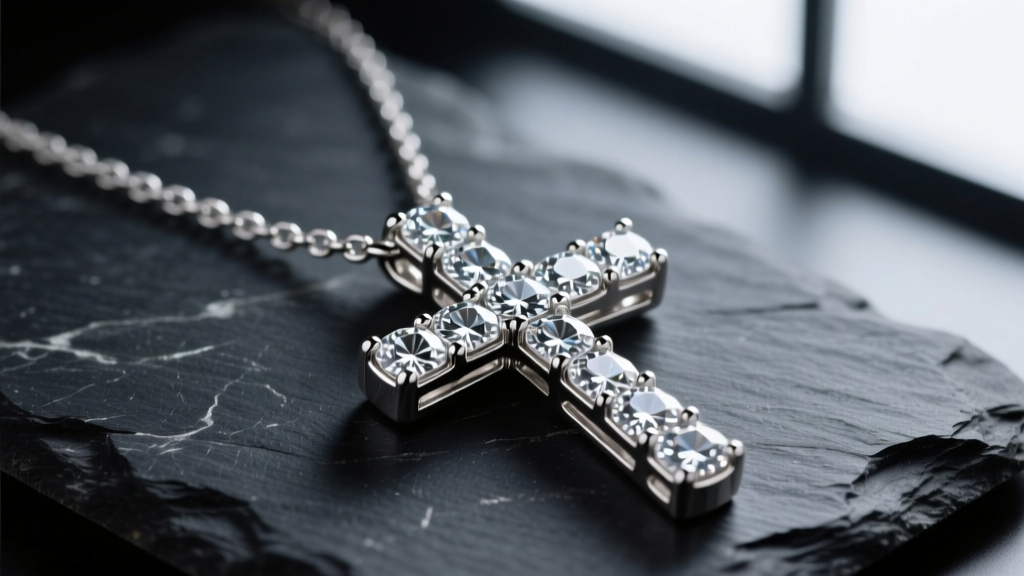
When shopping for a cross necklace with crystals, the price variance can be staggering. You can find seemingly identical pendants priced at $25 on fast-fashion marketplaces and $2,500 in luxury boutiques. For the modern buyer navigating the 2026 jewelry market, understanding this gap is critical. The true value of crystal jewelry is not dictated by brand prestige alone, but by a precise combination of optical materials, metallurgical standards, and setting mechanics. This guide strips away the marketing fluff to provide a rigorous budget and value assessment, helping you determine exactly what you are paying for and how to maximize your cost-per-wear.
Decoding the Crystals: Glass vs. Lab-Grown vs. Natural
The term 'crystal' is heavily abused in the jewelry industry. To assess value, you must first identify the actual material generating the sparkle. The refractive index (RI) and Mohs hardness scale are your primary metrics for evaluating durability and brilliance.
Leaded and Lead-Free Glass Crystals
Brands like Swarovski and Preciosa manufacture advanced glass crystals. While Swarovski transitioned to lead-free 'Advanced Crystal' formulas (maintaining an RI of approximately 1.52 to 1.54), these pieces are still fundamentally glass. With a Mohs hardness of 5 to 6, they are highly susceptible to micro-scratches from daily wear, dust, and friction. You are paying for precision machine-cutting and brand heritage, not geological rarity or scratch resistance.
Cubic Zirconia (CZ)
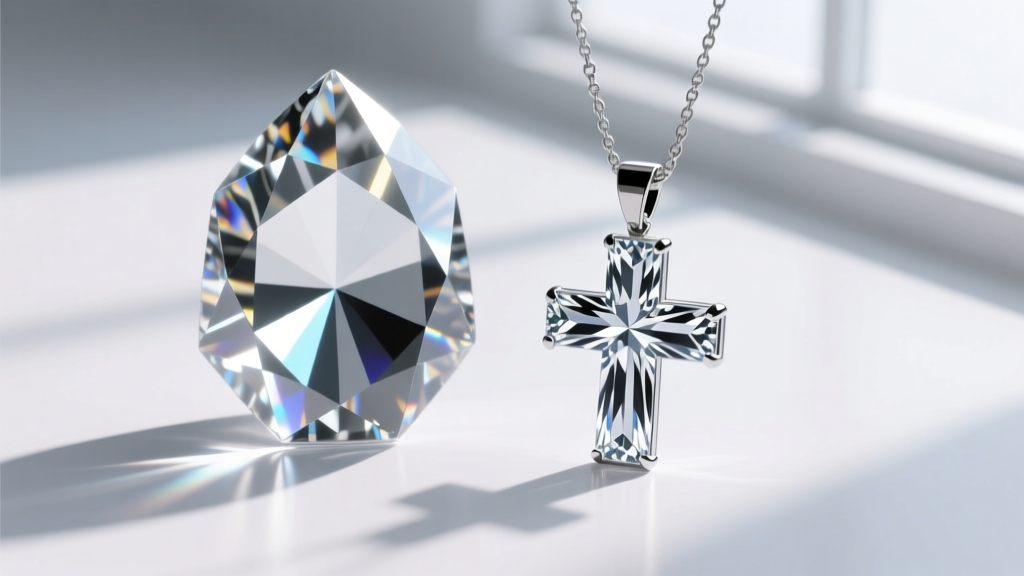
Lab-grown Cubic Zirconia offers a vastly superior optical profile for a fraction of the cost of diamonds. According to the Gemological Institute of America (GIA), high-grade CZ boasts an RI of 2.15 to 2.18 and a Mohs hardness of 8 to 8.5. This makes it significantly more scratch-resistant than glass and capable of mimicking the fiery dispersion of a diamond. A cross necklace with crystals made of AAA-grade CZ offers the highest brilliance-to-budget ratio on the market.
Natural Quartz and Topaz
Natural white quartz (Mohs 7) or white topaz (Mohs 8) are frequently used in mid-tier artisan jewelry. While they offer the romantic appeal of earth-mined stones, they often contain microscopic inclusions that disrupt light return. From a strict optical value perspective, a flawless lab-grown CZ will out-sparkle a natural quartz crystal every time, though natural stones hold better resale value among mineral collectors.
Metal Base Evaluation: Where Budget Pieces Fail
The most common point of failure in a budget cross necklace with crystals is not the stone, but the metal foundation. Understanding plating thickness is non-negotiable for value assessment.
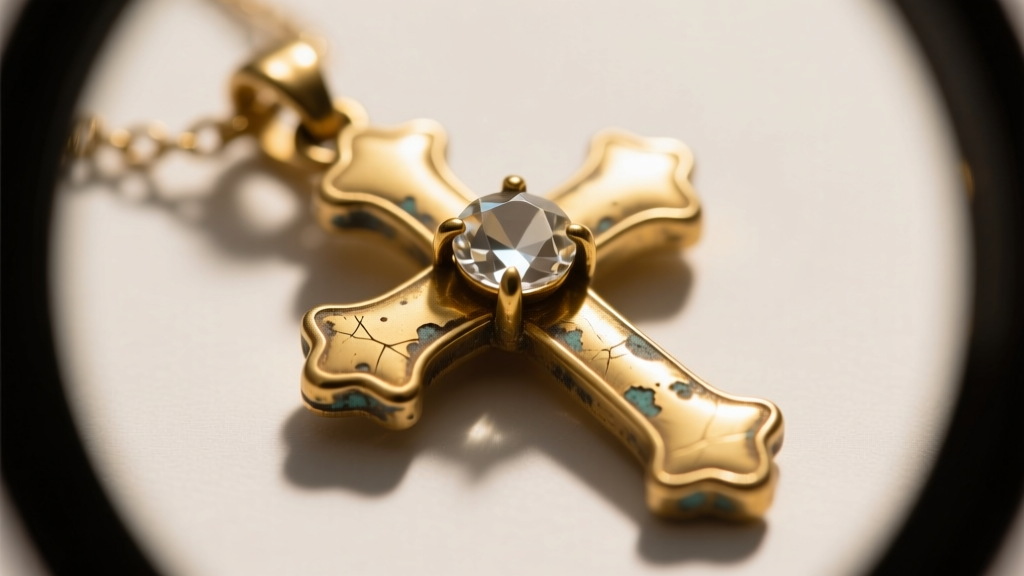
- Flash Plating (Brass Base): Often measuring a mere 0.05 to 0.1 microns of gold or rhodium over a brass or zinc alloy core. This plating wears off within 3 to 6 months of daily contact with skin acids, leaving a green residue and a dull, oxidized pendant. Value Rating: Poor.
- Gold Vermeil (Sterling Silver Base): The Federal Trade Commission (FTC) dictates that gold vermeil must feature a .925 sterling silver base with a minimum gold thickness of 2.0 microns. However, premium 2026 standards push this to 2.5 or 3.0 microns for extended longevity. Vermeil offers excellent value, lasting 2 to 5 years with proper care. Value Rating: High.
- Solid 14k/18k Gold or Platinum: The ultimate heirloom standard. Solid metals do not flake or wear away, ensuring the structural integrity of the crystal settings for generations. Value Rating: Premium/Investment.
Price Tier Breakdown & Value Matrix
To contextualize your purchasing decision, refer to the matrix below. This data synthesizes current market pricing, material grades, and expected lifespans for crystal cross pendants.
| Market Tier | Crystal Material | Metal Base | Setting Style | Price Range (USD) | Expected Lifespan |
|---|---|---|---|---|---|
| Fast Fashion | Acrylic / Low-Grade Glass | Brass (Flash Plated) | Glued / Cast Prong | $15 - $45 | 3 - 9 Months |
| Mid-Tier Commercial | Swarovski / Preciosa | Sterling Silver (Rhodium) | Channel / Bezel | $60 - $150 | 2 - 5 Years |
| Premium Value | AAA Cubic Zirconia | .925 Silver (2.5µ Vermeil) | Hand-Set Pavé / Prong | $120 - $350 | 5 - 10+ Years |
| Luxury / Fine | Natural Diamonds / Sapphires | Solid 14k/18k Gold | Custom Prong / V-Prong | $800 - $3,000+ | Lifetime / Heirloom |
Red Flags & Failure Modes in Budget Crystal Crosses
When evaluating a cross necklace with crystals under the $100 mark, inspect the piece for these specific engineering flaws that destroy long-term value.
The Foil Backing Degradation
Many budget glass crystals rely on a metallic foil backing (often silver or gold-toned paint) applied to the pavilion (bottom) of the stone to simulate brilliance. If the setting is not completely sealed, moisture, sweat, and cosmetics will seep behind the stone, oxidizing the foil. The crystal will suddenly appear 'dead' or cloudy. Always opt for open-back settings where the light passes entirely through a faceted stone like CZ or natural quartz.
Adhesive vs. Mechanical Settings
If you look closely at a budget pendant and see a smooth rim of metal holding the crystals in place without visible claws, the stones are likely glued. Jewelry adhesives degrade rapidly when exposed to the pH of human sweat, perfumes, and lotions. Within a year, stones will begin to fall out. Always demand mechanical settings—prong, bezel, or channel—where the metal is physically pushed over the girdle of the stone.
Cast-in-Place Prongs
In mass-produced jewelry, prongs are often cast directly from the mold rather than hand-cut and pushed over the stone by a jeweler. Cast prongs are brittle, porous, and prone to snapping off when snagged on clothing. A high-value piece will feature hand-set stones with polished, securely tightened prongs.
Pro-Tip for Value Hunters: If you are buying a gold-toned cross necklace with crystals on a budget, avoid 14k gold-plated brass. Instead, seek out 18k gold vermeil over sterling silver. The thicker micron plating combined with a non-reactive silver core will prevent the dreaded 'green skin' effect and extend the life of your pendant by a factor of four.
Final Verdict: How to Maximize Your Investment
A cross necklace with crystals remains a timeless staple, but its value is entirely dependent on material transparency. For the best balance of budget and longevity in 2026, target the 'Premium Value' tier: AAA-grade Cubic Zirconia set in heavy gold vermeil or rhodium-plated sterling silver, utilizing hand-set prong or bezel mechanics. Avoid flash-plated brass and glued glass stones at all costs, as their cost-per-wear ultimately exceeds that of a higher-quality, slightly more expensive piece. By demanding optical precision and metallurgical integrity, you ensure your jewelry remains a radiant, enduring asset rather than a fleeting accessory.


