Expert Care & Cleaning Guide for Chain Link Necklaces
Learn expert techniques to clean, polish, and maintain chain link necklaces. Discover material-specific care tips to prevent tarnish and kinks.

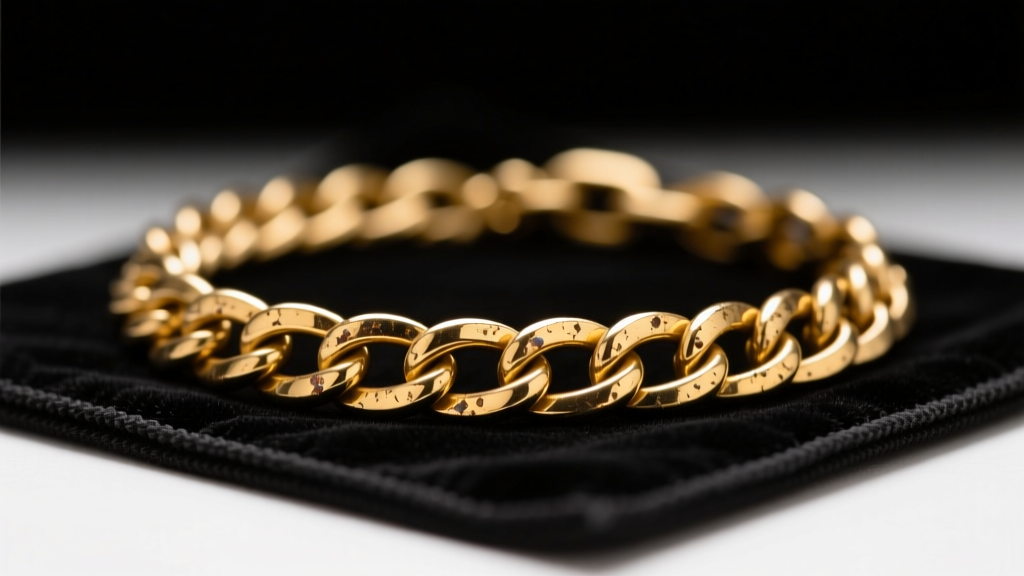
Chain link necklaces are foundational pieces in any jewelry collection, offering versatility that ranges from delicate layering cables to bold, statement-making Cuban curbs. However, the very geometry that makes these pieces beautiful—the interlocking loops and tight crevices—also makes them magnets for sebum, dead skin cells, lotions, and environmental pollutants. Over time, this buildup not only dulls the metal's luster but can also accelerate structural degradation. Proper maintenance is not just about aesthetics; it is about preserving the metallurgical integrity and mechanical function of your jewelry.
The Anatomy of Chain Link Necklaces: Why Care Matters
Different chain styles present unique cleaning challenges based on their link geometry. Understanding these nuances is the first step in effective maintenance:
- Cable Chains: The simplest and most common style. The uniform oval links have relatively open interstices, making them easier to clean but highly susceptible to stretching if snagged.
- Curb and Cuban Chains: Features flattened, interlocking links that lay flat against the skin. The tight, overlapping surface area traps oils and dirt directly against the skin, requiring more frequent degreasing.
- Rolo Chains: Composed of thick, round links. The interior of each circular link can harbor stubborn grime that requires specialized brushing techniques to dislodge.
- Figaro Chains: A patterned chain (usually three short links followed by one long link). The varying link sizes mean you must adjust your brushing pressure and angle to avoid bending the smaller, more delicate links.
Material-Specific Cleaning Protocols
The metallurgical composition of your chain link necklaces dictates the chemicals and mechanical actions you can safely use. What restores one metal will permanently damage another.
Sterling Silver (925) & Oxidation Management
Sterling silver is an alloy containing 92.5% pure silver and 7.5% copper. It is the copper that reacts with hydrogen sulfide in the air to form silver sulfide—the black tarnish you see on neglected pieces. According to the Gemological Institute of America (GIA), abrasive polishing compounds should be used sparingly, as they remove microscopic layers of silver over time. Instead, rely on chemically treated jeweler's cloths impregnated with mild polishing agents for routine maintenance. For heavy tarnish, a thiourea-based silver dip can be used, but the piece must be thoroughly rinsed and dried immediately to prevent chemical residue from accelerating future oxidation.
Solid Gold (14k & 18k) & Alloy Tarnish
Pure 24k gold does not tarnish, but it is too soft for chain links. 14k gold (58.5% gold) and 18k gold (75% gold) are alloyed with metals like copper, zinc, and nickel for durability. These base metals can oxidize when exposed to chlorinated water, sweat, and cosmetics, leading to a dull, dark film. A simple solution of warm water and a few drops of phosphate-free dish soap (like Dawn) is the safest, most effective degreaser for gold chains. Avoid toothpaste or baking soda pastes; their Mohs hardness can scratch the polished finish of 18k gold, which is softer and more malleable than 14k.
Surgical Stainless Steel & Titanium
Grades like 316L stainless steel and Grade 5 titanium are highly resistant to corrosion and tarnish. However, they are not immune to soap scum and hard water mineral deposits, which can make the links look cloudy. These metals can withstand more aggressive cleaning, including ultrasonic baths, without risk of chemical degradation.
Step-by-Step Deep Cleaning Method
For a thorough restoration of your chain link necklaces, follow this professional degreasing and polishing protocol. This method is safe for solid metals without porous gemstone pendants attached.
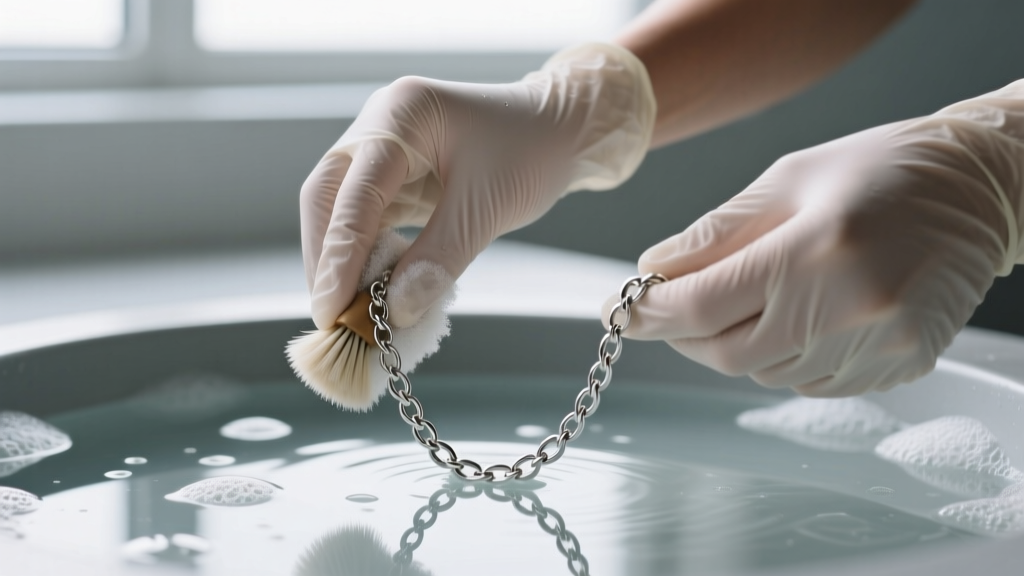
- Pre-Soak: Fill a glass bowl with warm (not hot) distilled water and a few drops of mild, ammonia-free dish soap. Submerge the chain for 15 to 20 minutes to emulsify trapped sebum and cosmetics.
- Agitation: Using an ultra-soft baby toothbrush (bristle diameter under 0.1mm), gently brush the chain. For curb chains, brush parallel to the links. For cable chains, brush in a circular motion to reach the inner wire.
- Rinsing: Rinse thoroughly under lukewarm running water. Ensure the drain is plugged or use a mesh strainer to prevent accidental loss.
- Drying: Pat dry with a lint-free microfiber cloth. Use a hairdryer on the 'cool' setting to blow water out of the tight crevices between links, preventing water spots.
Cleaning Solutions Quick Reference
| Material | Recommended Cleaning Agent | Primary Tool | Ideal Frequency |
|---|---|---|---|
| Sterling Silver (925) | Mild dish soap / Silver dip (rarely) | Treated polishing cloth | Monthly / As needed |
| 14k / 18k Yellow Gold | Warm water + Phosphate-free soap | Ultra-soft baby toothbrush | Bi-weekly |
| White Gold (Rhodium Plated) | Mild dish soap (No abrasives) | Microfiber cloth only | Monthly |
| 316L Stainless Steel | Glass cleaner or soapy water | Soft nylon brush | As needed |
| Platinum | Specialized platinum jewelry cleaner | Soft lint-free cloth | Bi-annually |
The Ultrasonic Cleaner: Proceed with Caution
Ultrasonic cleaners use high-frequency sound waves (typically 40 kHz) to create microscopic cavitation bubbles that implode, blasting dirt from crevices. While highly effective for solid stainless steel or platinum chain link necklaces, they can be disastrous for other pieces. Never use an ultrasonic cleaner on oxidized (antiqued) silver, as the vibrations will strip the intentional dark patina from the recesses. Furthermore, if your chain is attached to a pendant featuring emeralds, opals, pearls, or turquoise, the cavitation can fracture these porous or heavily included stones.
Structural Maintenance: Preventing Kinks and Clasp Failure
Beyond cleanliness, the mechanical integrity of chain link necklaces requires proactive attention. The two most common failure points are the clasp mechanism and the links themselves.
Clasp Mechanics and Vulnerabilities
Spring Ring Clasps: These feature a tiny internal carbon steel spring. If exposed to chlorinated pool water or salt water, the internal spring can rust and snap, rendering the clasp useless even if the exterior gold or silver looks fine. Always remove spring ring chains before swimming.
Lobster Claw Clasps: Cast as a single solid piece with a lever arm, these are far more durable. However, the lever arm can bend if caught on heavy knitwear. If the lever becomes stiff, a microscopic drop of synthetic watch oil applied with a needle to the hinge pin will restore smooth operation.
Untangling and Kink Removal
When a fine cable or figaro chain knots, pulling it will distort the links, creating permanent weak points. Jewelers use the 'two-needle' technique: lay the knotted chain on a flat, well-lit surface. Apply a single drop of mineral oil or baby oil directly to the knot to reduce friction. Use two fine sewing needles to gently tease the center of the knot outward, working from the inside out. Never use tweezers, as the serrated teeth will scratch the metal and crush the delicate links.
Proper Storage Techniques to Prevent Tangling and Tarnish
How you store your chain link necklaces is just as critical as how you clean them. Improper storage is the leading cause of both severe tangling and accelerated chemical tarnishing.
- Avoid PVC Plastics: Never store silver chains in standard polyvinyl chloride (PVC) plastic bags. PVC off-gasses chemicals that actively promote rapid silver sulfide formation. Always use polyethylene or archival-quality Mylar bags.
- Anti-Tarnish Strips: Incorporate 3M anti-tarnish strips into your storage boxes or pouches. These strips contain copper-based polymers that absorb airborne sulfur and hydrogen sulfide before they can reach your jewelry. Replace these strips every 6 to 12 months, as noted by metallurgical suppliers like Rio Grande.
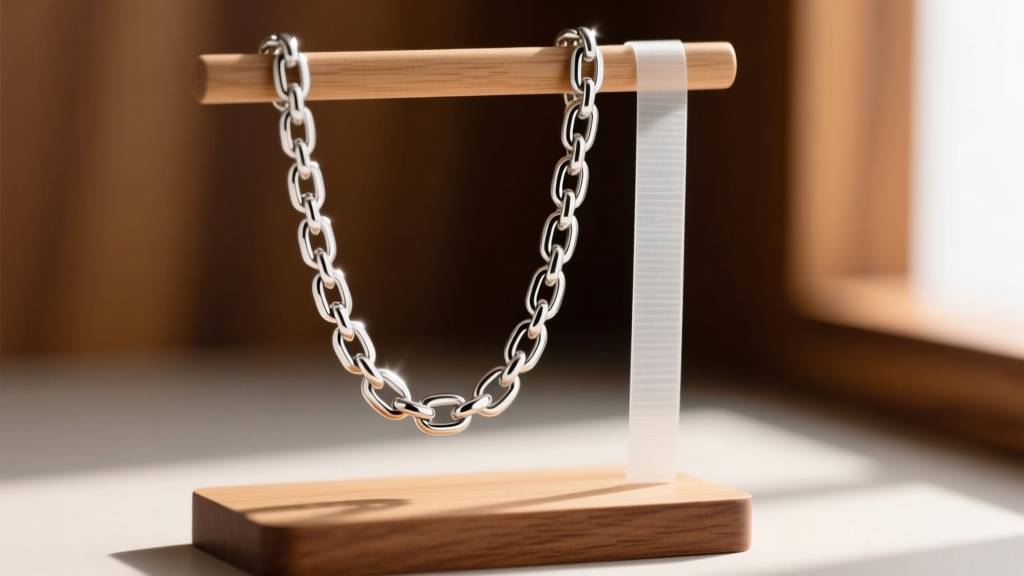
- Vertical Hanging vs. Flat Lay: Heavier chains (like thick Cuban curbs) should be laid flat in a lined jewelry box to prevent gravity from slowly stretching the links over time. Delicate chains should be hung vertically from a jewelry stand or the clasp left dangling outside a sealed pouch to prevent the links from weaving into one another.
- Isolation: Never store multiple chain link necklaces in the same compartment. The varying link geometries will inevitably interlock, creating frustrating tangles and micro-scratches as the harder metals (like steel or 14k gold) abrade against softer ones (like high-karat gold or silver).
By understanding the specific metallurgical and structural needs of your chain link necklaces, you can transition from reactive cleaning to proactive preservation. Implementing these targeted protocols ensures that whether you are wearing a delicate 18k gold cable chain or a heavy stainless steel curb link, the piece will retain its brilliance, mechanical security, and structural integrity for decades.


