Jewelry Necklace Display: A Beginner's Organization Guide
Learn how to choose and set up the perfect jewelry necklace display to prevent tangles, avoid tarnish, and beautifully showcase your pendant collection.

The Hidden Costs of Improper Necklace Storage
For many jewelry enthusiasts, the thrill of acquiring a new pendant or chain is quickly overshadowed by the frustration of untangling it. Tossing necklaces into a communal drawer or hanging them on improvised hooks isn't just an aesthetic compromise; it is a direct threat to the structural integrity and chemical stability of your pieces. A proper jewelry necklace display is not merely a decorative accessory for your vanity—it is a vital preservation tool.
When chains are piled together, the microscopic friction between links accelerates wear. More critically, certain chain styles are highly susceptible to permanent deformation if not supported correctly. Understanding the mechanics of your chains and the chemistry of your storage materials is the first step toward building a display system that protects your investment while keeping your collection visually accessible.
The Physics of Chain Damage: Why Display Style Matters
Not all chains are created equal, and their physical construction dictates how they must be displayed. Before selecting a bust, tray, or wall mount, you must evaluate the dominant chain types in your collection.
- Snake Chains: Constructed from tightly interlocking metal plates, snake chains offer a fluid, liquid-like drape. However, they have a critical failure point: if bent past a 45-degree angle, the plates can permanently kink. A flat jewelry necklace display tray is mandatory for these; hanging them on a tight hook will ruin them.
- Omega Chains: These rigid, flat chains consist of metal plates assembled over a mesh interior. They possess virtually no flexibility. Folding an omega chain will snap the interior mesh, requiring expensive professional soldering. They require wide, curved display busts or flat velvet trays.
- Box and Rope Chains: Highly durable and resistant to kinking, these chains are prone to severe tangling when their clasps catch on the uniform links of neighboring chains. They thrive on T-bar displays or individual hooks where they can hang freely without overlapping.
- Cable and Curb Chains: The workhorses of the jewelry world. While structurally resilient, their open links act as magnets for loose prongs and clasps from other pieces. Spacing is the primary defense for these styles.
Comparing the Top 4 Jewelry Necklace Display Styles
Choosing the right format depends on your spatial constraints, collection size, and the specific chain types you own. Below is a structural comparison of the most effective display solutions available on the market.
| Display Type | Best For | Avg. Price Range | Pros | Cons |
|---|---|---|---|---|
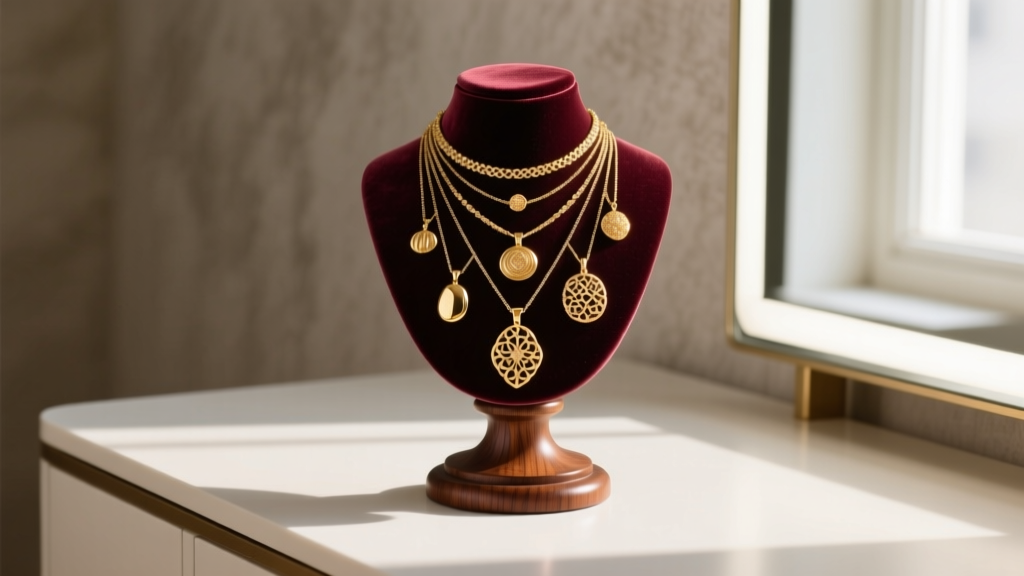
| Velvet Busts | Statement pendants, chokers, Omega chains | $15 - $45 | Provides 3D drape; excellent for visual merchandising. | Takes up significant vanity space; limited capacity. |
| T-Bar Stands | Long chains, layering sets, cable chains | $20 - $60 | High capacity; keeps chains separated; easy access. | Exposed to airborne tarnish agents; poor for rigid chains. |
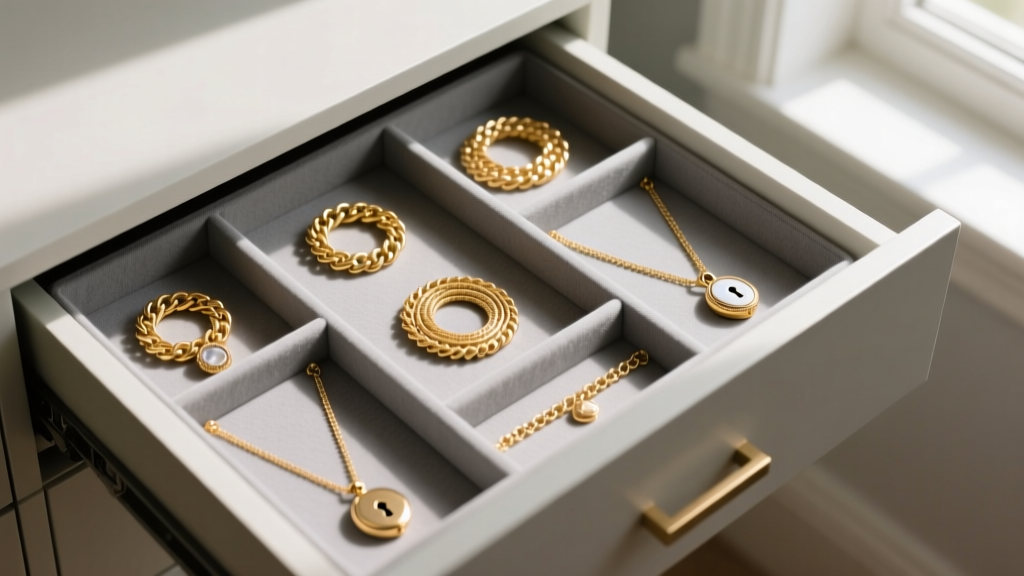
| Flat Drawer Inserts | Snake chains, delicate lockets, high-value items | $25 - $80 | Protects against kinks; can include anti-tarnish fabrics. | Requires dedicated drawer space; harder to browse quickly. |
| Wall-Mounted Racks | Large collections, boho aesthetics, long pendants | $30 - $100 | Saves surface area; acts as wall art; highly customizable. | Requires drilling; chains can swing and tangle in drafts. |
Material Science: What Touches Your Metals?
The physical structure of your display is only half the equation; the chemical interaction between your jewelry and the display materials is equally critical. Many beginners unknowingly accelerate the degradation of their pieces by choosing displays made from reactive materials.
The Danger of Unsealed Woods
Wooden displays are incredibly popular for their warm, natural aesthetic. However, woods like oak, cedar, and pine naturally emit volatile organic compounds (VOCs), including acetic acid. Over time, these acidic vapors will aggressively accelerate the tarnishing of sterling silver and can permanently etch the surface of porous gemstones like pearls and turquoise. If you prefer a wooden jewelry necklace display, ensure the wood is heavily sealed with a polyurethane finish, or opt for stable, low-acid woods like sealed maple or walnut.
Anti-Tarnish Fabrics and Pacific Cloth
Sterling silver tarnishes when it reacts with hydrogen sulfide in the ambient air, forming silver sulfide. To combat this, high-end display inserts utilize Pacific Silvercloth or similar treated flannels. These fabrics are embedded with microscopic silver particles that act as a sacrificial anode—they tarnish in place of your jewelry. According to the GIA Silver Care Guide, storing silver in specially treated anti-tarnish cloths is one of the most effective ways to inhibit chemical degradation without relying on harsh polishing compounds that strip metal over time.
Velvet vs. Suede vs. Microfiber
For gold and platinum pieces, the primary concern is micro-scratching. Standard cotton or rough synthetic fabrics can create microscopic abrasions on high-polish gold. Opt for displays lined with non-woven microfiber or ultra-soft rayon velvet. Avoid displays lined with cheap polyester felt, which can harbor abrasive dust particles and lack the necessary cushioning for heavy gemstone pendants.
Spatial Planning: Spacing by Necklace Length
A common mistake when setting up a T-bar or wall-mounted jewelry necklace display is overcrowding. When necklaces of varying lengths are hung too closely together, their pendulums swing and interlock. To maintain a tangle-free environment, you must adhere to strict spatial planning based on chain length.
The Golden Rule of Display Spacing: The horizontal distance between two hanging hooks should be at least 60% of the total drop length of the longest necklace sharing the rack.
- Chokers (14-16 inches): Require minimal swing radius. Hooks can be spaced 4 to 5 inches apart.
- Princess Length (18 inches): The most common length. Hooks should be spaced at least 7 inches apart to prevent the clasps from migrating and catching on neighboring links.
- Matinee (20-24 inches): Require 10 to 12 inches of horizontal clearance, especially if they feature heavy center pendants that act as pendulums.
- Opera Length (28-36 inches): Best reserved for dedicated, wide T-bars or flat drawer displays. If hanging, they require a minimum of 15 inches between hooks.
Visual Merchandising for the Home Collection
Beyond preservation, a well-curated jewelry necklace display serves as a daily visual inspiration, encouraging you to wear and layer your pieces more frequently. Approach your display setup with the same eye a boutique merchandiser uses.
Group by Metal Tone: Mixing yellow gold, white gold, and rose gold on the same display bar creates visual clutter. Dedicate specific sections or individual busts to specific metal tones. This not only looks cleaner but also prevents galvanic corrosion, a rare but possible reaction when dissimilar metals are stored in high-humidity environments while touching.
Graduated Layering Displays: If you frequently layer your necklaces, configure your display to mimic your go-to stacks. Place a 16-inch choker on the left, an 18-inch pendant in the center, and a 22-inch chain on the right. This allows you to visualize your complete outfit pairing before you even put the metal against your skin.
Consider Pearl Sensitivities: As noted by the Gemological Institute of America (GIA), pearls require unique care. They should never be stored in airtight plastic or hung for long periods, which can stretch the silk thread. Reserve a flat, breathable, fabric-lined tray specifically for your pearl necklaces, keeping them entirely separate from your metallic chains.
Final Thoughts on Building Your Setup
Investing in a high-quality jewelry necklace display is an investment in the longevity of your collection. By understanding the mechanical vulnerabilities of your chains, respecting the chemical realities of tarnish, and applying logical spatial planning, you can transform a chaotic, tangled drawer into a stunning, functional gallery. Start by auditing your collection, identifying your most delicate pieces, and selecting a display format that prioritizes structural support over mere aesthetics. Your jewelry will reward you with years of pristine, tangle-free wear.


