How to Judge a Necklace on Mannequin Displays: Buyer's Guide
Learn how to accurately evaluate a necklace on mannequin displays. Discover drape physics, sizing illusions, and lighting tricks for smart buying.

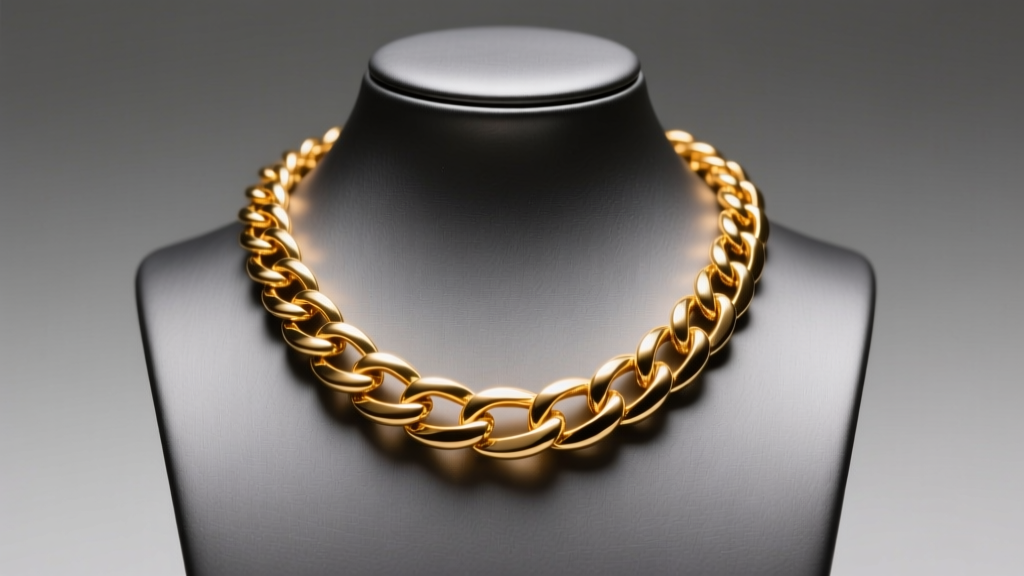
When shopping for fine jewelry online or browsing high-end boutique windows, you will frequently encounter a necklace on mannequin displays. While these busts provide a necessary three-dimensional reference, they are notorious for creating optical illusions that distort scale, chain drape, and pendant proportions. For serious collectors and everyday buyers alike, understanding the geometry of retail display busts is critical to making informed purchasing decisions.
This guide breaks down the physics of jewelry displays, teaching you how to translate the rigid, idealized proportions of a mannequin bust to the dynamic reality of the human body. By mastering these visual cues, you can avoid buyer's remorse and accurately predict how a piece will truly sit on your collarbone.
The Circumference Discrepancy: Chokers and Collars
The most common point of failure when evaluating a necklace on a display bust is neck circumference. Standard retail mannequin busts—whether cast in fiberglass, wrapped in linen, or molded from polyurethane—are typically designed with a neck circumference of 11.5 to 12.5 inches. In stark contrast, the average adult female neck measures between 13.5 and 14.5 inches, while male necks often exceed 15 inches.
This 1.5 to 2-inch discrepancy drastically alters the drop length of shorter chains. A 15-inch choker displayed on a 12-inch mannequin neck will exhibit a generous 1.5-inch drop below the throat, mimicking a "princess" length. However, when that exact same 15-inch chain is clasped around a 14.5-inch human neck, it leaves barely 0.25 inches of slack, transforming what looked like a relaxed collar into a restrictive, skin-tight choker. Always subtract the mannequin's exaggerated drop from your expectations for any chain under 18 inches.
Clavicle Physics and Chain Drape
Beyond circumference, the skeletal structure of a mannequin fundamentally misrepresents chain drape. Human shoulders feature a distinct, horizontal clavicle shelf that creates a natural "valley" at the base of the throat. Mannequin busts, conversely, are often sculpted with a continuous, sloping 45-degree angle from the jawline to the shoulder edge to prevent garments from slipping off.
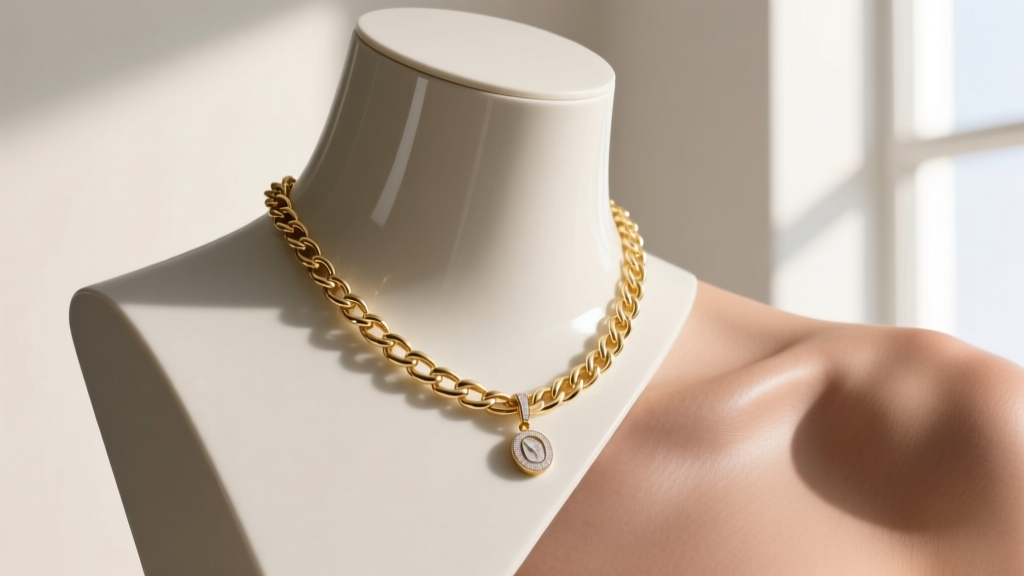
This sloping architecture forces chains outward. A delicate 14k white gold box chain holding a 10mm diamond solitaire will slide down the slick, sloping fiberglass of a mannequin, settling at an artificial center point. On a human body, the clavicle shelf catches the chain, allowing it to pool softly and create a wider, more flattering U-shape. When evaluating V-shaped lariat necklaces or Y-chains, recognize that the mannequin's lack of a clavicle shelf will make the pendant drop appear longer and more rigid than it will in reality.
Evaluating Pendant Scale and Visual Weight
Pendant scale is heavily influenced by the width of the display bust's shoulders. Boutique mannequins are often carved with narrow, petite shoulders to maximize the perceived size of the jewelry. A 25mm gemstone pendant might look substantial and commanding on a narrow 14-inch shoulder span, but can appear lost or undersized when worn by a person with a broader, 18-inch shoulder frame.
| Pendant Dimension | Perception on Narrow Bust | Reality on Average Human Torso | Ideal Chain Pairing |
|---|---|---|---|
| Under 10mm | Dainty, noticeable | Barely visible, easily lost | 16" delicate cable chain |
| 15mm - 20mm | Bold, statement-making | Proportional, elegant daily wear | 18" rope or Figaro chain |
| Over 30mm | Overwhelming, costume-like | True statement piece, high impact | 20" heavy Cuban or curb chain |
Lighting, Textures, and Metal Illusions
The material of the mannequin bust interacts directly with the metal and gemstones, often masking poor craftsmanship or enhancing mediocre brilliance. According to gemological lighting standards outlined by the Gemological Institute of America (GIA), the color temperature and background contrast are vital for accurate diamond and metal evaluation.
- Black Velvet Busts: Velvet absorbs ambient light. While this creates a high-contrast backdrop that makes 18k yellow gold and rose gold pop vibrantly, it can completely wash out 14k white gold and platinum, making them look dull or gray.
- Cream Linen Busts: Linen provides a neutral, mid-tone texture that accurately represents the true color grade of most metals. However, the woven texture can snag on delicate filigree pendants or micro-pavé settings, which sellers often hide by pinning the chain taut.
- Matte Polyurethane: The industry standard for high-end displays. Its non-reflective, skin-like finish provides the most honest representation of how light will bounce off a high-polish platinum setting or a brilliant-cut diamond under standard 5000K daylight LEDs.
Retail visual merchandising studies, such as those referenced by the National Retail Federation (NRF), note that inaccurate display lighting can increase return rates by up to 18% due to "color shock" when the buyer receives the item in natural sunlight.
The Buyer's Translation Checklist
To protect your investment and ensure the piece meets your expectations, use this actionable checklist before checking out:
- Request a Flat Lay: Ask the seller for a photo of the necklace laid flat on a grid. This removes the mannequin's sloping drape and reveals the true chain length and pendant bail size.
- Measure Your Own Neck: Use a soft tailor's tape measure. Wrap it around your neck at the exact point where you want the chain to sit, then add 2 inches for a comfortable drop. Compare this to the listed chain length, ignoring the mannequin photo entirely.
- Check the Bail Dimensions: A heavy 40mm pendant requires a bail with at least a 4mm inner diameter. Mannequin photos rarely show the bail clearly. Verify that your existing chains can actually pass through it.
- Look for the "Pinch": In mannequin photos, look closely at the clasp area. If the chain is digging deeply into the fiberglass or linen neck, the chain is likely 1 to 2 inches too short for a real human neck.
Sourcing Your Own Display Busts (For Sellers & Collectors)
If you are a jewelry maker, reseller, or serious collector looking to photograph or store your own pieces, selecting the right bust is paramount. Avoid cheap, hollow plastic busts wrapped in synthetic suede; these reflect UV light poorly and degrade over time, leaving residue on precious metals.
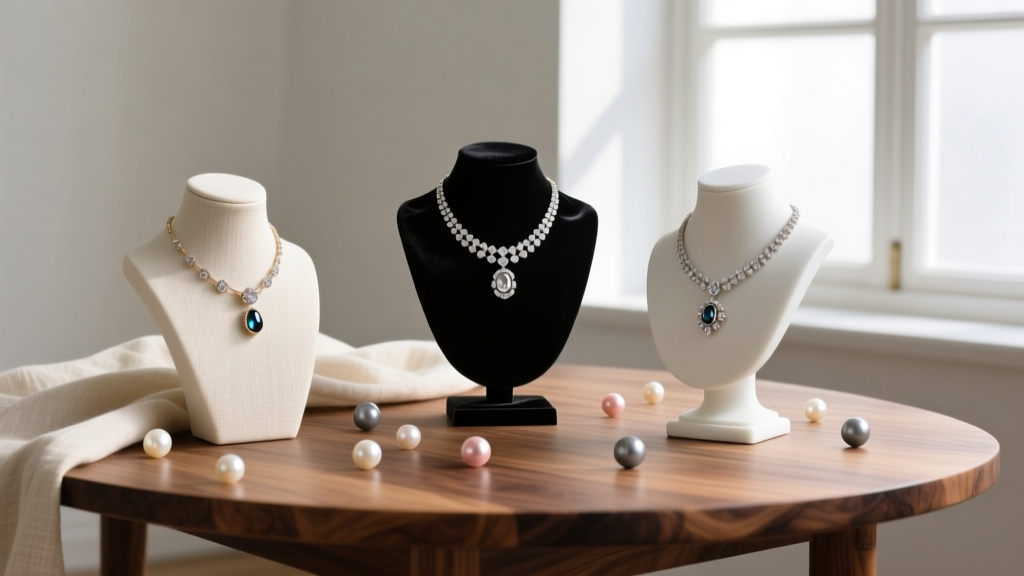
Invest in high-density polyurethane busts coated in a matte, skin-toned finish for e-commerce photography, as they mimic human skin reflectance. For trade shows or physical retail, opt for heavy-base linen busts with an internal wire armature, allowing you to slightly bend the "shoulders" inward to create a more realistic clavicle shelf. By understanding the mechanics of how a necklace behaves on a display, you bridge the gap between retail theater and wearable reality.


