Judith Ripka Necklace Materials: Silver, Vermeil & Diamonique Guide
Discover the exact materials in a Judith Ripka necklace. We compare sterling silver, gold vermeil, and Diamonique for durability and value.

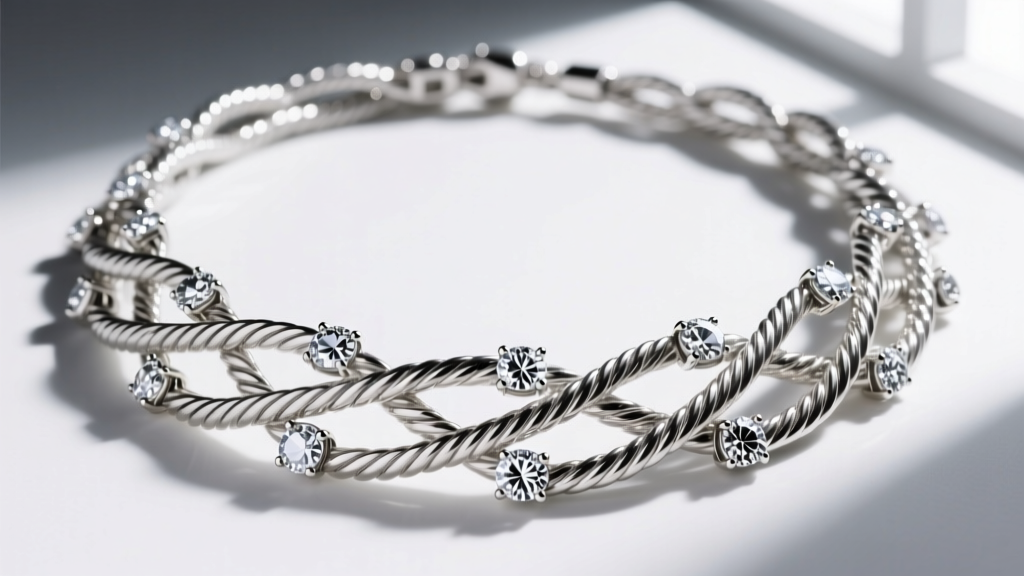
When evaluating a Judith Ripka necklace, collectors and everyday wearers alike often question the exact metallurgical composition and gemological properties of the materials used. Famous for her signature textured rope chains, bangle-style station beads, and heavy use of branded simulants, Ripka’s designs occupy a unique space in the 'bridge jewelry' market. As of 2026, with the secondary market for retired television shopping collections thriving, understanding the material science behind these pieces is critical for assessing durability, care requirements, and long-term value retention.
Core Metals: Sterling Silver vs. Gold-Tone Plating
The foundation of the vast majority of Judith Ripka necklaces is 925 sterling silver. According to The Silver Institute, sterling silver is an alloy consisting of 92.5% pure silver and 7.5% secondary metals, almost always copper. This copper addition is non-negotiable for jewelry; pure silver (99.9%) is far too malleable and would permanently deform under the tension of a heavy rope chain or pendant bail.
However, the copper content introduces a specific failure mode: tarnish. When copper reacts with sulfur compounds in the air or on the skin, it forms silver sulfide, creating a dark, dull patina. While many fine jewelers apply a micro-thin layer of rhodium to prevent this, Ripka frequently leaves her silver unplated to maintain a softer, vintage-inspired luster, or she applies gold-toned accents.
The Vermeil vs. Electroplating Distinction
A critical point of confusion for buyers is the gold-toned hardware and chain links often featured in her mixed-metal designs. The Federal Trade Commission (FTC) Jewelry Guides strictly regulate the use of the term 'vermeil.' To be legally classified as gold vermeil, a piece must have a sterling silver base and be plated with gold of at least 10k fineness to a minimum thickness of 2.5 microns. Many mass-market television jewelry pieces utilize standard gold electroplating over silver or brass, which typically measures only 0.5 to 1.0 microns thick. While beautifully finished when new, sub-micron plating will inevitably wear through at high-friction contact points, such as the clasp joints and the interior of the chain links, revealing the base metal beneath.
| Material | Base Core | Plating Thickness | Tarnish / Wear Risk |
|---|---|---|---|
| 925 Sterling Silver | 92.5% Ag, 7.5% Cu | N/A (Solid) | High tarnish risk; low structural wear |
| Gold Vermeil | 925 Sterling Silver | ≥ 2.5 microns | Moderate wear; excellent longevity |
| Gold Electroplate | Silver or Brass | 0.5 - 1.0 microns | High wear risk at friction points |
| Solid 14k Gold (Benchmark) | 58.5% Au, Alloys | N/A (Solid) | Zero plating wear; low tarnish |
The 'Diamonique' Factor: Gemological Breakdown

No analysis of a Judith Ripka necklace is complete without addressing 'Diamonique.' This is a proprietary, trademarked brand name utilized exclusively by QVC for Cubic Zirconia (CZ). It is not a unique gemstone or a proprietary laboratory-grown diamond; it is high-grade cubic zirconia. Understanding the physical properties of CZ is vital for long-term maintenance.
According to the Gemological Institute of America (GIA), cubic zirconia is a synthetic crystalline oxide of zirconium (ZrO2). To stabilize it at room temperature, manufacturers add yttrium or calcium oxide. The resulting material has a Mohs hardness of 8.0 to 8.5. While this makes it harder than most natural gemstones (like quartz or topaz), it is significantly softer than a natural diamond (10) or moissanite (9.25).
Optical Properties and Wear-and-Tear
Optically, CZ boasts a high refractive index (RI) of 2.15 to 2.18, which generates impressive brilliance. However, a natural diamond's RI is 2.42, and its dispersion (fire) is notably different. Over years of daily wear, CZ exhibits a specific failure mode: facet abrasion. Because it is softer than diamond and slightly brittle, the sharp facet junctions of a Diamonique stone will gradually round off and micro-chip if subjected to constant friction or ultrasonic cleaning. Furthermore, CZ is an thermal insulator, whereas diamond is a thermal conductor—a property easily tested by jewelers to instantly differentiate the two.
Chain Construction and Clasp Mechanics
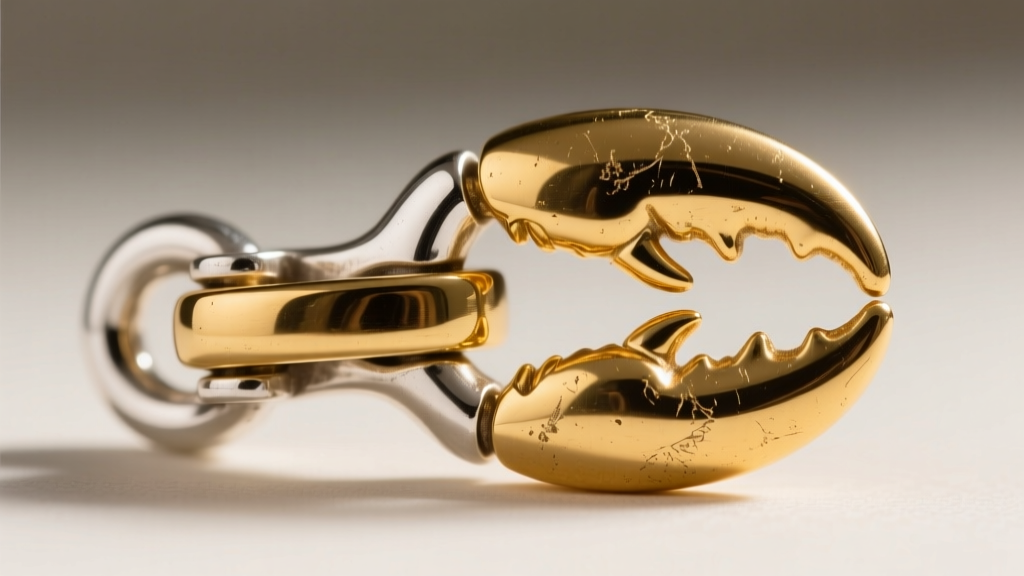
The structural integrity of any necklace relies heavily on its chain weave and clasp hardware. Ripka is renowned for her intricate rope chains and multi-strand bead designs. In a high-quality rope chain, the links are tightly twisted and ideally soldered closed. Soldered links prevent the chain from stretching or pulling apart if snagged on clothing. When inspecting vintage or secondary-market Ripka pieces, closely examine the link joints; if the links are unsoldered and have begun to separate, the structural integrity of the necklace is compromised.
For clasps, Ripka predominantly utilizes oversized lobster clasps or custom fold-over box clasps adorned with her signature motif. Lobster clasps are generally superior for heavy silver chains because the internal spring mechanism and the solid lever provide a secure lock. However, the small D-ring that the lobster clasp hooks into is a primary wear point. If the D-ring is made of gold-plated silver, the friction of the clasp rubbing against it will eventually strip the gold plating down to the copper-alloy core.
Longevity, Care, and Value Retention
Proper maintenance of mixed-metal and CZ jewelry requires abandoning the harsh cleaning methods used for solid fine jewelry. To preserve the material integrity of your pieces, adhere to the following protocols:
- Avoid Ultrasonic Cleaners: The high-frequency vibrations can fracture internal flaws in CZ stones and accelerate the flaking of thin gold electroplating.
- Chemical Dips are Forbidden: Liquid silver dip cleaners contain harsh acids that will instantly strip gold accents and leave the sterling silver porous and prone to rapid re-tarnishing.
- Manual Polishing: Use a treated, dry silver polishing cloth. Carefully buff the bare silver areas while avoiding aggressive rubbing on the gold-toned sections to preserve the plating thickness.
- Stone Cleaning: Clean Diamonique stations with a soft baby toothbrush, mild dish soap, and lukewarm water to remove skin oils that dull the stone's refractive index.
'The value of bridge jewelry lies not in its melt-weight or intrinsic gem value, but in its design patents, brand recognition, and the wearer's ability to maintain the original factory finish.' — Independent Jewelry Appraisal Standards, 2025.
Final Verdict: Is the Material Quality Worth the Price Tag?
A Judith Ripka necklace represents a specific tier of the jewelry market: design-forward, heavy-weight fashion-fine jewelry. You are paying for the intricate CAD modeling, the complex multi-strand assembly, and the recognizable aesthetic, rather than the intrinsic value of raw precious metals and natural diamonds. By understanding the exact properties of 925 sterling silver, the limitations of sub-micron gold plating, and the physical realities of cubic zirconia, buyers can make informed purchasing decisions and properly care for their pieces to ensure they remain beautiful for decades.


