Juicy Couture Heart Toggle Necklace: 2026 Trend Analysis
Explore the 2026 resurgence of the Juicy Couture heart toggle necklace. Learn authentication, material care, and modern styling for this Y2K icon.

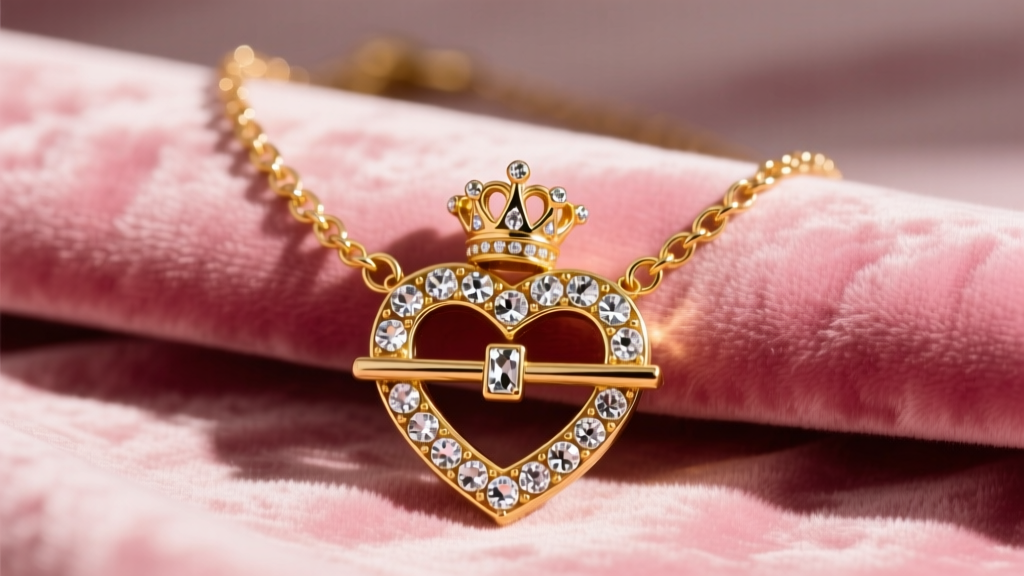
The early 2000s were defined by unapologetic maximalism, and no brand captured the zeitgeist quite like Juicy Couture. While the velour tracksuit remains the brand's most recognizable export, serious jewelry archivists and trend forecasters know that the true holy grail of the era is the juicy couture heart toggle necklace. As we move through 2026, the fashion cycle has shifted from ironic Y2K reproduction to serious archival appreciation. Today, original-era costume jewelry is being treated with the same reverence as vintage Chanel or Dior, driving up market values and demanding a new level of material literacy from collectors.
This comprehensive trend analysis breaks down the engineering, material degradation, and modern styling frameworks for the iconic heart toggle necklace, separating genuine 2000s artifacts from modern mall-brand pastiches.
The Archival Shift: Why 2000s Mall Jewelry is High Fashion
According to industry analysts tracking the secondary market, the Y2K trend has matured. As noted by Vogue, the initial wave of Y2K nostalgia relied heavily on fast-fashion dupes and low-quality reproductions. By 2026, however, Gen Z and Millennial collectors are seeking 'archival authenticity.' The juicy couture heart toggle necklace—specifically those produced between 2003 and 2008—has become a cornerstone of this movement.
'We are no longer dressing up as the 2000s; we are curating its surviving artifacts. The heavy, flawed, and glamorous nature of original mall-brand jewelry offers a tactile contrast to today's digital-first fashion landscape.'
This shift means that the specific weight, clasp mechanics, and crystal settings of the original necklaces are now primary drivers of value, far outweighing the mere presence of the brand name.
Anatomy and Engineering of the Heart Toggle
To authenticate and properly value a vintage piece, one must understand its physical construction. The original necklaces were not made of precious metals; they were masterclasses in mid-2000s costume engineering.
Base Metals and Flash Plating
The foundation of the necklace is typically a zinc-alloy blend, often referred to as Zamak, or a base brass. This heavy core gives the pendant a substantial, premium drape that modern hollow-cast reproductions lack. The gold or silver tone is achieved through 'flash plating'—a thin electroplated layer, usually between 0.5 and 1.0 microns thick. For a deeper understanding of base metal plating standards and historical marking, the Assay Office London provides excellent context on how non-precious metals were treated and regulated during the early 2000s boom.
Toggle Clasp Physics
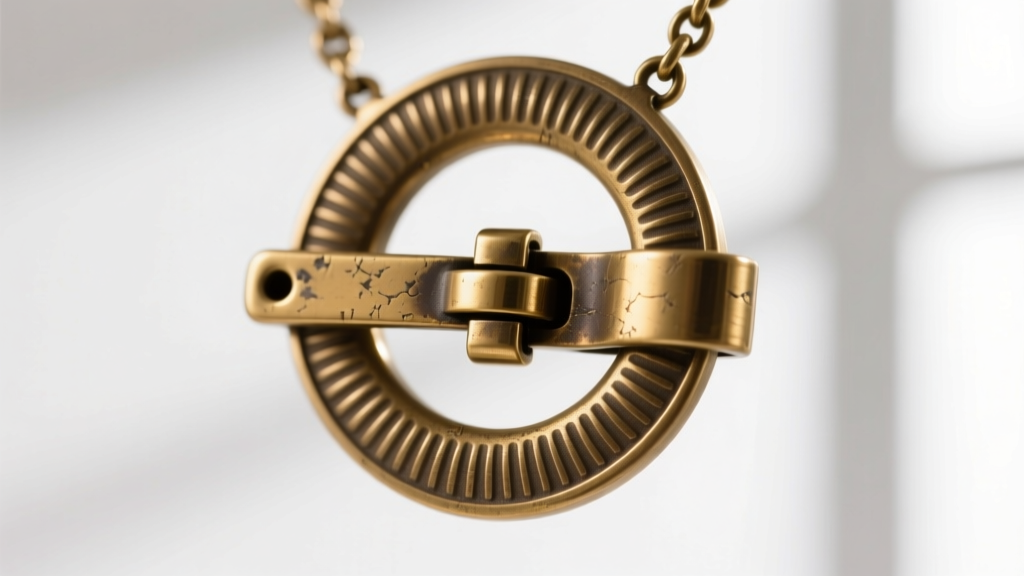
The toggle clasp is the most critical point of failure on these pieces. A properly engineered vintage toggle relies on gravity and the ratio of the T-bar to the O-ring. On an authentic juicy couture heart toggle necklace, the circular ring typically measures 15mm in diameter, while the T-bar spans at least 24mm. This 1.6x ratio ensures that when the necklace is pulled taut, the bar cannot slip through the ring. Modern reproductions often use thinner, lighter bars that measure only 18mm, leading to frequent accidental unclasping and lost pendants.
Crystal Pavé and Adhesives
The heart charm and accompanying crown motifs are heavily encrusted with crystals. Vintage pieces often utilized high-lead glass crystals (similar to early Swarovski compositions) known for their high refractive index and Aurora Borealis (AB) coatings. The Gemological Institute of America (GIA) notes that early 2000s glass crystals possess a distinct fire that modern, environmentally compliant lead-free glass struggles to replicate. Furthermore, vintage stones were often set in micro-prongs or glued with industrial cyanoacrylate, whereas modern versions rely on cheap epoxy that yellows and brittle-fails within two years.
Vintage vs. Modern Reproductions: A Buyer's Guide
When shopping on platforms like Depop, Grailed, or Etsy, it is vital to distinguish between the original 2000s runs and the licensed reproductions that flooded department stores in the late 2010s. Use this comparison chart to verify your find:
| Feature | Vintage (2003-2008) | Modern Licensed (2018-Present) |
|---|---|---|
| Overall Weight | Heavy (45g - 60g) | Lightweight (20g - 30g) |
| Chain Link Style | Thick cable chain, soldered links | Thin, hollow curb chain, unsoldered |
| Crystal Setting | Micro-prong or flush-set with AB coating | Glued surface stones, flat glass |
| Brand Hallmark | Deeply stamped 'Juicy' or 'Couture' script | Laser-etched or stamped block letters |
| Toggle Bar Ratio | 1.5x to 1.6x the ring diameter | 1.1x to 1.2x the ring diameter |
Material Degradation and Restoration Tactics
Because these pieces are crafted from plated base metals, surviving 20 years of wear introduces specific failure modes. Understanding how to treat these issues is a hallmark of a true archival collector.
Dealing with 'Brassing'
Brassing occurs when the gold-tone flash plating wears away, revealing the yellowish brass or dull gray zinc undercarriage. This is most common on the back of the heart pendant and the toggle ring. Do not attempt to re-plate these pieces at home. The chemical stripping required to prep the zinc alloy will often dissolve the adhesives holding the crystal pavé in place. Instead, embrace the brassing as a patina of authenticity, or seek a professional electroplater who specializes in costume jewelry and uses low-voltage, non-cyanide plating baths.
Verdigris Removal
The copper content in the base brass can react with sweat and humidity, creating verdigris—a toxic, powdery green crust that builds up in the crevices of the crown charm and chain links. To remove it safely without stripping the remaining gold plating:
- Mix a solution of 50% distilled water and 50% isopropyl alcohol.
- Dip a soft-bristled baby toothbrush into the solution.
- Gently agitate the green buildup, being careful not to snag the prongs holding the crystals.
- Immediately dry the piece with a microfiber cloth and use a can of compressed air to blow moisture out of the chain links.
2026 Styling Frameworks: Beyond the Tracksuit
The biggest mistake modern stylists make with the juicy couture heart toggle necklace is treating it as a literal costume piece. In 2026, the prevailing aesthetic is 'Ironic Elegance' or 'High-Low Archival.' The goal is to create visual tension by pairing the gaudy, unapologetic glamour of the necklace with severe, minimalist, or avant-garde clothing.
Framework 1: The Corporate Subversion
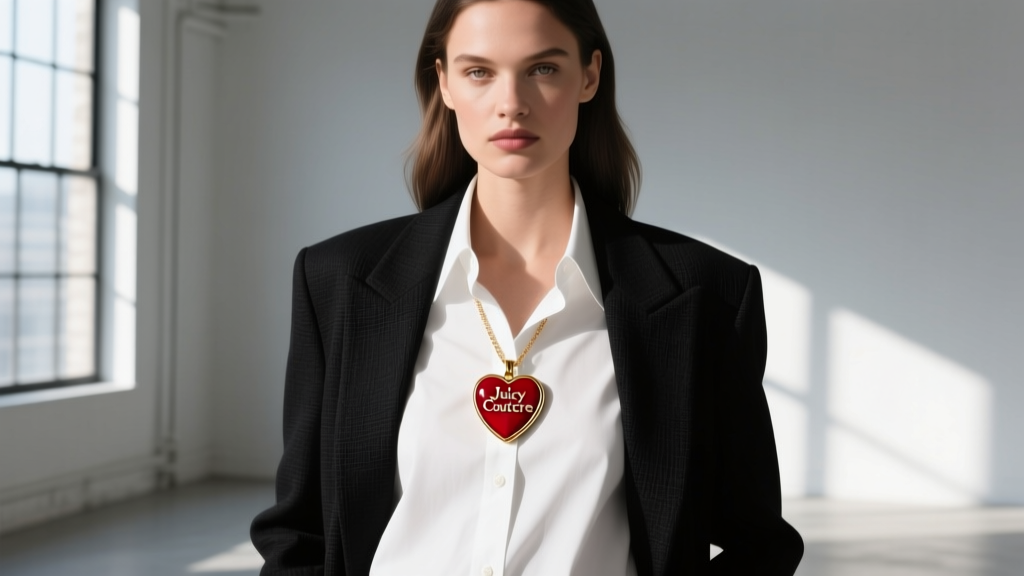
Layer the heavy gold heart pendant over a crisp, oversized white poplin button-down shirt, worn under a sharply tailored, structured black blazer. The visual clash between the severe corporate tailoring and the hyper-feminine, crystal-encrusted Y2K pendant creates a sophisticated, editorial look that dominates current street-style photography.
Framework 2: The Ethereal Contrast
Pair the necklace with a sheer, floor-length slip dress in a muted, earthy tone like olive or charcoal. Allow the toggle clasp to hang asymmetrically off-center. The heavy metallic hardware grounds the delicate, transparent fabric, preventing the outfit from looking overly romantic and anchoring it firmly in contemporary grunge-glam.
Market Valuation and Sourcing in 2026
The market for authentic early-2000s Juicy Couture jewelry has stabilized but remains highly lucrative for sellers who can properly document their pieces.
- Mint Condition (Deadstock): $180 - $250 USD. Pieces with original tags and intact crystal pavé command top dollar from serious archivists.
- Excellent Vintage (Light wear, minor brassing): $90 - $140 USD. The sweet spot for buyers who want authenticity without paying a premium for unworn artifacts.
- Distressed (Missing stones, heavy verdigris, broken toggle): $30 - $50 USD. Purchased primarily by upcyclers who harvest the heavy chain and charms for custom jewelry projects.
When sourcing online, always demand macro-photography of the toggle clasp and the hallmark stamp on the back of the heart. The juicy couture heart toggle necklace is more than a relic of a bygone pop-culture era; it is a masterclass in 2000s manufacturing and a vital artifact in the ongoing evolution of Y2K archival fashion.


