Julia Roberts Re-Wears Pink Dress and Accessories With Expensive Necklace: Style Guide
Learn how to elevate a vintage pink dress with high jewelry. Our step-by-step guide breaks down the Julia Roberts re-wears pink dress and expensive necklace look.

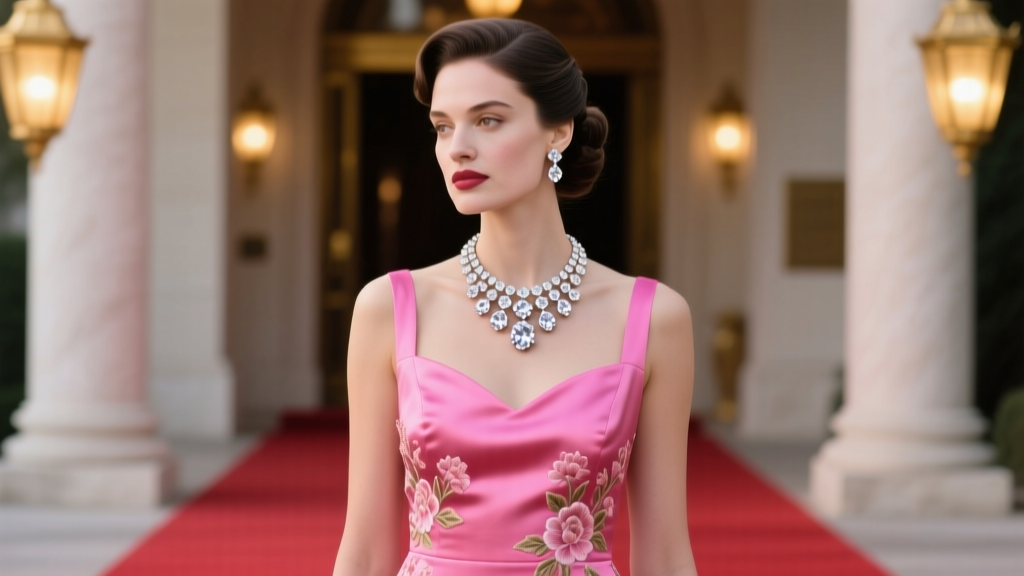
Search trends recently spiked for the phrase julia roberts re-wears pink dress and accessories with expensive necklace after the iconic actress proved that sustainable fashion and unapologetic luxury can coexist on the red carpet. By pairing a vibrant, previously worn pink silk gown with a multi-million-dollar high jewelry statement necklace, she sparked a masterclass in high-low styling. For jewelry enthusiasts and stylists in 2026, this look represents the ultimate styling challenge: how do you select, balance, and secure a heavy, high-value necklace against a bold, colorful, and often delicate vintage textile?
As a domain expert in high jewelry and red carpet styling, I have broken down the exact gemological, mechanical, and aesthetic steps required to recreate this viral look. Whether you are working with a family heirloom, an investment-grade diamond collar, or a high-end estate piece, this step-by-step guide will ensure your styling is both visually breathtaking and mechanically secure.
The Anatomy of the Look: High Jewelry Meets Sustainable Fashion
The brilliance of this styling technique lies in contrast. A re-worn or vintage pink dress carries a sense of history, romance, and eco-consciousness. When you introduce an "expensive" high jewelry necklace—typically defined by exceptional carat weight, premium metal purity, and master-level lapidary work—you create a focal point that elevates the entire ensemble. According to Vogue's red carpet jewelry analysis, modern celebrities are increasingly using archival fashion as a canvas to let museum-quality jewelry take center stage. The pink hue of the dress acts as a warm, saturated backdrop that makes cool-toned diamonds or contrasting colored gemstones visually pop.
Step 1: Selecting the "Expensive" Statement Necklace
To achieve the high-impact look of a multi-million-dollar red carpet piece, you must understand the markers of true high jewelry. Mass-market accessories will not provide the necessary light return or structural drape. When sourcing or selecting your necklace, evaluate the following gemological and metallurgical specifications:
- Metal Purity and Weight: True high jewelry utilizes Platinum 950 or 18-karat gold (750 purity). Avoid 14k gold for statement pieces, as the higher alloy content can cause skin irritation under hot red-carpet lights and lacks the tensile strength required to hold heavy gemstone clusters. A genuine statement collar should weigh between 45 and 120 grams, providing a luxurious, grounding drape on the clavicle.
- Diamond Grading: For the center stones or primary motifs, demand a minimum of G-H color and VS1 clarity. According to the Gemological Institute of America (GIA), fluorescence is a critical factor for red carpet photography; always select stones with "None" or "Faint" fluorescence to prevent a milky or oily appearance under intense LED and flash photography.
- Pavé Precision: The "expensive" look relies on micro-pavé settings where the metal beads holding the melee diamonds are nearly invisible. Ensure the pavé stones are matched in color and clarity to the primary stones to create a seamless river of light.
Step 2: Color Theory and Neckline Architecture
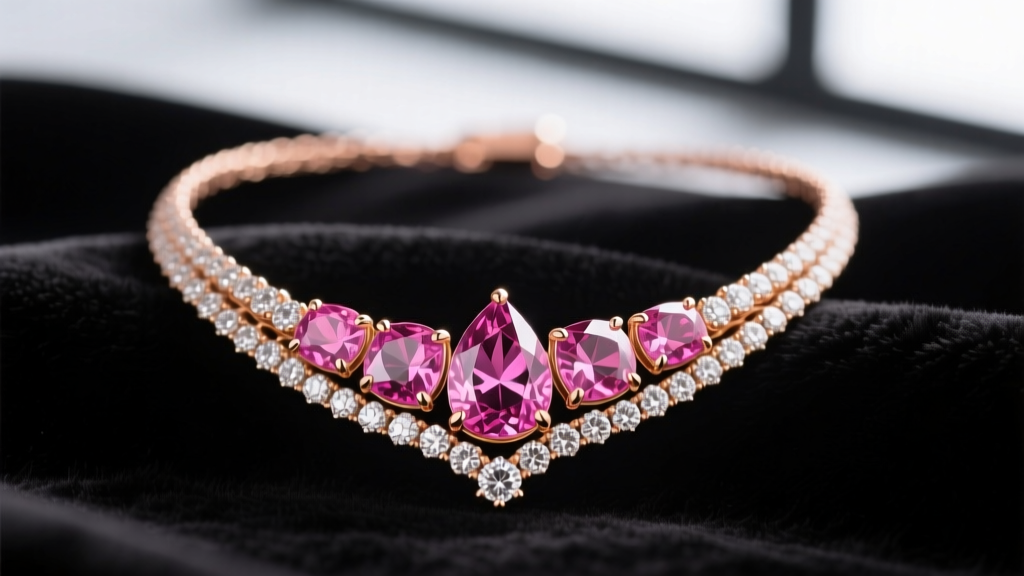
A pink dress is not a monolith; the specific shade of pink dictates the metallurgical choice of your necklace. Furthermore, the neckline of the dress determines the architectural length and silhouette of the jewelry. Here is a definitive pairing matrix for 2026:
| Dress Shade | Ideal Metal & Gemstone Pairing | Best Necklace Silhouette | Neckline Compatibility |
|---|---|---|---|
| Hot Fuchsia / Magenta | Platinum 950 with D-Color Diamonds | Bib or Festoon (15-16 inches) | Sweetheart or Strapless |
| Dusty Rose / Blush | 18k Rose Gold with Morganite & Pink Sapphires | Cascading Lariat (24-30 inches) | Plunging V-Neck |
| Coral Pink | 18k Yellow Gold with Rubellite Tourmaline | Choker with Drop Pendant (14-15 inches) | Scoop or Bateau |
Step 3: Mechanical Security and Textile Protection
The most overlooked aspect of styling heavy, expensive necklaces with vintage silk or chiffon dresses is mechanical failure and textile damage. A 100-gram diamond necklace exerts significant downward and lateral force on the delicate fabric of a pink silk gown. Follow these critical troubleshooting steps to secure the piece:
1. Upgrade the Clasp Mechanism
Standard lobster clasps are entirely insufficient for high jewelry. Your necklace must feature a double box clasp with figure-eight safety catches or a tongue-and-groove clasp with dual locking levers. This ensures that if the primary tongue slips, the secondary safety wires will catch the weight of the necklace before it falls.
2. Implement a Counterweight System
If you are styling a Y-necklace or lariat with a pink plunging neckline, the heavy front pendant will pull the chain forward, choking the wearer. High jewelers solve this by integrating a hidden 15-gram platinum counterweight into the clasp at the nape of the neck. This balances the center of gravity, allowing the pendant to lay perfectly flat against the sternum.
3. Protect the Vintage Dye
Some vintage pink textiles utilize acidic mordants in their dye processes. Lower-karat gold alloys containing copper or silver can oxidize and stain the silk upon contact with perspiration. Always ensure the back of the necklace features a smooth, polished platinum or rhodium-plated backing to create an inert barrier between the metal and the vintage fabric.
Step 4: Balancing the Remaining Accessories
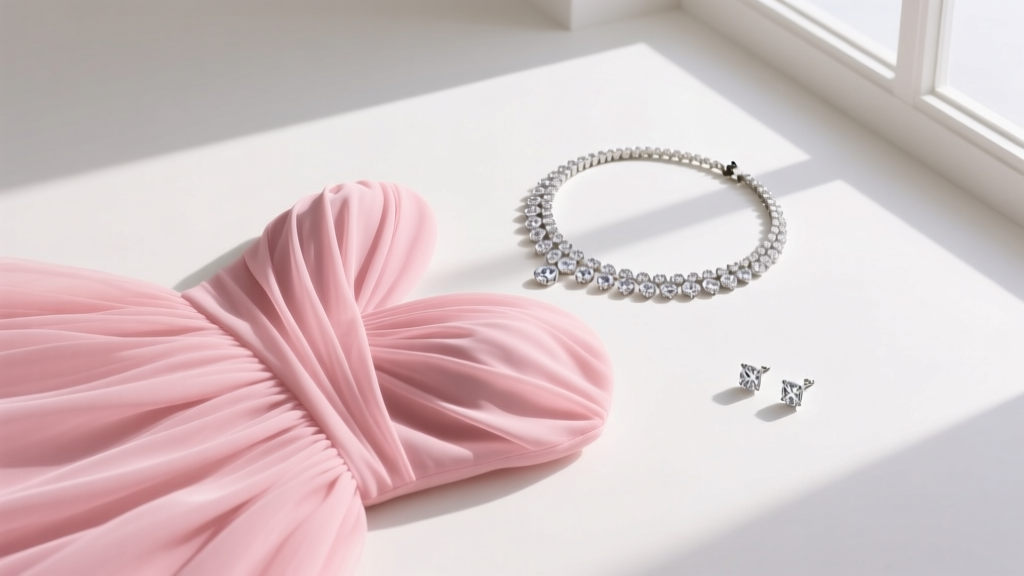
When the necklace is a multi-carat, high-impact statement piece, the golden rule of red carpet styling is aggressive subtraction. The "expensive" aesthetic is ruined by visual clutter. If the necklace features a complex diamond bib or a heavy colored gemstone drop, your earrings must be reduced to simple, high-clarity diamond studs (ideally between 1.00 and 2.00 total carat weight, set in 4-prong martini settings to minimize metal visibility). Skip bracelets entirely, as they distract from the neckline and can clink against the dress fabric, drawing the eye away from the primary jewelry piece.
Maintenance and Post-Event Care
After the event, the care of your high jewelry is paramount. Never use ultrasonic cleaners on statement necklaces that feature fracture-filled diamonds, emeralds, or tension-set stones, as the high-frequency vibrations can shatter the gems or loosen the micro-pavé beads. Instead, use a soft, natural-bristle brush dipped in a solution of warm distilled water and a single drop of pH-neutral dish soap. Gently agitate the pavé settings, rinse with distilled water, and dry with a lint-free microfiber cloth before storing the piece flat in a humidity-controlled, anti-tarnish vault.
By mastering the interplay between sustainable fashion and high jewelry mechanics, you can effortlessly recreate the viral Julia Roberts aesthetic. The key is not just in the price tag of the necklace, but in the deliberate, expert application of gemology, color theory, and structural engineering to create a truly unforgettable red carpet moment.


