Different Types of Necklace Chains: A Beginner Guide
Discover the different types of necklace chains, from durable cable links to delicate herringbones. Learn gauge sizes, strengths, and styling tips.

Introduction: Why Chain Construction Matters
When building a jewelry collection, beginners often focus entirely on the pendant or gemstone, treating the chain as an afterthought. However, navigating the different types of necklace chains is crucial for both the longevity and aesthetics of your jewelry. A chain is a structural component that bears the weight of your pendants, withstands daily friction, and interacts with your skin's chemistry. Choosing the wrong chain weave or gauge can lead to frustrating tangles, permanent kinks, or catastrophic snapping. This guide breaks down the engineering, metallurgy, and styling mechanics of necklace chains so you can make informed, durable purchases.
The Anatomy of a Chain: Gauge, Links, and Clasps
Before diving into specific weaves, you must understand the foundational metrics of chain construction. The most critical measurement is the gauge, which dictates the thickness of the wire used to form the links. While the US often uses the American Wire Gauge (AWG) system, millimeters (mm) offer far more precision for jewelry buyers.
- 0.9mm - 1.1mm (approx. 20-18 AWG): Extremely delicate. Suitable only for lightweight, hollow pendants or wearing alone as a subtle glint.
- 1.2mm - 1.5mm (approx. 16-14 AWG): The sweet spot for everyday pendant wear. Strong enough to hold a 3-gram solitaire diamond pendant without stretching.
- 1.8mm - 2.5mm (approx. 12-10 AWG): Heavy-duty. Used for statement pieces, heavy gold chains, and substantial gemstone pendants.
The clasp is equally vital. According to Jewelers of America, the clasp is the most common point of failure on any necklace. Avoid spring ring clasps for anything heavier than 2 grams; their internal tension springs degrade quickly. Instead, opt for lobster claw clasps for standard chains, or a box clasp with a figure-8 safety latch for heavy, high-value pieces.
The Most Popular Types of Necklace Chains Explained
Cable & Curb: The Everyday Workhorses
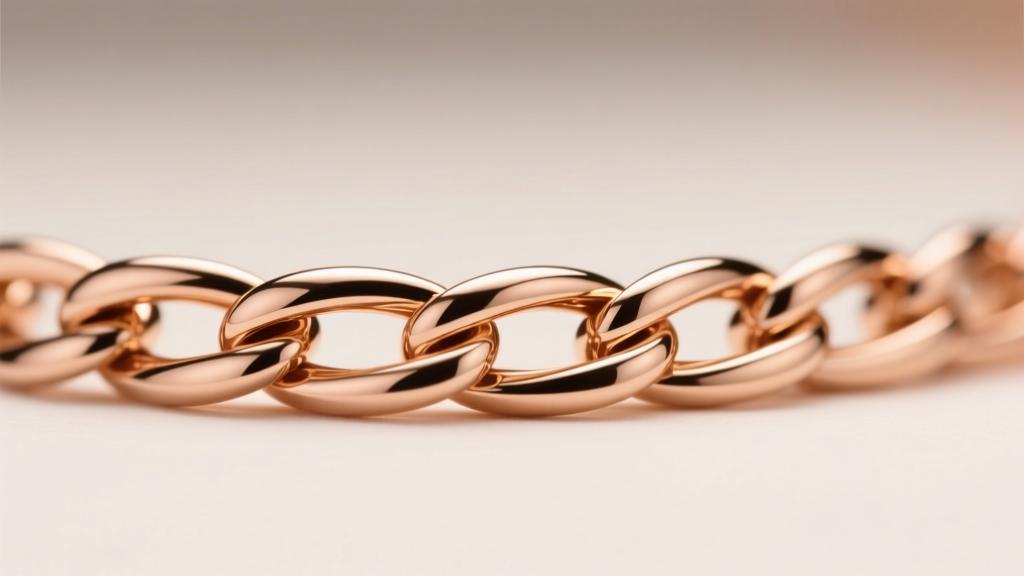
Cable chains are the most traditional and recognizable style, featuring uniform round or oval links connected to each other. They are relatively easy to repair if a link pulls apart. Curb chains take the cable concept and flatten the links, twisting them so they interlock tightly and lay flat against the collarbone. Curb chains offer significantly higher tensile strength than standard cable chains due to the flattened surface area and tighter interlocking friction.
Figaro & Rope: Textured Classics
The Figaro chain is a variation of the curb chain, characterized by a repeating pattern of two or three short circular links followed by one elongated oval link. It offers excellent durability and a vintage aesthetic. Rope chains consist of small metal links twisted together to mimic the appearance of a woven textile rope. Because the links are tightly bound and multi-directional, rope chains are incredibly strong and reflect light brilliantly from multiple angles, making them ideal for suspending heavy diamond pendants.
Box & Wheat: Geometric and Woven Styles
Box chains are constructed from square, geometric links connected at 90-degree angles, creating a smooth, four-sided chain. While visually striking and modern, box chains have a known failure mode: if the links are too thin, they can catch on hair or clothing and snap at the solder points. Wheat chains (or spiga chains) feature oval links woven continuously in a single direction, resembling stalks of wheat. This woven structure distributes tension evenly across multiple links, making wheat chains one of the most durable options on the market.
Snake & Herringbone: The Delicate Flat Weaves
Snake chains are made of tightly joined wavy rings that form a smooth, flexible tube. They look incredibly sleek but are notorious for catching body hair and bending permanently. Herringbone chains consist of short, flat, parallel links laid out in a V-shaped pattern. They offer a stunning, liquid-metal drape but are structurally fragile. As noted by gemological and jewelry care experts at the Gemological Institute of America (GIA), flat weave chains like herringbone are highly susceptible to permanent kinking if stored improperly or slept in.
Durability & Repair: Which Chains Break Easily?
Not all chains are created equal when it comes to surviving daily wear and tear. Below is a structural comparison of popular chain types based on their physical properties and repairability.
| Chain Type | Durability (1-10) | Kink Resistance | Repairability | Best Pendant Weight |
|---|---|---|---|---|
| Cable | 6 | High | Excellent | Light (Under 3g) |
| Curb | 8 | High | Good | Medium (3g - 8g) |
| Rope | 9 | High | Moderate | Heavy (8g+) |
| Box | 5 | Low (Catches Hair) | Difficult | Light to Medium |
| Wheat | 9 | High | Moderate | Medium to Heavy |
| Snake | 3 | Very Low | Poor | None (Wear Alone) |
| Herringbone | 2 | None (Kinks Easily) | Impossible | None (Wear Alone) |
Expert Troubleshooting Tip: If your snake or herringbone chain develops a kink, do not attempt to bend it back into place with your fingers. The metal has already work-hardened and will snap. Take it to a jeweler who can use specialized flat-nose nylon pliers to gently massage the kink out, though the structural integrity will always be compromised.

Metallurgy: How Gold Karats and Alloys Affect Strength
The physical weave of the chain is only half the equation; the metal alloy dictates the chain's baseline tensile strength. Pure 24-karat gold is far too soft for chain construction and will stretch out of shape within weeks.
When shopping for gold chains, 14k gold (58.5% pure gold mixed with copper, silver, and zinc) is the industry standard for durability. The alloy metals provide the necessary rigidity to prevent links from pulling apart under the weight of a pendant. 18k gold (75% pure gold) offers a richer, warmer color but is noticeably softer. If you are buying an 18k gold chain, you must increase the gauge thickness by at least 0.3mm to compensate for the softer alloy. For white gold chains, ensure the piece is rhodium-plated to prevent the underlying yellowish alloys from showing through due to friction against the skin.
How to Choose the Right Chain for Your Pendant
Pairing a chain with a pendant requires balancing visual proportions and physical weight limits. Follow these three rules to ensure a harmonious and safe pairing:
- The Width Ratio: The chain's width should be roughly one-third to one-half the width of the pendant. A massive 20mm pendant on a 1.0mm chain looks visually unbalanced and puts dangerous stress on the chain's center links.
- The Bail Clearance: Always measure the inner diameter of the pendant's bail (the loop it hangs from). A 1.5mm box chain requires a bail with an inner clearance of at least 2.0mm to slide freely without grinding against the metal edges.
- The Weight Rule: A chain should never bear a pendant that is heavier than the chain itself. Ideally, the chain should weigh at least 1.5 times the weight of the pendant to prevent the clasp from constantly sliding to the front of your neck and to distribute the kinetic energy of the bouncing pendant.
Conclusion
Understanding the different types of necklace chains transforms you from a passive buyer into an informed collector. By prioritizing structural weaves like curb, rope, and wheat for your heavy pendants, and reserving delicate snake or herringbone chains for standalone statement wear, you ensure your jewelry survives the rigors of daily life. Always verify the gauge, inspect the clasp mechanism, and respect the metallurgical limits of your chosen alloy to enjoy your necklaces for decades to come.


