K Initial Necklace Pricing 2026: True Value Guide
Discover the true value of a K initial necklace in 2026. Compare material grades, chain types, and fair price ranges to avoid overpaying.

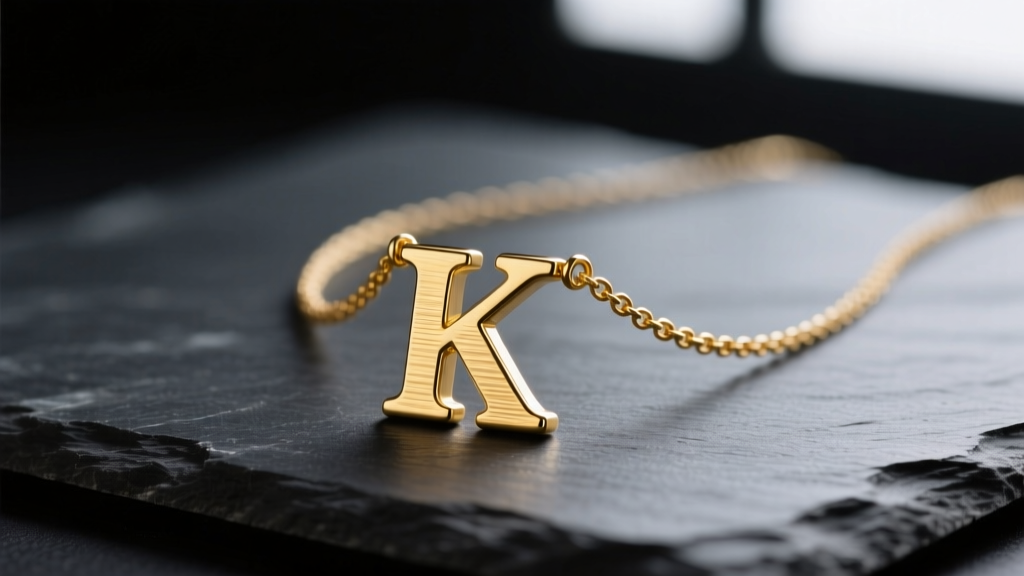
The Anatomy of a K Initial Necklace: Where the Money Goes
Personalized jewelry remains a dominant force in the 2026 accessories market, but not all monogram pieces are created equal. When shopping for a K initial necklace, the sharp, intersecting diagonal lines of the letter 'K' present unique manufacturing challenges that directly impact pricing and longevity. Unlike curved letters such as 'S' or 'C', the acute angles of a 'K' require precise mold venting during the casting process. If a manufacturer uses cheap, mass-produced rubber molds, microscopic porosity (air bubbles) often forms at these sharp vertices, weakening the pendant and creating rough edges that snag on delicate knitwear.
To accurately assess the budget and true value of a K initial necklace, you must deconstruct the piece into its three core components: the pendant casting method, the base metal purity, and the chain gauge. Many consumers focus entirely on the visual aesthetic of the initial, overlooking the structural integrity of the bail (the loop connecting the pendant to the chain). The bail experiences the highest friction of any part of the necklace. In lower-tier gold-plated pieces, the plating at the bail will wear away within three to six months of daily wear, exposing the reactive brass or copper core beneath.
Pendant Material Grades and Tarnish Timelines
The material grade is the single largest determinant of your necklace's baseline value. Understanding the legal and metallurgical definitions of these terms will prevent you from overpaying for disguised base metals.
- Brass with Gold Flash Plating: Often marketed as 'gold toned.' The plating is less than 0.1 microns thick. The copper in the brass will oxidize and turn your skin green within weeks. Fair Value: $12 - $25.
- 925 Sterling Silver with Rhodium: A solid core of 92.5% silver, plated with rhodium to prevent tarnish. Excellent for silver-toned initial necklaces, though the rhodium will eventually wear off at high-friction points. Fair Value: $45 - $85.
- Gold Vermeil (pronounced ver-may): By Federal Trade Commission guidelines, vermeil must be a sterling silver base plated with at least 2.5 microns of 10k, 14k, or 18k gold. It offers a luxury look at a mid-tier price but requires careful maintenance. Fair Value: $65 - $130.
- 14k Gold Filled (1/20 14k GF): A mechanical bonding process where a thick layer of solid 14k gold (comprising at least 5% of the total weight) is heat-bonded to a brass core. Highly durable and will not flake. Fair Value: $80 - $160.
- Solid 14k Gold (58.5% Purity): The industry standard for fine jewelry. According to the Gemological Institute of America (GIA), 14k gold offers the ideal balance of rich color and structural hardness for daily-wear pendants. Fair Value: $220 - $450+.
2026 Market Pricing Matrix: What You Should Actually Pay
Brand markups in the personalized jewelry sector can be staggering. The table below outlines the fair, intrinsic value ranges for a standard 15mm to 18mm K initial pendant paired with an 18-inch chain in the current 2026 market. Prices reflect independent bench jewelers and transparent direct-to-consumer brands, excluding luxury designer markups.
| Material Grade | Chain Type (18-inch) | Expected Lifespan | Fair 2026 Price Range | Best Use Case |
|---|---|---|---|---|
| Gold Vermeil | 0.9mm Cable Chain | 1 - 3 Years | $75 - $110 | Trend-driven layering, occasional wear |
| 14k Gold Filled | 1.2mm Box Chain | 5 - 10 Years | $110 - $165 | Daily wear, budget-conscious buyers |
| Solid 10k Gold | 1.0mm Rope Chain | Lifetime | $180 - $240 | Shower/sleep wear, high durability |
| Solid 14k Gold | 1.2mm Cable Chain | Lifetime / Heirloom | $280 - $420 | Permanent jewelry, sentimental gifts |
Chain Selection: The Hidden Cost Multiplier
A common failure mode in budget initial necklaces is a mismatched chain gauge. A solid 14k gold K pendant typically weighs between 1.8 and 2.8 grams, depending on the thickness of the casting and whether it features diamond accents. Many brands pair these pendants with ultra-delicate 0.7mm or 0.9mm chains to save on gold weight and reduce manufacturing costs.
Cable vs. Box vs. Figaro: Durability vs. Price
When assessing the value of the complete necklace, scrutinize the chain style. The chain accounts for roughly 60% to 75% of the total gold weight in a solid gold piece.
- Cable Chain (1.0mm - 1.2mm): The most classic and cost-effective option. The simple oval links are easy to solder if they break, keeping repair costs low. However, they are prone to tangling if stored improperly.
- Box Chain (1.2mm - 1.5mm): Offers a premium, reflective geometric look that complements the sharp angles of the letter K. However, box chains are notorious for kinking. Once a box chain kinks, it weakens the structural integrity of the link, and it is nearly impossible for a jeweler to repair seamlessly.
- Rope Chain (1.0mm - 1.5mm): The most durable option for the price. The twisted links naturally hide scratches and wear patterns, making it an excellent choice for a K initial necklace meant for 24/7 wear, including showering and swimming.
Expert Tip: Always check the clasp. A high-quality initial necklace should feature a spring ring or lobster clasp that is proportionate to the chain. If a brand uses a hollow, lightweight clasp on a solid gold chain, they are cutting corners to inflate their profit margins.
Brand Markup vs. Independent Bench Jewelers
The 'K' initial is highly popular, meaning it is mass-produced by both fast-fashion conglomerates and high-end luxury houses. In 2026, the price disparity between these two extremes is vast. A major mall-brand retailer might charge $250 for a 14k solid gold K pendant on a flimsy 0.8mm chain. The intrinsic melt value of that gold might only be $90. You are paying a 170% premium for the brand's logo and retail overhead.
Conversely, sourcing from an independent bench jeweler or a specialized direct-to-consumer casting house often yields a heavier, more robust 14k gold pendant on a 1.2mm chain for $280 to $320. When evaluating your budget, prioritize the gram weight of the gold over the brand name. Reputable sellers will list the exact gram weight of the pendant and chain in their product specifications. If the gram weight is hidden, consider it a red flag for a budget-tier, lightweight casting.
Verifying Authenticity and Hallmark Stamps
When investing in a solid gold or sterling silver K initial necklace, verifying the hallmark stamps is non-negotiable. The London Assay Office and international equivalents mandate specific stamps to protect consumers from fraud.
- Solid 14k Gold: Look for '14K', '14kt', or the millesimal fineness stamp '585'. This stamp is usually located on the back of the initial pendant or on the flat tag near the clasp.
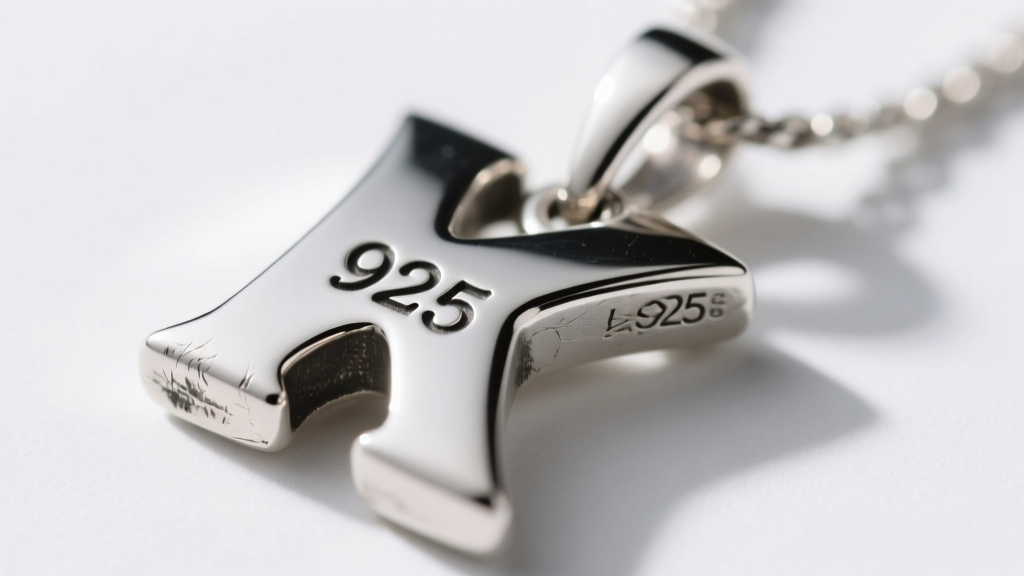
- Sterling Silver: Must be stamped '925' or 'Sterling'. If it is vermeil, it may also feature a maker's mark alongside the 925 stamp.
- Gold Filled: Must be stamped with the exact ratio and karat, such as '1/20 14K GF'. A stamp that simply says '14K HGE' (Heavy Gold Electroplate) is not gold filled; it is merely a thicker plating that will eventually wear through.
Be highly suspicious of initial necklaces sold on social media marketplaces that claim to be 'solid gold' but lack clear, macro-photographed hallmarks. Acid testing or X-ray fluorescence (XRF) scanning by a local jeweler can verify the metal composition for a nominal fee if you are purchasing vintage or secondhand.
Final Verdict: Maximizing Your Initial Pendant Investment
Evaluating the budget and value of a K initial necklace requires looking past the sentimental appeal of the monogram and focusing on metallurgical realities. For a budget under $100, 14k gold-filled pieces on a 1.2mm rope chain offer the best balance of longevity and aesthetics. If your budget allows for $250 to $400, insist on solid 14k gold with a verified '585' stamp, a substantial bail to prevent friction wear, and a chain gauge thick enough to support the pendant's weight without snapping. By understanding these structural and material nuances, you can secure a personalized piece that retains its beauty and value for decades, rather than months.


