Kanye West Panther Necklace: 2026 Technical Appraisal
Explore the technical specs, diamond grading, and metallurgical engineering behind the iconic Kanye West panther necklace in our 2026 appraisal guide.

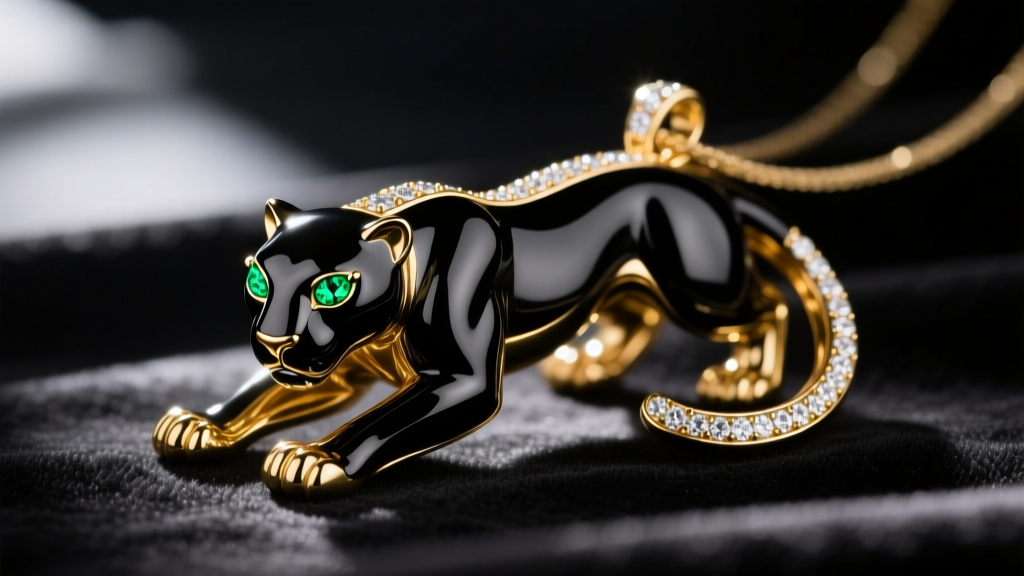
When analyzing the intersection of hip-hop culture and high jewelry, few pieces command the technical and cultural reverence of the custom animal motifs worn by rap’s elite. The kanye west panther necklace represents a masterclass in bespoke 3D metallurgical sculpture, moving far beyond standard flat diamond-encrusted pendants. As of 2026, the demand for complex, multi-dimensional animal pendants has pushed custom jewelers to adopt aerospace-grade finishing techniques and advanced gemological setting methods. This expert deep dive deconstructs the engineering, material science, and structural requirements that define this iconic piece of hip-hop horology.
Metallurgical Architecture of the 3D Panther Pendant
Creating a fully three-dimensional panther head requires advanced CAD (Computer-Aided Design) modeling and precision lost-wax casting. Unlike flat pendants that typically weigh between 40 and 80 grams, a statement 3D panther pendant engineered to Kanye West’s specifications generally falls in the 150 to 220-gram range. To support this mass without compromising the integrity of the gold, master jewelers utilize 18K yellow or white gold. The 18K alloy (75% pure gold mixed with copper, silver, and zinc) provides the necessary tensile strength and hardness that 24K or even 14K gold cannot achieve for complex sculptural details.
The most critical technical evolution in dark-toned hip-hop jewelry is the shift from black rhodium plating to DLC (Diamond-Like Carbon) coating. Historically, jewelers used black rhodium to achieve the "midnight" look on white gold panther motifs. However, rhodium is merely a surface plating that wears away within 12 to 18 months due to skin acidity and friction. In contrast, modern DLC coating is applied via a vacuum plasma process, bonding carbon atoms to the gold at a molecular level. This results in a scratch-resistant, permanent black finish with a Vickers hardness rating exceeding 2000 HV, ensuring the panther’s dark coat remains pristine for decades.
The Gemological Matrix: Pavé and Contrast Setting
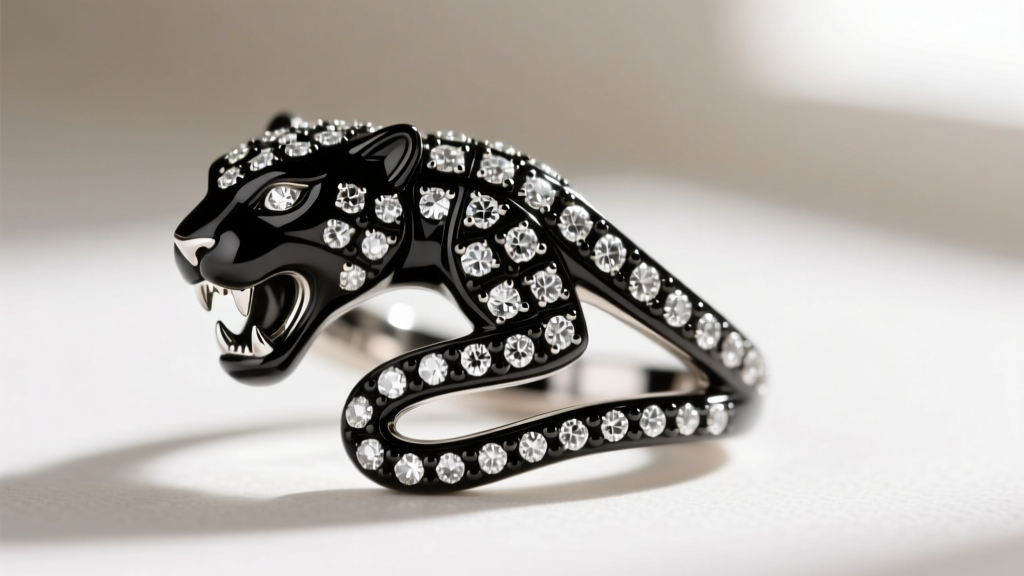
The visual impact of the necklace relies heavily on the contrast between the dark metallic coat and the blinding brilliance of the diamond accents. To achieve the signature look, jewelers employ a hybrid setting strategy:
- The Coat (Body): Irradiated black diamonds are set using a micro-pavé bead setting. The stones are typically 1.0mm to 1.5mm in diameter, set flush against the DLC-coated gold to create a seamless, scaly texture that mimics a panther's rosettes.
- The Fangs and Inner Ears: F-color, VVS1 clarity white diamonds are utilized here. The extreme clarity (Very Very Slightly Included) ensures no carbon spots are visible under 10x magnification, providing a stark, icy contrast against the black coat.
- The Eyes: Rather than using standard emeralds, which are notoriously brittle and prone to chipping during the setting process, top-tier custom pieces utilize custom-cut Tsavorite garnets. Tsavorite boasts a refractive index of 1.74 (higher than emerald) and lacks the inherent fissures of emeralds, making it vastly superior for the high-stress prong settings required for a 3D animal face.
According to the Gemological Institute of America (GIA), the vast majority of black diamonds used in high-end hip-hop jewelry are natural white diamonds that have undergone artificial irradiation to turn their color black. This treatment is permanent and stable, though it must be disclosed during formal appraisals.
Diamond Setting Comparison for 3D Motifs
| Setting Technique | Application on Panther Motif | Durability Rating | Light Return |
|---|---|---|---|
| Micro-Pavé (Bead) | Coat, snout, and outer edges | High (Flush profile) | Moderate (Scattered) |
| V-Prong Setting | Fangs and ear tips | Medium (Prone to snagging) | Maximum (Brilliance) |
| Bezel Setting | Primary focal diamonds | Very High (Fully enclosed) | Low (Light restricted) |
Structural Chain Engineering and Tensile Stress
A common failure point in heavy celebrity jewelry is the chain. Hanging a 200-gram 3D pendant on a standard rope or curb chain will result in catastrophic link failure within weeks due to the pendulum effect. As the wearer moves, the pendant swings, generating dynamic kinetic loads that can easily exceed 150 pounds of tensile stress on the weakest link (typically the jump ring or the clasp).
To properly support a piece of this magnitude, the necklace must be paired with a heavy-gauge 14mm to 18mm Miami Cuban Link chain. The structural integrity of a Miami Cuban relies on its interlocking, flat-filed links which distribute weight evenly across the collarbone. Furthermore, the links must be laser-welded rather than torch-soldered. Laser welding provides a localized, high-heat bond that prevents the surrounding gold from annealing and softening, maintaining the chain's rigid structural memory.
The Clasp Mechanics
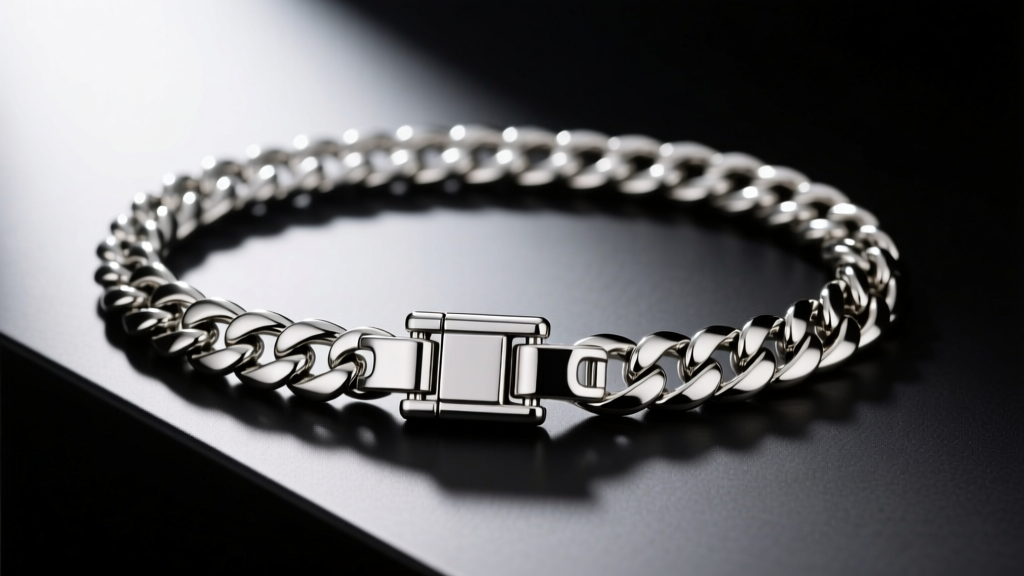
Lobster clasps are entirely insufficient for this weight class. The engineering standard requires a custom-machined box clasp with a dual internal pin lock, supplemented by two figure-8 safety catches on the exterior. The internal locking pins must be milled from hardened steel or titanium, as gold pins will warp and bend under the repetitive stress of the pendant's swing.
2026 Appraisal and Authentication Metrics
As the secondary market for celebrity-worn and celebrity-commissioned jewelry continues to mature, authenticating pieces attributed to Ye’s preferred jewelers (such as Jacob the Jeweler or Greg Yüna) requires rigorous scientific validation. The Jewellers of America guidelines dictate that high-value appraisals must go beyond visual inspection.
"True authentication of bespoke hip-hop jewelry relies on microscopic maker's marks, CAD serial number verification, and non-destructive metallurgical testing, not just visual diamond grading."
Authentication Red Flags to Watch For:
- Missing XRF Verification: Genuine pieces will have an accompanying X-ray Fluorescence (XRF) spectrometry report confirming the exact 18K alloy composition, including the specific copper-to-silver ratio used by the original caster.
- Improper Hallmarking: Counterfeiters often stamp "18K" on the back of the pendant. Authentic custom pieces feature laser-inscribed hallmarks on the interior bail or the clasp tongue, often accompanied by a unique CAD production number.
- CZ Substitution in Micro-Pavé: Under a 30x gemological microscope, cubic zirconia will show signs of facet abrasion and lack the natural internal growth patterns (even in irradiated stones) found in genuine black diamonds.
Ultimately, the kanye west panther necklace is not merely a fashion statement; it is a triumph of modern jewelry engineering. From the molecular bonding of DLC coatings to the kinetic load distribution of laser-welded Cuban links, every millimeter of the piece is calculated for maximum visual impact and structural longevity. For collectors and horologists alike, understanding these technical nuances is the key to appreciating—and accurately valuing—the pinnacle of 21st-century hip-hop jewelry.


