Evaluating a Kays Locket Necklace: Metals, Hinges, and Wear
An expert technical review of the Kays locket necklace, analyzing sterling silver vs. gold vermeil durability, hinge mechanics, and photo-fit specs.

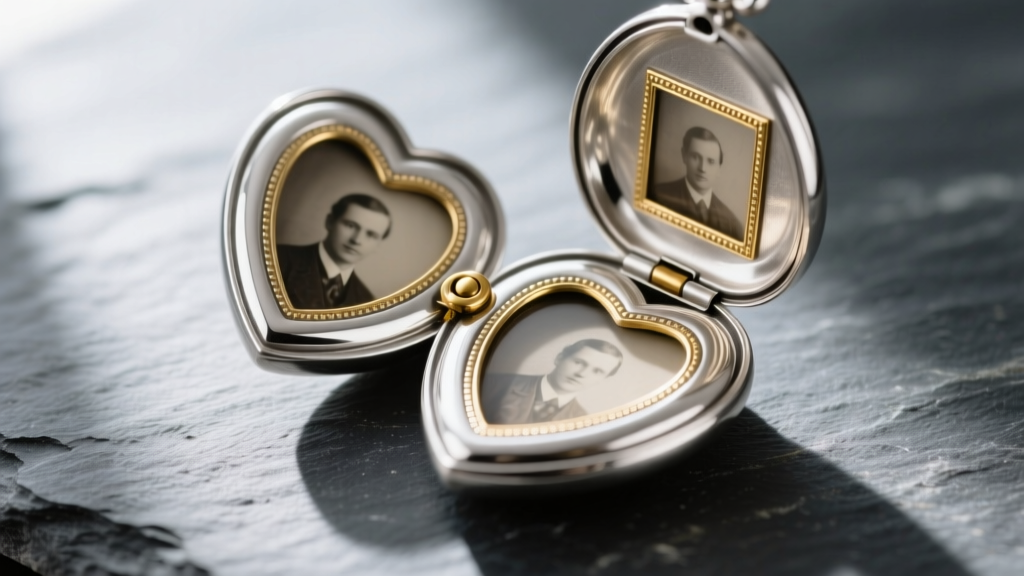
When consumers purchase a sentimental piece like a kays locket necklace, they are often focused on the aesthetic and emotional value rather than the metallurgical and mechanical engineering beneath the surface. However, as jewelry appraisers and bench jewelers know, the longevity of a hinged keepsake relies entirely on its structural tolerances, alloy composition, and clasp integrity. In this expert deep dive, we deconstruct the commercial locket archetype—specifically analyzing the technical specifications, failure modes, and material grades typical of mall-tier retail lockets to help you understand exactly what you are wearing and how to maintain it.
The Metallurgical Reality: Sterling Silver vs. Plated Bases
Most entry-level to mid-tier lockets are cast in 925 sterling silver. According to the Gemological Institute of America (GIA), sterling silver consists of 92.5% pure silver and 7.5% copper alloy. This copper provides the necessary tensile strength for the thin walls of a locket, but it also introduces a critical vulnerability: oxidation. To combat this, commercial manufacturers apply a rhodium flash plating.
Unlike fine jewelry benchmarks that may use 0.5 to 1.0 microns of rhodium, mass-market pieces often feature a micro-thin layer of 0.05 to 0.1 microns. This flash plating provides brilliant initial luster but wears through rapidly at high-friction contact points, such as the clasp and the hinge barrel. If the locket is gold-toned, it is rarely solid 14k gold at this price point. Instead, it is usually gold vermeil or standard gold plating. The Federal Trade Commission (FTC) Jewelry Guides dictate that true vermeil must have a gold coating of at least 2.5 microns over sterling silver. Many commercial lockets fall short of this, utilizing standard electroplating at 0.1 to 0.3 microns, which will inevitably wear down to the silver base within six to twelve months of daily wear.

Hinge Mechanics and Tolerances
The hinge is the most critical mechanical component of any locket. A standard kays locket necklace typically utilizes a simple friction pin hinge or a basic soldered barrel hinge. In a friction pin setup, a 0.8mm to 1.0mm brass or steel pin is driven through the interlocking knuckles of the hinge. Over time, the repeated opening and closing causes microscopic abrasion, widening the knuckle holes and resulting in a loose, floppy locket that fails to snap shut.
Common Hinge Failure Modes
- Galvanic Corrosion: If the hinge pin is base metal or brass while the locket body is sterling silver, exposure to sweat and humidity creates a galvanic cell. This accelerates localized corrosion, often seizing the hinge entirely.
- Solder Fatigue: On barrel hinges, the top and bottom caps are soldered in place. Commercial manufacturing often uses lower-temperature 'Easy' grade silver solders. As noted in the Rio Grande Soldering and Fabrication Guides, Easy solder has a lower melting point but reduced structural integrity, making it prone to fracturing if the locket is dropped.
- Knuckle Misalignment: Mass casting can result in knuckles that are not perfectly coaxial. This places uneven torsional stress on the pin every time the locket is opened, leading to premature metal fatigue.
Dimensional Tolerances and Photo Insertion
The interior bezel of a commercial locket is designed to hold a photograph securely without the need for adhesives. The critical metric here is the bezel depth, which typically ranges from 0.5mm to 0.8mm. Standard photo paper weighs around 200 GSM (grams per square meter) and is approximately 0.25mm thick. This allows the metal retaining ring or bezel lip to press firmly against the paper.
However, attempting to insert cardstock or double-layered prints (exceeding 0.6mm) will warp the internal tension ring, permanently bending the locket's backplate and preventing it from closing flush. For precise insertion, bench jewelers recommend using a specialized locket photo punch rather than scissors, ensuring a perfect geometric match to the 12mm, 14mm, or 18mm interior diameter of the bezel.
Technical Specifications: Commercial vs. Benchmade Lockets
| Feature | Standard Commercial Locket (e.g., Kay's) | Benchmade Fine Jewelry Locket |
|---|---|---|
| Base Metal | 925 Sterling Silver (Cast) | 950 Platinum or 18k Gold (Die-Struck) |
| Plating Thickness | 0.05 - 0.1 microns (Flash) | 0.5 - 1.5 microns (Heavy Plate) |
| Hinge Type | Friction Pin / Basic Barrel | Piano Hinge / Precision Swage |
| Bezel Depth | 0.5mm - 0.8mm | 1.0mm - 1.5mm (Accommodates thicker stock) |
| Clasp Type | 5mm Spring Ring | Lobster Claw or Box Clasp |
Chain Integrity and Bail Engineering
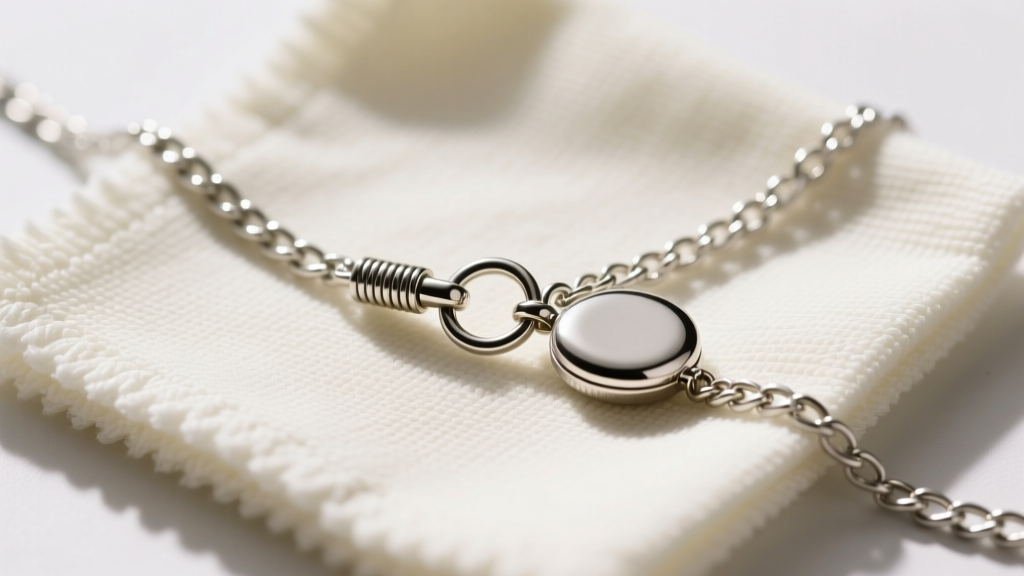
A locket is only as secure as the chain suspending it. Commercial lockets are frequently paired with 0.9mm to 1.2mm sterling silver cable chains. While cable chains are classic, their structural weakness lies in the spring ring clasp. The internal steel spring in a standard 5mm spring ring clasp is highly susceptible to fatigue and moisture ingress. For a heavy item like a double-sided photo locket, upgrading to a 1.5mm box chain with a lobster claw clasp is a necessary technical intervention to prevent catastrophic loss.
Furthermore, the bail (the loop connecting the chain to the locket) on mass-market pieces is often cast directly onto the locket body. This creates a porosity risk at the junction. If the bail snaps off, it requires laser welding to repair; traditional torch soldering would transfer too much heat, potentially melting the adjacent photo inserts or damaging any exterior enamel work.
Maintenance and Long-Term Preservation
To maximize the lifespan of a commercial locket, proactive maintenance is required. Avoid ultrasonic cleaners, as the high-frequency vibrations can shatter internal glass inserts (if present) and loosen the friction pin. Instead, use a mild, non-ammonia silver dip for the exterior, taking care to keep the liquid out of the hinge barrel to prevent chemical trapping.
For the hinge mechanism itself, a microscopic application of synthetic watch oil (such as Moebius 9010) applied with a 0.5mm oiler will drastically reduce friction wear and displace moisture, preventing galvanic corrosion between dissimilar metals. Store the necklace in an airtight anti-tarnish bag with a 3M silver protector strip to absorb airborne sulfur compounds that cause sterling silver to blacken.
Conclusion: Verdict on Commercial Locket Engineering
Understanding the technical realities of a kays locket necklace transforms it from a simple retail purchase into a manageable mechanical keepsake. While the metallurgy and hinge tolerances reflect mass-production compromises, proper photo sizing, strategic chain upgrades, and meticulous hinge lubrication can easily extend the functional life of these sentimental pieces for decades. By treating the locket not just as jewelry, but as a precision micro-mechanical device, owners can ensure their memories remain safely enclosed for generations.


