A Guide to Kinds of Necklace Clasps: How to Choose and Replace
Learn how to select, match, and replace different kinds of necklace clasps based on chain weight, metal grade, and tensile strength.

The Anatomy of a Secure Closure: Why Clasp Choice Matters
When evaluating fine jewelry, collectors and designers often obsess over gemstone clarity or chain weave. However, the structural integrity of any necklace relies entirely on its weakest link: the clasp. Understanding the different kinds of necklace clasps is not just a matter of aesthetics; it is a critical exercise in weight distribution, tensile strength, and material science. A heavy 18k gold Byzantine chain paired with a flimsy spring ring is a lost piece waiting to happen. According to the Gemological Institute of America (GIA), improper clasp selection and jump ring fatigue are the leading causes of necklace breakage and loss. This guide provides a step-by-step framework for matching, replacing, and repairing clasps to ensure your necklaces remain secure and functional.
Step-by-Step: Matching Kinds of Necklace Clasps to Chain Weights
To select the correct hardware, you must first weigh your chain and pendant combination. The clasp must be able to withstand not just the static weight of the piece, but the dynamic kinetic force generated when the wearer moves, turns their head, or catches the chain on clothing. Below is a structural breakdown of the most common kinds of necklace clasps and their engineering limits.
| Clasp Type | Max Static Weight Limit | Best Chain Style | Primary Failure Point |
|---|---|---|---|
| Spring Ring | 10 Grams | Snake, Box, Delicate Cable | Internal spring fatigue |
| Lobster Claw | 25 Grams | Cable, Curb, Rolo | Trigger lever bending |
| Toggle (T-Bar) | 40 Grams | Rope, Figaro, Beaded | Bar slipping through ring |
| Magnetic (Neodymium) | 30 Grams | Leather, Multi-strand | Adhesive failure inside tube |
| Box with Safety Latch | 75+ Grams | Wheat, Byzantine, Cuban | Tongue metal fatigue |
Lightweight Chains (Under 15 Grams)
For delicate chains (0.8mm to 1.5mm thickness), the standard spring ring or a small 5mm to 7mm lobster claw is ideal. These clasps are lightweight, ensuring the necklace drapes properly without the clasp pulling the chain down the back of the neck. However, spring rings contain a tiny internal steel spring that can rust or fail if exposed to moisture and lotions. Always opt for a lobster claw if the wearer has limited dexterity, as the larger trigger is easier to manipulate.
Medium to Heavy Chains (15 - 50 Grams)
As chains get heavier, gravity becomes the enemy of small clasps. A 12mm to 15mm lobster claw provides a robust mechanical lock. Alternatively, toggle clasps offer excellent security for medium-weight pieces because the weight of the necklace itself pulls the T-bar tightly against the receiving ring. For magnetic clasps, ensure you are purchasing pieces that use N52-grade Neodymium magnets housed in machined metal tubes, rather than cheap ceramic magnets glued into plated brass, which will degrade rapidly.
Statement & Luxury Pieces (50+ Grams)
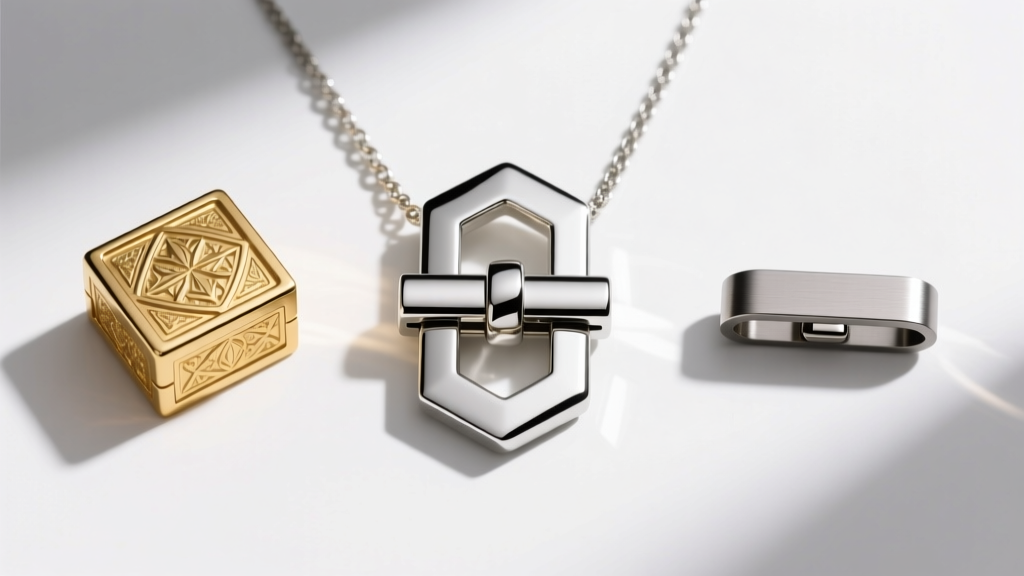
Heavy chains, such as 5mm+ Cuban links or solid gold Byzantine weaves, require a box clasp with a figure-eight safety latch. The box clasp distributes tension across a wide surface area, while the safety latch provides a secondary point of failure protection. As noted by wholesale findings experts at Halstead Bead, a box clasp's internal 'tongue' must be made of a resilient alloy like 14k or 18k gold; pure 24k gold or high-karat yellow gold is too soft and will permanently bend after a few uses, causing the clasp to pop open unexpectedly.
How to Replace a Broken Clasp at Home: A Jeweler’s Method
Replacing a clasp is a fundamental jewelry repair. Whether you are upgrading a weak spring ring to a secure lobster claw or fixing a broken jump ring, the process requires precision and the correct materials. Follow this step-by-step guide to perform a professional-grade cold connection.
Step 1: Gather the Proper Tools and Materials
Do not use standard household pliers; their serrated teeth will mar precious metals. You will need:
- Chain-nose pliers (x2): Smooth-jawed, flat-nose pliers for gripping.
- Flush cutters: For trimming wire or removing old soldered rings if necessary.
- New Clasp: Matched to the metal grade and color of the chain.
- Jump Rings: This is critical. Use a wire gauge that matches or exceeds the chain's wire thickness. For most medium chains, an 18-gauge (1.0mm) or 16-gauge (1.29mm) jump ring with a 4mm or 5mm outer diameter is standard.
Step 2: Remove the Old Hardware
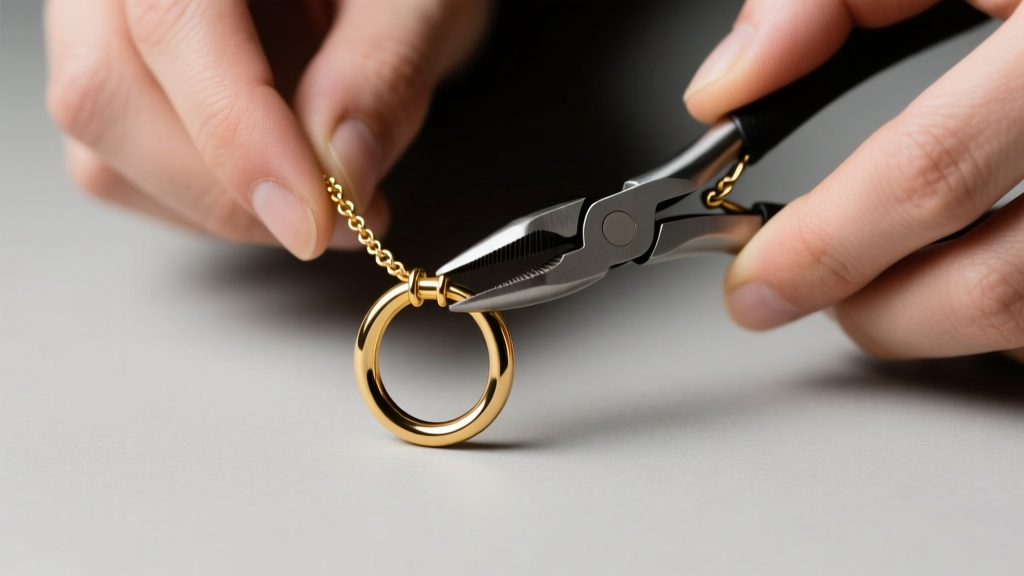
If the old clasp is attached via an unsoldered jump ring, grip the ring with your two pairs of chain-nose pliers on opposite sides of the split. Never pull the ring apart outward, as this distorts the circle and weakens the metal. Instead, twist one hand toward you and the other away, opening the ring laterally. Slide the old clasp off.
Step 3: Attach the New Clasp
Slide the new clasp onto the open jump ring, then thread the jump ring through the end link of your necklace chain. Ensure the clasp moves freely within the jump ring and is not pinched. If the jump ring is too small, the clasp will experience excessive friction and wear down over time.
Step 4: Close and Secure the Jump Ring
Using the twisting motion from Step 2, bring the ends of the jump ring back together. You should feel a slight 'click' or tension as the metal ends pass each other and align perfectly. There should be no visible gap, and no light should pass through the seam. For added security on valuable pieces, a professional jeweler will use a micro-torch to solder the jump ring shut, creating a continuous, unbreakable loop.
Troubleshooting Common Clasp Failures
Even the best kinds of necklace clasps can fail if subjected to improper care or environmental stressors. Here is how to diagnose and fix the most common issues:
- Lobster Claw Won't Snap Shut: This is usually caused by lotion, soap, or debris jamming the tiny internal spring mechanism. Soak the clasp in a mild solution of warm water and dish soap, then use a soft toothbrush to clean the crevice. Apply a microscopic drop of synthetic watch oil to the hinge.
- Toggle Clasp Keeps Slipping Out: If the T-bar is sliding through the receiving ring, the chain is likely too short, preventing the necklace's weight from keeping the bar horizontal. Add a 1-inch chain extender to increase the drape and allow gravity to lock the toggle in place.
- Magnetic Clasp Pulling Apart: If the magnets are strong but the clasp separates, the issue is often lateral sliding rather than direct pulling. Look for magnetic clasps that feature a locking groove or a secondary safety chain to prevent side-to-side shearing.
- Jump Ring Gapping: If the jump ring connecting the clasp to the chain has pulled open, the wire gauge was too thin for the weight of the necklace. Replace it with a jump ring that is at least two gauge sizes thicker (e.g., upgrade from 20-gauge to 18-gauge).
Final Sizing and Security Checks
Mastering the various kinds of necklace clasps transforms how you curate, wear, and maintain your jewelry collection. By treating the clasp as a vital structural component rather than an afterthought, you protect your investment and ensure your pieces drape beautifully. Always perform a gentle 'tug test' after replacing any hardware, and have your high-value, heavy chains inspected by a certified bench jeweler annually to check for microscopic metal fatigue in box tongues and safety latches.


