2026 Dangle Necklace Trends: Kinetic Drops & Asymmetrical Styling
Discover 2026 dangle necklace trends, from kinetic movement to asymmetrical drops. Learn how to style, size, and invest in this year's top pendant styles.

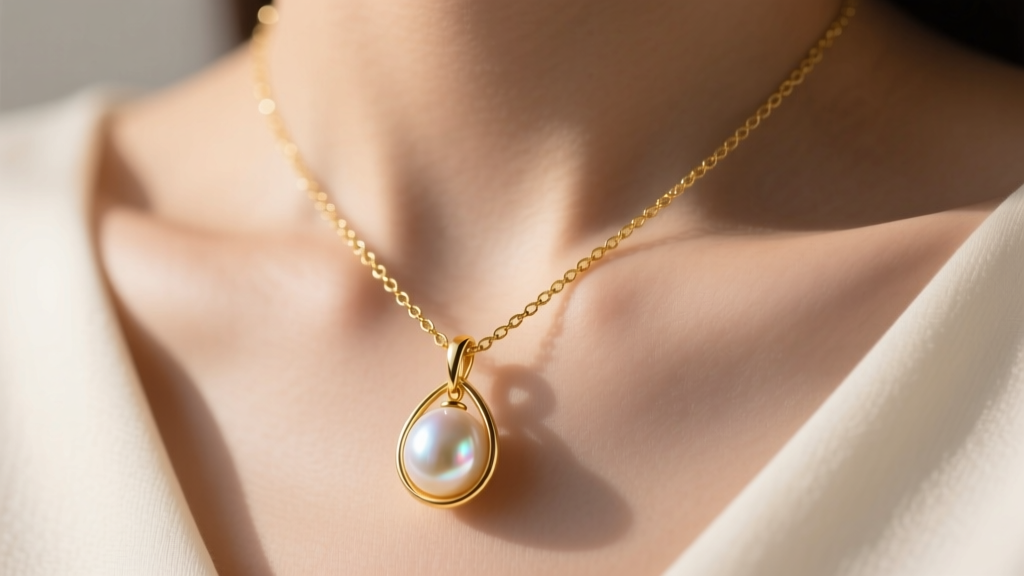
The jewelry landscape of 2026 has decisively moved away from static, perfectly centered pendants. Today, the modern dangle necklace is defined by deliberate imbalance, kinetic energy, and architectural movement. As consumers seek pieces that interact with their physical environment rather than simply resting against the skin, designers are engineering pendants that swivel, articulate, and shift. According to trend forecasting reported by Vogue, the shift toward dynamic jewelry reflects a broader cultural desire for adaptability and fluidity in personal style. This comprehensive guide breaks down the mechanical innovations, styling frameworks, and material grades defining the dangle necklace category this year.
The 2026 Shift: From Static Pendants to Kinetic Dangle Necklaces
A traditional dangle necklace relies on a simple jump ring or fixed bail to connect the drop to the chain. In 2026, the focus is entirely on kinetic engineering. High-end jewelers are incorporating micro-hinges, Teflon-lined swivel bails, and 360-degree ball-bearing joints into their pendant designs. This allows the dangle element to rotate independently of the chain, catching light from multiple angles and preventing the pendant from flipping backward against the wearer's chest.
Micro-Hinge Mechanics
The most prominent innovation in the dangle necklace space is the micro-hinge. Unlike a standard jump ring which can warp under stress, a micro-hinge utilizes a precision-machined pin—often crafted from Grade 5 titanium for its high tensile strength and low friction—to connect the drop to the bail. This allows the pendant to swing forward and backward up to 180 degrees without putting torque on the chain links. For buyers, inspecting the bail is critical: look for hinges that move silently and return to center smoothly, indicating proper tolerance machining and high-quality polishing of the internal pin.
Asymmetrical Drops: Breaking the Centerline Rule
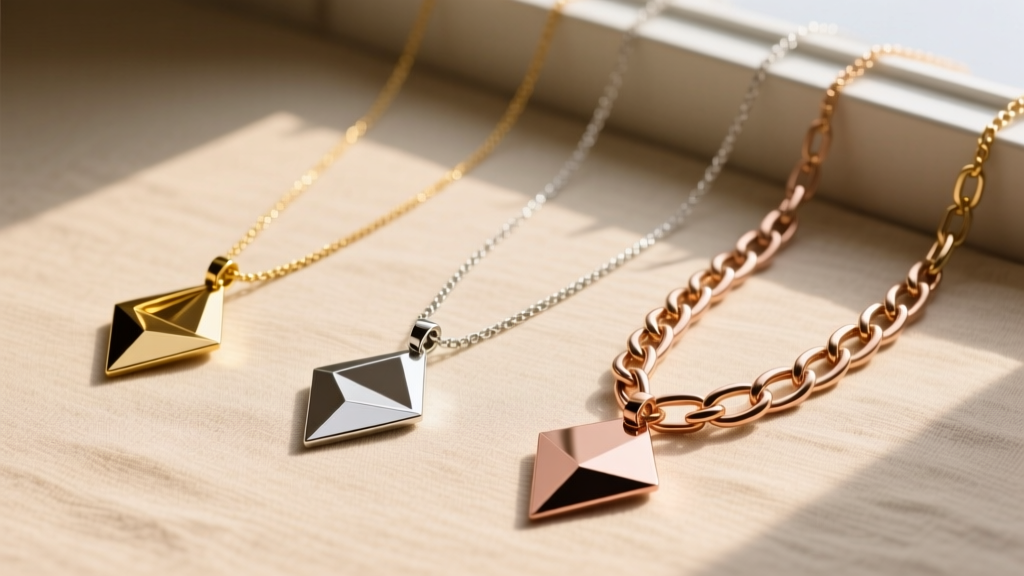
The symmetrical, perfectly centered drop is being replaced by the asymmetrical dangle necklace. This trend involves placing the pendant attachment point off-center—often at the 7-inch or 11-inch mark on an 18-inch chain—creating a deliberate visual imbalance that draws the eye diagonally across the collarbone. This technique, heavily featured in recent luxury runway shows and analyzed by Forbes in their luxury market reports, creates a sense of effortless, unstructured elegance.
Styling the Off-Center Drop
- The Lariat Hybrid: Many asymmetrical dangle necklaces mimic the look of a lariat but feature a fixed, off-center jump ring to prevent the chain from slipping and choking the wearer throughout the day.
- Weight Distribution: Because the drop is off-center, the shorter side of the chain must be slightly heavier (e.g., using a thicker cable or curb link) to counterbalance the visual and physical weight of the pendant on the longer side.
- Ear Pairing: To balance an asymmetrical dangle necklace dropping on the left side, style the right ear with a heavier, structured ear cuff or a clustered stud arrangement to maintain overall facial harmony.
True asymmetry in jewelry is not about randomness; it is about calculated visual weight. An off-center dangle necklace must be engineered so the chain does not slide, requiring precise link tension and counterbalancing.
Material Innovations & Pricing Tiers
The materials used in 2026 dangle necklaces prioritize lightweight durability, as kinetic and asymmetrical pieces require exact weight ratios to function properly. Heavy metals can cause the chain to pull uncomfortably on the nape of the neck, while overly light drops fail to hang correctly. The Gemological Institute of America (GIA) continues to highlight how alternative materials and lab-grown stones are allowing designers to create larger, more dramatic drops without the prohibitive weight and cost of traditional mined diamonds and solid platinum.
| Material Grade | Weight Factor | Durability & Use Case | 2026 Price Range (USD) |
|---|---|---|---|
| Grade 5 Titanium (Ti-6Al-4V) | Ultra-Light (4.43 g/cm³) | Exceptional for large, architectural drops and micro-hinge pins. Hypoallergenic. | $350 - $1,200 |
| 18k Recycled Yellow Gold | Heavy (15.6 g/cm³) | Best for smaller, high-density drops. Requires robust chain pairings (e.g., 14-gauge rope). | $1,800 - $6,500 |
| Lab-Grown Diamond Pave | Medium (Set in Platinum/18k) | Ideal for light-catching kinetic drops. Eliminates the heavy carat weight of mined stones. | $2,200 - $8,000 |
| Aerospace Aluminum & Enamel | Feather-Light (2.7 g/cm³) | Used for oversized, avant-garde geometric drops. Prone to scratching if not anodized. | $150 - $600 |
Neckline Pairing Framework for Elongated Drops
The elongated dangle necklace—featuring a vertical drop exceeding 2 inches—requires strategic neckline pairing to avoid looking cluttered or tangling with fabric. Here is a definitive framework for styling extended drops in 2026.
Plunging V-Neck & Deep Scoop
For deep necklines, opt for a 24-inch to 28-inch chain with a 3-inch to 4-inch vertical dangle. The goal is to fill the negative space of the décolletage without the metal resting directly on the skin. A Y-style dangle necklace with a diamond-set terminus works exceptionally well here, drawing the eye downward and elongating the torso.
Asymmetrical One-Shoulder Tops
When wearing a one-shoulder garment, the fabric already creates a strong diagonal line. Combat this with a 15-inch choker-length chain featuring a sharp, 1.5-inch off-center dangle that drops directly onto the exposed collarbone. Avoid long drops, as they will compete with the diagonal drape of the fabric and create visual chaos.
High Mock Neck & Turtleneck
Heavy knits and high collars demand an opera-length (30-inch to 34-inch) dangle necklace. Crucially, the drop must be heavily weighted (at least 10-15 grams) to act as a plumb bob, keeping the chain straight and preventing it from swinging wildly or flipping over the fabric. Matte-finished metals or dark oxidized silver provide the best contrast against dark winter knits.
Mechanical Failure Points: What to Inspect Before Buying
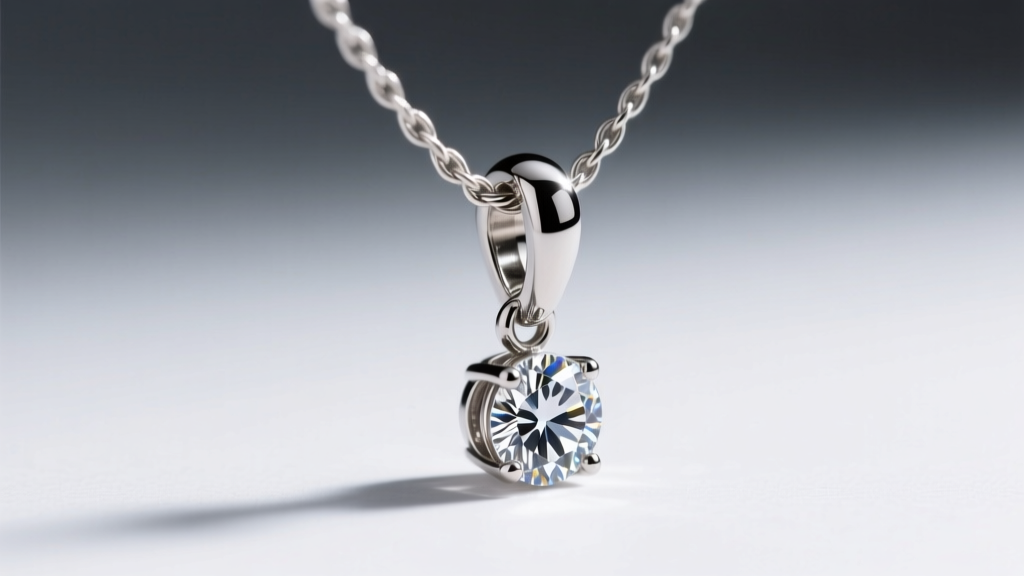
Because modern dangle necklaces incorporate moving parts and asymmetrical weight distribution, they are susceptible to specific mechanical failures that static pendants do not face. As a domain expert, I recommend inspecting the following three failure points before investing in a high-end kinetic or asymmetrical piece.
1. The Pendulum Effect (Weight Ratio Failure)
The most common complaint with poorly engineered dangle necklaces is the 'pendulum effect,' where the chain constantly flips over, bringing the clasp to the front of the neck. This occurs when the pendant is disproportionately heavy compared to the chain. The Golden Rule: The physical weight of the dangle drop should never exceed 20% of the total weight of the chain. If you are purchasing a 10-gram gemstone drop, the chain must weigh at least 40 grams to maintain proper tension and keep the clasp anchored at the nape.
2. Bail Friction and Metal Galling
In kinetic necklaces where the chain slides through a fixed bail rather than a swivel joint, continuous friction will eventually wear through the metal. This is especially prevalent when pairing a hard metal chain (like platinum or white gold) with a softer bail (like high-karat yellow gold). Always look for dangle necklaces that feature a rhodium-plated interior bail or a replaceable Teflon sleeve to prevent metal galling and eventual chain breakage.
3. Micro-Pave Shedding in Moving Parts
If your dangle necklace features a kinetic drop set with micro-pave diamonds, inspect the articulation points. If the hinges or swivels are located too close to the pave settings, the friction and micro-vibrations from daily movement will loosen the tiny prongs over time, leading to stone loss. Ensure there is at least a 2-millimeter buffer zone of bare metal between any moving joint and the nearest gemstone setting.
By understanding the mechanics, materials, and styling nuances of the 2026 dangle necklace trends, you can invest in pieces that are not only visually striking but structurally sound and engineered for dynamic, everyday wear.


