How to Clean, Repair, and Restore a Flower Necklace Silver
Learn how to troubleshoot, clean, and repair a tarnished flower necklace silver. Expert tips on removing oxidation, fixing chains, and protecting petals.

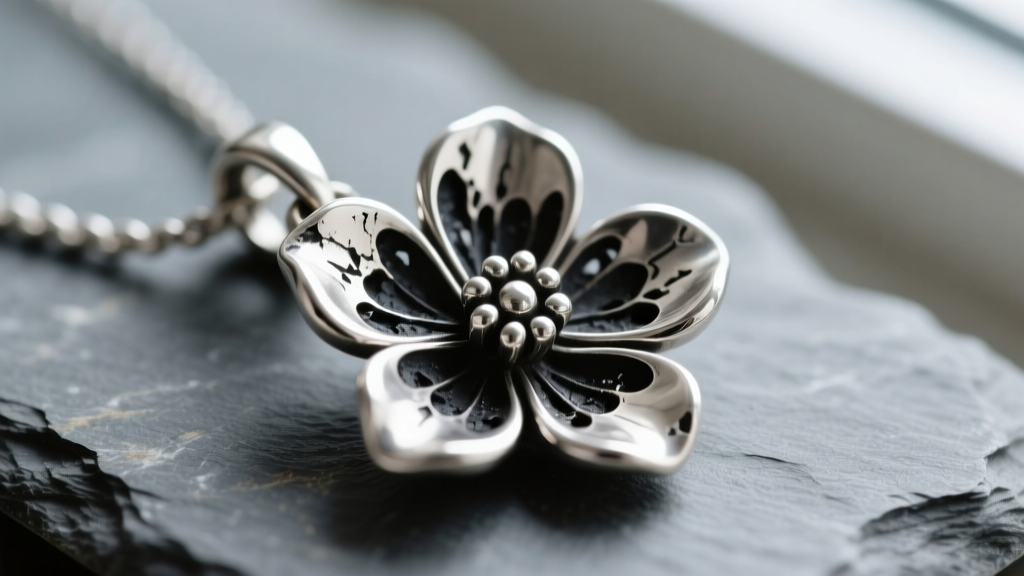
A delicate floral pendant is a timeless jewelry staple, but maintaining its intricate details requires specific care. When you invest in a flower necklace silver piece, you are often dealing with deep crevices, textured petals, and lightweight chains that are highly susceptible to environmental damage, tangling, and oxidation. Unlike smooth, flat silver surfaces, the three-dimensional anatomy of a floral design traps skin oils, lotions, and atmospheric sulfur, accelerating the tarnishing process.
In this comprehensive troubleshooting guide, we will break down the exact metallurgical reasons your silver florals tarnish, provide step-by-step restoration techniques for deep petal crevices, and offer structural solutions for fragile chain attachments.
The Anatomy of Silver Floral Tarnish and Damage
To effectively troubleshoot your jewelry, you must first understand the material. The vast majority of high-quality floral pendants are crafted from 925 sterling silver. This alloy consists of 92.5% pure silver and 7.5% copper. While pure silver (999 fine silver) is highly resistant to tarnish, it is far too soft to hold the crisp, intricate edges of a molded rose or daisy petal. The copper added to create 925 sterling silver provides necessary structural integrity, but it is also the culprit behind oxidation.
When copper is exposed to moisture and sulfur in the air, it forms copper sulfide, which manifests as a yellowish, brown, or black film on your jewelry. In a flower necklace silver design, this reaction is exacerbated by the pendant's topography. The recessed areas between petals create micro-environments where humidity and sulfur compounds become trapped, leading to localized, heavy tarnishing that standard polishing cloths simply cannot reach.
Step-by-Step Troubleshooting Guide for Silver Flower Pendants
Issue 1: Deep Crevices Tarnish (Oxidation in Petals)
When a standard jeweler's cloth fails to remove the dark oxidation nestled between the petals of your floral pendant, you need to rely on chemistry rather than friction. The most effective, non-abrasive method for intricate silver is an electrochemical reduction bath.
- Prepare the Vessel: Line a glass or ceramic bowl with aluminum foil, shiny side up.
- Add the Catalysts: Mix 1 tablespoon of baking soda and 1 tablespoon of non-iodized salt into the bowl.
- Activate the Reaction: Pour 1 cup of boiling water over the mixture. It will fizz as the alkaline solution forms.
- Submerge the Pendant: Place your flower necklace silver pendant into the solution, ensuring it physically touches the aluminum foil. Leave it for 2 to 5 minutes.
Expert Warning: Never use the aluminum foil bath if your floral pendant features porous gemstones (like turquoise, opals, or pearls) or enamel detailing. The boiling water and alkaline salts will permanently fracture or cloud these delicate materials. For mixed-media florals, stick to localized cleaning with a cotton swab dipped in mild dish soap and warm water.
Issue 2: Delicate Petal Bending or Warping
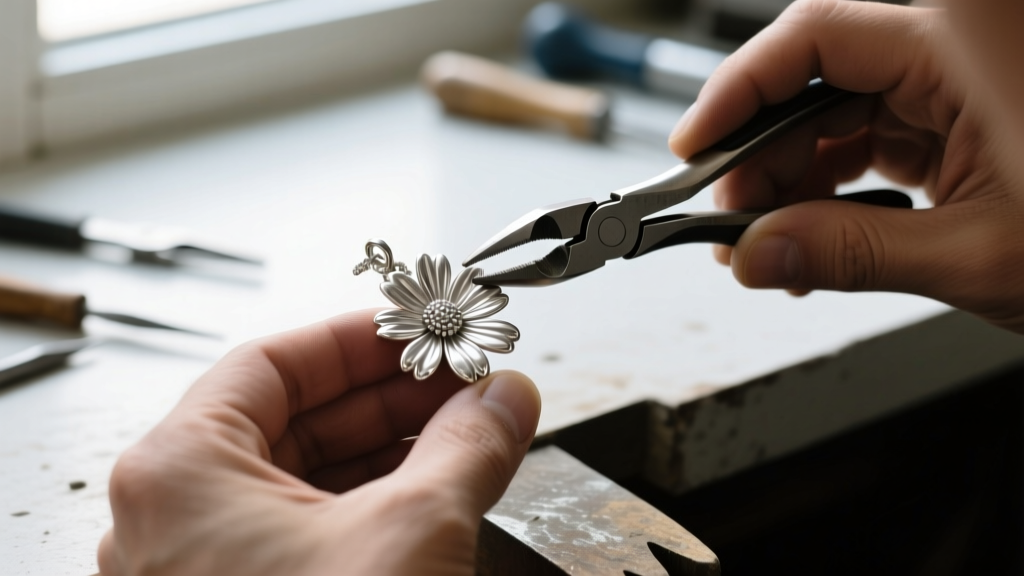
Because 925 sterling silver is relatively soft, the outer petals of a floral pendant can easily bend or warp if snagged on clothing or stored improperly. Attempting to bend them back with standard steel jewelry pliers will mar the silver with deep scratches and tool marks.
The Solution: Use nylon-jaw pliers. The soft nylon grips the silver firmly without leaving indentations. Apply gentle, incremental pressure from the base of the petal outward to reshape the metal. If the silver has become work-hardened and brittle from repeated bending, it may require professional annealing (heating and rapid cooling) by a jeweler to restore its malleability before reshaping.
Issue 3: Chain Tangling and Clasp Failure
Floral pendants are frequently paired with ultra-fine 0.7mm or 0.8mm cable chains to maintain a delicate aesthetic. However, these lightweight chains are notorious for kinking, tangling, and snapping under the pendulum weight of a solid silver flower.
The Solution: Upgrade your chain to a 1.0mm or 1.2mm box chain or wheat chain. These styles offer superior structural support and resist kinking due to their interlocking geometric links, all while remaining visually proportionate to a medium-sized floral pendant. Additionally, swap out the standard spring-ring clasp (which frequently fails due to weak internal springs) for a 5mm or 6mm lobster clasp, which provides a much more secure closure mechanism.
Chemical vs. Mechanical Cleaning: What to Avoid
Not all silver cleaners are created equal. Using the wrong product on a textured flower necklace silver piece can strip away intentional antiquing (patina) that jewelers apply to make the floral details pop.
| Cleaning Method | Best Used For | Risk Level | Time Required |
|---|---|---|---|
| Aluminum Foil Bath | Heavy, all-over black tarnish on bare metal florals | Low (High for porous gems) | 2-5 Minutes |
| Silver Dip (Liquid) | Quick fixes on smooth surfaces | High (Strips intentional patina, harsh chemicals) | 10 Seconds |
| Jeweler's Rouge Cloth | Light surface tarnish and daily polishing | Very Low | 3-5 Minutes |
| Ultrasonic Cleaner | Removing trapped dirt/oils in deep crevices | Medium (Can loosen gemstone settings) | 3-5 Minutes |
According to the Gemological Institute of America (GIA), harsh liquid silver dips contain thiourea, a toxic chemical that can cause micro-pitting on the silver surface if left on too long, ultimately making the metal tarnish faster in the future. Always opt for mechanical polishing or electrochemical baths when possible.
Preventative Maintenance for Sterling Silver Florals
Preventing tarnish is significantly easier than reversing it. To protect the intricate details of your floral pendants, implement the following storage and wear protocols:
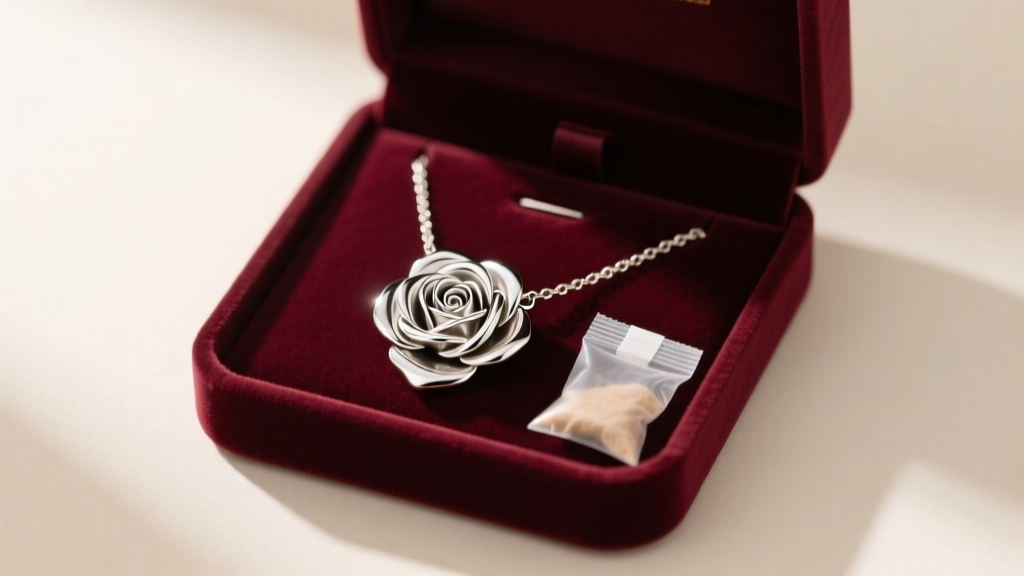
- Anti-Tarnish Strips: Store your necklace in an airtight ziplock bag with a 3M anti-tarnish strip. These strips absorb atmospheric sulfur before it can react with the copper in your sterling silver. Replace the strips every 6 months.
- Silica Gel Packets: Moisture accelerates the copper oxidation process. Tossing a small silica gel packet into your jewelry box or storage bag will keep the micro-environment dry.
- The 'Last On, First Off' Rule: Always put your flower necklace silver on after applying perfume, hairspray, and lotions. The alcohols and oils in cosmetics will quickly degrade the silver's finish and create a sticky film in the petal crevices that attracts dirt.
When to Seek Professional Jeweler Intervention
While home troubleshooting can resolve 90% of tarnish and minor bending issues, certain problems require a professional bench jeweler. If the jump ring connecting your floral pendant to the chain has thinned or cracked, do not attempt to bend it closed with household tools; it will eventually snap and you will lose the pendant. A jeweler can laser-weld or solder a new, heavy-duty jump ring in place.
Furthermore, if your floral necklace features severe scratches or you wish to completely halt the tarnishing process, ask your jeweler about rhodium plating. Rhodium is a precious metal from the platinum family that provides a brilliant, white-gold-like finish over sterling silver, rendering it completely impervious to oxidation. However, be aware that rhodium plating will fill in some of the deepest, sharpest crevices of your floral design and will need to be re-applied every 1 to 3 years depending on wear. For more insights on precious metal care, refer to the Tiffany & Co. Care Guide for industry-standard maintenance practices.
By understanding the metallurgy of 925 silver and utilizing the correct chemical and mechanical troubleshooting techniques, you can ensure your flower necklace silver remains a pristine, blooming centerpiece in your jewelry collection for decades to come.


