The Name of the Necklace in Titanic: Heart of the Ocean Specs & Lore
Discover the name of the necklace in Titanic. We break down the Heart of the Ocean's carat weights, Asprey & Garrard origins, and modern replicas.

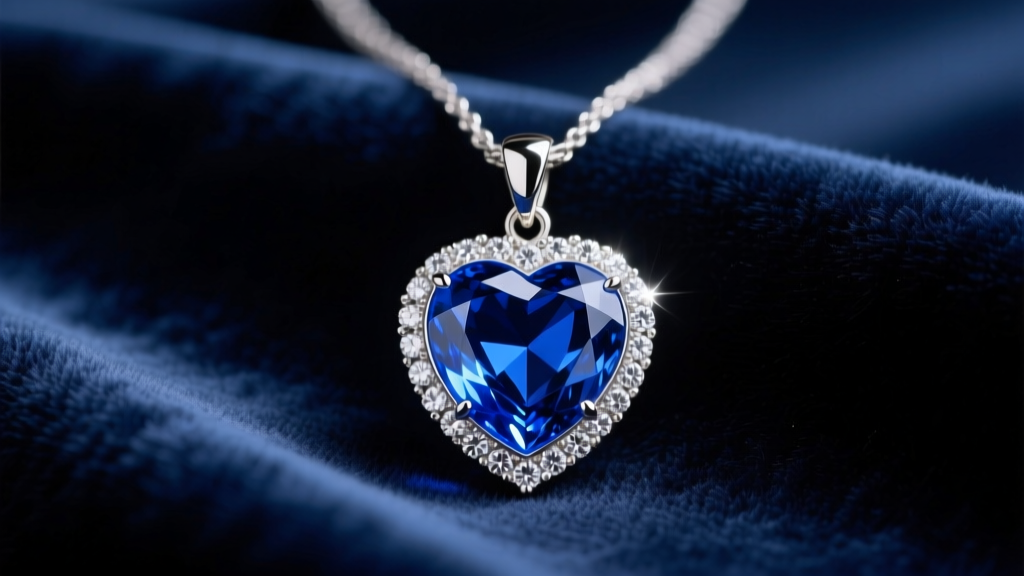
The True Name of the Necklace in Titanic: Cœur de la Mer
When jewelry enthusiasts and film buffs ask about the name of the necklace in Titanic, they are referring to the legendary Heart of the Ocean (or Cœur de la Mer in French). In James Cameron’s 1997 cinematic masterpiece, the necklace is fictionalized as a 56-carat heart-shaped diamond originally owned by Louis XVI, which was later cut into its iconic heart shape by the fictional jeweler Cartier after the French Revolution. However, the real-world history, gemological specifications, and engineering of the actual pieces created for the film—and the subsequent high-jewelry replicas—are far more fascinating than the movie's lore.
As a technical deep dive into one of the most famous pendants in pop culture history, this guide deconstructs the original movie prop, the multi-million-dollar Harry Winston Oscars replica, and the exact gemological parameters required to commission a museum-quality reproduction today.
Technical Specifications of the Original Asprey & Garrard Prop
Director James Cameron commissioned the historic London jewelry house Asprey & Garrard to create the physical prop for the film. The design brief was highly specific: a massive heart-shaped blue center stone surrounded by a halo of white diamonds, suspended from a delicate, diamond-studded chain.
Because a natural blue diamond of that size would have been impossibly rare and prohibitively expensive to insure on a movie set, the prop was crafted using alternative materials. The center stone was a heart-shaped cubic zirconia (CZ), dyed to mimic the deep cornflower blue of a premium sapphire. The surrounding halo and the chain were set with high-grade white cubic zirconias, all mounted in 18-karat white gold to provide the necessary structural integrity and cold, platinum-like luster required for the camera.
Material Breakdown: Prop vs. Real
Understanding the optical differences between the prop and a genuine gemstone requires looking at refractive indices (RI) and dispersion rates. CZ has a dispersion of 0.058–0.066, significantly higher than a diamond's 0.044. This means the movie prop exhibited intense 'fire' (rainbow flashes) under the studio lights, which visually sold the idea of a massive, flawless diamond to the audience, even if it lacked the sharp, crisp scintillation of real carbon.
| Specification | Fictional Lore | Asprey & Garrard Prop | Harry Winston Oscars Piece |
|---|---|---|---|
| Center Stone Material | Blue Diamond | Blue Cubic Zirconia | 15-Carat Blue Diamond |
| Center Stone Cut | Heart Brilliant | Heart Brilliant | Heart Brilliant |
| Halo & Chain Stones | White Diamonds | White Cubic Zirconia | 103 Carats White Diamonds |
| Metal Base | Platinum (Implied) | 18k White Gold | Platinum |
| Estimated Value | Priceless | ~$10,000 (Material) | $20M+ (Current Appraisal) |
The Harry Winston “Celine Dion” Replica: A Gemological Marvel
While the Asprey & Garrard piece was the actual prop used in the water and drawing scenes, the name of the necklace in Titanic took on a new reality in 1998. Jewelers Harry Winston created a genuine, high-jewelry replica for Celine Dion to wear during her performance of 'My Heart Will Go On' at the 1998 Academy Awards.
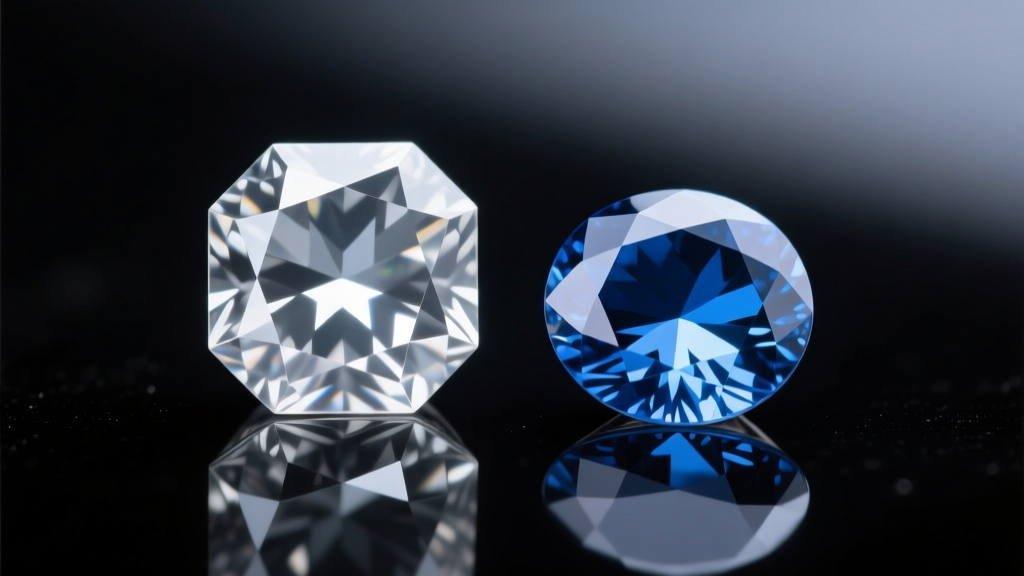
This piece was a gemological heavyweight. It featured a 15-carat heart-shaped blue diamond. Natural blue diamonds derive their color from trace amounts of boron within the carbon crystal lattice, classifying them as Type IIb diamonds—an incredibly rare category that accounts for less than 0.1% of all natural diamonds. The center stone was surrounded by 103 carats of D-flawless white diamonds. Originally valued at $1.4 million in 1998, the skyrocketing auction prices for Type IIb blue diamonds (such as the Oppenheimer Blue) place this specific Harry Winston piece at an estimated $20 million to $25 million today.
Commissioning a Museum-Quality Replica in 2026
For collectors and bespoke jewelry clients looking to recreate the Heart of the Ocean today, sourcing a 15-carat natural blue diamond is practically impossible outside of elite auction houses. Therefore, modern master jewelers substitute the center stone with a high-grade blue sapphire. According to the Gemological Institute of America (GIA), achieving the exact 'Heart of the Ocean' hue requires specific attention to sapphire origin, saturation, and tone.
Sourcing the Center Stone: Sapphire Specifications
To replicate the movie prop's deep, velvety blue without the black extinction zones common in overly dark stones, you must source a sapphire with the following parameters:
- Origin: Ceylon (Sri Lanka) or Madagascar. Kashmir sapphires offer the perfect velvety cornflower blue, but stones over 10 carats are museum pieces and rarely enter the open market.
- Color Grade: 'Royal Blue' or a deeply saturated 'Cornflower Blue'. The tone should be medium-dark (60-70%) to ensure the heart shape doesn't wash out under bright lighting.
- Treatment: While unheated sapphires command a massive premium, a high-quality heat-treated sapphire offers better color consistency and clarity for a fraction of the price, which is ideal for a replica focused on visual impact.
- Lab-Grown Alternative: For under $3,000, a flux-grown lab sapphire can be custom-cut into a 30-carat heart shape, offering identical chemical and optical properties (Mohs 9, RI 1.76-1.78) to natural corundum.
The Setting and Halo Engineering
The pendant's halo is not merely decorative; it is a structural necessity. A 20-carat sapphire can weigh upwards of 4 to 5 grams. The halo must be cast in platinum or 18k white gold with reinforced gallery wires beneath the stone to prevent the prongs from warping under the stone's kinetic movement. The movie design utilizes a modified bezel setting for the center stone, surrounded by 28 to 32 round brilliant-cut diamonds (totaling roughly 4.5 carats) set in a shared-prong halo to maximize light return.
Chain and Clasp Engineering for High-Carat Drops
A common failure point in heavy pendant necklaces is the chain. The Heart of the Ocean features a delicate-looking but structurally complex diamond-set chain. To support a heavy sapphire pendant without snapping, the chain cannot be a standard cable link.
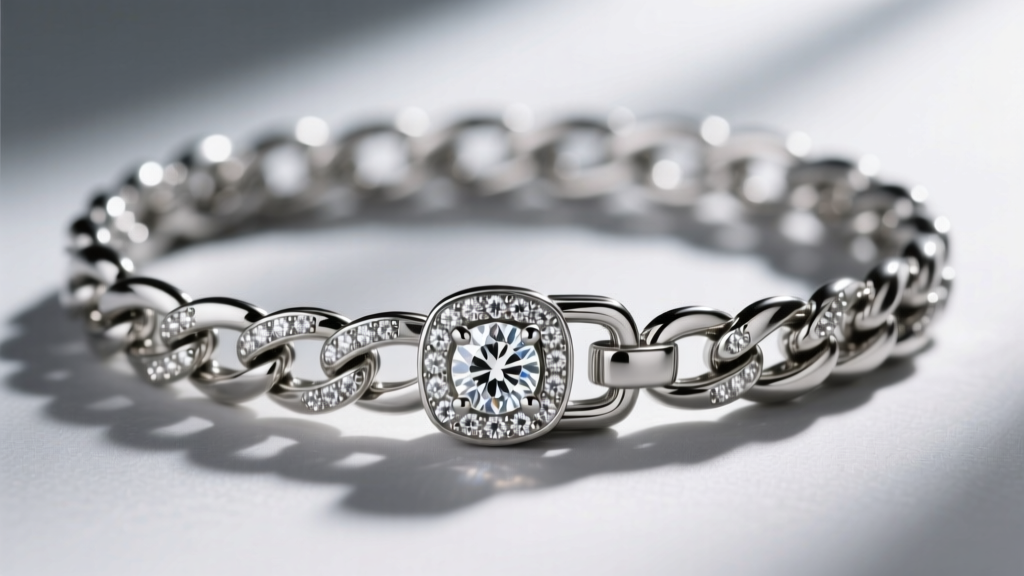
Master jewelers recreate this using a diamond-set rolo or modified belcher chain. The links are cast solid in platinum, with the top-facing links pave-set with 1.5mm round brilliants. The clasp mechanism must be a heavy-duty lobster clasp with a secondary figure-eight safety catch, soldered directly to a reinforced jump ring. The bail (the loop connecting the pendant to the chain) must be articulated, allowing the pendant to lay flat against the sternum regardless of the wearer's posture, preventing the 30-carat stone from flipping upside down.
Final Verdict on the Heart of the Ocean
Knowing the true name of the necklace in Titanic is just the beginning of understanding its impact on jewelry design. The Cœur de la Mer bridged the gap between historical romanticism and modern high jewelry. Whether analyzing the optical dispersion of the original Asprey & Garrard cubic zirconia prop, marveling at the boron-infused lattice of the Harry Winston Type IIb diamond, or engineering a bespoke Ceylon sapphire replica, the Heart of the Ocean remains a masterclass in gemological storytelling and structural jewelry design.


