What Does It Mean When a Cross Necklace Breaks? Buyer Guide
Discover what it means when a cross necklace breaks, from spiritual myths to metallurgical facts, and learn how to buy a durable chain.

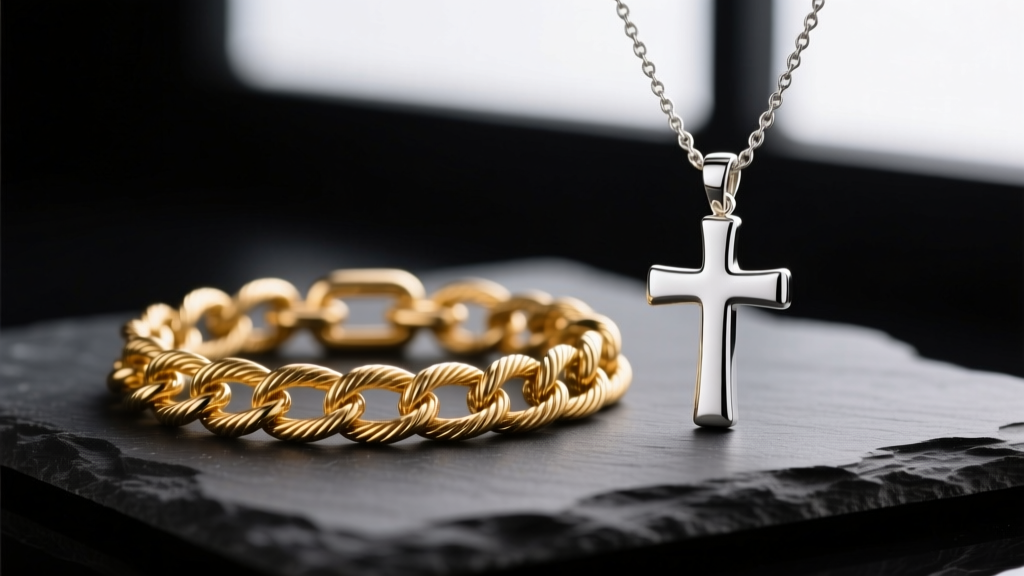
When a cherished piece of jewelry snaps, it is natural to feel a sudden pang of anxiety. If you have been searching for what does it mean when a cross necklace breaks, you have likely encountered a whirlwind of spiritual folklore, superstitions, and old wives' tales suggesting that the pendant took a 'spiritual hit' for you or absorbed negative energy. While these cultural interpretations hold deep personal meaning for many, from a jeweler's perspective, the truth is grounded entirely in physics, metallurgy, and mechanical wear.
As a senior jewelry analyst, I can assure you that a broken chain is rarely a bad omen; it is simply a predictable failure of tensile strength, friction, or metal fatigue. In this comprehensive buying guide, we will decode the mechanical reasons behind chain failure and provide you with an expert framework for purchasing a cross necklace built to last a lifetime.
The Spiritual Myth vs. The Metallurgical Reality
Historically, cross pendants have been viewed as protective talismans. In various Eastern European and Latin American traditions, a broken cross necklace is interpreted as a sign that the piece has successfully deflected a curse or absorbed a wave of misfortune directed at the wearer. While this provides psychological comfort, it obscures the actual material science at play.
Gold, silver, and platinum are dynamic metals. They are subjected to microscopic stressors every single day: the acidity of your sweat, the pulling force of a snagged sweater, and the relentless friction of the pendant bail rubbing against the chain links. According to the Gemological Institute of America (GIA), pure gold is incredibly malleable, which is why it is alloyed with metals like copper and zinc to increase its hardness. However, even alloyed gold is susceptible to work-hardening and eventual micro-fractures if the chain gauge is too thin for the weight of the pendant.
The 4 Mechanical Reasons Your Cross Necklace Broke
To buy a better necklace, you must first understand exactly how and why the previous one failed. Here are the four primary mechanical failure points in pendant necklaces.
1. The Unsoldered Jump Ring Gap
The jump ring is the tiny circular wire link that connects your clasp to the chain, or the pendant to the clasp. If this ring is merely pinched closed with pliers rather than soldered shut, everyday pulling will slowly pry the gap open. Once the gap exceeds the thickness of the adjacent link, the chain slips through and 'breaks'.
2. Clasp Spring Fatigue and Corrosion
Spring ring clasps are notoriously fragile. The outer shell is made of gold or silver, but the internal spring mechanism is usually made of base steel. Over time, the soft outer shell wears thin from friction. Microscopic amounts of moisture and sweat penetrate the shell, rusting the internal steel spring. The clasp either seizes open or snaps shut unpredictably, leading to loss.
3. Bail Friction (The Micro-Saw Effect)
The bail is the loop at the top of the cross pendant that the chain threads through. If you pair a heavy solid silver cross with a delicate 20-gauge box chain, the weight of the pendant forces the chain to grind against the inside of the bail. Over 12 to 18 months, the bail acts like a microscopic saw blade, literally cutting through the chain links.
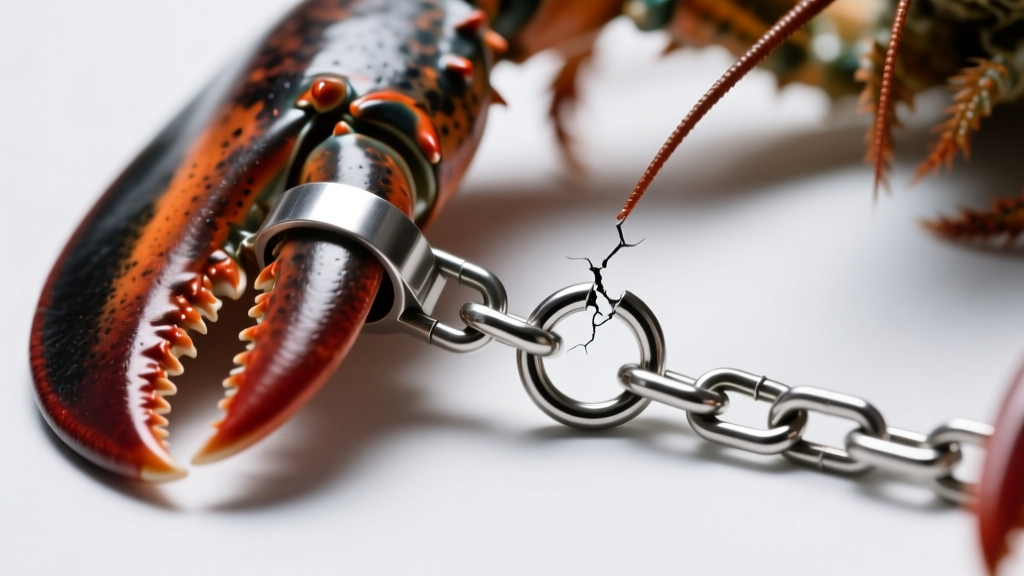
4. Kinking and Work-Hardening in Box Chains
Box chains are beautiful and reflect light brilliantly, but they are highly susceptible to kinking. When a box chain folds back on itself at a sharp angle, the geometric links crush and deform. This localized stress causes 'work-hardening,' making that specific spot brittle. A simple tug will cause the brittle link to snap cleanly.
Buying Guide: How to Choose an Unbreakable Chain
When shopping for a replacement or a new daily-wear cross necklace, the chain style you select dictates 80% of its lifespan. Below is a structural analysis of popular chain styles to help you make an informed purchase.
| Chain Style | Tensile Durability | Repairability | Best For |
|---|---|---|---|
| Cable | Low to Medium | Excellent | Lightweight, minimalist crosses |
| Box | Medium (Prone to kinking) | Difficult | Medium pendants, formal wear |
| Rope | Very High | Very Difficult | Heavy, solid gold or silver crosses |
| Wheat | High | Medium | Everyday wear, medium-to-heavy pendants |
| Curb | High | Good | Men's jewelry, thick statement crosses |
Expert Recommendation: For a daily-wear cross pendant weighing between 5 and 15 grams, a Wheat chain or a Rope chain in an 18-gauge or 16-gauge thickness offers the best balance of tensile strength, drape, and resistance to friction. Avoid box chains entirely if you are active or sleep in your jewelry.
Material Grades and Tensile Strength: What to Look For
The metal alloy you choose fundamentally alters the necklace's structural integrity. The World Gold Council outlines how varying karat weights change the physical properties of gold, but durability goes beyond just karat age.
- 14k Gold vs. 18k Gold: While 18k gold (75% pure gold) is more valuable and has a richer yellow hue, it is softer (approx. 125 Vickers Hardness). 14k gold (58.3% pure gold) contains more copper and zinc, raising its hardness to roughly 140 HV. For a chain meant to hold a pendant without stretching, 14k gold is metallurgically superior.
- Platinum (950 Pt): Platinum is dense and heavy. Unlike gold, which loses microscopic particles when scratched, platinum merely displaces metal. A platinum chain will not thin out over decades of wear, making it the ultimate heirloom choice, albeit at a premium price point (often 3x to 4x the cost of 14k gold).
- 316L Surgical Stainless Steel: If you are on a budget, 316L steel offers immense tensile strength and will not tarnish or snap under normal human-wear conditions. It is an excellent choice for heavy stainless steel cross pendants.
- Grade 5 Titanium (Ti-6Al-4V): Used in aerospace, Grade 5 titanium is virtually unbreakable in a jewelry context. It is lightweight, hypoallergenic, and possesses a tensile strength that far exceeds precious metals.
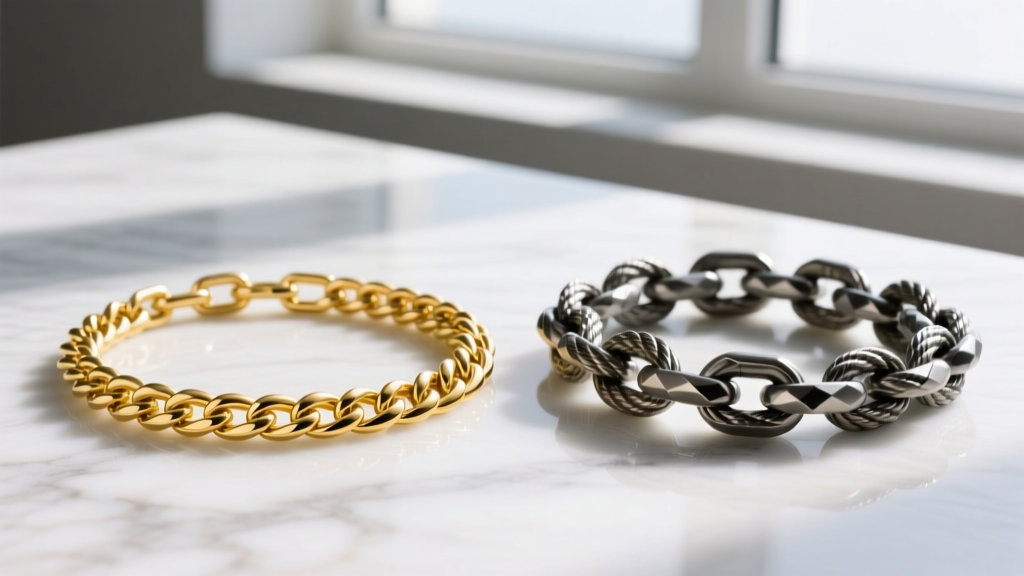
The Importance of Laser-Welded Clasps
When inspecting a necklace before purchase, look closely at the clasp assembly. High-end jewelers utilize laser welding to seal jump rings and attach clasps. Traditional torch soldering requires adding a lower-melting-point alloy to the joint, which can create a brittle weak point if not executed perfectly. Laser welding fuses the exact same metal molecules together without adding foreign solder, resulting in a joint that is as strong as the rest of the chain. Always ask the jeweler if the clasp jump rings are laser-soldered shut.
Maintenance and Preventative Care
Even the most robust 14k gold rope chain requires basic maintenance to prevent catastrophic failure. Implement these three checks into your routine:
- The Monthly Tug Test: Gently pull the chain on either side of the clasp and the pendant bail. If you feel any 'clicking' or see a gap opening in a link, stop wearing it immediately and take it to a bench jeweler for a $15 soldering repair.
- Bail Inspections: Look inside the hole of your cross pendant's bail. If you see a deep groove worn into the metal, the bail needs to be replaced or reinforced with a harder metal insert before it saws through your chain.
- Proper Storage: Never toss a necklace into a jewelry box where it can tangle. Tangles lead to aggressive pulling, which stretches cable links and crushes box links. Always hang your cross necklaces or lay them perfectly flat.
Conclusion
So, what does it mean when a cross necklace breaks? It means the laws of physics have run their course. It means a microscopic gap in a jump ring finally gave way, or a delicate 22-gauge link succumbed to months of friction against a heavy pendant. By shifting your perspective from superstition to material science, you can make empowered purchasing decisions. Opt for 14k gold or platinum, choose a rope or wheat chain in a 16-to-18-gauge thickness, and ensure your clasps are laser-soldered. By following these expert guidelines, your next cross necklace will remain a steadfast companion for decades to come.


