Best Metals for a Custom Necklace Name Pendant Design
Discover the best metals for a custom necklace name pendant. Compare 14k gold, sterling silver, and stainless steel for durability and style.

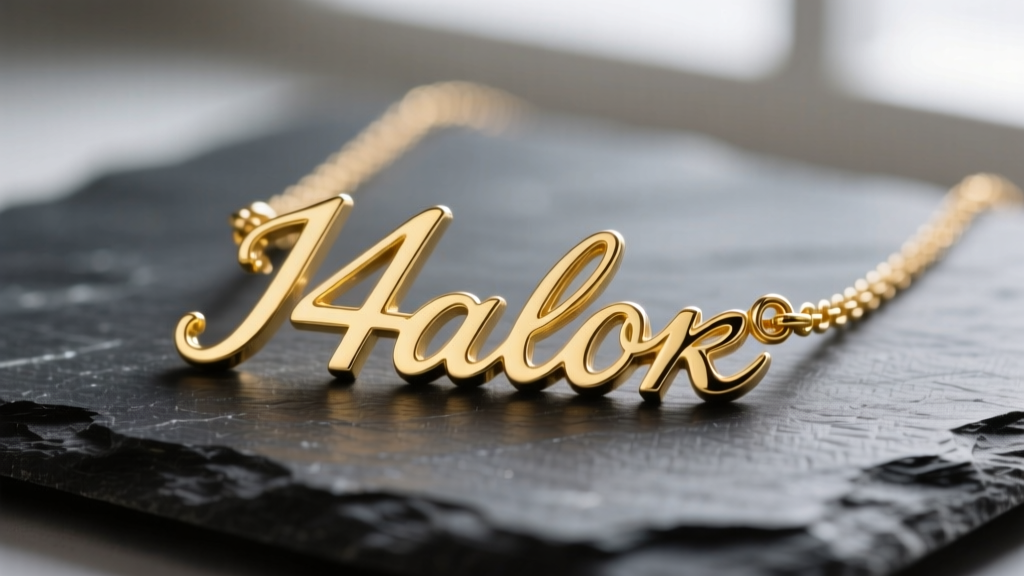
When commissioning or purchasing a personalized piece of jewelry, the aesthetic appeal of the typography is only half the battle. The structural integrity, metallurgical properties, and long-term wearability of the piece are dictated entirely by the base metal. A custom necklace name design presents unique engineering challenges: cursive loops, delicate serifs, and connecting bridges require a metal that balances malleability during manufacturing with rigid durability during daily wear. In 2026, advancements in alloy blending and CNC laser cutting have expanded the options available to consumers, making it crucial to understand the exact material properties before making an investment.
The Structural Demands of a Custom Necklace Name
Unlike a simple geometric pendant, a nameplate or cursive script pendant is essentially a continuous, interconnected metal web. The primary vulnerability lies in the "bridges"—the thin sections of metal connecting letters like 'S' and 't' or the sweeping tails of a 'y' or 'g'. To prevent warping or snapping, jewelers cut these pendants from sheet metal measured in gauges.
- 18-Gauge (1.0mm): Often used for cheap, mass-produced fashion jewelry. It is highly susceptible to bending and will easily warp if a long name (e.g., "Katherine") is cut into it.
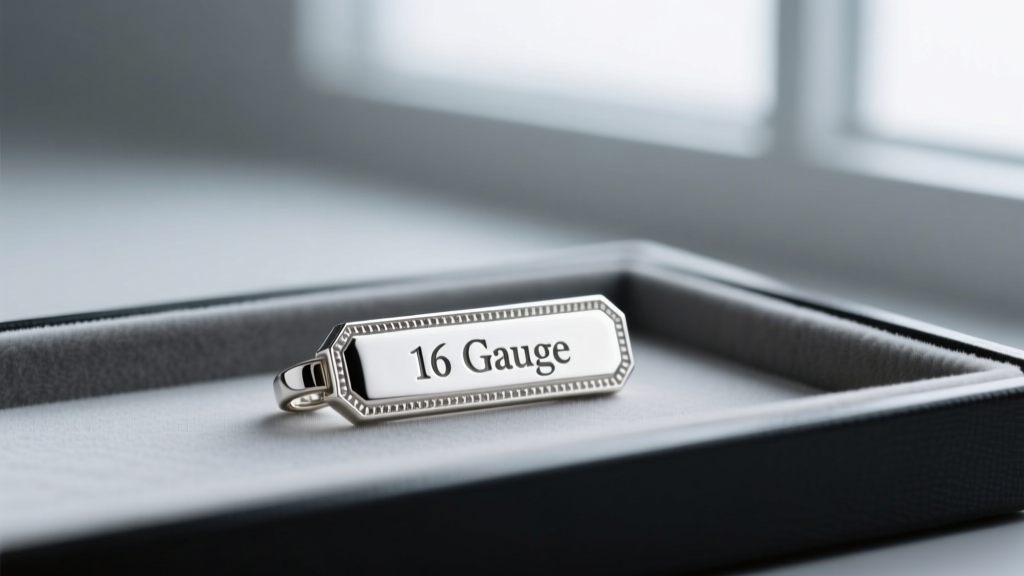
- 16-Gauge (1.3mm): The industry standard for high-quality silver and steel name pendants. It provides enough rigidity to hold complex cursive shapes without feeling overly heavy on the collarbone.
- 14-Gauge (1.6mm): Reserved for premium solid gold pieces or heavy statement nameplates. The added thickness ensures that the metal can withstand decades of tension without structural fatigue.
Material Showdown: Precious vs. Base Metals
Choosing the right alloy is a matter of balancing budget, skin chemistry, and lifestyle. According to the Gemological Institute of America (GIA), the alloying metals mixed with pure gold or silver drastically alter the hardness and tarnish resistance of the final piece.
14k vs. 18k Solid Gold
Pure 24k gold is far too soft for a necklace name pendant; the delicate loops would bend out of shape within days. Therefore, gold is alloyed with metals like copper, silver, and zinc.
18k Gold (75% pure gold) offers a rich, buttery yellow hue but has a lower Vickers hardness (approx. 125 HV). It is more prone to micro-scratches and can bend if caught on heavy clothing.
14k Gold (58.5% pure gold) is the undisputed champion for intricate name jewelry. With a Vickers hardness ranging from 135 to 160 HV (depending on the exact copper/silver ratio), 14k gold provides the necessary tensile strength to keep cursive bridges intact. For a 2026 price range of $350 to $850, 14k gold offers the best intersection of heirloom value and structural resilience.
Sterling Silver (925) vs. Argentium
Traditional 925 Sterling Silver consists of 92.5% pure silver and 7.5% copper. While the copper provides necessary strength, it is also the culprit behind silver's notorious tendency to tarnish when exposed to sulfur and humidity. For a nameplate necklace that rests against the skin's sweat and sebum, 925 silver requires weekly polishing with a microfiber cloth.
Argentium Silver (960) is a modern, premium alternative. By replacing some of the copper with germanium, Argentium is highly tarnish-resistant and hypoallergenic. As noted in the GIA Silver Guide, Argentium's fire-stain resistance makes it a superior choice for laser-cut pendants, as the edges remain bright white without requiring aggressive chemical pickling.
Surgical Stainless Steel (316L)
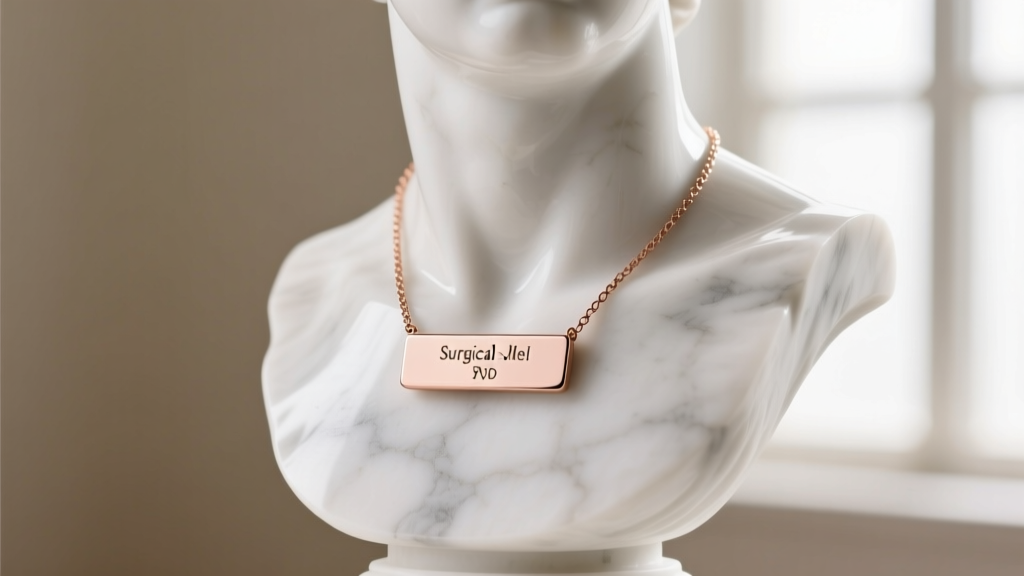
For budgets under $100, 316L Surgical Stainless Steel is the premier choice. Unlike cheaper 304 stainless steel, 316L contains 2-3% molybdenum, which drastically increases its resistance to chlorides and industrial solvents. This means you can wear a 316L necklace name in the ocean or a chlorinated pool without triggering pitting corrosion. Furthermore, 316L complies with the EU Nickel Directive (EN 1811:2011), releasing less than 0.5 µg/cm²/week of nickel, making it safe for the vast majority of metal-sensitive wearers. However, steel cannot be easily soldered; if the chain loop snaps, laser welding is required for repair.
Comprehensive Metal Comparison Chart
To visualize the trade-offs between these popular metals, refer to the 2026 material specification table below:
| Metal / Alloy | Composition | Hardness (Vickers) | Tarnish Resistance | Est. Price Range (2026) |
|---|---|---|---|---|
| 14k Yellow Gold | 58.5% Au, 25% Ag, 16.5% Cu | 135 - 160 HV | Excellent | $350 - $850 |
| 18k Yellow Gold | 75% Au, 12.5% Ag, 12.5% Cu | 120 - 135 HV | Excellent | $600 - $1,400 |
| 925 Sterling Silver | 92.5% Ag, 7.5% Cu | 65 - 80 HV | Poor (Requires upkeep) | $80 - $180 |
| Argentium 960 | 96% Ag, Germanium alloy | 75 - 90 HV | Very Good | $120 - $250 |
| 316L Steel (PVD Coated) | Fe, Cr, Ni, Mo | 150 - 190 HV | Excellent (Base metal) | $35 - $90 |
Manufacturing Methods: Laser Cutting vs. Stamping
The metal you choose must be compatible with the manufacturing method. Today, 95% of custom name pendants are created using CNC Fiber Laser Cutting. A high-powered laser vaporizes the metal along a digital vector path. The "kerf" (the width of the cut) is incredibly narrow, allowing for sharp serifs and tight cursive loops.
However, when cutting 18k gold or silver, the intense heat can leave a rough, oxidized edge that requires meticulous hand-filing and polishing. Conversely, 316L steel is often cut and then coated with a PVD (Physical Vapor Deposition) layer of rose or yellow gold. PVD bonding is exceptionally hard, but if the laser cut is not perfectly polished before coating, the PVD layer will flake off the edges within a year.
Skin Chemistry and Metal Reactivity
A frequently overlooked factor in selecting a necklace name material is the wearer's unique skin chemistry. Human sweat contains urea, lactic acid, and salts. Individuals with highly acidic sweat (a lower pH) will find that 925 sterling silver tarnishes at an accelerated rate, sometimes turning black within 48 hours of continuous wear. The copper in the silver alloy reacts with the sulfur and acids, creating silver sulfide.
If you have acidic skin or work in environments with high sulfur exposure (such as certain culinary or industrial settings), you must opt for 14k gold, platinum, or 316L stainless steel. These metals are virtually impervious to standard human perspiration and will maintain their structural and visual integrity without chemical reactions.
Chain Pairing and Clasp Mechanics
The pendant is only as secure as the chain it hangs from. Because name pendants are horizontally weighted and can catch on scarves or hair, the chain must possess high tensile strength.
Box Chains and **Cable Chains** in 1.2mm to 1.5mm thicknesses are ideal. Avoid hollow rope chains or delicate snake chains, which are prone to kinking and snapping under the pendulum-like weight of a long nameplate. Furthermore, always upgrade the clasp. A standard spring-ring clasp is a failure point; upgrade to a solid cast lobster clasp with a reinforced jump ring to ensure your custom piece remains secure around your neck.
Final Verdict: Matching Metal to Lifestyle
Ultimately, the best metal for your custom necklace name depends on your budget and maintenance preferences. For an heirloom-quality piece that will survive generations and resist all tarnish, 14k solid gold cut at 16-gauge is the gold standard. For those seeking an affordable, everyday piece that can withstand water, sweat, and friction without upkeep, 316L surgical steel offers unmatched metallurgical durability. By understanding the gauge, alloy composition, and manufacturing techniques behind your jewelry, you can ensure your personalized pendant remains a flawless representation of your identity for decades to come.