A Beginner's Guide to the Knights Templar Necklace
Discover the history, symbolism, and best metals for a Knights Templar necklace. Learn how to choose, style, and care for this historic pendant.

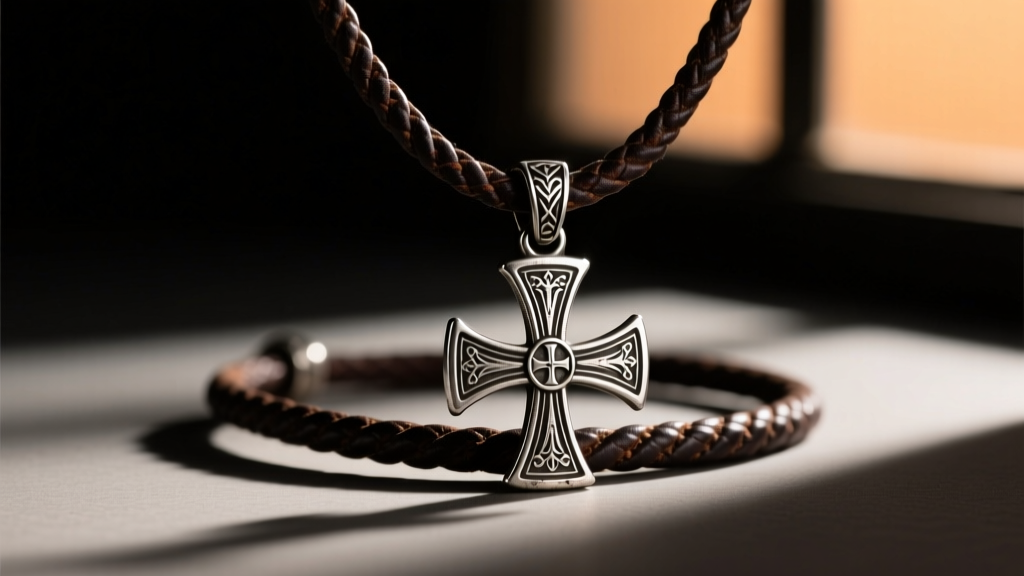
The allure of the Poor Fellow-Soldiers of Christ and of the Temple of Solomon—better known as the Knights Templar—has transcended centuries. Today, the Knights Templar necklace serves as a powerful symbol of faith, historical fascination, and fraternal pride. However, navigating the market for these historical pendants can be overwhelming for beginners. From distinguishing authentic heraldic symbols to selecting the right metal grade for daily wear, there is much to consider before making a purchase.
This comprehensive guide breaks down everything you need to know about choosing, styling, and maintaining a Knights Templar necklace, ensuring you invest in a piece that is both historically respectful and structurally sound.
The True History Behind the Pendant
Founded in 1119 AD by Hugues de Payens, the Knights Templar were a Catholic military order renowned for their martial prowess and early banking systems. According to historical records documented by Britannica, the order was officially recognized by the papal bull Omne Datum Optimum in 1139. Their iconic uniform featured a white mantle emblazoned with a distinct red cross, symbolizing martyrdom and unwavering devotion.
When you purchase a Knights Templar necklace today, you are buying into this rich tapestry of medieval history. However, mass-market jewelry often plays fast and loose with historical accuracy, mixing up crusader insignias or using incorrect Latin mottos. Understanding the core symbols is your first line of defense against poorly researched novelty jewelry.
Decoding the Symbols: What to Look For
A high-quality Templar pendant relies on precise iconography. The two most prominent features you will encounter are the cross design and the Latin inscriptions.
The Cross Pattée vs. The Maltese Cross
The most common mistake beginners make is confusing the Cross Pattée with the Maltese Cross. While both are associated with medieval military orders, they are distinctly different.
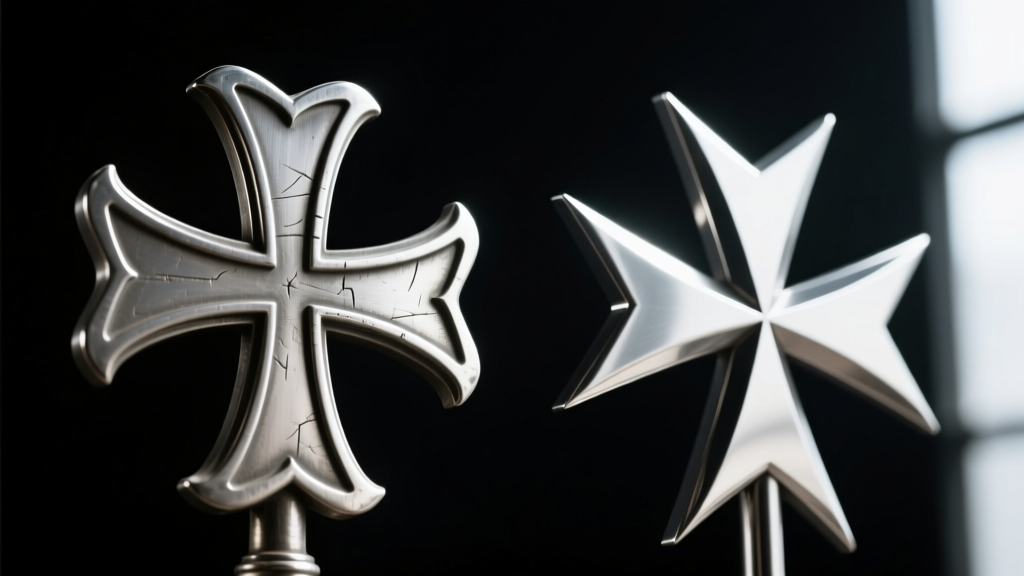
- The Cross Pattée: This is the authentic Templar cross. It features arms that are narrow at the center and flare out broadly at the ends with flat or slightly rounded edges.
- The Maltese Cross: Associated with the Knights Hospitaller, this cross has eight points and distinct V-shaped notches at the ends of its arms.
If a product description claims to be a 'Templar' necklace but features a Maltese cross, it is historically inaccurate. Always inspect the product photos closely to ensure the arms flare outward without V-notches.
Latin Inscriptions and Engraving Depth
Many pendants feature the motto 'Non Nobis Domine, Non Nobis, Sed Nomini Tuo Da Gloriam' (Not unto us, O Lord, not unto us, but to Your name give glory) or 'In Hoc Signo Vinces' (In this sign, you shall conquer).
Pro Tip: Pay attention to the engraving depth. Cheap pendants use shallow laser etching that will wear away after a year of friction against clothing. Look for CNC-machined or deeply cast engravings where the lettering is recessed by at least 0.5mm to ensure longevity.
Material Guide: Choosing the Right Metal
The metal you choose dictates the necklace's weight, tarnish resistance, and overall lifespan. According to the Gemological Institute of America (GIA), understanding metal properties is crucial for jewelry that is meant to be worn daily. Below is a comparison of the most common metals used for Templar pendants.
| Metal Type | Grade / Stamp | Price Range | Pros | Cons |
|---|---|---|---|---|
| Stainless Steel | 316L Surgical | $20 - $50 | Hypoallergenic, sweat-proof, highly durable, affordable. | Heavy, cannot be easily resized or repaired if the bail breaks. |
| Sterling Silver | 925 (Oxidized) | $60 - $150 | Authentic antique look, holds intricate detail, precious metal. | Requires specific cleaning to maintain patina, softer than steel. |
| Solid Gold | 14k or 18k | $400 - $900+ | Prestigious, will not tarnish, excellent heirloom value. | Expensive, high theft risk, lacks the 'weathered' historical aesthetic. |
| Bronze / Brass | Unplated | $30 - $70 | Beautiful natural aging process, warm historical tone. | Can turn skin green due to copper content, requires sealing. |
Expert Recommendation: For beginners, oxidized 925 sterling silver offers the best balance of historical authenticity, detail retention, and intrinsic value. The intentional blackening (using liver of sulfur) highlights the deep crevices of the Cross Pattée, giving it an excavated, medieval artifact appearance.
Chain Pairings and Hardware Mechanics
A heavy historical pendant requires a chain that can support its weight without snapping. The most common failure point in any necklace is the hardware, not the chain links themselves.
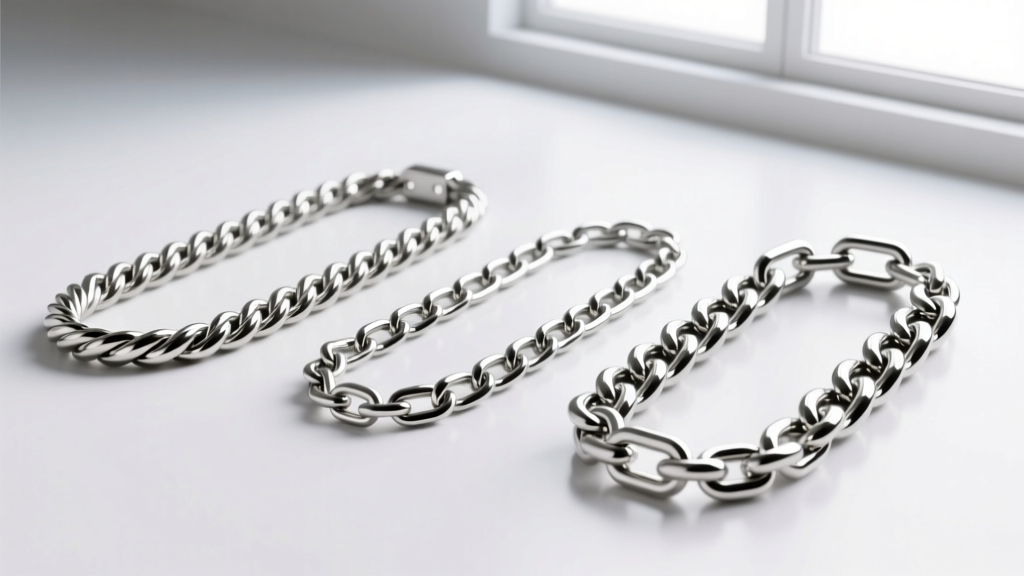
Matching Chain Thickness to Pendant Weight
A standard 30mm x 40mm solid silver Templar cross weighs roughly 12 to 18 grams. To support this, you need a chain with a thickness between 2.5mm and 4.0mm.
- Box Chains (2.5mm - 3.0mm): Excellent for a clean, geometric look that contrasts nicely with the ornate pendant. They lay flat and resist kinking.
- Rope Chains (3.0mm - 4.0mm): Offer a twisted, vintage aesthetic that pairs beautifully with oxidized silver. They are incredibly strong due to their interwoven links.
- Curb Chains (3.5mm+): Best for large, heavy 'statement' pendants (50mm+). They provide a rugged, masculine foundation.
Critical Hardware Inspections
Before buying, check the bail (the loop that connects the pendant to the chain). Avoid pendants where the bail is glued on or attached with an unsoldered jump ring. The bail should be cast as a single, continuous piece with the pendant body, or securely laser-welded. Furthermore, ensure the chain features a lobster clasp. Spring-ring clasps are notoriously weak and will inevitably fail under the dynamic weight of a swinging Templar cross.
Sizing and Proportions for Different Body Types
Choosing the right dimensions ensures the necklace looks proportional rather than overwhelming or comically small.
Pendant Dimensions
- Subtle / Everyday (15mm - 20mm): Ideal for wearing under a shirt or in professional environments where you want the symbol close to the skin but out of sight.
- Standard / Versatile (25mm - 35mm): The sweet spot for most men and women. It rests perfectly on the sternum and is easily visible with an open-collar shirt.
- Statement / Outerwear (40mm - 55mm): Designed to be worn over clothing, such as a t-shirt or light sweater. These are heavy and demand a thick chain.
Chain Length Guide
For a standard 30mm pendant, a 22-inch chain is generally the most flattering for men, allowing the cross to rest on the upper chest. For women, an 18-inch to 20-inch chain places the pendant elegantly at the collarbone or upper décolletage. Always verify the inner diameter of the pendant's bail; if it is 4mm, you cannot use a chain thicker than 3.5mm.
Care and Maintenance for Antiqued Finishes
Cleaning an oxidized Knights Templar necklace requires a delicate touch. The dark patina in the recessed areas is what gives the piece its depth and historical character. If you clean it incorrectly, you will strip this finish, leaving the pendant looking flat and artificially bright.
Never use ultrasonic cleaners or liquid silver dips on antiqued jewelry. These methods will strip the intentional oxidation from the crevices, ruining the contrast.
Instead, use a dry, untreated microfiber polishing cloth. Gently rub only the raised, high-polish areas of the cross and the outer edges. This removes skin oils and environmental tarnish while leaving the dark, recessed Latin engravings and inner angles completely untouched. If you live in a highly humid environment, store the necklace in an airtight ziplock bag with a silica gel packet to prevent moisture-induced degradation.
Verifying Authenticity and Hallmarks
When investing in precious metals like sterling silver or gold, always look for official hallmarks. As outlined by the London Assay Office, a legitimate 925 stamp guarantees the metal contains 92.5% pure silver. Be wary of listings that use terms like 'Tibetan Silver' or 'Silver-Plated,' as these contain little to no actual precious metal and are prone to rapid corrosion and skin discoloration. A true Knights Templar necklace is a tribute to a legacy of endurance; the materials you choose should reflect that same enduring quality.


