Catholic Cross Necklace Guide: Metals, Meaning, and Sizing
Discover how to choose the perfect catholic cross necklace. Learn about crucifix vs. cross symbolism, metal grades, chain pairings, and proper sizing.

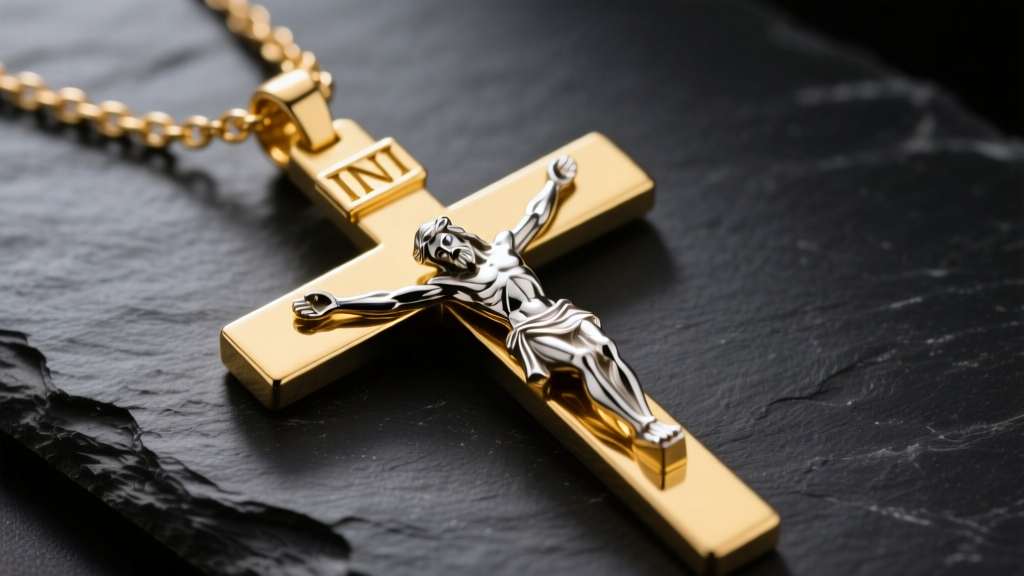
Choosing a catholic cross necklace is a deeply personal decision that bridges faith, tradition, and personal style. Whether you are purchasing your first sacramental piece of jewelry, selecting a gift for a Confirmation, or upgrading an heirloom, understanding the nuances of religious jewelry is essential. Unlike standard fashion pendants, a Catholic cross or crucifix carries profound theological weight and specific design traditions that dictate its anatomy, material choices, and proper wear.
In this comprehensive beginner-friendly guide, we will break down the critical differences between crosses and crucifixes, decode the traditional engravings, and provide a practical decision framework for selecting the right metal grade, chain style, and bail size to ensure your necklace lasts a lifetime.
The Core Distinction: Cross vs. Crucifix
While the terms are often used interchangeably in casual conversation, there is a strict theological and visual distinction between a cross and a crucifix within the Catholic tradition. A cross is a bare, empty structure consisting of the vertical and horizontal beams. It is widely used across many Christian denominations and often symbolizes the resurrection. A crucifix, however, specifically includes the corpus—the sculpted body of Jesus Christ.
According to the United States Conference of Catholic Bishops (USCCB), the crucifix serves as a powerful sacramental, continually reminding the faithful of Christ's ultimate sacrifice. For traditional Catholic jewelry, the crucifix is the standard choice for everyday wear, though bare crosses featuring specific Catholic motifs (like the IHS christogram) are also acceptable and increasingly popular in modern minimalist designs.
Decoding the Details: INRI, IHS, and the Corpus
When examining a high-quality catholic cross necklace, you will notice specific iconographic details that separate authentic religious jewelry from generic fashion replicas.
The INRI Plaque
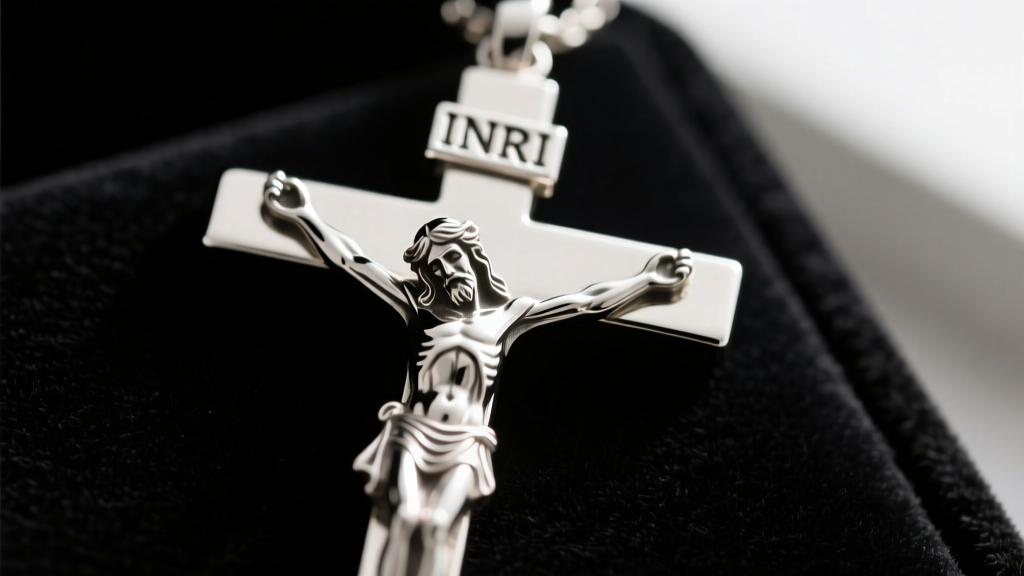
At the top of a traditional crucifix, you will often find a small, angled plaque bearing the letters INRI. This is an acronym for the Latin phrase Iesus Nazarenus, Rex Iudaeorum, which translates to "Jesus of Nazareth, King of the Jews." Historically, this was the titulus (title) that Pontius Pilate ordered to be placed above Christ's head. A well-crafted pendant will feature an INRI plaque that is either cast as part of the solid piece or soldered securely at a slight downward angle to mimic its historical placement.
What to Look For in a High-Quality Corpus
The corpus is the focal point of a crucifix. In premium jewelry, the anatomy of the corpus should be distinct, with visible musculature, a draped loincloth (perizonium), and a bowed head. Cheaper, mass-produced pendants often feature a flat, stamped corpus that lacks depth. Look for pieces where the corpus is cast using the lost-wax method, ensuring sharp, three-dimensional details that catch the light.
Metal Grades and Material Longevity
The metal you choose dictates not only the price of your catholic cross necklace but also its durability, maintenance requirements, and skin compatibility. According to the Gemological Institute of America (GIA), understanding precious metal hallmarks is crucial for verifying quality and purity.
| Metal Type | Hallmark | Pros | Cons & Maintenance | Price Range |
|---|---|---|---|---|
| Sterling Silver | .925 | Classic, bright finish; traditional choice for sacramentals. | Prone to tarnish; requires regular polishing with a treated cloth. | $40 - $150 |
| 14k Yellow/White Gold | 14k / 585 | Highly durable; excellent for heirloom pieces; resists deep tarnish. | White gold requires periodic rhodium plating; higher initial cost. | $250 - $800+ |
| 316L Surgical Steel | None / 316L | Hypoallergenic; will not tarnish; extremely budget-friendly. | Cannot be resized or soldered by traditional jewelers if the bail breaks. | $15 - $45 |
| Vermeil | .925 + Gold | Affordable gold appearance over a sterling silver base. | Gold layer will eventually wear off with daily friction, requiring re-plating. | $60 - $120 |
Expert Tip: If you opt for sterling silver, look for pieces that have been "rhodium flashed." This microscopic plating of platinum-group metal prevents immediate tarnishing and gives the silver a bright, white-gold-like luster that lasts for years before needing a re-plate.
Selecting the Right Chain and Bail Size
A common mistake beginners make is pairing a heavy, solid-metal crucifix with a delicate, lightweight chain. This not only looks disproportionate but guarantees that the chain will snap under the pendant's kinetic weight. Furthermore, the bail (the loop at the top of the pendant that the chain threads through) must be correctly sized.
Chain Styles That Complement Religious Pendants
- Figaro Chain (2.0mm - 3.0mm): The alternating pattern of the Figaro chain provides excellent tensile strength and a masculine, traditional aesthetic that pairs beautifully with medium-to-large crucifixes.
- Rolo Chain (1.8mm - 2.5mm): Composed of uniform, round links, the rolo chain is incredibly durable and offers a classic, unobtrusive backdrop for highly detailed pendants.
- Cable Chain (1.5mm - 2.0mm): Best suited for smaller, lightweight crosses (under 5 grams). Avoid cable chains for heavy pendants, as the oval links can easily pull apart.
Avoid Snake Chains: While sleek, snake chains are notorious for kinking and trapping body hair. They also lack the structural integrity to support a heavy metal corpus over time.
The Bail-to-Chain Ratio Framework
To ensure your chain threads smoothly without causing friction wear on the bail, use this sizing rule: The inner diameter (ID) of the bail must be at least 1.5 times the width of your chain. For example, if you are using a 2.0mm Figaro chain, the bail's inner opening should be a minimum of 3.0mm. If you are buying a pendant and chain separately, always measure the bail ID with digital calipers before purchasing your chain.
Sizing and Proportions for Everyday Wear
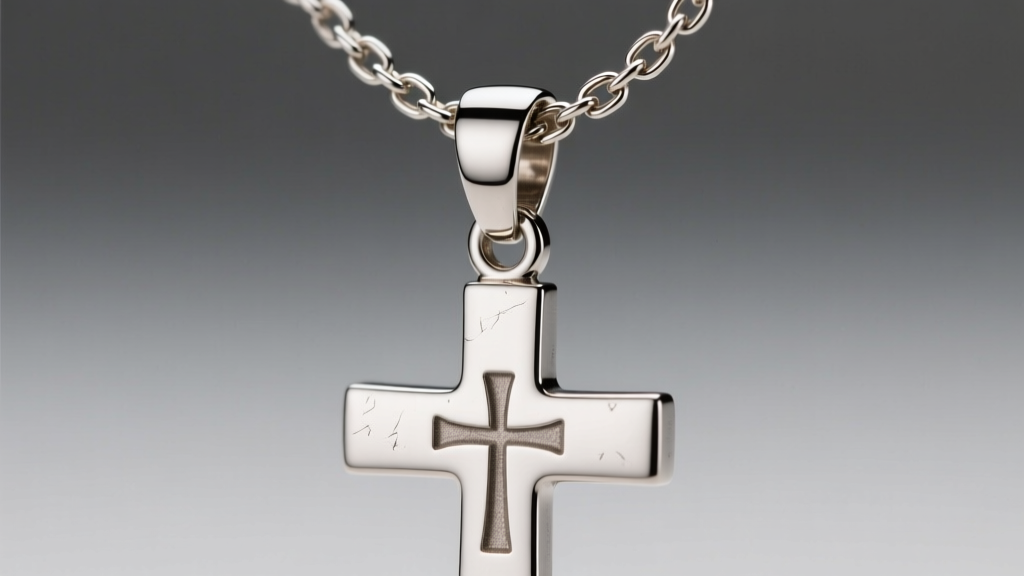
The visual impact of a catholic cross necklace relies heavily on the drop length of the chain and the physical dimensions of the pendant. Religious jewelry is generally meant to be worn close to the body, resting on the chest rather than hanging over clothing as a bold fashion statement.
- For Men: A 20-inch to 24-inch chain is standard, allowing the pendant to rest on the upper chest or sternum. Pendant sizes typically range from 1.25 inches to 2.0 inches in height.
- For Women: An 18-inch chain is the most versatile, resting just below the collarbone. Pendant heights between 0.75 inches and 1.25 inches offer an elegant, proportional look.
- For Children (First Communion): A 14-inch to 16-inch chain with a petite 0.5-inch to 0.75-inch cross is appropriate and safe.
Caring for Your Sacramental Jewelry
Because a catholic cross necklace is often blessed by a priest, it is treated with reverence. However, from a purely material standpoint, proper care is required to maintain its physical integrity.
Cleaning: Never use ultrasonic jewelry cleaners on a crucifix. The high-frequency vibrations can easily loosen the microscopic solder joints holding the INRI plaque or the corpus to the main crossbeam. Instead, use a soft-bristled baby toothbrush with a drop of mild dish soap and warm water to gently agitate dirt from the crevices of the corpus. Dry thoroughly with a microfiber cloth.
Water Exposure: While 14k gold and 316L steel can withstand occasional water exposure, sterling silver should be removed before swimming in chlorinated pools or saltwater, as these chemicals will rapidly accelerate oxidation and cause deep, difficult-to-remove pitting.
By understanding the theological symbolism, selecting the appropriate metal grade, and correctly pairing your chain and bail, you ensure that your catholic cross necklace remains a durable, beautiful, and meaningful sacramental for decades to come. For more insights into the traditions surrounding religious sacramentals, you can explore resources provided by Vatican News.


