Expert Guide to Selecting and Stringing a Kyanite Bead Necklace
Discover expert tips on selecting, grading, and stringing a kyanite bead necklace. Learn about hardness anisotropy, drill holes, and wire gauges.

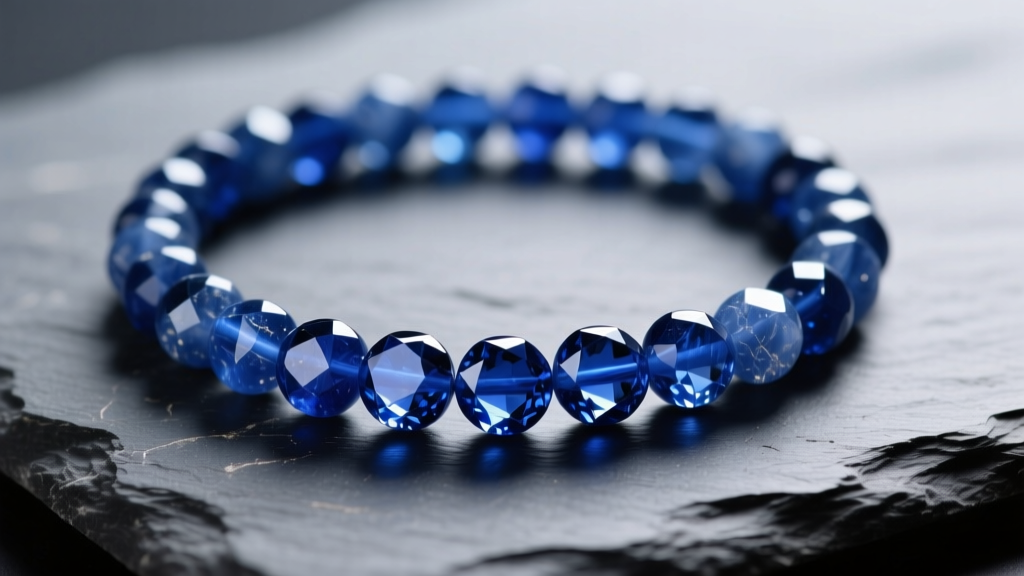
The Allure and Complexity of Kyanite Jewelry
A kyanite bead necklace is a masterclass in natural beauty, offering deep, sapphire-like blues and striking visual depth. However, from a gemological and lapidary perspective, kyanite is one of the most notoriously difficult stones to work with. Unlike quartz or beryl, which possess uniform crystal structures, kyanite presents unique structural challenges that directly impact how beads are cut, drilled, and ultimately strung. For jewelers, collectors, and enthusiasts, understanding these technical nuances is the difference between a necklace that lasts a lifetime and one that frays, chips, or degrades within months. This deep dive explores the mineralogical realities of kyanite and provides a rigorous technical framework for selecting and stringing these complex gemstones.
The Gemological Paradox: Anisotropic Hardness
To understand why a kyanite bead necklace requires specialized stringing and care, one must first understand its crystal structure. Kyanite is a triclinic aluminosilicate mineral, meaning it lacks symmetrical axes. This results in a phenomenon known as anisotropic hardness—a rarity in the gemological world. According to Mindat.org's mineralogical database, kyanite exhibits two distinct hardness values on the Mohs scale depending on the direction of the scratch.
When tested parallel to its crystal length (the {100} cleavage plane), kyanite registers a mere 4.5 to 5 on the Mohs scale, making it softer than a steel knife. However, when tested perpendicular to the crystal length, its hardness jumps dramatically to 6.5 to 7, rivaling quartz. This extreme variance means that lapidary artists face a nightmare scenario when cutting uniform, spherical beads. The cutting wheel encounters alternating bands of soft and hard material, often resulting in beads that are slightly asymmetrical, exhibit 'stepped' edges, or feature micro-fractures along the softer cleavage planes. When sourcing a kyanite bead necklace, minor surface pitting or uneven rounding is not necessarily a sign of poor craftsmanship; rather, it is a natural byproduct of the stone's anisotropic resistance.
Grading Kyanite Beads: Color Zoning and Inclusions
Unlike faceted sapphires, kyanite beads are rarely treated or heated, meaning the color you see is entirely natural. However, kyanite is famous for its intense color zoning. High-quality strands will exhibit deep, uniform blue hues, while commercial grades are heavily streaked with white, green, or black inclusions. When evaluating a kyanite bead necklace, use the following grading matrix to determine fair market value and quality.
| Grade | Color Profile | Clarity & Inclusions | Avg. Price (16-inch Strand, 8mm) |
|---|---|---|---|
| Commercial (C) | Pale blue, heavy white/green streaks | Opaque, visible black schorl inclusions, uneven bead shapes | $15 - $35 |
| Good (B) | Medium blue, moderate white zoning | Semi-opaque, minor surface pitting, mostly uniform rounding | $40 - $85 |
| Fine (A) | Deep sapphire blue, minimal zoning | Translucent edges, clean surfaces, precise spherical cutting | $120 - $250 |
| Gem (AA) | Intense 'Swiss Blue', uniform saturation | Highly translucent, virtually no white streaks, flawless polish | $300 - $600+ |
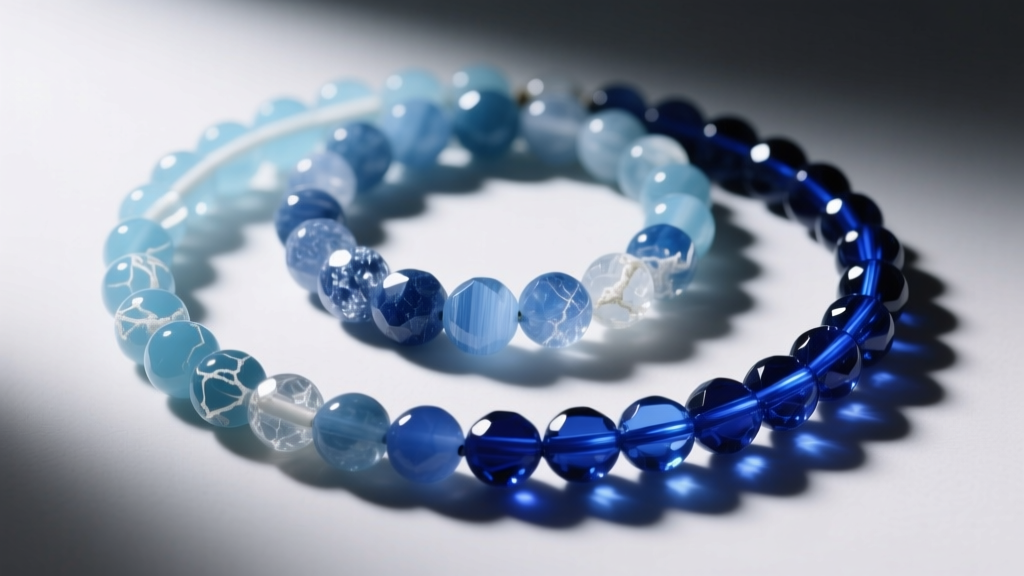
When inspecting Fine or Gem grade strands, always use a 10x triplet loupe. Look for the characteristic 'bladed' crystal habit remnants. If the blue color appears entirely uniform with a glassy, non-striated luster, be highly suspicious of dyed quartz or glass imitations. Natural kyanite will always show some degree of internal striation or chatoyancy under direct light.
Technical Stringing Requirements for Kyanite Bead Necklaces
The most common point of failure in a kyanite bead necklace is the stringing material. Many commercial manufacturers string kyanite on silk or nylon thread to reduce costs and improve drape. This is a critical error. Because of kyanite's perfect cleavage and the rough, abrasive nature of its internal drill holes, traditional threads will fray and snap under the weight of the stones. The sharp internal edges of the softer cleavage planes act like microscopic razors against organic fibers.
Wire Gauge and Tensile Specifications
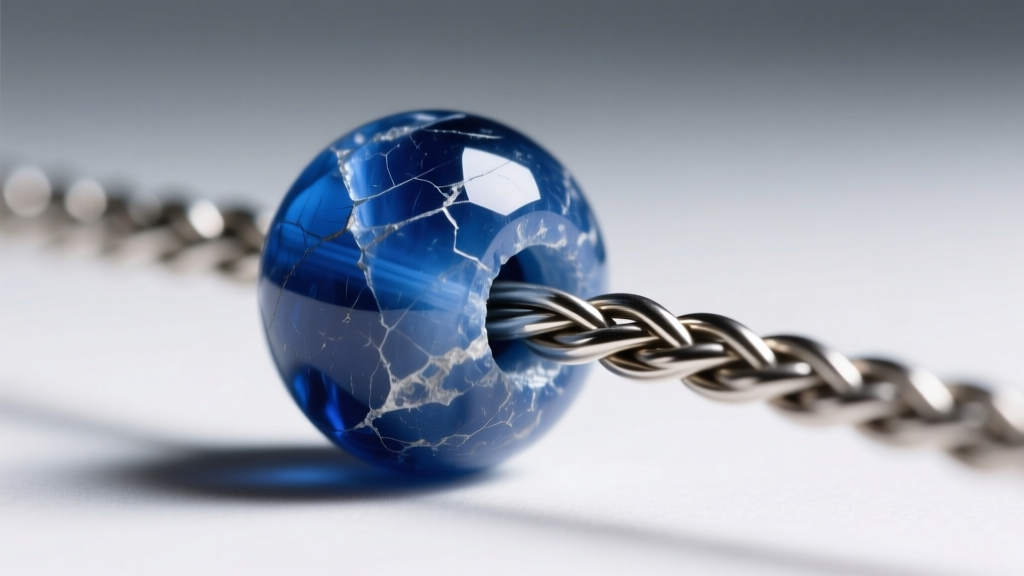
For a durable, professional-grade kyanite bead necklace, you must use a micro-braided stainless steel wire with a nylon coating. Brands like Accu-Flex or Soft Flex are industry standards. The specific gauge depends on the bead diameter and the drill hole size:
- 4mm to 6mm beads: Use a 49-strand wire with a diameter of .015' or .018'. The 49-strand construction provides maximum flexibility, allowing the smaller beads to drape like thread while maintaining a tensile strength of up to 12 pounds.
- 8mm to 12mm beads: Use a 49-strand wire with a diameter of .019' or .024'. Larger kyanite beads are significantly heavier, and the thicker core wire prevents the necklace from stretching or kinking under the gravitational load.
Drill Hole Analysis: The Hidden Flaw
Before stringing, or when inspecting a pre-strung kyanite bead necklace, you must analyze the drill channels. Due to the anisotropic hardness, drill bits often 'blow out' the exit point of the bead, creating a conical, jagged edge rather than a clean cylinder. Run your fingernail over the drill holes; if they catch or feel sharp, the bead will eventually sever your stringing wire. Professional lapidaries will chamfer (bevel) the edges of the drill hole using a diamond burr. If you are stringing the necklace yourself and encounter un-chamfered holes, insert a microscopic sterling silver or gold-filled wire protector (French wire) through the bead to shield your main cable from the abrasive kyanite edges.
Sourcing and Origin: Does Geography Matter?
The geographic origin of kyanite heavily influences the bead's structural integrity and color. According to Geology.com's mineral resources, kyanite is found globally, but gem-quality material suitable for bead cutting is localized.
- Nepal (Kali Gandaki Gorge): Produces some of the most intensely colored, deep blue kyanite. However, Nepalese kyanite is often heavily included with black carbonaceous material, making clean, large beads rare and expensive.
- Brazil (Minas Gerais): The primary source for commercial and mid-grade kyanite beads. Brazilian material tends to have more white quartz intergrowths but is generally more stable for mass bead cutting.
- Kenya and Tanzania: African kyanite often exhibits a unique greenish-blue or teal hue. While beautiful, the high degree of internal fracturing in African deposits makes large, durable beads difficult to source.
Care, Maintenance, and Ultrasonic Warnings
Maintaining a kyanite bead necklace requires strict adherence to its mineralogical limitations. The most critical rule is to never use an ultrasonic or steam cleaner. The high-frequency vibrations of an ultrasonic bath will exploit kyanite's perfect {100} cleavage, causing the beads to split, fracture, or develop internal stress cracks that will eventually lead to structural failure.
Furthermore, avoid exposing the necklace to harsh chemicals, including chlorine, bleach, or acidic jewelry dips. Kyanite is an aluminosilicate and can be slowly etched by hydrofluoric acid or strong alkaline solutions. To clean a kyanite bead necklace, use only a soft, lint-free microfiber cloth dampened with lukewarm water and a drop of mild, phosphate-free dish soap. Gently wipe each bead individually, ensuring you do not pull or stretch the wire. Dry the necklace flat on a towel to prevent the wire from taking on a permanent kinked shape.
Final Thoughts on Kyanite Craftsmanship
A kyanite bead necklace is more than just an accessory; it is a wearable piece of complex geology. By respecting the stone's anisotropic hardness, demanding proper drill hole chamfering, and utilizing 49-strand micro-braided wire, you ensure that the necklace remains both structurally sound and visually breathtaking. Whether you are a jeweler sourcing strands for a custom commission or a collector investing in fine gem-grade material, applying these technical standards will elevate your appreciation and preservation of this extraordinary mineral.


