Lapis Pendant Necklace Trends: 2026 Style Analysis
Discover 2026 lapis pendant necklace trends, quality grading, metal pairings, and expert styling tips for this striking blue gemstone.

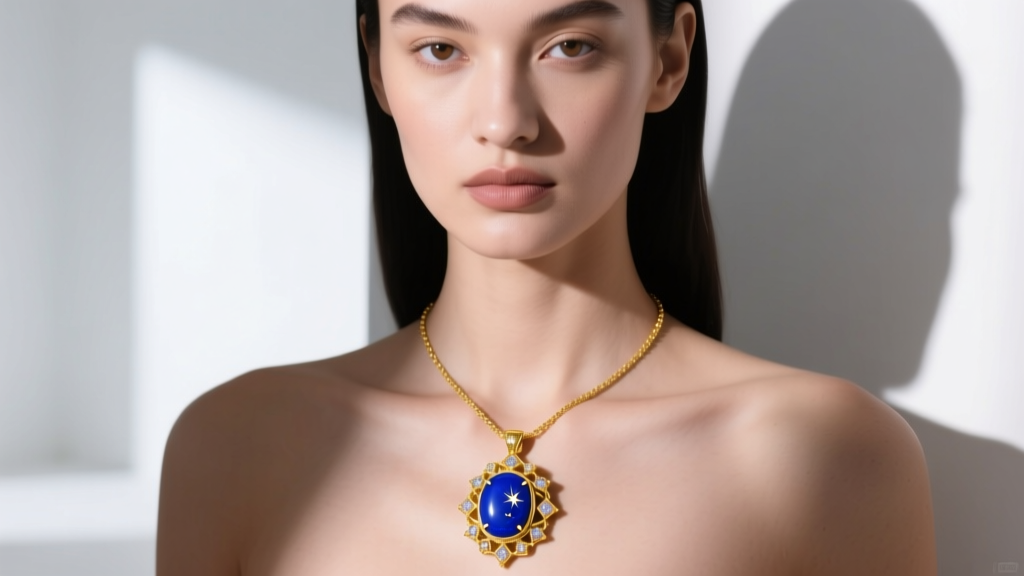
The 2026 Resurgence: From Boho to High-Luxury
In the ever-evolving landscape of fine jewelry, the lapis pendant necklace has undergone a radical transformation for 2026. Moving far beyond the stereotypical bohemian and festival-chic associations of the past decade, lapis lazuli has been reclaimed by high jewelry houses and avant-garde independent designers. This year's trend cycle is heavily influenced by 'neo-archaeological' aesthetics and celestial motifs, positioning lapis as a sophisticated alternative to the heavily saturated malachite and turquoise markets.
According to trend forecasts from the Gemological Institute of America (GIA), consumer demand for opaque, historically significant gemstones has surged by 22% since 2024. However, the modern lapis pendant necklace is defined by its architectural settings, oversized cabochons, and deliberate contrast with unconventional metals. Designers are no longer hiding the stone's natural pyrite inclusions; instead, they are highlighting these golden flecks as a hallmark of authenticity and terrestrial beauty.
Decoding Lapis Quality: The Origin Matrix
Not all lapis lazuli is created equal, and understanding the geological origin of the stone is critical when investing in a lapis pendant necklace. Lapis is a metamorphic rock composed primarily of lazurite (which provides the blue color), calcite (white streaks), and pyrite (gold flecks). The ratio of these minerals dictates both the stone's value and its visual impact.
| Origin | Color Profile | Inclusions & Matrix | Market Tier & Value |
|---|---|---|---|
| Afghan (Badakhshan) | Deep, intense royal blue to violet-blue | Minimal calcite; evenly distributed, fine pyrite | Premium / High Jewelry ($$$) |
| Russian (Lake Baikal) | Medium to deep blue | Higher pyrite content; occasional quartz matrix | Mid-Tier / Artisan ($$) |
| Chilean (Andes) | Lighter, slightly greenish or grayish blue | Prominent white calcite veining; sparse pyrite | Commercial / Accessible ($) |
For a high-impact pendant, Afghan lapis remains the gold standard. The Natural History Museum notes that the Sar-e-Sang mines in Afghanistan have been producing the world's finest lapis for over 6,000 years. When shopping, look for a uniform, saturated blue that does not appear dull or overly gray, which is a common flaw in lower-grade Chilean material.
Metal Pairings: Framing the Blue
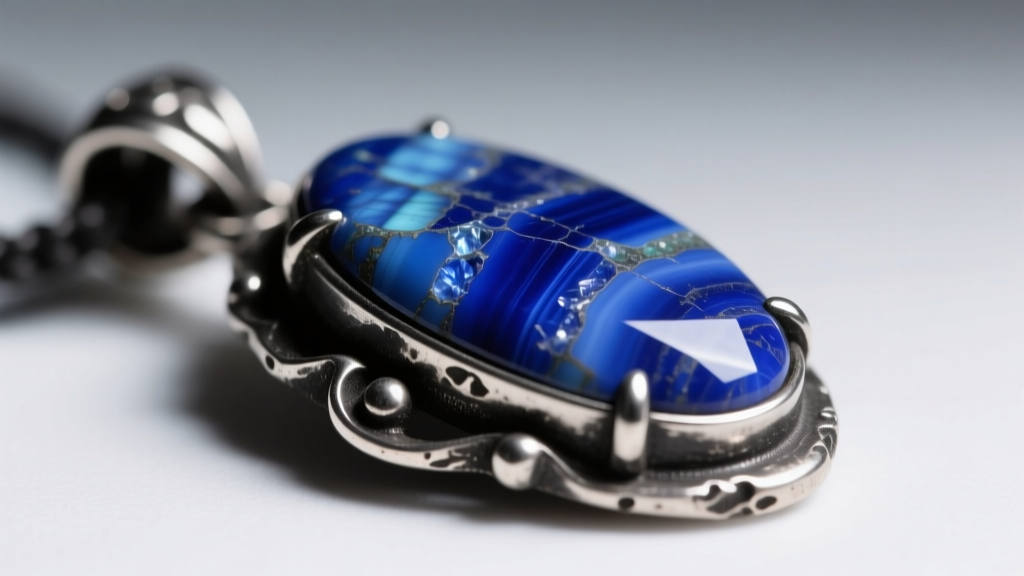
The metalwork surrounding a lapis pendant necklace drastically alters its stylistic footprint. In 2026, we are seeing a departure from standard high-polish sterling silver in favor of more nuanced, textured finishes.
The Yellow Gold Revival
18k yellow gold is the traditional and most luxurious pairing for lapis. The warm, rich tones of the gold perfectly complement the golden pyrite flecks within the stone. This combination leans into the 'neo-Egyptian' trend, evoking the burial masks of pharaohs but updated with sleek, minimalist bezels and heavy, unadorned chains.
Oxidized Sterling Silver for Edge
For a contemporary, slightly gothic aesthetic, oxidized or blackened sterling silver is the 2026 metal of choice. The darkened metal creates a striking, high-contrast frame that makes the ultramarine blue of the lapis appear almost luminescent. This pairing is frequently seen in signet-style pendants and chunky, geometric amulets favored by avant-garde fashion houses.
Spotting Imitations and Treatments
As the popularity of the lapis pendant necklace grows, so does the market for fakes and heavily treated stones. Because lapis is a porous rock, it is highly susceptible to enhancement. Here is how to ensure you are buying genuine, high-quality material:
- Dyeing: Lower-grade, pale lapis (or even howlite and magnesite) is often dyed with Prussian blue or synthetic aniline dyes. The Acetone Test: Rub a cotton swab dipped in nail polish remover (acetone) on an inconspicuous area of the stone. If blue transfers to the swab, the stone is dyed.
- Waxing and Polymer Impregnation: To improve luster and hide surface pits, lapis is frequently treated with paraffin wax or clear resins. While waxing is an accepted traditional practice, polymer impregnation significantly lowers the gemological value and should be disclosed by the seller.
- Sodalite Confusion: Sodalite is a common, cheaper alternative that looks similar but lacks the metallic pyrite flecks. If the 'gold' flecks look like painted brass or are entirely absent, you are likely looking at sodalite or dyed howlite.
- Gilson Synthetic: Created in labs in the 1970s, Gilson lapis has a very uniform color but features pyrite flecks that look artificially sprinkled on the surface rather than naturally integrated into the rock matrix.
The 2026 Styling Framework: Necklines and Layering
Styling a lapis pendant necklace requires an understanding of color theory and proportion. The deep ultramarine hue is inherently bold, meaning it can easily overwhelm delicate outfits if not balanced correctly.
The Power of the Plunge (V-Necks and Deep Scoops)
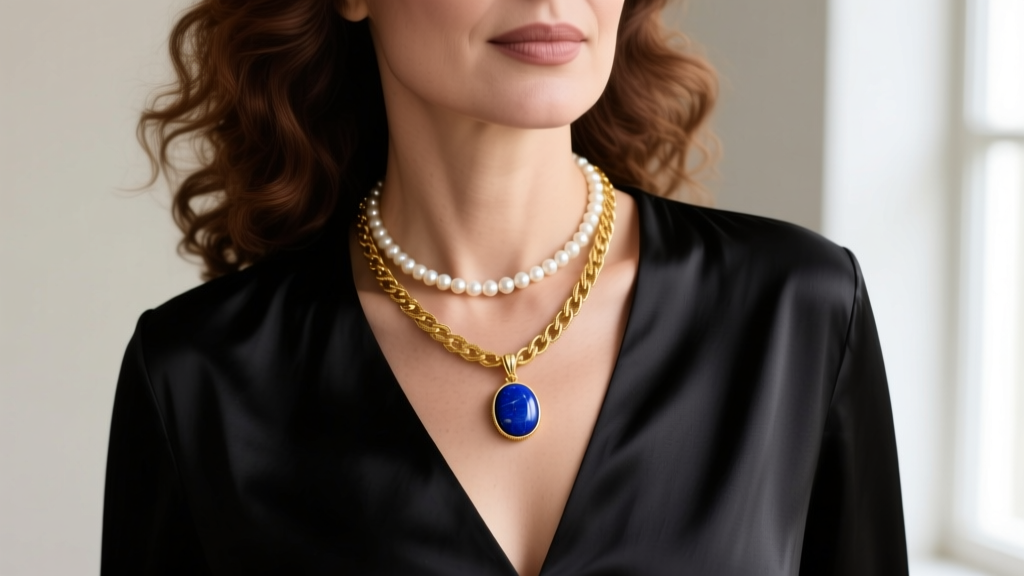
A lapis pendant on a 20-inch or 24-inch chain is the ultimate accessory for deep V-necklines. The stone should rest exactly at the apex of the V, drawing the eye downward and elongating the neck. This works exceptionally well over solid-colored silk blouses or fine-gauge merino wool sweaters in neutral tones like camel, ivory, or charcoal.
Advanced Layering Techniques
Layering lapis requires careful curation to avoid a cluttered look. The 2026 approach to layering relies on material contrast rather than matching sets.
Formula: Start with a 14-inch delicate pearl or diamond-station choker. Add your 18-inch lapis pendant necklace as the focal point. Finish with a 22-inch textured, hammered gold chain with no pendant. This creates a cascading effect that allows the lapis to remain the undisputed centerpiece while adding depth and luxury to the stack.
"Lapis lazuli is not a background stone. When styling a lapis pendant, let it dictate the mood of the outfit. It demands negative space and solid, rich textiles to truly sing." — Editorial Jewelry Stylist, 2026
Investment Tiers and Market Pricing
Understanding the pricing landscape helps set realistic expectations when shopping for a lapis pendant necklace. Prices vary wildly based on the origin of the stone, the carat weight (or surface area of the cabochon), and the craftsmanship of the setting.
- Commercial Tier ($40 - $120): Typically features Chilean lapis with visible white calcite matrix, set in thin sterling silver or gold-plated brass. Mass-produced and widely available.
- Artisan & Mid-Tier ($250 - $800): Features high-quality Afghan or Russian lapis with excellent color saturation and minimal calcite. Set in solid 14k gold or heavy, custom-cast oxidized silver by independent jewelers.
- High Jewelry & Heritage ($1,500 - $5,000+): Museum-grade, untreated Persian lapis, often carved or set in 18k/22k gold with accent diamonds or enamel work. These pieces are investment-grade and often come with provenance documentation.
Final Verdict: The New Standard in Opaque Gems
As we navigate the 2026 jewelry landscape, the lapis pendant necklace has firmly established itself as a cornerstone of the modern luxury wardrobe. It bridges the gap between ancient talismanic power and contemporary high fashion. By prioritizing Afghan origin stones, experimenting with oxidized metals, and mastering the art of intentional layering, you can elevate this historic gemstone into a defining element of your personal style radar.


