2026 Buying Guide: Choosing a Large Rhinestone Necklace
Discover what to look for in a large rhinestone necklace. Our 2026 buying guide covers crystal grades, prong settings, weight limits, and pricing tiers.


The Anatomy of a High-Quality Statement Piece
When investing in a large rhinestone necklace, the line between a breathtaking heirloom-quality statement piece and a tarnished, heavy nuisance comes down to microscopic details. The resurgence of maximalist jewelry in 2026 has flooded the market with oversized necklaces, but not all sparkle is created equal. A truly exceptional piece relies on a triad of engineering: optical-grade stones, secure mechanical settings, and ergonomic weight distribution. Before you add a massive, light-catching piece to your collection, you must look past the initial glare and inspect the metallurgy, the refractive properties of the stones, and the structural integrity of the findings.
According to the Gemological Institute of America (GIA), the visual impact of any simulant or crystal is dictated by its refractive index (RI) and dispersion. In large-scale jewelry, these optical properties are magnified, meaning flaws, poor cutting, and cheap backing materials become immediately obvious to the naked eye. This guide will equip you with the exact specifications and material grades necessary to identify a superior large rhinestone necklace.
Stone Composition: Crystal vs. Glass vs. Acrylic
The term "rhinestone" is legally unregulated and is frequently used as a catch-all for any faceted, sparkling stone. However, the material composition drastically alters the price, weight, and longevity of the necklace. When examining a large rhinestone necklace, you are generally looking at one of three materials: advanced lead-free crystal, pressed glass, or injection-molded acrylic.
| Material | Refractive Index (RI) | Weight Profile | Durability & Scratch Resistance | Market Price Tier |
|---|---|---|---|---|
| Advanced Crystal (e.g., Preciosa) | ~1.70 (High Brilliance) | Heavy (Similar to glass) | Excellent (Mohs 6-7) | Premium ($150 - $600+) |
| Pressed Glass | ~1.52 (Moderate) | Heavy | Good (Mohs 5.5) | Mid-Range ($60 - $150) |
| Acrylic / Resin | ~1.49 (Low/Dull) | Extremely Light | Poor (Mohs 2-3, scratches easily) | Budget ($15 - $50) |
For a large rhinestone necklace intended for formal events or frequent wear, advanced crystal is the only acceptable choice. Modern lead-free crystals utilize barium and zinc oxides to achieve a high RI without the environmental and health hazards of traditional lead glass. Furthermore, premium crystals feature machine-cut facets with razor-sharp edges, whereas glass and acrylic are often molded, resulting in rounded, soft facet edges that fail to reflect light dynamically.
The Importance of Foil Backing
Rhinestones are not transparent gemstones; they rely on a reflective backing to bounce light back through the crown. High-end manufacturers use vacuum-sealed silver or gold foil backing. Cheaper alternatives use painted metallic coatings that will oxidize, flake, or turn black when exposed to the natural acids and oils in human skin. Always inspect the back of the stones in a large rhinestone necklace. If the backing looks painted, uneven, or lacks a protective clear-coat sealant, avoid the purchase.
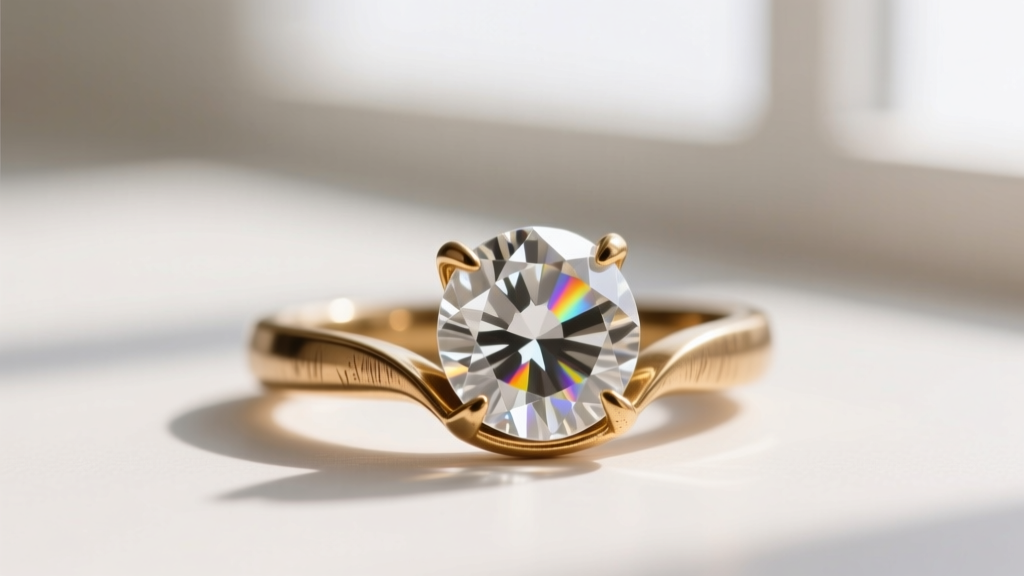
Setting Techniques: Prong vs. Glue vs. Bezel
The failure rate of oversized statement jewelry is overwhelmingly tied to how the stones are secured. When a necklace features stones larger than 12mm, the mechanical stress on the settings increases exponentially.
Why Glue Settings Fail
Many mass-market brands rely on cyanoacrylate or basic epoxy resins to adhere large rhinestones into shallow metal cups. This is a critical failure point. Adhesives degrade when exposed to UV light, temperature fluctuations, and the chemical composition of cosmetics and perfumes. Within a single season of regular wear, glue-bound stones will inevitably pop out, leaving behind a sticky, discolored residue.
The Superiority of Cast Prong Settings
A high-quality large rhinestone necklace will utilize prong settings. However, there is a distinct difference between stamped prongs and cast prongs. Stamped prongs are cut from thin sheets of metal and folded over the stone's girdle; they are prone to bending, snagging on fabrics, and eventually snapping. Cast prongs, created through lost-wax casting, are thicker, more durable, and can be precisely filed to grip the stone securely without excessive pressure that might fracture the crystal. Always run your finger over the prongs—they should feel smooth, rounded, and firmly anchored.
Weight Distribution and Clasp Engineering
A significant oversight in buying heavy statement jewelry is ignoring the ergonomics of the piece. A large rhinestone necklace can easily weigh between 80 and 150 grams. If this weight is suspended on a thin chain with a standard lobster clasp, the necklace will suffer from the "pendulum effect," constantly sliding forward and pulling uncomfortably on the nape of the neck.
According to Halstead Bead's comprehensive clasp engineering guide, heavy neckpieces require specialized findings to maintain balance and security. When evaluating a large rhinestone necklace, look for the following structural elements:
- Counterbalancing: The back of the necklace chain should feature heavier metal links or a decorative counterweight drop to offset the massive stone cluster at the front.
- Wide Magnetic Barrel Clasps: These provide a seamless look and can support immense weight without the mechanical spring failure common in lobster clasps.
- Figure-8 Safety Catches: If the piece uses a box clasp, it must have a secondary figure-8 wire safety catch. If the primary latch is bumped, the safety wire prevents the necklace from falling to the floor.
- Graduated Link Sizing: The chain links nearest to the clasp should be smaller and more flexible, while the links supporting the central rhinestone cluster should be soldered and rigid to prevent warping.
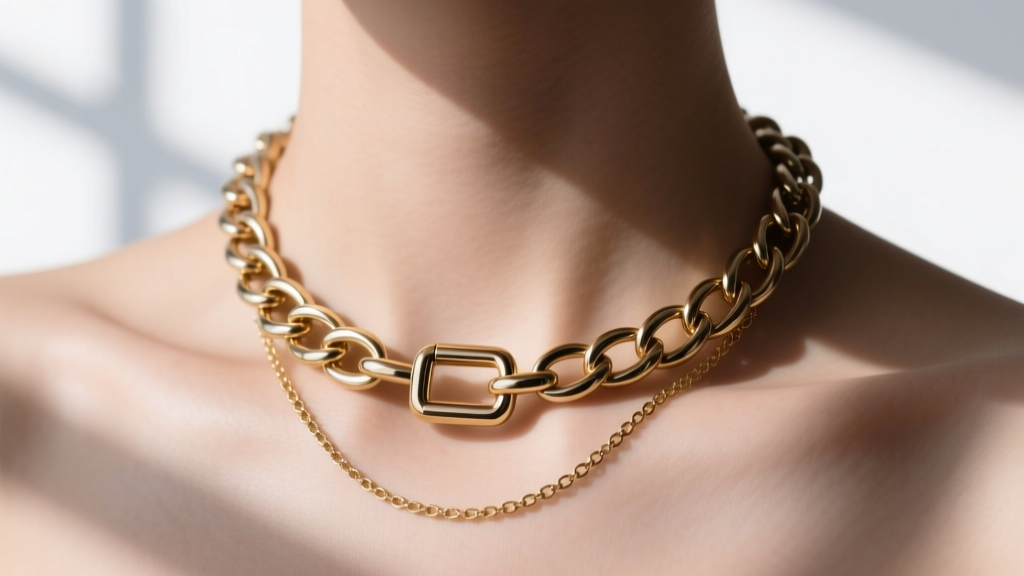
2026 Pricing Tiers: What You Should Actually Pay
Understanding the intersection of material costs and labor helps you identify fair market value. The price of a large rhinestone necklace is dictated by the base metal, the stone grade, and the complexity of the setting.
Tier 1: Fast Fashion & Costume ($25 - $85)
Materials: Acrylic or low-grade glass stones, zinc alloy or pewter base metals, glued settings, thin plated finishes (often less than 0.5 microns of gold or rhodium).
Verdict: Suitable for a single-use costume event. Expect tarnishing and stone loss within weeks. The base metals often contain nickel, which can cause severe contact dermatitis on the chest and neck.
Tier 2: Bridge & Premium Fashion ($120 - $350)
Materials: Machine-cut glass or entry-level crystals, solid brass base metals with heavy gold vermeil (minimum 2.5 microns of 14k or 18k gold), stamped prong settings, secure mechanical clasps.
Verdict: The sweet spot for most buyers. These pieces offer excellent visual impact and durability for seasonal wear. Ensure the brass is properly sealed to prevent verdigris (green oxidation).
Tier 3: Fine Fashion & Heirloom ($400 - $1,200+)
Materials: Premium advanced crystals (e.g., Preciosa or Swarovski), sterling silver or 14k solid gold bases, hand-set cast prongs, foil-backed stones with protective sealing, ergonomic counterbalancing.
Verdict: An investment piece. These necklaces are designed to be passed down, maintaining their structural integrity and optical brilliance for decades.
The Pre-Purchase Inspection Checklist
Before finalizing your purchase, whether online or in a boutique, run the necklace through this rigorous five-point inspection checklist:
- The Light Test: Hold the necklace under a direct, cool-white LED light. Look for "fire" (flashes of spectral colors). If the sparkle is purely white and flat, you are likely looking at acrylic or poorly cut glass.
- The Prong Pull: Gently try to lift the prongs with your fingernail. They should not yield or bend. If they move, the stone will eventually fall out.
- The Back Inspection: Flip the necklace over. Are the metal cups finished and smooth, or are there sharp burrs and excess glue? High-end manufacturers finish the back of the piece just as meticulously as the front.
- The Weight Balance: Hold the necklace by the clasp. Does the front pendant immediately flip upside down? If so, it lacks proper counterbalancing and will be frustrating to wear.
- The Hallmark Check: Look for stamps indicating metal purity (e.g., "925" for sterling silver, or "14k" / "18k" for gold). If the piece is vermeil, it should bear both the "925" stamp and the maker's mark.
By prioritizing optical-grade materials, mechanical settings, and ergonomic engineering, you can confidently select a large rhinestone necklace that delivers uncompromising glamour and enduring quality.


