How to Style a Droplet Necklace Silver Pendant: Step-by-Step
Learn how to layer, style, and care for your droplet necklace silver chain with our step-by-step guide. Perfect tips for necklines and sterling silver care.

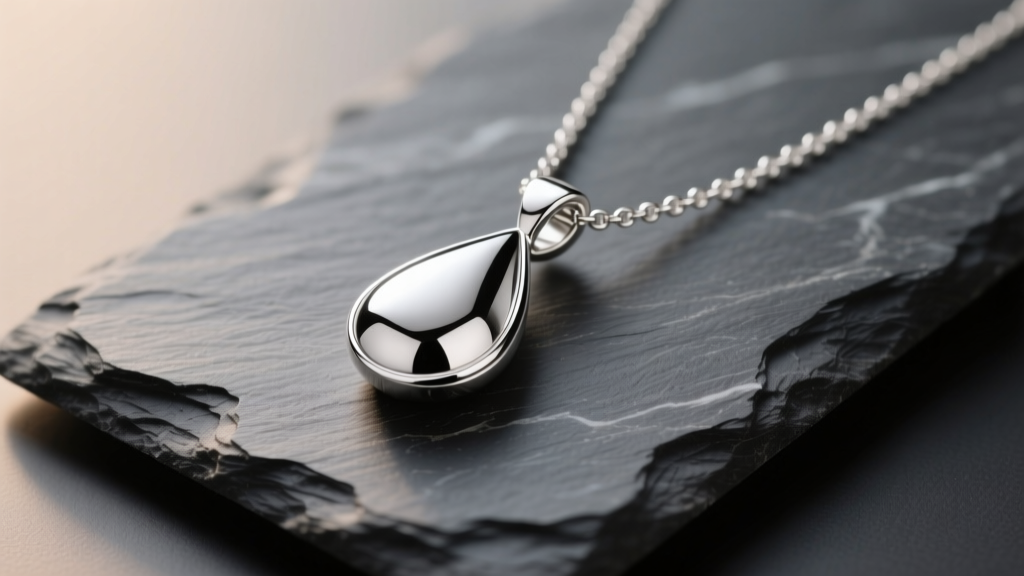
The teardrop silhouette has remained a cornerstone of fine jewelry for centuries, but mastering the modern droplet necklace silver aesthetic requires more than just slipping it over your head. Whether you are working with a minimalist 925 sterling silver teardrop or a rhodium-plated statement piece, understanding chain gauges, layering mathematics, and metallurgical care is essential. In this step-by-step guide, we break down exactly how to style, layer, and maintain your silver droplet pendant for any neckline and occasion.
The Anatomy of a Sterling Silver Droplet Necklace
Before styling, you must understand the material you are working with. Pure silver (99.9%) is too malleable for daily wear jewelry. According to the Gemological Institute of America (GIA), sterling silver is an alloy consisting of 92.5% pure silver and 7.5% copper. This copper addition provides the necessary tensile strength to hold the structural integrity of a teardrop bail and chain links.
When shopping for a high-quality silver droplet necklace, look for two critical specifications:
- The 925 Stamp: Always verify the hallmark. Reputable manufacturers stamp the bail or the clasp end-tag.
- Rhodium Plating Thickness: Many premium silver pendants are flash-plated with rhodium to prevent tarnish and mimic the look of white gold. A durable plating should be between 0.75 and 1.0 microns thick. Anything thinner will wear off within months of friction against the skin.
Step 1: Matching the Chain Length to Your Neckline
The visual weight of a droplet pendant changes drastically depending on where it lands on the chest. The teardrop shape naturally draws the eye downward, making it an exceptional tool for elongating the neck. Here is how to map your chain length to specific garment necklines:
The V-Neck and Wrap Dress (18-Inch Chain)
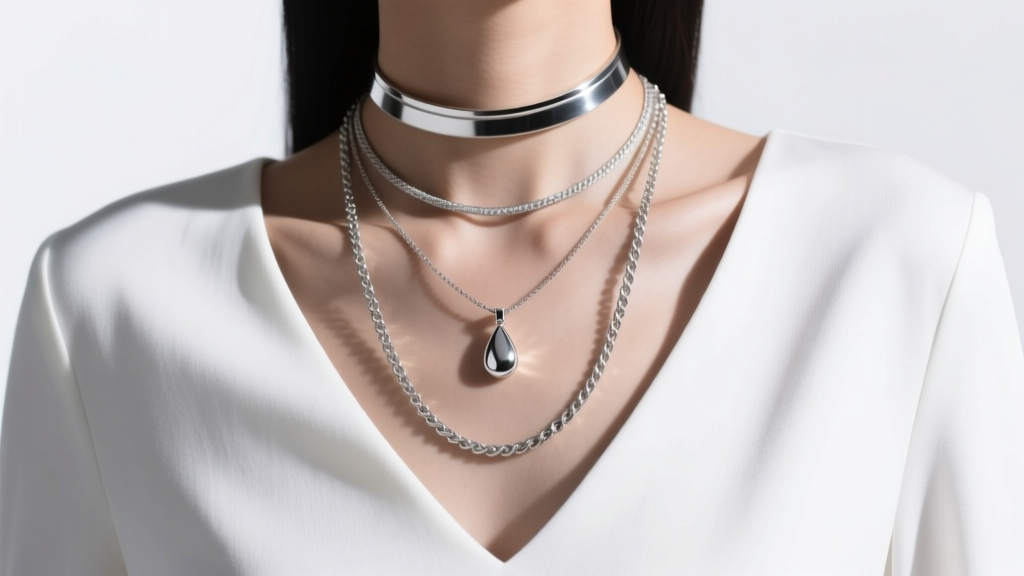
An 18-inch chain is the industry standard for a reason. On an average neckline, it allows a standard 15mm to 20mm droplet pendant to rest exactly in the vertex of a V-neck or wrap dress. This creates a continuous geometric line that flatters the collarbone.
The Crew Neck and Turtleneck (20 to 24-Inch Chain)
Wearing a short chain over a crew neck creates a visually choked, cluttered look. Instead, opt for a 20-inch or 22-inch matinee-length chain. The droplet will rest below the collarbone, breaking up the solid block of fabric and providing a focal point without competing with the garment's hem.
The Scoop Neck and Off-Shoulder (16-Inch Choker)
For wider, horizontal necklines, a 16-inch choker-length chain keeps the droplet pendant suspended just above the collarbone. This highlights the décolletage and prevents the pendant from getting lost in the negative space of a wide scoop neck.
Step 2: The 3-Chain Layering Formula
Layering a droplet necklace silver chain requires a strict adherence to spacing and gauge variation. If your chains are too similar in width, they will tangle instantly. If they are too close in length, the pendants will collide. Use this 3-chain framework for a flawless, tangle-free stack.
| Chain Position | Chain Type & Gauge | Length | Pendant / Focal Point |
|---|---|---|---|
| Base (Top) | Cable Chain (1.0mm - 1.2mm) | 15" to 16" | None or tiny 3mm bezel gem |
| Middle (Anchor) | Box Chain (1.5mm - 1.8mm) | 18" | The Silver Droplet Pendant |
| Bottom (Extension) | Rope or Figaro (2.0mm+) | 22" to 24" | Lariat drop or horizontal bar |
Expert Tip: The middle chain must bear the most weight. A silver droplet pendant, especially if it features a solid cast teardrop or an inset gemstone like moonstone, requires a sturdy box or wheat chain. As noted by Rio Grande jewelry supply, box chains offer superior structural support for heavier pendants because their square links distribute weight evenly, reducing the risk of the chain snapping at the bail.
Step 3: Balancing Metal Tones and Gemstone Accents
While mixing metals was once a fashion faux pas, modern styling embraces it—provided there is intentionality. If you are layering your silver droplet necklace with white gold or platinum pieces, ensure the silver piece has a rhodium finish. Unplated sterling silver has a slightly warmer, grayer undertone compared to the stark, icy white of platinum. The rhodium flash bridges this color gap seamlessly.
If your droplet features a gemstone, consider the color theory of your wardrobe. Silver pairs exceptionally well with cool-toned stones. A silver droplet necklace featuring a cabochon turquoise, lapis lazuli, or rainbow moonstone creates a striking contrast against neutral, earth-toned clothing.
Step 4: Cleaning and Preventing Tarnish on Silver Droplets
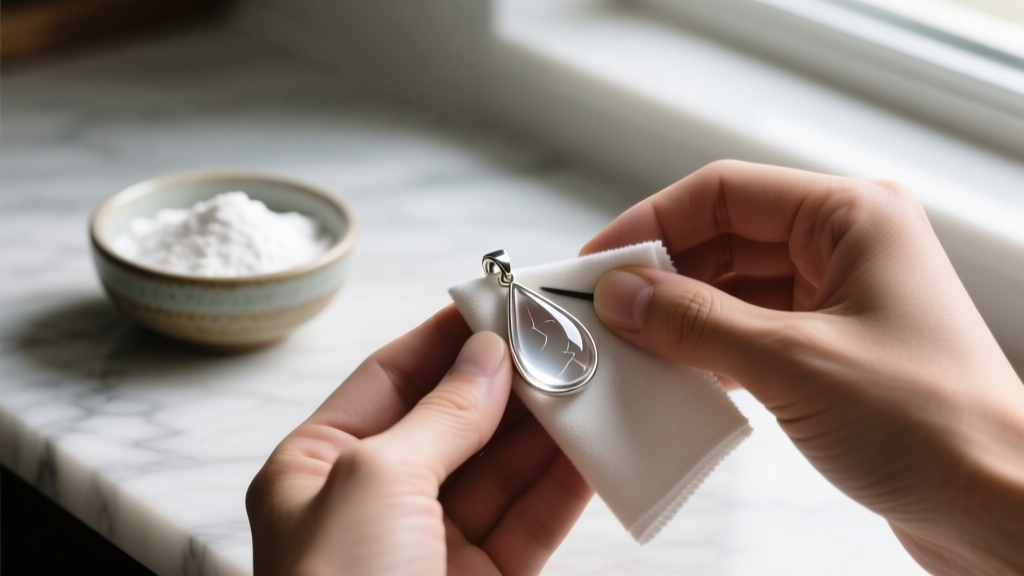
Sterling silver tarnishes due to a chemical reaction between the copper alloy and hydrogen sulfide in the air, creating silver sulfide (a black or yellowish film). Because droplet pendants often feature smooth, highly polished surfaces, tarnish is immediately visible. Here is the professional, non-abrasive method to reverse tarnish without stripping rhodium plating or scratching the silver.
The Electrochemical Aluminum Bath
- Line a glass bowl with heavy-duty aluminum foil, shiny side up.
- Place your tarnished silver droplet necklace in the bowl, ensuring the silver physically touches the aluminum foil.
- Sprinkle 2 tablespoons of baking soda and 1 tablespoon of sea salt over the jewelry.
- Pour boiling water into the bowl until the necklace is fully submerged. You will see immediate bubbling as the sulfide transfers from the silver to the aluminum.
- Leave it for 3 to 5 minutes. Remove with wooden tongs, rinse thoroughly with distilled water, and pat dry with a microfiber cloth.
Warning: Never use this method if your silver droplet necklace contains porous gemstones like pearls, opals, or turquoise, or if it is intentionally oxidized (blackened in the crevices for an antique look). The bath will strip the intentional patina and damage porous stones.
Expert Troubleshooting: Fixing Bail and Chain Snags
One of the most common issues with teardrop pendants is the bail catching on the chain links, causing the pendant to flip backward or the chain to kink. Here is how to troubleshoot the hardware:
The Pendant Keeps Flipping Backward
This happens when the bail loop is too large for the chain gauge, allowing the chain to twist inside the bail. The Fix: Use a small, smooth-jawed chain-nose plier to gently squeeze the bottom of the bail loop, reducing its inner diameter. Alternatively, add a tiny 3mm soldered jump ring between the bail and the chain to act as a swivel pivot.
The Jump Ring is Pulling Apart
The weight of a solid silver droplet can slowly pull a standard butt-joint jump ring open over time, leading to a lost pendant. The Fix: Inspect the jump ring connecting the bail to the chain. If you see a gap, do not just squeeze it shut; this weakens the metal. Instead, twist the jump ring open laterally (like a door hinge) and close it the same way, or replace it with a split ring or a soldered jump ring for permanent security.
Final Thoughts on Silver Droplet Styling
A droplet necklace silver chain is not just an accessory; it is a versatile architectural element in your wardrobe. By respecting the metallurgy of 925 sterling silver, utilizing precise chain gauges for layering, and maintaining the piece with proper electrochemical cleaning, your teardrop pendant will remain a timeless staple for decades. Remember that the key to effortless elegance lies in the deliberate spacing of your layers and the intentional pairing of your chain length with your neckline.


