Expert Layered Necklace Ideas & Sizing Guide 2026
Discover expert layered necklace ideas for 2026. Learn precise chain lengths, weight ratios, and anti-tangle techniques for a flawless stacked look.

The Architecture of a Flawless Stack
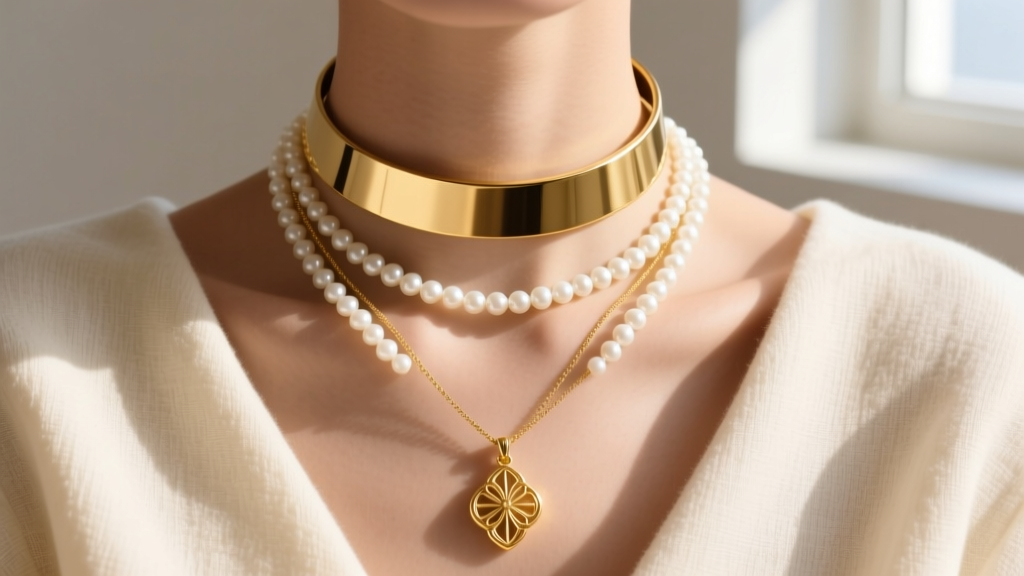
When exploring layered necklace ideas, most buyers focus purely on aesthetics, overlooking the mechanical engineering required to keep a stack looking intentional rather than chaotic. A successful layered look relies on precise mathematical drops, contrasting chain profiles, and strategic weight distribution. In 2026, the trend has shifted away from haphazard clumping toward curated, asymmetrical stacks that highlight individual craftsmanship while functioning as a cohesive unit.
The foundational rule of layering is the 2-to-3 inch drop rule. If your base choker sits at 15 inches, your secondary chain must be at least 17.5 to 18 inches to prevent the clasps and links from interlocking. A third layer should drop to 21 or 22 inches. This spacing ensures that each necklace catches the light independently and drapes according to its specific tension.
Base Lengths and Neckline Mapping
- The Choker (14-15 inches): Sits tightly against the collarbone. Best reserved for lightweight 1.0mm to 1.5mm chains or rigid collars.
- The Princess (17-18 inches): The workhorse of any stack. Rests on the upper chest and serves as the ideal anchor for mid-sized pendants.
- The Matinee (20-24 inches): Provides the necessary vertical elongation. This layer should carry the heaviest visual weight, such as a large geometric pendant or a thick 4.0mm rope chain.
Chain Profiles: Mixing Textures Without Tangling
The most common failure point in layered stacks is tangling. This occurs when chains with similar link geometries act like gears, catching on one another through friction and movement. To prevent this, you must mix chain profiles that possess contrasting surface textures and link shapes.
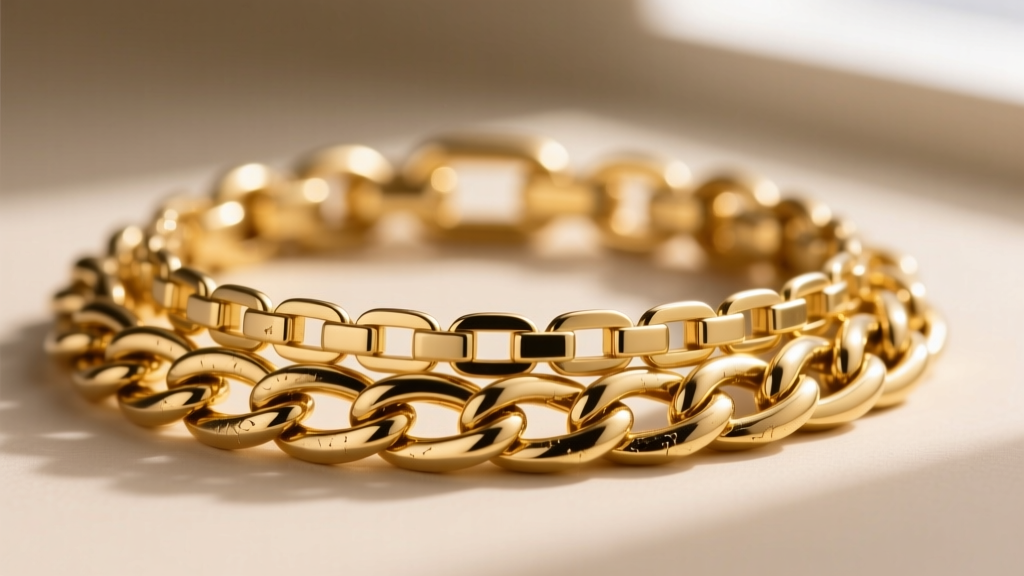
For example, pairing a smooth, flat box chain with a textured, rounded rope chain drastically reduces the surface area available for links to snag. Conversely, layering a cable chain with a bead chain is a recipe for disaster, as the small spherical links easily slip into the oval gaps of the cable links, creating stubborn knots.
| Chain Type | Width (mm) | Tangling Risk | Best Stack Position |
|---|---|---|---|
| Box Chain | 1.0 - 2.0mm | Low | Base / Choker |
| Cable Chain | 1.5 - 3.0mm | Medium | Secondary Layer |
| Figaro Chain | 2.5 - 4.0mm | Low | Secondary / Tertiary |
| Rope Chain | 3.0 - 5.0mm | Very Low | Bottom Layer (Heavy) |
| Bead / Snake | 1.0 - 2.5mm | High | Wear Solo or w/ Spacers |
Pendant Weight and Bail Sizing
Integrating pendants into a layered stack requires careful attention to the bail—the loop that connects the pendant to the chain. A standard cast bail typically has an inner diameter of 4mm to 5mm. If you attempt to thread a 4.5mm rope chain through a 4mm bail, the friction will prematurely wear down the gold alloy, leading to structural failure.
For 2026 styling, the 'Focal Point Framework' dictates that only one chain in a three-piece stack should feature a prominent pendant. The other chains should either be bare or feature microscopic charms (under 5mm) that act as textural accents rather than focal points. If your pendant weighs more than 8 grams, you must use a chain with a minimum width of 2.5mm to support the load without stretching the links over time.
Hardware and Clasp Considerations
Do not underestimate the clasp. Standard 4mm spring ring clasps are notoriously difficult to operate when you are wearing three layers of jewelry, as the chains tend to bunch up at the nape of the neck. Upgrade your base and secondary chains to 5mm x 8mm lobster clasps. Lobster clasps provide a wider surface area for your fingers to grip and feature a stronger internal spring mechanism that resists accidental unhooking when subjected to the pull of a heavy stack.
Material Hardness: 14k vs. 18k Gold for Layering
According to the Gemological Institute of America (GIA), the karat weight of your gold significantly impacts its durability in a layered stack. Pure 24k gold is too soft for jewelry, but the alloy mix in 14k and 18k gold creates distinct wear profiles.
18k Gold (75% pure gold): Offers a richer, warmer yellow hue but is softer and more prone to micro-scratching. When layered, 18k chains will show friction marks where they rub against each other much faster than lower-karat alternatives.
14k Gold (58.3% pure gold): Contains a higher percentage of strengthening alloys like copper, zinc, and silver. This makes 14k gold significantly more resistant to the constant friction inherent in a layered stack. For chains that will be in direct contact with one another, 14k gold is the superior choice for longevity.
2026 Trend Forecast: Asymmetrical and Mixed-Metal Layering
As noted by Vogue's jewelry trend forecasts, the perfectly symmetrical, uniform-gold stack is giving way to more dynamic, personalized arrangements. The 2026 aesthetic heavily favors mixed-metal layering, combining oxidized silver, yellow gold, and rose gold within the same stack to create depth and contrast.
Furthermore, asymmetrical pendant placement is dominating the market. Instead of centering every pendant on the sternum, stylists are using adjustable slider chains to park pendants off-center, resting on the collarbone or clavicle. This creates a bespoke, organic look that feels less manufactured and more curated.
Troubleshooting: How to Stop Necklaces from Tangling
Even with perfect length spacing and contrasting chain profiles, active movement can cause tangling. If you are committed to a heavy stack, consider integrating anti-tangle hardware into your buying strategy:
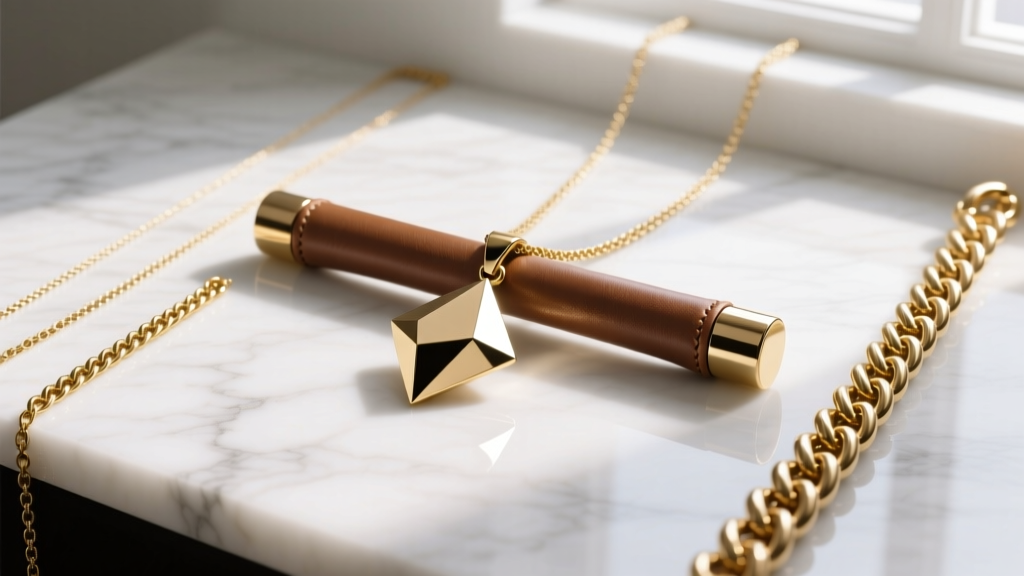
- Necklace Spacer Bars: These are small, rigid bars (often made of silicone, leather, or precious metals) with two or three parallel holes. You thread the ends of your chains through the bar before clasping them. This locks the chains in parallel, making tangling physically impossible.
- Magnetic Clasp Converters: By attaching a magnetic clasp to the back of your neck, you eliminate the need to fiddle with tiny lobster clasps. More importantly, high-strength neodymium magnetic clasps keep the chains anchored at a single point, reducing the kinetic energy that leads to knotting.
- Strategic Weighting: Ensure your bottom chain is at least 30% heavier (in gram weight) than your top chain. The gravitational pull of the heavier bottom chain will naturally force the lighter chains to lay flat against the chest, minimizing the slack that allows knots to form.
By treating your layered stack as an engineered system rather than a random assortment of chains, you ensure that your jewelry remains elegant, comfortable, and tangle-free throughout the day.


