The Leigh Necklace Trend: 2026 Layering & Style Guide
Discover how the Leigh necklace is redefining fine jewelry layering in 2026. Explore styling tips, material grades, and pricing for this organic trend.

The Evolution of the Leigh Necklace Silhouette
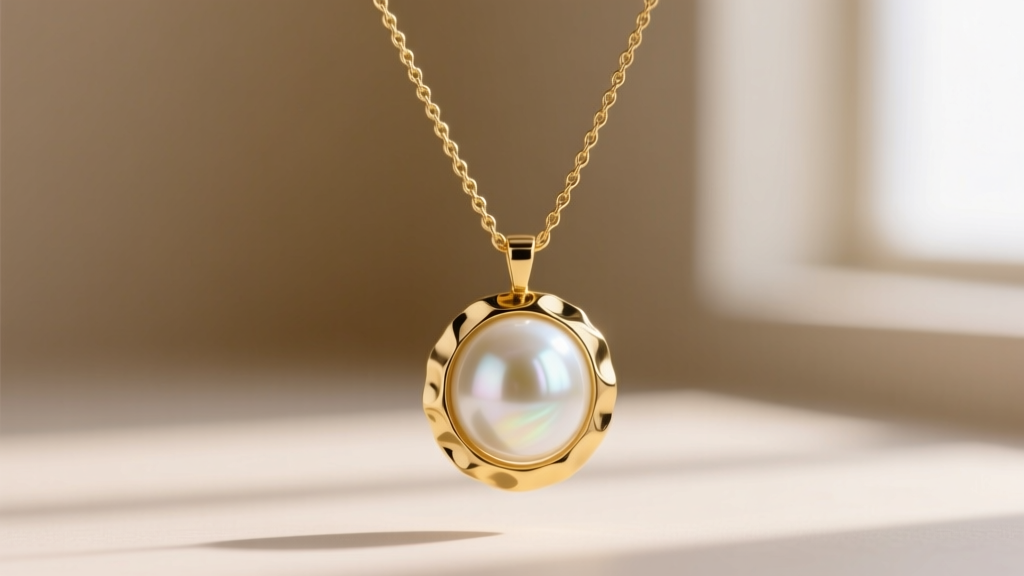
The term 'leigh necklace' has transcended its origins as a signature piece by contemporary fine jewelry designers to become a definitive, recognized silhouette in the 2026 jewelry market. Characterized by its organic, hand-textured gold bezels and asymmetrical gemstone settings, the Leigh aesthetic bridges the gap between raw, natural forms and refined luxury. Unlike traditional high-polish, perfectly symmetrical solitaire pendants, the Leigh style embraces imperfection. It typically features a sandblasted, hammered, or brushed gold bezel that cradles an irregular baroque pearl, a raw diamond, or a rose-cut gemstone. This deliberate juxtaposition of rugged metalwork and delicate, luminous stones has made it the ultimate anchor piece for modern necklace layering.
As we navigate the style landscape of 2026, the shift away from ultra-minimalist, 'quiet luxury' chains toward 'organic luxury' is undeniable. Collectors and everyday wearers alike are seeking pieces that feel bespoke and grounded in nature. The Leigh necklace perfectly captures this zeitgeist, offering a tactile, visually interesting focal point that elevates even the simplest wardrobe. But to truly master this trend, one must understand the precise metallurgy, gemological grading, and structural mechanics that separate a genuine fine jewelry investment from a mass-produced imitation.
Anatomy and Material Specifications
The hallmark of a true Leigh-style pendant lies in its bezel construction and chain pairing. The bezel wall is typically 0.8mm to 1.2mm thick, intentionally irregular to mimic natural geological formations. This requires a specific approach to metallurgy. While the chain is best crafted from 14k solid gold, the pendant itself is frequently cast in 18k gold.
The Metallurgy of 14k vs. 18k Gold
14k gold (58.3% pure gold alloyed with silver, copper, and zinc) offers a Vickers hardness of approximately 130-150. This tensile strength is critical for the delicate 1.2mm to 1.5mm cable or rolo chains used in Leigh necklaces, allowing them to withstand up to 12-15 lbs of pull force without stretching or snapping. Conversely, 18k gold (75% pure gold) is softer, with a Vickers hardness around 110. This malleability is highly preferred for the pendant bezel, as it allows the jeweler to securely burnish the metal over the irregular girdle of a baroque pearl or the fragile edges of a rose-cut diamond without risking stone fracture. Furthermore, the higher gold content in 18k yields a warmer, richer hue that beautifully complements the subtle overtone of natural pearls.
Gemological Standards for the Leigh Aesthetic
When evaluating the gemstones used in these pendants, luster and cut are paramount. According to the Gemological Institute of America (GIA), luster is the most critical value factor for pearls. High-end Leigh-style necklaces utilize baroque freshwater or Akoya pearls with 'high' to 'very high' luster, meaning the reflections on the surface are bright, sharp, and distinct. For diamond variations, rose-cut or rustic salt-and-pepper diamonds are favored. These stones feature a flat base and a domed, faceted top, which catches the light in a diffuse, romantic manner that aligns perfectly with the matte texture of the hammered bezel.
Why the Leigh Silhouette Dominates 2026 Trends
The dominance of the Leigh necklace in 2026 is deeply tied to a broader cultural shift toward individuality in fine jewelry. Mass-produced, identical gemstones are increasingly viewed as sterile. Consumers are actively seeking 'imperfect' beauty. Industry analyses from the Blue Nile Education Center note a significant year-over-year increase in consumer searches for baroque pearls and included diamonds, driven by a desire for unique, non-uniform gemstones that cannot be perfectly replicated.
The Leigh pendant serves as a wearable piece of sculpture. Its textured surface interacts with ambient light differently throughout the day, creating a dynamic visual experience. Furthermore, the bezel setting—a continuous metal rim that completely encircles the gemstone's girdle—is inherently more secure than traditional prong settings. This makes the Leigh necklace not just a stylistic triumph, but a highly practical choice for everyday wear, as it protects the gemstone's vulnerable edges from impact and snagging on textiles.
The Layering Framework: Building Around a Leigh Pendant
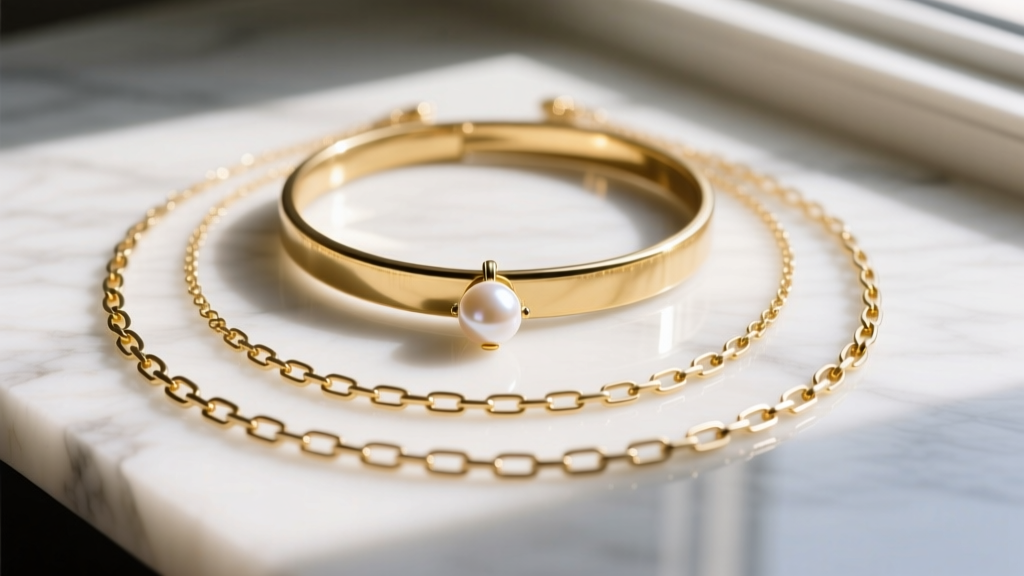
The true versatility of the Leigh necklace is unlocked through strategic layering. Because the pendant features heavy visual texture and an organic shape, the surrounding layers must provide structural contrast. The golden rule of 2026 layering is to mix chain geometries and maintain a strict 2-inch length differential between each piece to prevent tangling and ensure each silhouette is visible.
The standard Leigh pendant sits comfortably at 16 or 18 inches. Below is a structural matrix for building a balanced, high-impact necklace stack anchored by your Leigh piece.
| Layer Position | Length | Chain Style & Gauge | Styling Purpose |
|---|---|---|---|
| Base (Choker) | 14 inches | 2.0mm Herringbone or Snake | Provides a fluid, high-shine metallic contrast to the matte, organic texture of the Leigh pendant. |
| Anchor (Focal) | 16 inches | 1.2mm Cable (The Leigh) | The centerpiece. Rests precisely on the collarbone, drawing the eye to the textured bezel and pearl. |
| Mid-Layer | 18 inches | 1.5mm Rolo or Wheat | Adds depth and catches light below the pendant. The open links of a rolo chain contrast with the solid cable. |
| Outer Statement | 20-22 inches | 3.0mm Paperclip or Curb | Grounds the stack with modern, architectural geometry, framing the neckline and elongating the torso. |
When executing this stack, clasp mechanics are crucial. Avoid standard 5mm spring ring clasps, which are prone to mechanical failure and difficult to operate when layering. Upgrade your base and anchor layers to 10mm or 12mm lobster clasps with reinforced, soldered jump rings. This ensures the structural integrity of your stack, especially when supporting the 3-to-5-gram weight of a solid gold Leigh pendant.
Pricing Tiers and Investment Value
Understanding the pricing architecture of the Leigh necklace market is essential for making an informed purchase. The cost is primarily driven by the karat of the gold, the origin and grade of the pearl or diamond, and the artisan labor required to hand-texture the bezel.
Entry-Level and Demi-Fine ($150 - $400)
In this tier, you will typically find gold vermeil (a thick layer of 18k gold over a sterling silver base) paired with commercial-grade freshwater baroque pearls. While visually appealing, vermeil will eventually wear down to the silver core with daily friction. These pieces are excellent for trend-testing but lack multi-generational longevity.
Contemporary Fine Jewelry ($600 - $1,500)
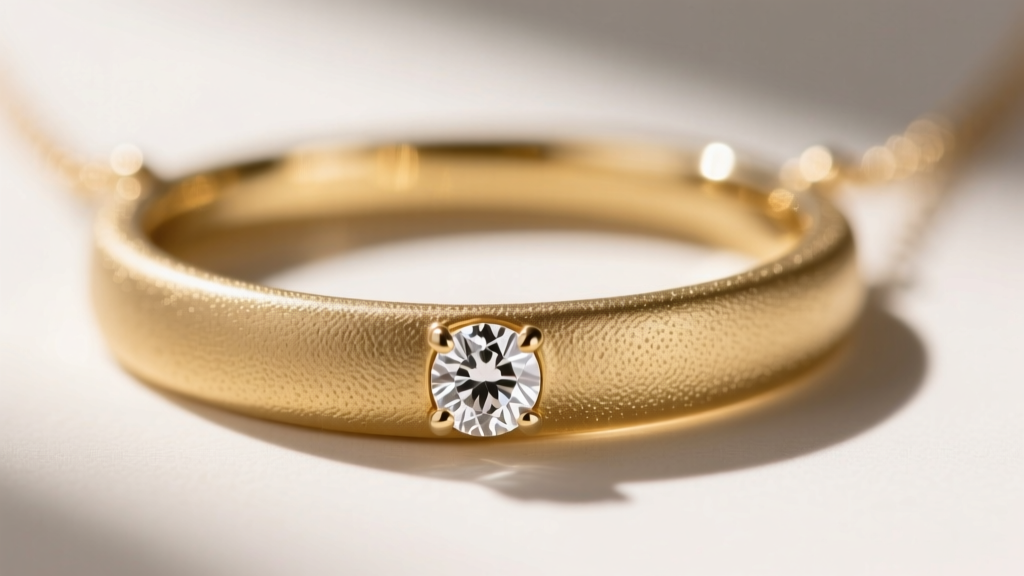
This is the sweet spot for the authentic Leigh aesthetic. Pieces in this range are cast in solid 14k or 18k gold and feature high-luster, AAA-grade freshwater pearls or 0.25ct to 0.50ct SI-clarity rose-cut diamonds. The bezels are hand-hammered by skilled bench jewelers, ensuring no two pendants are exactly alike. This tier offers the best balance of heirloom durability and accessible pricing.
High Fine and Luxury ($2,500 - $5,000+)
At the apex of the market, Leigh-style necklaces are crafted in 18k or 22k gold, featuring rare South Sea or high-end Akoya baroque pearls with exceptional orient (the iridescent play of colors on the pearl's surface). Diamond variations in this tier utilize VVS-clarity, precision-cut rose diamonds or custom-carved rustic diamonds. These pieces are often produced in limited, numbered editions by independent artisan studios.
Care, Maintenance, and Troubleshooting
The very elements that give the Leigh necklace its charm—matte textures and organic pearls—require specialized care. The most common mistake owners make is using ultrasonic jewelry cleaners. The high-frequency sound waves and harsh chemical solutions used in ultrasonic machines can fracture the delicate nacre layers of a baroque pearl and strip the intentional oxidation and matte finish from a sandblasted or hammered gold bezel, leaving it unnaturally shiny and uneven.
To properly clean your Leigh necklace, lay it flat on a microfiber cloth. Use a soft-bristled baby toothbrush dipped in a solution of lukewarm water and a few drops of phosphate-free, mild dish soap. Gently brush the gold bezel to remove trapped skin oils and lotions, being careful not to scrub the pearl or diamond aggressively. Rinse the metal under a gentle stream of distilled water (avoiding direct water pressure on the pearl's drill hole) and pat dry immediately with a lint-free cloth. Store the necklace flat or hanging in a climate-controlled environment, as extreme fluctuations in humidity can cause baroque pearls to dehydrate and craze over time. By respecting the material science behind the piece, your Leigh necklace will remain a cornerstone of your fine jewelry collection for decades to come.


