Mastering the Loft Necklace: Structural Bail & Suspension Design
Explore the engineering behind the loft necklace. Learn about structural bails, tension suspension, metallurgy, and architectural jewelry design.

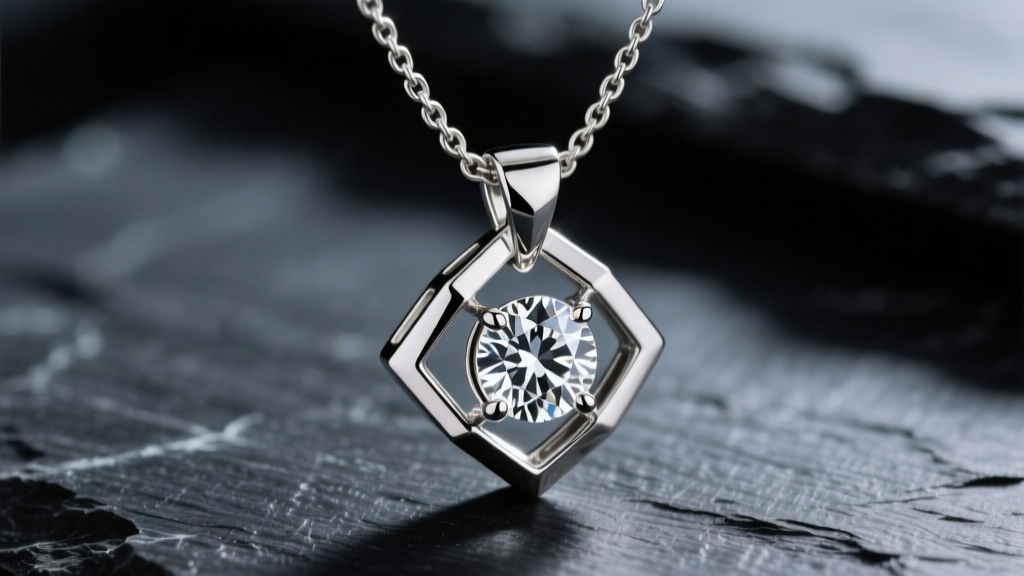
The Architecture of Suspension: Defining the Loft Necklace
In the upper echelons of avant-garde and architectural jewelry design, the loft necklace represents a triumph of spatial engineering over traditional flat-plane aesthetics. Unlike standard pendants that rest flush against the clavicle, a true loft necklace utilizes a structural bail or cantilevered cage system to elevate—or "loft"—the central gemstone or sculptural element several millimeters above the primary chain axis. This creates a striking three-dimensional floating effect, allowing light to penetrate the pavilion of a gemstone from all angles while casting dynamic shadows against the wearer's skin.
Designing and manufacturing a loft necklace requires a radical departure from traditional bench jewelry techniques. The elevated center of gravity introduces complex torque and shear stress variables that standard cast bails simply cannot withstand. As we navigate the technical landscape of 2026, master jewelers and CAD designers are increasingly relying on aerospace-grade metallurgy and micro-laser welding to execute these gravity-defying pieces without compromising structural integrity.
Z-Axis Engineering: The Mechanics of the Lofted Bail
The defining feature of any loft necklace is its Z-axis elevation. Standard jewelry bails operate primarily on the X and Y axes, acting as a simple 2D loop connecting the chain to the pendant. A lofted bail, however, acts as a structural pylon. There are two primary engineering approaches to achieving this suspension:
1. The Rigid Cage Pylon
This method involves CNC-milling or precision-casting a rigid, multi-pronged titanium or platinum cage that physically lifts the setting away from the chain loop. The clearance gap typically ranges from 4mm to 8mm. The structural integrity of this design relies heavily on the thickness of the vertical struts, which must be a minimum of 1.2mm in high-yield alloys to prevent bending under lateral impact.
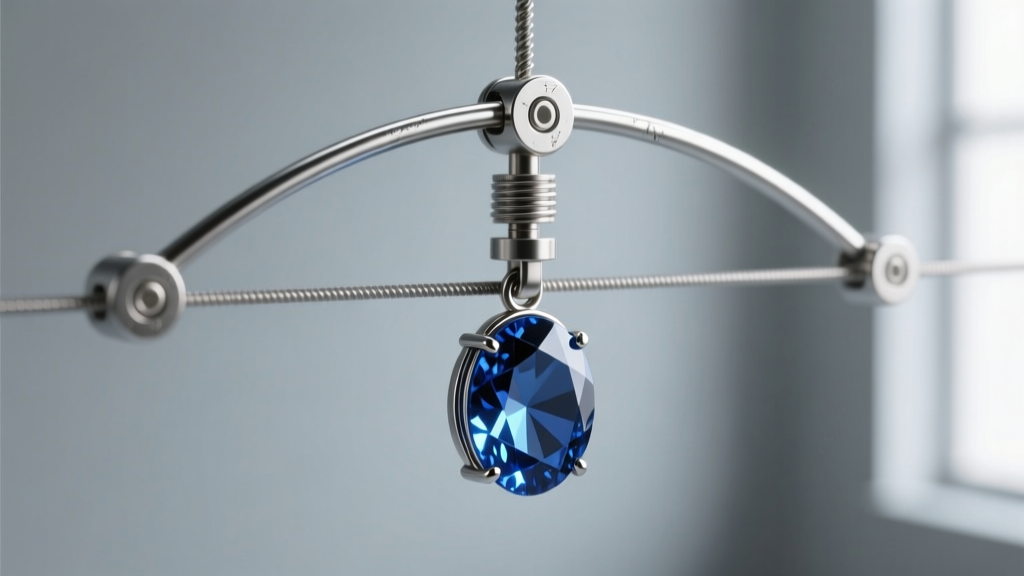
2. Tension Rod Suspension
A more complex and visually striking method utilizes horizontal tension rods. The central element is suspended between two rigid metal arms extending from the chain loop, relying on precise compressive force and micro-screw fittings to hold the stone or central motif in mid-air. This technique requires tolerances of less than 0.05mm to ensure the stone does not rattle or dislodge during wear.
Metallurgical Demands for Structural Elevation
You cannot craft a reliable loft necklace using standard 14k or 18k yellow gold. The malleability of traditional gold alloys will inevitably lead to "bail droop," where the weight of the lofted element gradually pulls the structural arms downward, ruining the architectural silhouette. According to metallurgical data published by the Gemological Institute of America (GIA), the yield strength of the chosen alloy is the single most critical factor in suspension design.
| Alloy Specification | Yield Strength (MPa) | Vickers Hardness (HV) | Suitability for Lofting |
|---|---|---|---|
| Grade 5 Titanium (Ti-6Al-4V) | 880 MPa | 334 HV | Superior (Requires CAD/CNC milling) |
| Platinum 950/Ruthenium | 135 MPa | 130 HV | Excellent (Ideal for casting & welding) |
| 18k White Gold (Nickel Alloy) | 125 MPa | 120 HV | Very Good (Requires rhodium plating) |
| 18k Yellow Gold (Copper/Silver) | 80 MPa | 75 HV | Poor (High risk of structural deformation) |
For high-end loft necklaces, Platinum 950 alloyed with Ruthenium (Pt950/Ru) is the industry standard. Ruthenium dramatically increases the hardness and yield strength of the platinum without compromising its hypoallergenic properties or its natural white luster. For ultra-modern, industrial-aesthetic pieces, Grade 5 Titanium is favored, though it cannot be cast or traditionally soldered, requiring 5-axis CNC milling and mechanical assembly.
Evaluating Stress Points and Failure Modes
When appraising or designing a loft necklace, an expert must look beyond the gemstone quality and scrutinize the structural failure points. The elevated mass of the pendant creates a lever arm effect. If the wearer catches the lofted stone on a piece of clothing, the resulting torque is concentrated entirely at the base of the structural pylon.
- The Solder Joint Vulnerability: Traditional torch soldering creates a heat-affected zone (HAZ) that can anneal and weaken the surrounding metal. The Santa Fe Symposium on jewelry manufacturing technology strongly advocates for pulsed Nd:YAG laser welding for structural bails. Laser welding confines the heat to a microscopic focal point, preserving the temper and yield strength of the surrounding platinum or white gold.
- Galvanic Corrosion in Multi-Metal Assemblies: If a loft necklace uses a titanium cage with gold micro-screws for tension suspension, exposure to sweat and moisture can trigger galvanic corrosion, seizing the screws permanently. Expert makers isolate dissimilar metals using microscopic PTFE (Teflon) gaskets at the contact points.
- Chain Loop Shear: The interior diameter of the chain loop on a lofted bail must be oversized by at least 1.5mm compared to standard bails to accommodate the thicker chains required to support the piece's altered center of gravity.

Chain Pairing and Center of Gravity Dynamics
A loft necklace cannot simply be strung on a delicate cable chain. The Z-axis elevation pushes the pendant's center of gravity outward, away from the neck. This creates a continuous downward and outward pull on the front of the chain. To counteract this, master jewelers pair lofted pendants with high-tensile, interlocking chain weaves.
Wheat (Spiga) Chains and Box Chains are the optimal choices. Their geometric, interlocking links distribute the localized torque of the lofted bail across a wider surface area of the neck, preventing the chain from kinking or snapping at the bail loop. A minimum wire gauge of 1.8mm is recommended for the chain to ensure it visually and physically balances the architectural weight of the suspended pendant.
Sourcing, Pricing, and Market Realities
Because the loft necklace is inherently a piece of structural engineering rather than mass-produced cast jewelry, it occupies a specific tier of the luxury market. You will rarely find true architectural suspension designs in commercial retail environments. Instead, they are the domain of bespoke CAD designers and avant-garde jewelry houses.
As of 2026, expect the following pricing tiers for authentic, structurally sound loft necklaces:
- Entry-Level Architectural (Sterling Silver / Base Titanium): $800 – $2,500. Often CNC-milled from solid titanium blocks with synthetic or semi-precious lofted stones.
- Mid-Tier Bespoke (18k White Gold / Lab-Grown Diamonds): $4,500 – $9,000. Features custom CAD-designed cage bails, laser-welded joints, and precision-set lofted centers.
- Haute Joaillerie (Pt950/Ru / Natural Unheated Gems): $15,000 – $50,000+. Master-crafted tension suspensions, invisible mechanical fittings, and flawless structural polishing on all Z-axis planes.
When investing in a loft necklace, always request the CAD wireframe renderings from the jeweler to verify the strut thickness and bail geometry. A true architectural suspension piece is a wearable sculpture, demanding the same rigorous engineering scrutiny as a high-end mechanical timepiece.


