Lucky Clover Necklace Guide: Enamel, Inlay & Chain Tech
An expert technical deep dive into lucky clover necklaces, covering hard stone inlay, vitreous enamel, chain gauges, and material durability.

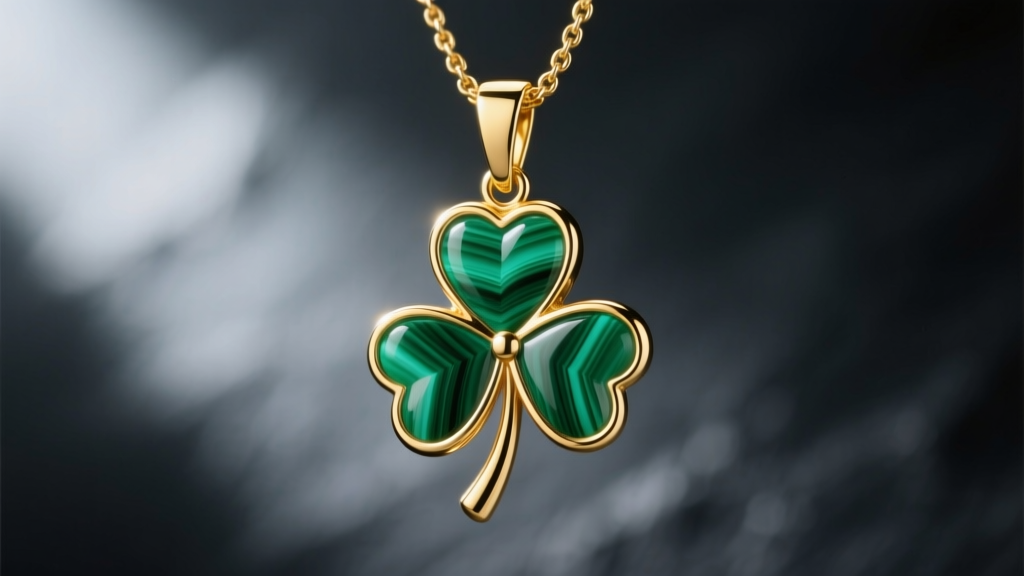
The Anatomy of a Premium Lucky Clover Necklace
When evaluating a lucky clover necklace, casual buyers often focus solely on the motif's aesthetic appeal. However, from a metallurgical and gemological perspective, the longevity and value of these pieces depend on precise manufacturing tolerances, base metal purity, and the structural integrity of the inlay settings. A high-end four-leaf clover pendant is not merely stamped from a sheet of gold; it is typically cast, hand-finished, and assembled using a multi-part bezel or prong architecture designed to protect fragile gemstone inlays.
The most critical structural element is the bezel collar. In premium manufacturing, the gold collar that wraps around the stone inlay is engineered to be flush with the stone's surface, preventing chipping at the girdle. Lower-tier mass-market alternatives often use glued-in cabochons with a faux-bezel overlay, which degrades rapidly upon contact with cosmetics or sweat. Furthermore, the bail—the loop connecting the pendant to the chain—must be proportionally weighted. A standard 15mm clover pendant weighs between 3.5 and 6 grams; it requires a reinforced, soldered bail to prevent metal fatigue and eventual snapping at the stress point.
Material Science: Hard Stone Inlay vs. Vitreous Enamel
The visual impact of a lucky clover necklace is dictated by its internal material. The two dominant techniques in fine jewelry are hard stone inlay and vitreous enamel. Understanding the physical properties of these materials is essential for long-term wearability.
Hard Stone Inlay Properties
Stones like malachite, mother-of-pearl (MOP), onyx, and carnelian are cut into precise, flat-backed cabochons and friction-fitted into the gold bezel. According to the GIA Gem Encyclopedia, the Mohs hardness and porosity of these stones dictate their vulnerability to daily wear.
- Malachite (Mohs 3.5-4.0): Prized for its concentric green banding, malachite is highly sensitive to acids, including the natural lactic acid in human sweat. It requires a protective bezel lip to prevent edge abrasion.
- Mother-of-Pearl (Mohs 2.5-4.0): Composed of nacre layers, MOP offers iridescence but is notoriously soft. Scratches easily accumulate if stored alongside harder jewelry.
- Carnelian (Mohs 6.5-7.0): A variety of chalcedony, carnelian is highly durable and resistant to scratching, making it the superior choice for everyday, high-impact wear.
- Onyx (Mohs 6.5-7.0): Typically dyed black agate, onyx provides excellent durability and a stark, high-contrast aesthetic against yellow or white gold.
For a comprehensive breakdown of specific gemstone vulnerabilities, jewelers frequently reference the GIA Malachite Profile and related mineralogical databases to advise clients on care protocols.
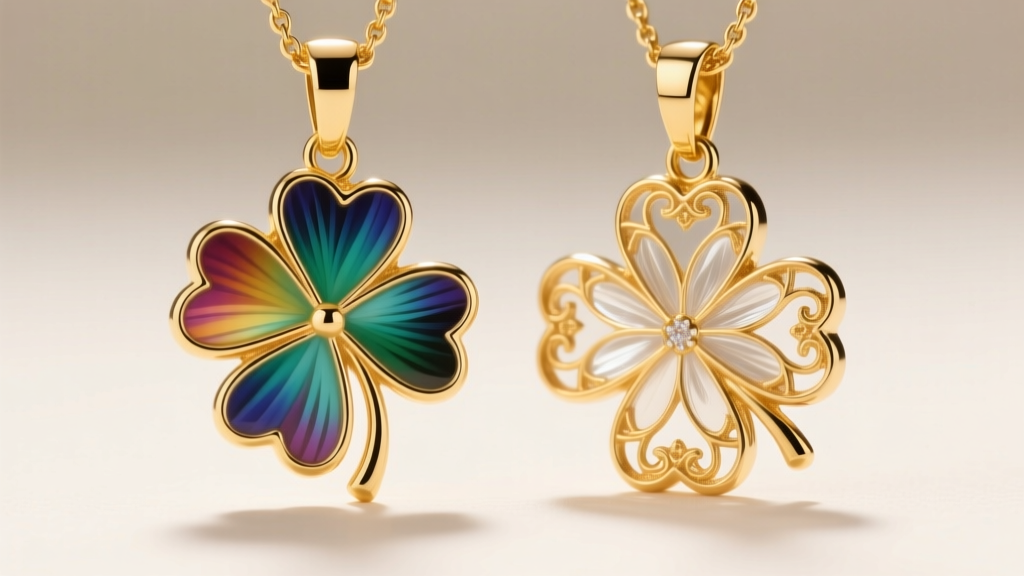
The Enamel Divide: Vitreous vs. Cold
If a lucky clover necklace features colored enamel rather than stone, the manufacturing technique defines its lifespan. Vitreous enamel involves fusing finely ground glass powder to a metal surface at temperatures exceeding 800°C. In luxury pieces, this is often applied over an engine-turned (guilloché) metal base, creating a mesmerizing, light-catching depth beneath the translucent glass. Vitreous enamel is highly resistant to UV fading and chemical degradation, though it can shatter if dropped on a hard surface.
Conversely, cold enamel (epoxy resin) is a two-part chemical polymer cured at room temperature. While cheaper and less prone to shattering, cold enamel will inevitably yellow over 3 to 5 years due to UV exposure and will degrade when exposed to alcohol-based perfumes or hand sanitizers.
Durability & Maintenance Matrix
Proper maintenance requires an understanding of the specific material matrix used in your clover pendant. Below is a technical guide to cleaning and durability based on material composition.
| Inlay Material | Mohs Hardness | Porosity & Sensitivity | Ultrasonic Safe? | Recommended Cleaning Protocol |
|---|---|---|---|---|
| Malachite | 3.5 - 4.0 | High; reacts to acids & heat | No | Dry microfiber cloth only |
| Mother-of-Pearl | 2.5 - 4.0 | Moderate; sensitive to chemicals | No | Damp cloth, no soaps |
| Carnelian | 6.5 - 7.0 | Low; highly stable | Yes (with caution) | Mild soap, soft brush, warm water |
| Vitreous Enamel | 5.0 - 6.0 | None; susceptible to impact | No | Soft brush, mild detergent |
| Cold Enamel (Resin) | 2.0 - 3.0 | High; degrades with solvents | No | Dry wipe; avoid all chemicals |
Expert Warning: Never place a malachite or mother-of-pearl clover necklace in an ultrasonic cleaner. The high-frequency vibrations can fracture the stone's internal crystalline structure, while the heat of the cleaning solution can strip the nacre's luster or dissolve the adhesive backing the cabochon.
Chain Engineering: Matching the Clover Pendant
The pendant is only half the equation; the chain must provide adequate tensile strength without overpowering the delicate clover motif. A common failure mode in necklace design is pairing a heavy, 5-gram pendant with a fragile 0.6mm chain, leading to inevitable link distortion or clasp failure.
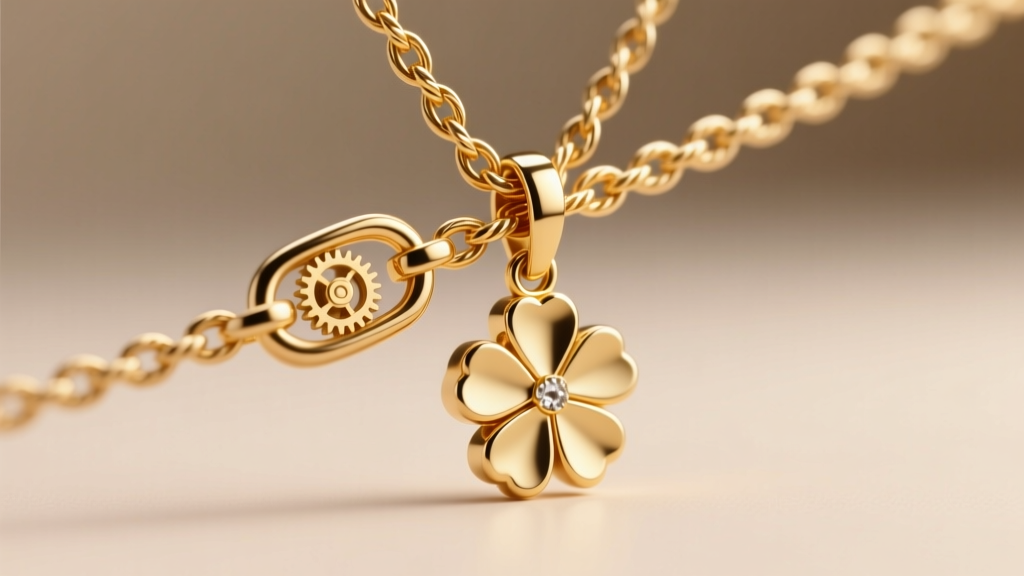
Optimal Chain Gauges and Weaves
For a standard 15mm to 20mm lucky clover pendant, the ideal chain gauge ranges from 0.9mm to 1.2mm. This thickness provides a break-strength of roughly 8 to 12 pounds, far exceeding the static weight of the pendant while remaining visually proportional.
- Cable Chain (0.9mm - 1.1mm): The classic choice. Its uniform, oval links offer excellent flexibility and a traditional aesthetic. Ensure the links are fully soldered to prevent them from pulling apart under tension.
- Box Chain (1.0mm - 1.2mm): Composed of square, interlocking links, box chains are incredibly strong and resist kinking. They provide a modern, geometric contrast to the organic curves of the clover motif.
- Rope Chain (1.0mm - 1.5mm): Twisted links create a highly reflective surface. Rope chains are durable but can trap skin oils and lotions, requiring more frequent ultrasonic cleaning (provided the pendant is removed first).
Clasp Mechanics
The clasp is the most frequent point of mechanical failure. Spring ring clasps, while common on entry-level pieces, suffer from internal spring fatigue and are difficult to operate single-handedly. A premium lucky clover necklace should utilize a lobster clasp or a fold-over safety clasp. Lobster clasps feature a heavier internal spring and a wider gate, ensuring the chain's jump ring remains securely seated even when subjected to lateral pulling forces.
Authentication and Hallmarking
When investing in a luxury-tier lucky clover necklace, verifying the metal purity is non-negotiable. Authentic pieces will feature a laser-engraved or stamped hallmark on the pendant's reverse side or the chain's end tag. Look for 750 (indicating 18k gold, 75% pure gold content) or 585 (14k gold). Additionally, high-end manufacturers include a unique serial number and a maker's mark (often a lozenge or oval stamp). If the pendant lacks these microscopic identifiers, or if the gold tone appears overly yellow and brassy (a sign of heavy gold plating over brass), the piece is likely a counterfeit or low-tier fashion imitation.


