How to Clean and Care for a Butterscotch Bakelite Necklace
Learn expert techniques to clean, polish, and store your butterscotch bakelite necklace safely without damaging its rare vintage patina.

The Chemistry of Phenol Formaldehyde: Why Bakelite Needs Special Care
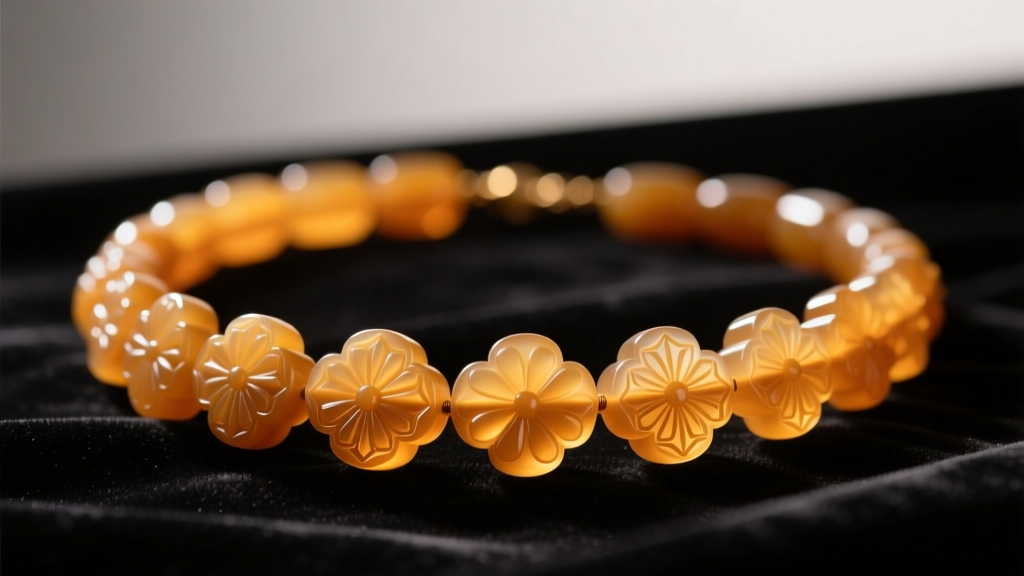
To properly care for a butterscotch bakelite necklace, you must first understand the material you are handling. Bakelite, invented by Leo Baekeland in 1907, is a phenol formaldehyde resin. Unlike modern thermoplastics that melt when heated, Bakelite is a thermosetting polymer. Once cured, its chemical bonds are permanently cross-linked, giving it incredible durability but also specific vulnerabilities.
The highly coveted "butterscotch" color—a translucent, warm yellow-orange—was achieved using specific aniline dyes during the molding process. Over decades, exposure to UV light, oxygen, and skin oils causes the surface to oxidize. This oxidation creates a darkened, sometimes crusty patina that can obscure the beautiful translucent glow of the original butterscotch resin. While some collectors appreciate this darkening as a sign of authenticity, a heavy buildup of grime and degraded oils can eventually lead to micro-crazing (tiny surface cracks) if left untreated.
According to the American Chemical Society, the stability of early plastics relies heavily on avoiding harsh solvents. Because Bakelite is porous at a microscopic level, it can absorb chemicals that cause irreversible swelling or discoloration. Therefore, the golden rule of maintaining your butterscotch bakelite necklace is to avoid all alcohol-based cleaners, ammonia, and acetone.
Authentication First: Bakelite vs. Celluloid vs. Amber
Before applying any cleaning agents, you must be absolutely certain your necklace is genuine Bakelite. During the 1920s and 1930s, butterscotch-colored jewelry was also made from celluloid, catalin, and natural amber. Cleaning celluloid with the wrong compounds can be disastrous; celluloid is highly unstable, prone to off-gassing nitric acid, and extremely flammable.
The Simichrome Polish Test
The safest and most reliable method for authenticating Bakelite is the Simichrome test. Apply a tiny dot of Simichrome metal polish to a cotton swab and rub it gently on an inconspicuous area of the bead, such as near the drill hole or the clasp.
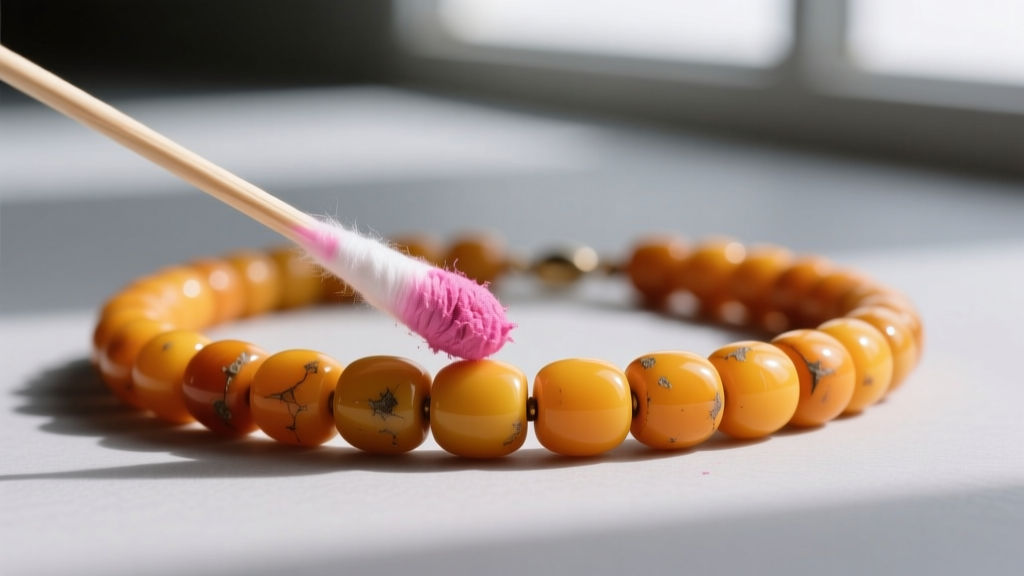
If the swab turns a bright, mustard-yellow or dark orange, you have confirmed the presence of oxidized phenol formaldehyde. If the swab remains pink or clear, the piece is likely amber, celluloid, or a modern acrylic reproduction. Note: Never use the "hot pin" test. Not only does it permanently damage the bead, but if the piece is celluloid, the heat can cause it to ignite.
The Step-by-Step Cleaning Protocol
Once authenticated, you can safely clean your butterscotch bakelite necklace. The goal is to lift decades of accumulated lotion, perfume, and dead skin cells without stripping the structural integrity of the resin.
Materials Needed:
- Distilled water (never tap water, which contains chlorine and hard minerals)
- pH-neutral liquid soap (such as Orvus WA Paste or a mild, fragrance-free dish soap)
- Ultra-soft microfiber cloths
- A soft-bristled baby toothbrush
- Cotton swabs
The Washing Process:
- Prepare the Solution: Mix a few drops of pH-neutral soap into a bowl of lukewarm distilled water. The water should never be hot, as extreme thermal shock can cause vintage Bakelite to crack along its internal stress lines.
- Damp Wipe: Do not submerge the necklace. Submerging can weaken the internal cotton or silk threading and cause the metal clasps to rust from the inside out. Instead, dip your microfiber cloth into the solution, wring it out until it is barely damp, and gently wipe each bead.
- Detail the Carvings: Butterscotch bakelite necklaces often feature intricate carved floral or geometric motifs. Dip the soft baby toothbrush into the soapy water, shake off the excess, and gently agitate the dirt from the crevices.
- Rinse and Dry: Wipe the beads down with a cloth dampened only with clean distilled water to remove soap residue. Immediately dry the necklace thoroughly with a soft, lint-free towel.
Safe vs. Unsafe Cleaning Agents for Bakelite
To prevent catastrophic damage to your vintage jewelry, consult this quick reference guide before reaching for household cleaners.
| Agent | Safety Status | Effect on Butterscotch Bakelite |
|---|---|---|
| Distilled Water + Mild Soap | Safe | Gently lifts surface oils without penetrating the resin. |
| Simichrome Polish | Safe (for polishing) | Removes oxidation and leaves a protective micro-layer. |
| Rubbing Alcohol | Unsafe | Dries out the resin, leading to severe micro-crazing. |
| Acetone / Nail Polish Remover | Highly Unsafe | Chemically melts the surface, destroying the finish instantly. |
| Ultrasonic Cleaners | Unsafe | High-frequency vibrations will shatter aged, brittle Bakelite. |
| Baking Soda Paste | Unsafe | Too abrasive; scratches the surface and dulls the translucent glow. |
Polishing to Restore the Butterscotch Glow
Cleaning removes dirt, but it will not remove the dark, oxidized patina that accumulates on vintage Bakelite. To restore the luminous, translucent butterscotch color, you must polish the beads using a specialized plastic polish.
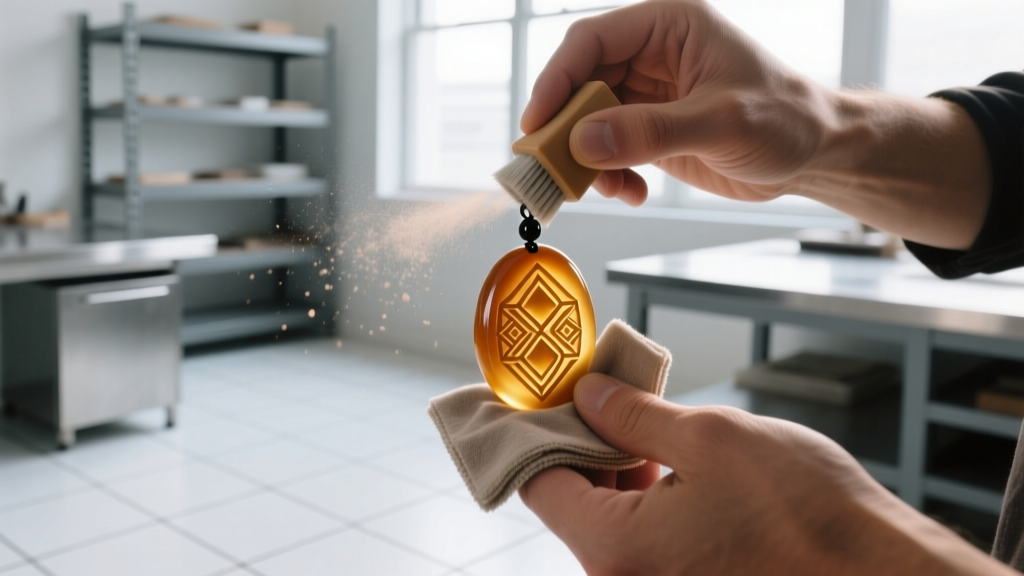
Conservationists at the Victoria and Albert Museum recommend using gentle, non-solvent-based polishes for historical plastics. Novus 2 (Fine Scratch Remover) or Simichrome Metal Polish are the industry standards for Bakelite restoration.
How to Polish:
Apply a pea-sized amount of polish to a soft cotton cloth. Rub the bead using circular motions with moderate pressure. You will immediately see the cloth turning dark yellow or brown—this is the oxidized layer being lifted. Continue buffing until the cloth comes away clean. Finally, use a fresh microfiber cloth to buff the bead to a high, glass-like shine. The butterscotch color should now appear vibrant, glowing, and deeply translucent.
Archival Storage and Environmental Controls
How you store your butterscotch bakelite necklace is just as critical as how you clean it. Bakelite is susceptible to environmental degradation if kept in improper conditions.
- Humidity Control: Store your necklace in an environment with 40% to 50% relative humidity. High humidity can cause the metal hardware to corrode and stain the adjacent Bakelite beads, while extremely dry conditions can accelerate resin brittleness.
- UV Protection: Keep the necklace in a dark drawer or archival box. Prolonged exposure to direct sunlight will cause the butterscotch dye to break down, turning the beads an opaque, muddy brown.
- Acid-Free Materials: Never store Bakelite in PVC plastic bags or standard cardboard boxes, which off-gas acidic compounds. Wrap the necklace in unbleached, acid-free cotton tissue paper or store it in a lined wooden jewelry box.
- Isolation from Other Plastics: Store Bakelite away from celluloid or degrading modern plastics. "Plastic disease" from off-gassing items can spread and damage the surface of your Bakelite.
Maintaining Vintage Hardware and Clasps
Most authentic 1930s butterscotch bakelite necklaces feature brass barrel clasps, steel screw clasps, or early spring-ring mechanisms. When cleaning the metal hardware, you must be incredibly careful not to let metal polishes like Brasso touch the Bakelite beads, as the harsh solvents in metal polishes will permanently cloud the resin.
Use a cotton swab dipped in a mild brass cleaner to carefully swab the clasp mechanism. If the clasp is heavily rusted or the internal spring mechanism has failed, take the necklace to a professional jeweler who specializes in vintage estate pieces. They can replace the internal spring or re-string the beads using modern, high-tensile beading wire while preserving the original exterior brass barrel for historical accuracy.
Final Thoughts on Preservation
A butterscotch bakelite necklace is more than just a piece of vintage jewelry; it is a wearable artifact of early 20th-century chemical engineering. By avoiding harsh solvents, utilizing the Simichrome testing and polishing method, and maintaining strict environmental controls in your storage, you can ensure that the warm, golden glow of your necklace survives for another century of wear.


