How to Make an Arrowhead Necklace: Metals & Stones
Learn how to make an arrowhead necklace by comparing wire gauges, metal alloys, and stone hardness to ensure a durable, professional-grade pendant.
The Metallurgy and Mineralogy of Arrowhead Pendants
Learning how to make an arrowhead necklace requires more than just an eye for rustic aesthetics; it demands a rigorous understanding of material properties, structural integrity, and lapidary mechanics. Whether you are knapping your own flint, sourcing polished agate, or casting bronze replicas, the intersection of stone and metal dictates the longevity of your pendant. A poorly matched wire alloy or an improperly drilled stone will result in a fragile craft project rather than an heirloom-quality piece of jewelry. In this comprehensive guide, we dissect the exact material grades, wire gauges, and failure modes you must navigate to craft a professional-grade arrowhead necklace.
Selecting the Arrowhead: Mohs Hardness & Material Properties
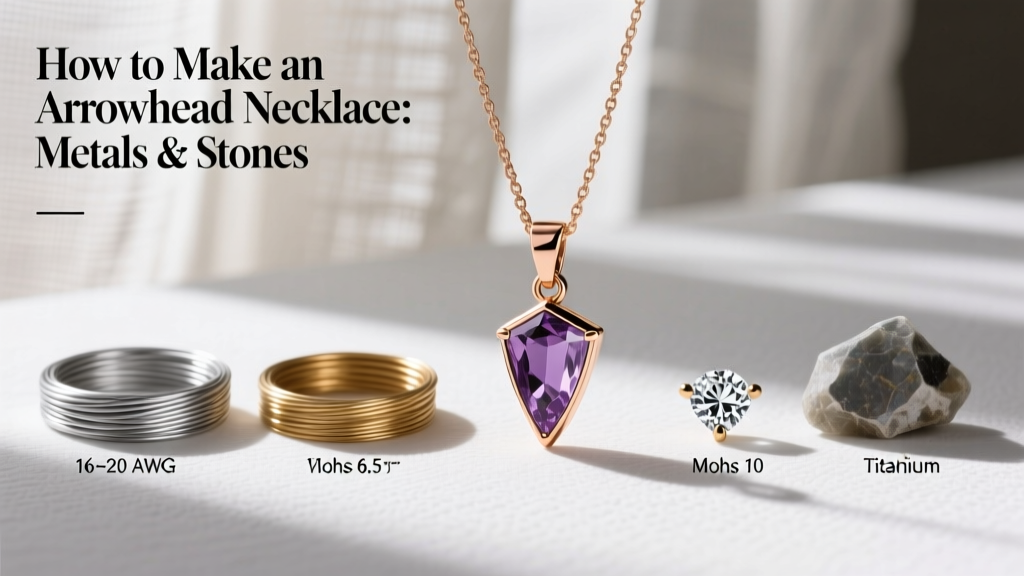
The foundational element of your necklace is the arrowhead itself. Historically crafted from materials that exhibit a conchoidal fracture, modern arrowhead pendants utilize a variety of stones and metals. Understanding the Mohs hardness scale is critical, as it directly impacts how you will drill, wrap, and wear the piece. According to the Mindat Mineral Database, the structural integrity of silicate stones varies wildly based on their crystalline structure.
Natural Stone vs. Cast Alternatives
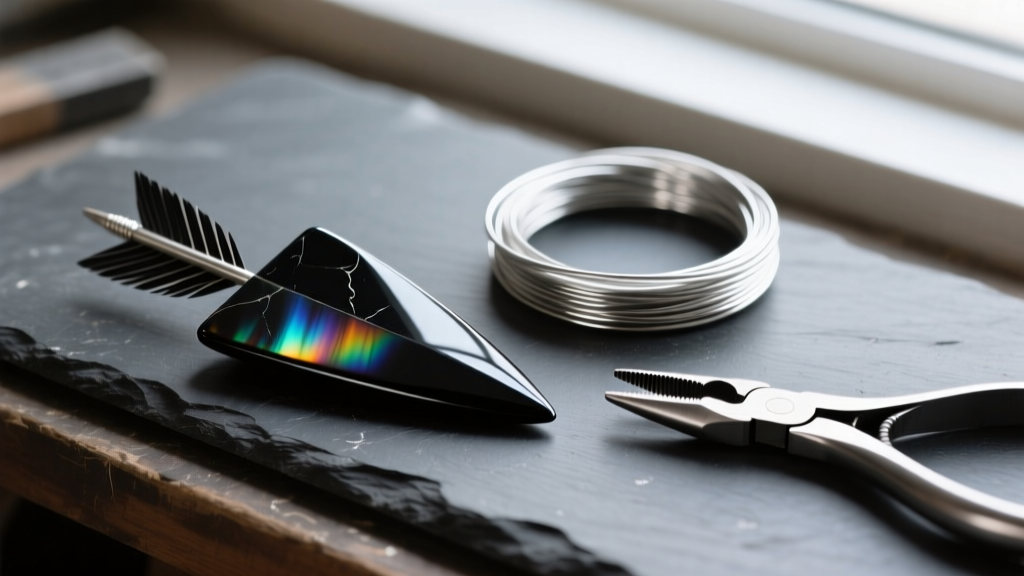
Obsidian is a popular choice for its glassy luster and deep black color, but it is an amorphous volcanic glass with a Mohs hardness of 5 to 5.5. While it is relatively easy to drill using a diamond-tipped twist bit, it is highly susceptible to thermal shock. If you drill obsidian without continuous water cooling, the friction heat will cause the stone to shatter along its natural fracture lines. Flint and chert (Mohs 6.5-7) are significantly more durable but require specialized lapidary diamond core bits and a slow, steady drilling pace. Agate and jasper (Mohs 6.5-7) offer beautiful banding and superior toughness due to their microcrystalline quartz structure, making them the most forgiving stones for beginners learning how to make an arrowhead necklace.
| Arrowhead Material | Mohs Hardness | Drillability & Risks | Weight Profile (Avg 2-inch) |
|---|---|---|---|
| Obsidian (Volcanic Glass) | 5.0 - 5.5 | Easy to drill; high risk of thermal shock and chipping. | 12 - 18 grams |
| Flint / Chert | 6.5 - 7.0 | Moderate; requires diamond core bits and water cooling. | 15 - 22 grams |
| Agate / Jasper (Quartz) | 6.5 - 7.0 | Moderate; highly durable, low risk of edge chipping. | 18 - 25 grams |
| Cast Bronze / Brass | 3.0 - 4.0 | Very easy; can be drilled with standard HSS steel bits. | 25 - 40 grams |
Wire Wrapping vs. Bail Mounting: Metal Alloy Comparison
Once you have selected and drilled your arrowhead, the next critical decision is the metal used for the bail and structural wrap. The alloy you choose will determine the pendant's tarnish resistance, malleability, and ultimate tensile strength. As of 2026, lapidary artists and professional jewelers increasingly favor advanced silver alloys over traditional options for wire-wrapping heavy stone pendants.
Argentium Silver vs. Standard Sterling
Standard sterling silver (92.5% silver, 7.5% copper) is a jewelry staple, but its copper content makes it prone to firescale when soldered and rapid tarnishing when exposed to atmospheric sulfur. For wire wrapping, sterling work-hardens relatively quickly, meaning you have a limited window to manipulate the wire before it becomes brittle and snaps. Rio Grande, a leading authority on jewelry metallurgy, heavily recommends Argentium silver (93.5% silver, alloyed with copper and germanium) for advanced wire artists. The germanium content creates a transparent, self-healing oxide layer that makes Argentium highly tarnish-resistant. More importantly for arrowhead wraps, Argentium fuses to itself without the need for solder, allowing you to create seamless, structurally sound bail loops that will not unravel under the heavy load of a quartz arrowhead.
Copper, Brass, and Work Hardening
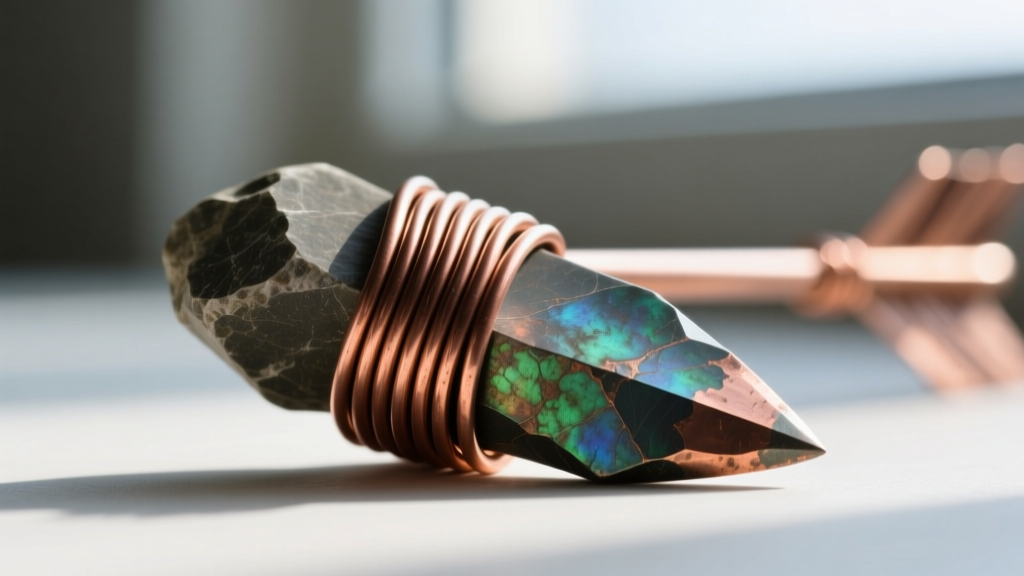
For practice pieces or rustic, earthy designs, copper and brass are excellent, cost-effective materials. However, pure copper (dead soft) work-hardens aggressively. When wrapping the sharp, uneven edges of a knapped flint arrowhead, copper wire will stiffen after just a few bends. To prevent the wire from snapping mid-wrap, you must understand annealing. Heating copper wire to approximately 700°F (370°C)—indicated by a dull red glow in a dimly lit room—and quenching it in water will reset its crystalline structure, returning it to a dead soft state.
Choosing the Right Wire Gauge & Temper
Selecting the correct wire gauge and temper is where many amateur jewelers fail. The gauge dictates the thickness of the wire, while the temper dictates its stiffness out of the spool. Fire Mountain Gems categorizes wire temper into three main tiers: dead soft, half-hard, and full-hard. For an arrowhead necklace, you will need a combination of tempers to achieve both structural integrity and decorative weaving.
- 20-Gauge (0.81mm) Half-Hard: This is your primary structural wire. Half-hard temper provides enough stiffness to hold the shape of the bail and the base frame, ensuring the heavy arrowhead does not pull the wire out of alignment.
- 22-Gauge (0.64mm) Dead Soft: Ideal for secondary structural wraps and creating the initial 'cage' around the stone. Dead soft wire easily conforms to the irregular, asymmetrical edges of a knapped stone.
- 24-Gauge (0.51mm) or 26-Gauge (0.40mm) Dead Soft: Used exclusively for decorative lashing, coiling, and binding the heavier gauge wires together. Never use 26-gauge wire to bear the actual load of the pendant, as it will stretch and deform under a 20-gram stone.
Pro-Tip for Sharp Edges: Knapped arrowheads often feature micro-serrations along the edges. Always use a slightly thicker wire (20g or 18g) to create a 'bumper' frame around the perimeter of the stone. If you wrap 24-gauge wire directly over a sharp obsidian edge, the stone will eventually slice through the metal, causing the pendant to fail.
Surface Treatments and Patinas
To give your arrowhead necklace an antique, archaeological feel, surface treatments are essential. For silver and copper alloys, Liver of Sulfur (potassium sulfide) is the industry standard for inducing controlled oxidation. By diluting a small amount of Liver of Sulfur in warm water, you can dip your finished wire wrap to achieve a deep, gunmetal-black patina. Once dry, use 0000-grade extra-fine steel wool or a polishing cloth to buff the high points of the wire. This leaves the dark oxidation in the crevices and weaves, dramatically highlighting the texture of the wire work while contrasting beautifully against the smooth, polished face of an agate or jasper arrowhead.
Chain Selection: Load-Bearing Properties
The final, often overlooked component is the chain. Arrowheads are inherently top-heavy and dense. A standard 1mm or 1.2mm cable chain, while delicate and attractive, possesses a low tensile strength and will easily snap at the soldered jump rings if subjected to the pendulum-like swinging motion of a 25-gram stone pendant.
For arrowhead necklaces, opt for chains with high structural interlocking. A 2mm to 3mm Rolo chain, Wheat chain, or Figaro chain distributes the kinetic energy of the heavy pendant across multiple interlocking links, drastically reducing the failure rate. Furthermore, always secure the clasp and pendant bail with heavy-duty, soldered jump rings. Open jump rings (those with a single cut) will inevitably pull apart under the dynamic load of a heavy stone. If you must use open jump rings, ensure they are at least 18-gauge in thickness and use two pairs of flat-nose pliers to twist them open laterally, rather than pulling them apart, to maintain their perfect circular tension.
Step-by-Step Assembly & Failure Prevention
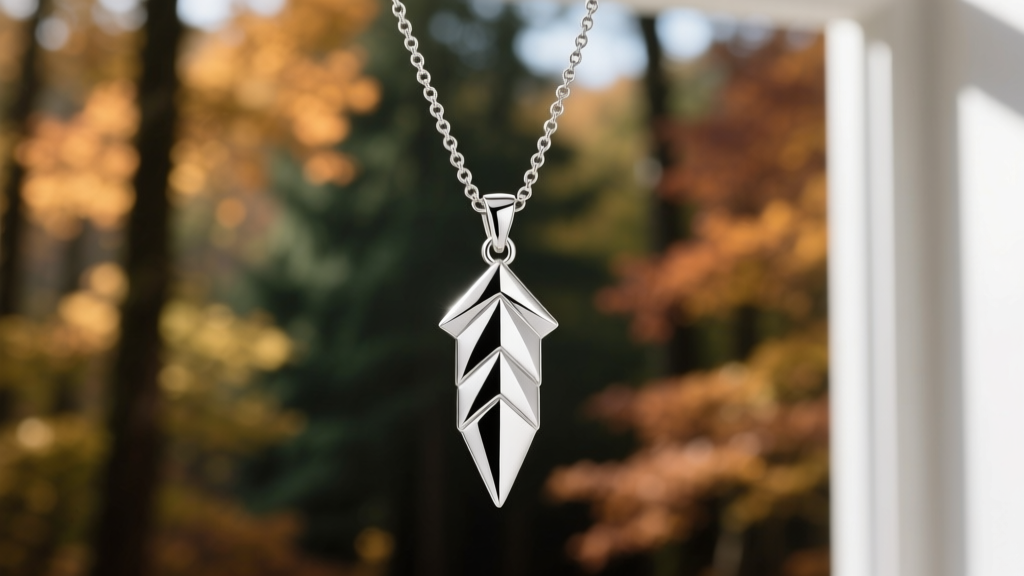
When assembling your piece, follow a strict sequence to avoid material fatigue. First, construct the base frame and bail using your 20-gauge half-hard wire. Work-harden the bail loop by gently hammering it with a rawhide or nylon-jaw mallet against a steel bench block; never use a metal hammer directly on silver or copper, as it will mar the surface and create micro-fractures. Next, place the arrowhead into the frame and use your 22-gauge dead soft wire to lash the stone securely, ensuring the wire crosses over the thickest part of the stone's center of gravity. Finally, apply your decorative 24-gauge weaves, oxidize the piece, and attach it to your heavy-duty rolo chain. By respecting the Mohs hardness of your stone and the tensile limits of your metal alloys, you will craft an arrowhead necklace that is as structurally enduring as it is visually striking.


