Male Surfer Necklaces: The 2026 Budget & Value Guide
Discover the true value of male surfer necklaces in 2026. We break down material grades, saltwater resistance, and budget tiers to find the best gear.

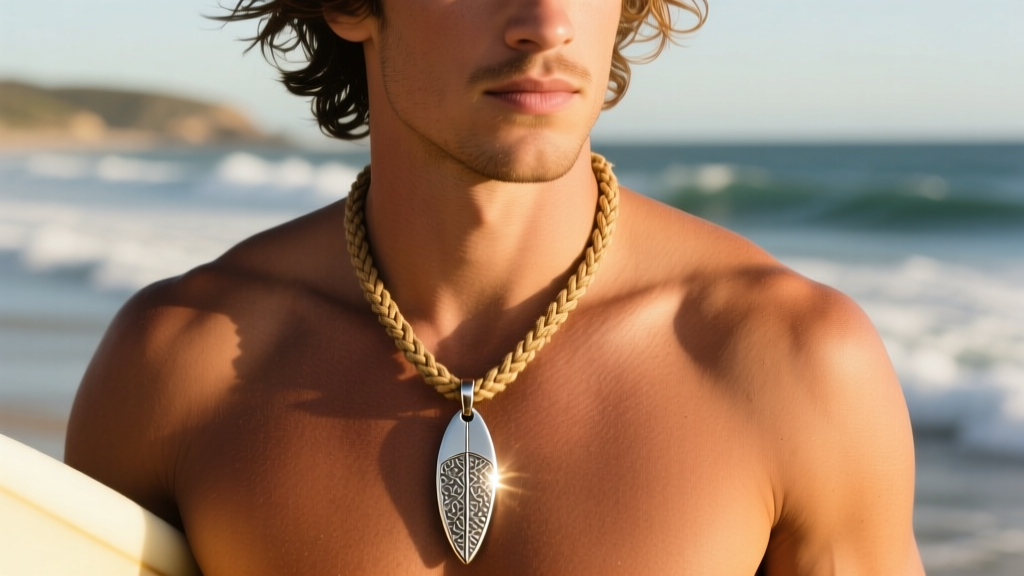
The Ocean is a Ruthless Judge of Jewelry
When it comes to male surfer necklaces, the ocean does not care about brand names or aesthetic appeal. Saltwater, intense UV radiation, and the sheer physical force of wiping waves create a hostile environment that rapidly destroys poorly made accessories. In 2026, the market is flooded with fast-fashion surf jewelry that looks great on a mannequin but disintegrates after a single surf trip. As a buyer, understanding the intersection of material science and budget is the only way to ensure you are getting actual value rather than paying for a temporary illusion.
This guide strips away the marketing fluff and evaluates male surfer necklaces through a strict budget and value assessment lens. We will examine exact metal grades, cord polymers, and shell sourcing to help you determine exactly what your money should be buying, whether you are spending twenty dollars or two hundred.
The True Cost of Saltwater: Why Cheap Surf Necklaces Fail
To assess value, you first need to understand the primary failure modes of surf jewelry. The ocean is roughly 3.5% sodium chloride. Chloride ions are notoriously aggressive; they penetrate the passive oxide layer of standard metals, causing localized pitting and catastrophic rust. Furthermore, the constant cycle of soaking in saltwater and baking in the sun causes untreated organic fibers to rot, stiffen, and snap.
A necklace that costs $15 but turns your chest green and snaps in a rip current after two weeks has a terrible cost-per-wear ratio. Conversely, a $45 necklace engineered with marine-grade materials that lasts five years offers exceptional value. According to gear testing insights featured in Surfer Magazine, the most common complaint among surfers regarding accessories is clasp corrosion and cord degradation, not the loss of the pendant itself.
Material Breakdown: What Actually Survives the Surf Zone?
Before assigning a budget, you must know which materials justify a premium price tag. The table below outlines the standard materials used in male surfer necklaces and their actual performance metrics in marine environments.
| Material | Saltwater Resistance | UV Resistance | Expected Lifespan (Daily Surf) | Value Tier |
|---|---|---|---|---|
| 304 Stainless Steel | Poor (Pits easily) | N/A | 1 - 3 Months | Low |
| 316L Surgical Steel | Excellent | N/A | 2 - 5 Years | Mid |
| Grade 23 Titanium | Impervious | N/A | Lifetime | High |
| Untreated Cotton | Poor (Rots) | Poor | 2 - 4 Weeks | Low |
| Waxed Hemp/Linen | Good (Requires re-waxing) | Moderate | 6 - 12 Months | Mid |
| 550 Nylon Paracord | Excellent | Excellent | 3+ Years | Mid/High |
Metals: The Molybdenum Advantage
If your surfer necklace features a metal pendant—be it a surfboard, a hook, or a simple geometric tag—the alloy is everything. Budget brands use 304 stainless steel or zinc alloys plated in silver. These will pit and rust within weeks of saltwater exposure. The absolute minimum standard for value is 316L stainless steel. As noted by the metallurgical experts at Rio Grande, 316L contains 2-3% molybdenum, an element that drastically increases resistance to chloride pitting. If you are paying over $30 for a steel pendant, verify it is stamped or marketed as 316L. For the ultimate, albeit expensive, upgrade, Grade 23 Titanium (Ti-6Al-4V) is completely immune to saltwater corrosion and is significantly lighter on the neck.
Cords and Shells: Polymers vs. Organics
The cord is the weakest link in any male surfer necklace. Leather looks rugged but stiffens and rots when repeatedly saturated with saltwater. Waxed hemp is a classic surf staple, but the wax coating eventually wears off from friction against your wetsuit, leaving the organic fibers vulnerable to mildew. The highest value-to-durability ratio in 2026 belongs to 550 paracord. Made from marine-grade nylon, it resists UV fading, does not absorb water, and boasts a 550-pound breaking strength.
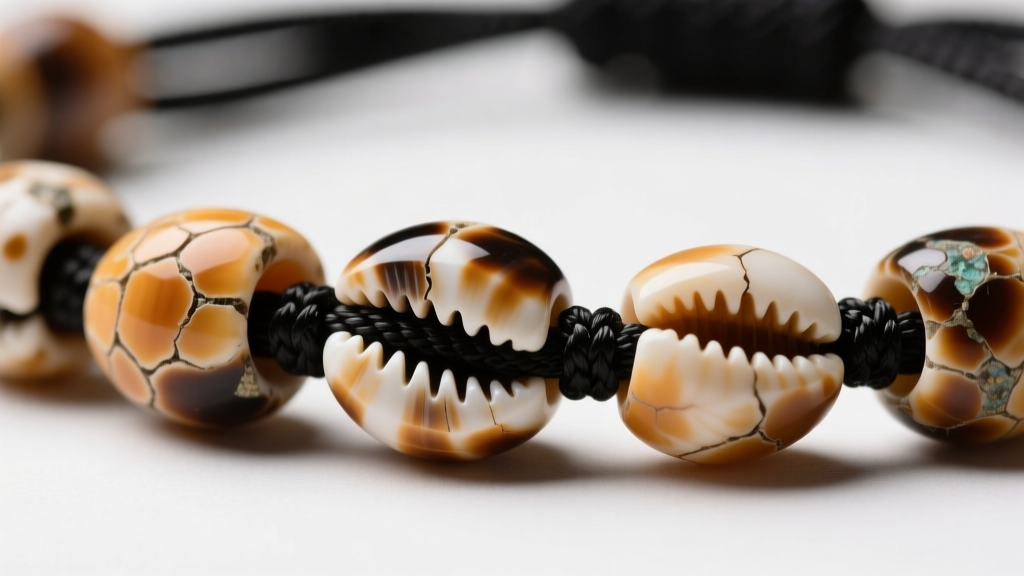
When it comes to beads, genuine Puka shells are the naturally occurring apexes of cone snails. They are thick, asymmetrical, and have a distinct convex/concave profile. Mass-market budget necklaces often use stamped Trocas shell or molded plastic disguised as Puka. These flat, uniform fakes lack structural integrity and will shatter when caught under the lip of a heavy wave.
Budget Tiers & Value Assessment for 2026
With the material science established, let us break down the current market pricing to help you identify where the true value lies, and where the marketing traps are hidden.
The Under $25 Trap (High Depreciation)
Necklaces in the $10 to $25 range are almost exclusively constructed from 304 stainless steel, brass, or zinc alloys, strung on untreated cotton or cheap elastic. While they serve the purpose of a temporary vacation souvenir, they hold zero long-term value. The clasps in this tier are usually lobster claws made of plated base metals, which will seize up with salt crystallization after three or four uses. Buying in this tier means committing to replacing the necklace every few months.
The $30–$60 Sweet Spot (Optimal Value)
This is where the smart money is spent. In the $30 to $60 bracket, you should demand 316L stainless steel pendants, solid titanium jump rings, and high-quality braided paracord or professionally waxed maritime linen. Brands operating in this space often use screw-down barrel clasps or custom-machined titanium hooks that will not corrode or accidentally unclip during a wipeout. A $45 necklace in this tier, properly maintained, will easily outlast a $150 piece from a luxury fashion house that prioritized branding over marine engineering.
Premium Artisan Pieces ($75 to $200+)
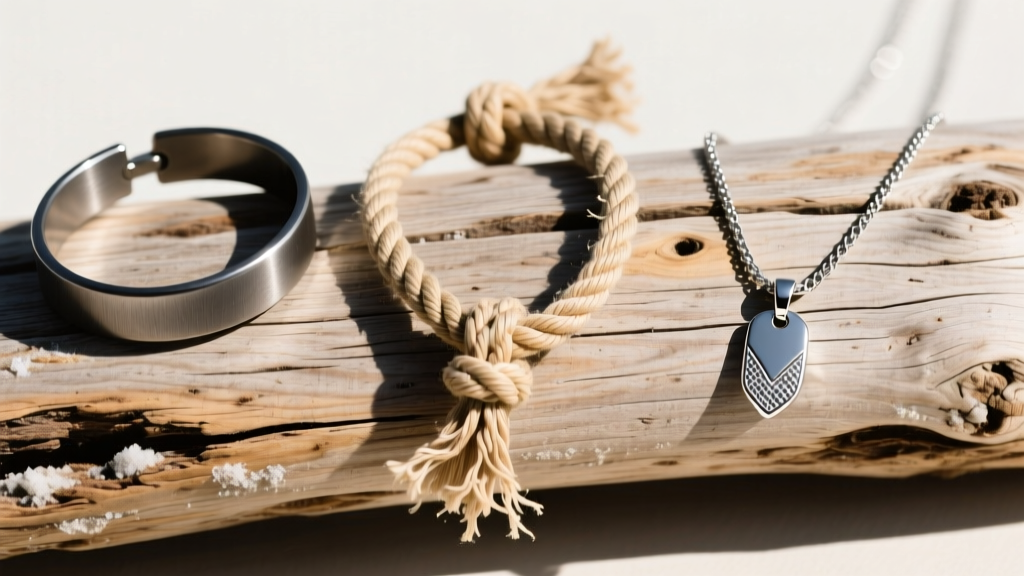
Once you cross the $75 threshold, you are no longer just paying for material survival; you are paying for artisanal craftsmanship, ethical sourcing, and exotic materials. In this tier, expect solid Grade 23 Titanium, Sterling Silver (which requires polishing but holds intrinsic metal value), and hand-carved fossilized ivory or ethically sourced mother-of-pearl. The cord work in this tier often features complex, multi-strand sinnet braids that take hours to weave by hand. The value here is subjective, rooted in art and exclusivity rather than pure utility.
Maintenance: Extending the Lifespan of Your Gear
Even the most expensive male surfer necklace requires basic maintenance to protect your investment. The single most effective habit you can develop is rinsing your necklace in fresh water immediately after every surf session. Salt crystals act like microscopic sandpaper, grinding away at cord fibers and lodging inside clasp mechanisms. Once a week, use a soft toothbrush and a drop of mild dish soap to scrub the clasp and the bail (the loop connecting the pendant to the cord). If your necklace features a waxed hemp cord, re-apply a thin layer of beeswax or surf wax every few months to maintain its hydrophobic barrier.
Final Verdict: Where Should You Put Your Money?
When evaluating male surfer necklaces through a strict value assessment, the $30 to $60 range offers the undisputed best return on investment. By insisting on 316L stainless steel or titanium, paired with 550 paracord or meticulously maintained waxed hemp, you secure a piece of surf jewelry that respects the ocean's destructive power while maintaining its aesthetic edge. Stop paying for fast-fashion rust, and start investing in marine-grade craftsmanship that will stay around your neck for years to come.


