How to Clean and Care for Your Daryl Hall Guitar Pick Necklace
Learn expert cleaning and maintenance tips for your Daryl Hall guitar pick necklace. Keep your sterling silver or steel pendant tarnish-free.

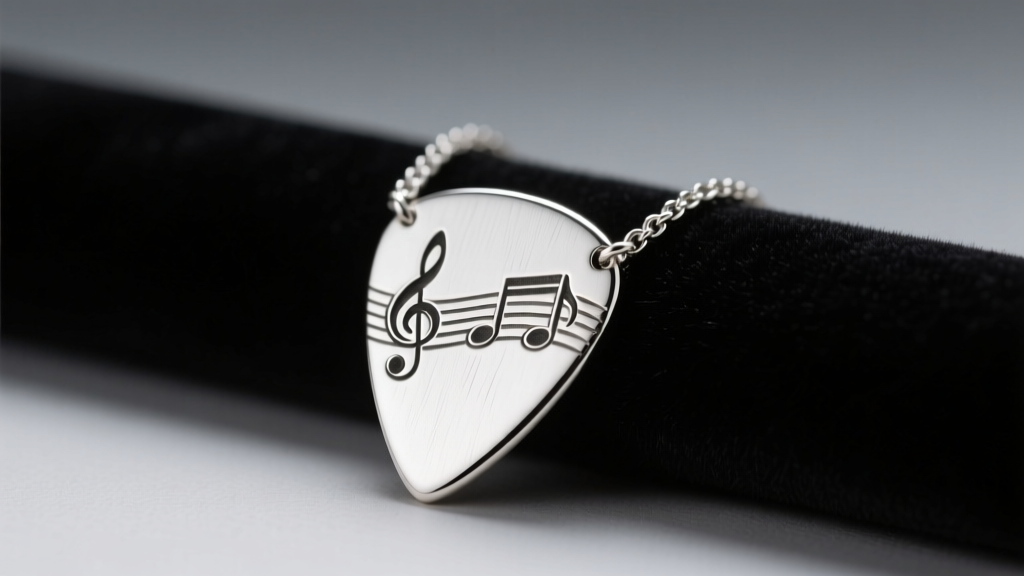
For fans of classic rock and soul, the Daryl Hall guitar pick necklace is more than just a piece of memorabilia; it is a symbol of musical legacy and personal style. Whether you own a solid sterling silver replica, a stainless steel tribute, or a brass pendant modeled after the Hall & Oates legend's iconic stage jewelry, maintaining its pristine condition requires specific care. Metal pendants shaped like guitar picks feature unique bevels, deep-stamped signatures, and intricate grooves that easily trap dirt, skin oils, and environmental tarnish.
In this comprehensive guide, we break down the exact metallurgy of your pendant, the chemistry of tarnish, and the step-by-step maintenance routines required to keep your necklace looking stage-ready. According to the Gemological Institute of America (GIA), proper care of precious metals hinges on understanding their specific alloy compositions and avoiding abrasive chemicals that can strip intentional patinas or damage delicate engravings.
The Anatomy of a Guitar Pick Pendant: Why Material Matters
Before applying any cleaning solution, you must identify the exact metal of your Daryl Hall guitar pick necklace. The cleaning protocol for 925 sterling silver is vastly different from that of 316L stainless steel or raw brass.
- Sterling Silver (925): Composed of 92.5% pure silver and 7.5% copper. The copper provides durability but is highly reactive to sulfur and moisture, leading to black silver sulfide (tarnish).
- Stainless Steel (316L): A surgical-grade alloy containing chromium, which forms a passive oxide layer that resists corrosion. It rarely tarnishes but can accumulate a cloudy film of sebum and dead skin cells.
- Brass/Bronze: Copper-zinc or copper-tin alloys that develop a natural, dark patina over time. Some owners prefer this vintage look, while others want a high-polish shine.
- Mixed Media (Celluloid/Metal Bezel): Some premium pendants feature an actual celluloid or tortoiseshell pick encased in a metal bezel. These require extreme caution, as alcohol-based cleaners will melt celluloid.
Daily Wear and Tear: The Impact of Concert Environments
Wearing a guitar pick necklace to a live concert or during daily activities exposes the metal to human sweat, which has a pH ranging from 4.5 to 7.0. The lactic acid and urea in sweat accelerate the oxidation process in copper-bearing alloys like sterling silver and brass. Furthermore, the deep-stamped grooves of a signature or the "Daryl Hall" engraving act as microscopic traps for cosmetic products, sunscreen, and ambient humidity.
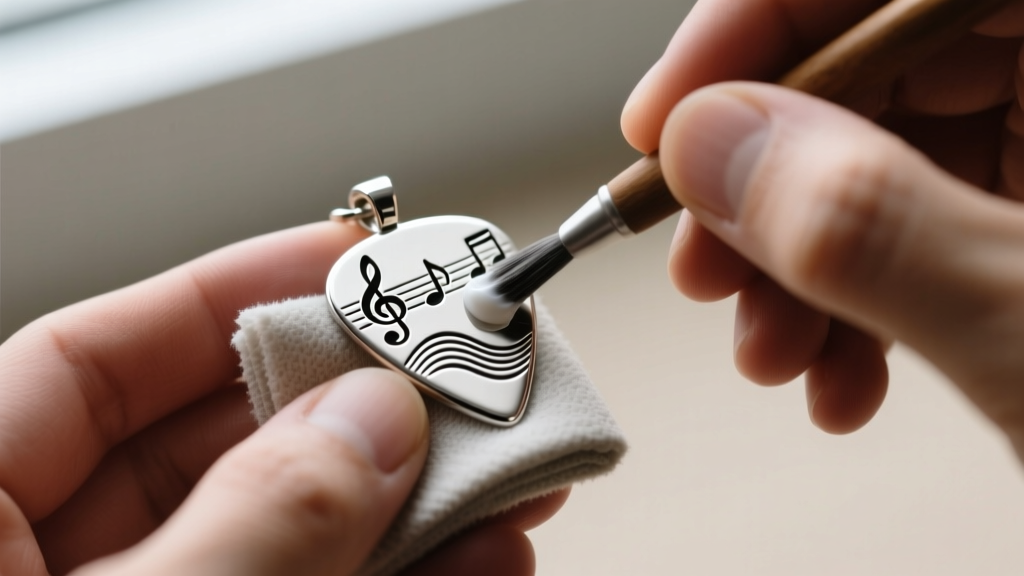
To mitigate daily damage, adopt the "last on, first off" rule. Put your necklace on after applying perfumes, hairsprays, and lotions, and remove it immediately upon returning home, wiping it down with a dry, lint-free microfiber cloth to remove acidic skin oils before they can etch into the metal.
Step-by-Step Cleaning Guide by Material
1. Restoring Sterling Silver Picks
For heavily tarnished sterling silver Daryl Hall guitar pick necklaces, avoid harsh commercial dips that strip the metal. Instead, use a redox (reduction-oxidation) reaction to lift tarnish without removing any silver.
- Line a glass bowl with aluminum foil, shiny side up.
- Place the silver pick pendant in the bowl, ensuring it touches the foil.
- Sprinkle two tablespoons of baking soda over the pendant.
- Pour boiling water into the bowl. The resulting chemical reaction transfers the sulfur from the silver to the aluminum foil.
- After 3 minutes, remove the pendant with wooden tongs, rinse in distilled water, and buff dry with a microfiber cloth.
Note: If the pendant features an intentional dark antiquing in the engraved letters to make the signature pop, the aluminum foil method will remove it. For antiqued silver, use a mild dish soap and a soft-bristled baby toothbrush to clean only the raised surfaces.
2. Polishing Stainless Steel and Brass
Stainless steel requires minimal intervention. A simple wash in warm water with a drop of pH-neutral dish soap (like Dawn) followed by a thorough drying is usually sufficient. For brass picks that have lost their luster, create a paste using equal parts lemon juice and baking soda. Apply it with a soft cloth, let it sit for five minutes, and rinse. The citric acid gently chelates the copper oxide tarnish.
3. Protecting Mixed Media and Enamel
If your pendant features enamel inlays or a celluloid pick set in a metal frame, never submerge it in water or use ultrasonic cleaners. Ultrasonic waves can shatter brittle celluloid and loosen the adhesives holding enamel in place. Clean these pieces using a slightly damp Q-tip to carefully trace the metal bezels, avoiding the inlay entirely.
Chain Maintenance: Don't Forget the Hardware
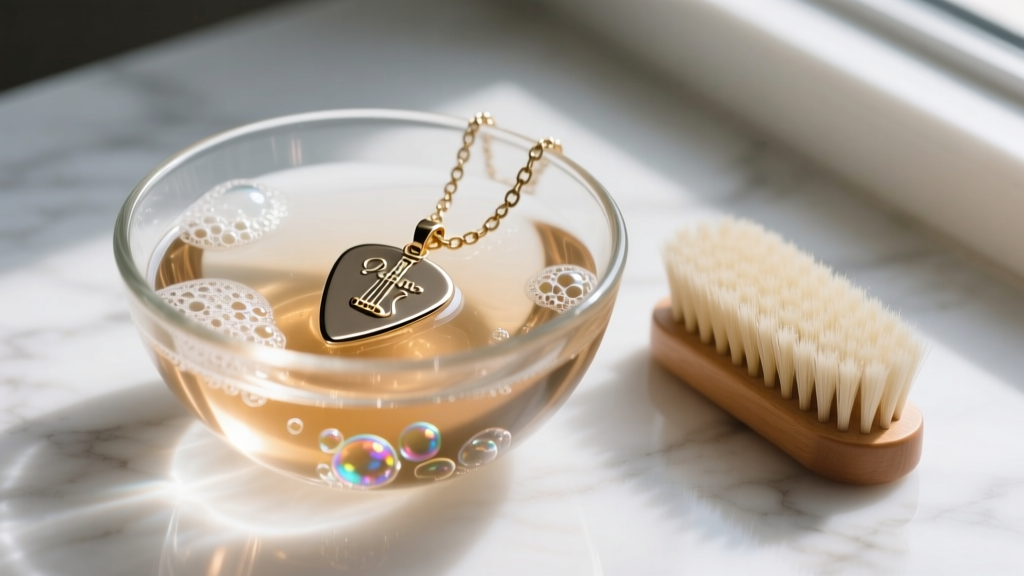
The pendant is only half the equation. The chain supporting your Daryl Hall guitar pick necklace requires equal attention, particularly if it is a box chain or a snake chain. Box chains, popular for their masculine, geometric aesthetic, are notorious for trapping dead skin and soap scum inside their square links.
To deep clean a metal chain, detach the pendant (to prevent the jump ring from catching) and soak the chain in a solution of warm water and a few drops of ammonia-free jewelry cleaner for 15 minutes. Agitate it gently, then use a soft toothbrush to sweep out the crevices of the links. Rinse thoroughly and lay flat on a paper towel to dry.
If your pick is strung on a leather cord, be aware that leather degrades rapidly when exposed to sweat and water. Wipe leather cords with a barely damp cloth and condition them once every six months with a specialized leather balm to prevent cracking. Replace leather cords annually if worn daily.
Inspecting the Jump Ring and Hardware
Guitar picks are relatively heavy and flat, meaning they swing and pivot against the jump ring (the small circular loop connecting the pick to the chain). Over time, this friction can wear down the metal of the jump ring, especially if it is made of softer sterling silver. According to Jewelers of America, inspecting the structural integrity of your jewelry's connections is a critical part of routine maintenance.
Every three months, examine the jump ring. If you notice a visible gap where the ends meet, or if the metal has thinned significantly, take it to a local jeweler to have it soldered shut or replaced with a heavier 18-gauge or 16-gauge jump ring. Losing a sentimental piece of memorabilia to a failed jump ring is entirely preventable.
Storage Solutions to Prevent Tarnish and Scratches
How you store your necklace when it is not around your neck dictates how much cleaning it will require later. Sterling silver and brass react to hydrogen sulfide in the ambient air. Tossing your necklace into a crowded jewelry box guarantees two things: accelerated tarnishing and micro-scratches from harder gemstones or steel pieces rubbing against the pick's polished surface.
- Airtight Environments: Store the necklace in a sealed polyethylene zip-top bag.
- Anti-Tarnish Strips: Place a 3M anti-tarnish strip inside the bag. These strips absorb airborne sulfur compounds and typically last for 6 to 12 months.
- Silica Gel Packets: Include a small silica gel packet to control humidity, which acts as a catalyst for oxidation.
- Individual Pouches: If using a jewelry box, keep the pick necklace in its own soft flannel pouch to prevent the bevels from scratching against other items.
Troubleshooting Common Necklace Issues
Even with meticulous care, you may encounter specific issues with your guitar pick pendant. Use the diagnostic table below to resolve them safely.
| Problem | Root Cause | Expert Solution |
|---|---|---|
| Cloudy, smudged surface on steel | Sebum and lotion buildup | Wipe with a microfiber cloth dampened with 70% isopropyl alcohol. |
| Black tarnish deep in the signature engraving | Silver sulfide trapped in grooves | Use a wooden toothpick wrapped in a thin layer of cotton and dipped in silver polish to trace the letters. |
| Stiff or grinding chain links | Micro-debris in the link joints | Soak in warm soapy water, brush gently, and apply a microscopic drop of synthetic watch oil to the stiff links. |
| Faded or scratched high-polish bevels | Friction against clothing or other jewelry | Use a jeweler's rouge cloth for minor scratches; seek professional buffing for deep gouges. |
By understanding the specific metallurgical needs of your Daryl Hall guitar pick necklace and implementing these targeted cleaning and storage routines, you ensure that your tribute to a music icon remains as vibrant and enduring as the legacy it represents. Consistent, gentle care will always outperform aggressive, reactive cleaning methods.


