Material Guide for a Massive Cross Necklace: Metals & Durability
Compare metals for a massive cross necklace. Learn about weight, durability, alloy grades, and chain pairings to prevent breakage and skin irritation.


The Physics of Heavy Pendants: Why Material Density Matters
When selecting a massive cross necklace, aesthetics are only half the equation; the metallurgical properties of your chosen material dictate how the piece wears, ages, and survives daily use. A standard cross pendant might measure 30mm and weigh 5 grams. A 'massive' cross typically spans 70mm to 120mm in height with a proportional width and depth. If cast in solid metal, the volume increases exponentially, leading to extreme weight variations based on the material's specific gravity (density).
For context, pure gold has a density of 19.32 g/cm³, while 316L stainless steel sits at 8.00 g/cm³, and Grade 5 titanium is just 4.51 g/cm³. A solid 14k gold cross measuring 100x60x8mm would weigh over 600 grams (more than 1.3 lbs). This immense static weight causes severe neck strain and accelerates metal fatigue on the chain. Therefore, understanding material properties is critical to balancing visual impact with structural integrity and physical comfort.
Metal Comparison Chart: Weight, Hardness, and Cost
The table below breaks down the most common metals used for oversized pendants, comparing their physical properties and practical applications in heavy jewelry design.
| Material | Density (g/cm³) | Mohs Hardness | Avg Price (per oz) | Best Application |
|---|---|---|---|---|
| Solid 14k Gold | 13.50 | 3.5 - 4.0 | ~$1,100 | High-end, heirloom pieces (often hollowed) |
| 925 Sterling Silver | 10.36 | 2.5 - 3.0 | ~$25 | Budget-friendly, highly detailed casting |
| 316L Surgical Steel | 8.00 | 5.5 - 6.0 | ~$1 | Heavy, durable daily wear, streetwear |
| Grade 5 Titanium | 4.43 | 6.0 | ~$15 | Lightweight, hypoallergenic, modern designs |
Deep Dive: Top Metals for Oversized Crosses
316L Surgical Stainless Steel: The Heavyweight Champion
For a truly solid, heavy-feeling massive cross necklace that won't bankrupt the wearer, 316L stainless steel is the industry standard. The 'L' stands for low carbon, and the alloy includes 2-3% molybdenum, which drastically increases corrosion resistance compared to standard 304 steel. According to Rio Grande Jewelry Supply, 316L is highly resistant to tarnishing and skin discoloration. Because it is incredibly hard, it holds sharp, CNC-milled bevels and deep enamel inlays without scratching easily. However, its hardness makes it difficult to resize or repair if the bail snaps.
Solid 14k and 18k Gold: Prestige vs. Softness
Gold alloys are the traditional choice for luxury pendants, but their softness poses a structural risk for massive pieces. As detailed by the Gemological Institute of America (GIA), 18k gold (75% pure gold) is significantly softer and more malleable than 14k gold (58.5% pure gold). If you are buying a massive solid gold cross, 14k is vastly superior for the bail and jump ring components, as it resists bending under the pendant's heavy pendulum swing. To mitigate the extreme weight and cost of solid gold, master jewelers often use electroforming or lost-wax casting with a thick resin core to maintain the massive volume while reducing the weight by up to 60%.
Grade 5 Titanium: The Lightweight Alternative
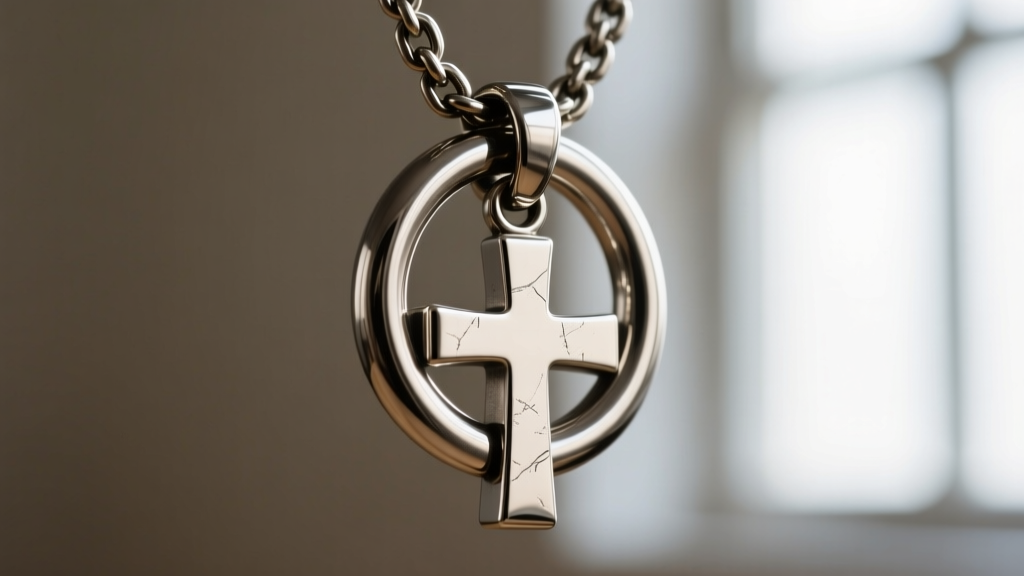
If you want the imposing silhouette of a 120mm cross without the cervical spine strain, Ti-6Al-4V (Grade 5 Titanium) is the ultimate solution. It is an aerospace-grade alloy that is 45% lighter than steel but boasts a higher tensile strength. Titanium is also entirely biocompatible, making it the only safe choice for wearers with severe nickel or cobalt contact dermatitis. The primary drawback is that titanium cannot be easily soldered using standard jewelry torches; it requires laser welding or argon-arc techniques, meaning repairs to a broken bail are highly specialized.
Structural Failure Points: Bails, Jump Rings, and Chain Tension
The most common failure mode in a massive cross necklace is not the chain snapping, but the bail deforming or the jump ring pulling apart. When you walk, a heavy pendant acts as a pendulum. The dynamic load at the apex of the swing can multiply the static weight of the pendant by 2.5x to 3x. A 200-gram steel cross can exert over 600 grams of localized shear force on the connection point.
- The Bail: Must be cast or forged with a minimum thickness of 3mm. Hollow or thin-sheet metal bails will collapse under the dynamic load of a massive pendant.
- The Jump Ring: Never use a standard split jump ring for a heavy cross. The tension will pull the split apart. You must use a soldered closed jump ring or a heavy-gauge screw-lock mechanism (minimum 14-gauge / 1.6mm wire thickness).
- Work Hardening: Metals like silver and gold work-harden over time. Repeated bending from taking the necklace on and off will cause microscopic fractures in the bail, leading to sudden catastrophic failure. Lang Antiques University recommends having a jeweler anneal and inspect heavy pendant bails annually.
Chain Pairings: What Actually Holds a Massive Cross?
A massive pendant requires a chain with high tensile strength and a low center of gravity to prevent the clasp from sliding to the front of your neck. Avoid delicate chains like Figaro, cable, or standard curb links, as they will kink and stretch irreparably.
1. The Franco Chain: Featuring interlocking V-shaped links, the Franco chain is virtually kink-proof. The weight of a heavy cross is distributed across multiple link contact points, making it the most secure pairing for pendants over 150 grams.
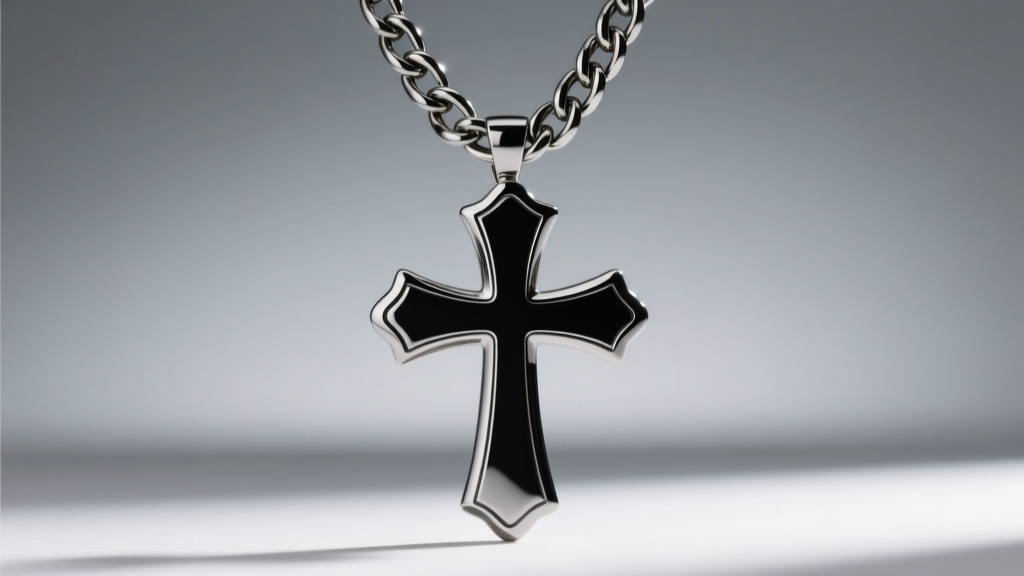
2. The Cuban Link Chain: A staple in streetwear, the Cuban link offers a wide, flat profile that matches the visual weight of a massive cross. Ensure the links are soldered; unsoldered thick Cuban links can stretch and deform under heavy static loads.
3. The Rope Chain: The helical twist of a rope chain provides excellent tensile strength and reflects light beautifully, but it can trap skin hair and is difficult to clean if it accumulates oils and debris from daily wear.
Care and Maintenance for Heavy Alloys
Maintaining a massive cross necklace requires specific protocols based on the metal. For 316L steel and titanium, an ultrasonic jewelry cleaner with a mild degreasing solution will safely remove sebum and dead skin from deep crevices and diamond pavé settings. For sterling silver and lower-karat golds, avoid ultrasonic cleaners if the cross features tension-set stones or oxidized (blackened) detailing, as the high-frequency vibrations can loosen stones and strip the intentional patina. Instead, use a soft-bristled brush with warm water and a few drops of phosphate-free dish soap.
Expert Insight: Always store your massive cross necklace hanging vertically or laid completely flat. Tossing a heavy, angular steel or silver cross into a jewelry box will guarantee it will scratch softer pieces and potentially bend its own bail if it lands at an awkward angle.
Choosing the right material for a massive cross necklace is an exercise in balancing physics, metallurgy, and personal style. By prioritizing structural integrity at the bail, selecting a metal density that suits your comfort level, and pairing it with a high-tensile chain like a Franco or soldered Cuban, you ensure that your statement piece remains a permanent, unbroken fixture of your wardrobe for decades to come.


