The Matrix Tennis Necklace: Comparing Turquoise and Opal
Discover the best materials for a matrix tennis necklace. We compare turquoise and boulder opal matrix properties, durability, and setting styles.

The Evolution of the Matrix Tennis Necklace
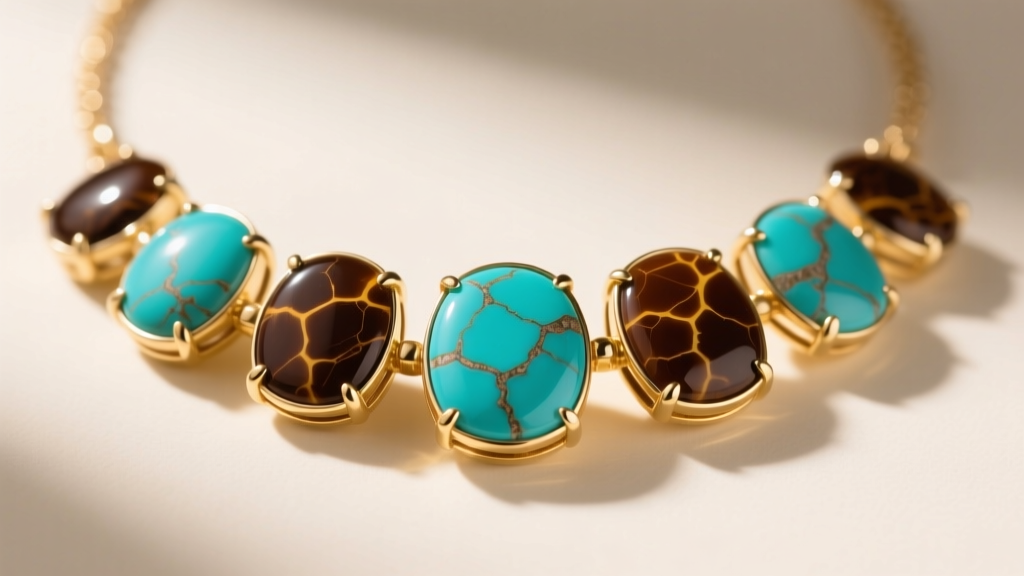
The traditional tennis necklace has long been defined by its continuous, symmetrical line of faceted diamonds or gemstones. However, as of 2026, a striking evolution has taken over high-end and artisanal jewelry: the matrix tennis necklace. This design marries the elegant, unbroken drape of a tennis silhouette with the raw, organic beauty of matrix gemstones—stones that retain their natural host rock or parent material. Rather than hiding the geological origins of the gem, the matrix is celebrated as an integral part of the aesthetic, creating a continuous line of earthy, textured, and entirely unique cabochons.
Designing a continuous necklace with matrix stones presents unique gemological and structural challenges. Unlike calibrated round brilliants, matrix stones are often freeform or irregularly shaped cabochons. The two most prominent materials used in this style are turquoise with its intricate webbing and boulder opal with its striking ironstone backing. Understanding the material properties, porosity, and structural integrity of these matrix stones is critical for both jewelers and collectors.
Turquoise Matrix: Limonite vs. Pyrite Webbing
When discussing a turquoise matrix tennis necklace, the "matrix" refers to the host rock that surrounds the turquoise vein. The visual appeal and structural durability of the necklace depend heavily on the mineral composition of this matrix.
Kingman Turquoise and Pyrite Matrix
Kingman turquoise, sourced from Arizona, is famous for its bright blue color and striking pyrite (iron sulfide) matrix. Pyrite appears as metallic, silver-gold flecks or webbing. From a structural standpoint, pyrite is significantly harder (Mohs 6-6.5) than the turquoise itself (Mohs 5-6). This differential hardness creates a challenge during the lapidary process; polishing the stone often results in the pyrite standing slightly proud of the turquoise, creating a micro-textured surface. When setting these stones in a continuous tennis line, bezel settings must be carefully burnished to accommodate these uneven edges without applying excessive pressure that could fracture the softer turquoise.
Number 8 Turquoise and Limonite Webbing
The legendary Number 8 mine in Nevada produces turquoise characterized by a golden-brown to black limonite matrix. Limonite is an iron oxide hydroxide that forms intricate, spiderweb-like patterns. According to the Mindat Mineralogy Database, limonite is relatively soft and highly porous. In a tennis necklace, stones with heavy limonite webbing are more susceptible to absorbing skin oils, lotions, and environmental pollutants, which can darken the matrix over time and alter the necklace's overall contrast.
Boulder Opal Matrix: Ironstone Host Rock Dynamics
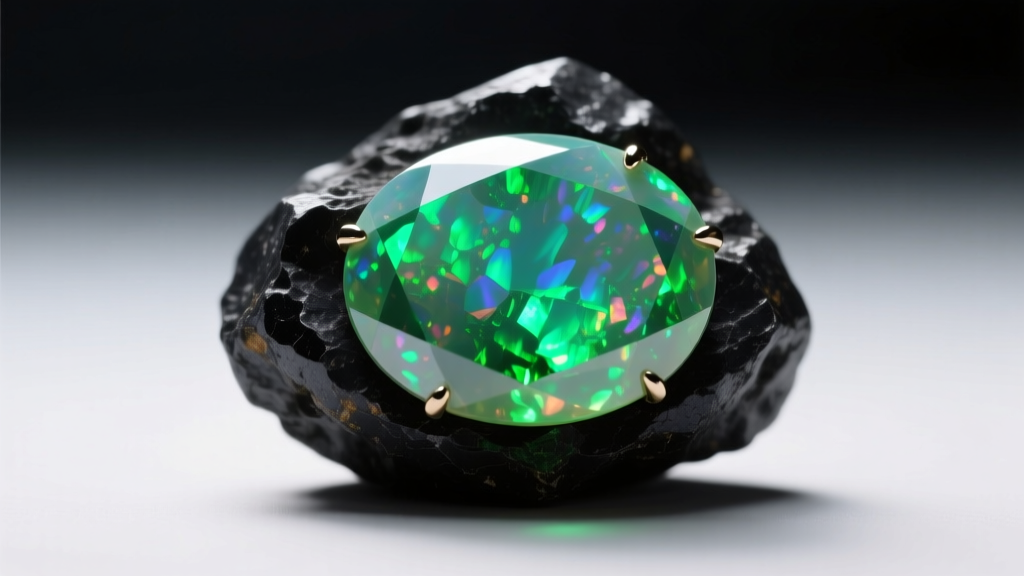
Boulder opal, primarily mined in Queensland, Australia, offers a completely different matrix profile. Here, the precious opal forms in narrow seams within ironstone boulders. The lapidary artist cuts the stone to include the ironstone as a natural backing and sometimes as veins running through the opal itself.
Structural Integrity and Cleavage Planes
The GIA Opal Guide notes that while precious opal is relatively fragile (Mohs 5.5-6.5) and prone to crazing, the ironstone matrix (Mohs 5-5.5) provides exceptional structural backing. In a boulder opal matrix tennis necklace, the ironstone acts as a shock absorber. However, the critical failure point in these stones is the boundary layer where the opal seam meets the ironstone. If a prong or bezel applies tension directly over this boundary, the stone can delaminate. Therefore, a matrix tennis necklace featuring boulder opal requires custom-fitted, low-profile bezels that grip only the ironstone edges, leaving the opal boundary entirely stress-free.
Comparative Gemological Data
When selecting materials for a matrix tennis necklace, jewelers must weigh the physical properties of the host rock against the design requirements. The following table outlines the critical specifications for the most common matrix materials used in 2026.
| Material | Matrix Composition | Mohs Hardness (Stone/Matrix) | Porosity | Recommended Treatment |
|---|---|---|---|---|
| Kingman Turquoise | Pyrite (Iron Sulfide) | 5-6 / 6-6.5 | Low to Moderate | Zachery Treatment |
| Number 8 Turquoise | Limonite (Iron Oxide) | 5-6 / 4-5 | High | Polymer Stabilization |
| Boulder Opal | Ironstone | 5.5-6.5 / 5-5.5 | None (Ironstone is dense) | None (Untreated) |
Articulation and Wire Core Engineering
A defining feature of any tennis necklace is its fluid drape. It must lay flat against the clavicle in a perfect "U" or "V" shape without kinking. Achieving this with irregular matrix cabochons requires advanced stringing engineering.
The Shift from Silk to Micro-Braided Steel
Historically, high-end necklaces were strung on silk thread. However, matrix stones are often drilled with diamond-tipped core bits that leave microscopic, sharp burrs inside the drill hole. Over time, these burrs will fray and snap silk thread. In modern matrix tennis necklaces, the industry standard is a 49-strand micro-braided stainless steel wire, typically coated in nylon. For standard turquoise matrix stones, a 0.019-inch (0.48mm) diameter wire provides the ideal balance of tensile strength and flexibility. For heavier boulder opal matrix stones, jewelers upgrade to a 0.024-inch (0.61mm) gauge to support the higher specific gravity of the ironstone.
Articulated Jump Ring Mechanics
To prevent the wire from kinking between the irregular cabochons, each stone must be separated by articulated jump rings. Using rigid, soldered links will cause the necklace to behave like a stiff collar rather than a fluid tennis line. Jewelers utilize 18k yellow gold oval jump rings (typically 2.5mm x 1.5mm, 22-gauge) that allow for multi-directional pivot points, ensuring the necklace maintains its continuous visual flow while adapting to the wearer's movements.
Real-World Failure Modes and Troubleshooting
Even with premium materials, matrix tennis necklaces are subject to specific failure modes that buyers and collectors must monitor.
- Differential Expansion Cracking: Turquoise and its limonite matrix expand and contract at different rates when exposed to heat (e.g., leaving the necklace on a dashboard in direct sunlight). This thermal shock can cause the stone to split along the webbing lines.
- Bezel Lift and Snagging: Because matrix stones are rarely perfectly domed, the edges of the bezel can lift slightly where the stone's profile dips. This creates a microscopic catch-point that will snag on knitwear and eventually pull the bezel wire away from the stone.
- Clasp Fatigue: The weight of a full-length (18-inch) boulder opal matrix tennis necklace can exceed 80 grams. Standard spring-ring clasps will fail under this dynamic load. A tongue-and-groove box clasp with dual figure-8 safety catches is mandatory for structural security.
Pricing Tiers and Authenticity Markers
The market for matrix tennis necklaces is heavily stratified based on the authenticity and treatment of the host rock. According to the Gemological Institute of America (GIA), the treatment of turquoise drastically affects its value and longevity.
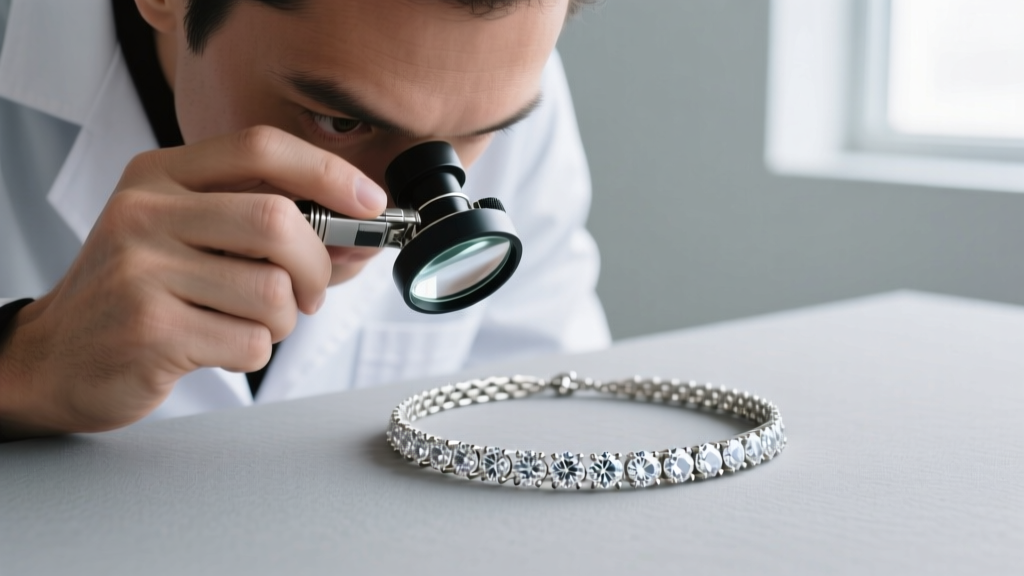
In the premium tier ($8,000 - $25,000+), you will find necklaces featuring untreated or Zachery-treated Kingman turquoise and natural Australian boulder opal. The Zachery treatment is highly prized because it uses a potassium-based solution to reduce porosity without introducing polymers that could cloud the matrix webbing under UV light. In the mid-tier ($2,000 - $7,000), stones are typically stabilized with clear epoxy resins (like Opticon) to harden the limonite matrix for secure setting. In the entry-level tier (under $1,000), buyers must be highly cautious of dyed howlite or magnesite masquerading as turquoise matrix. Authentic matrix webbing follows natural, chaotic fracture patterns, whereas imitation matrix often shows a "cookie-cutter" uniformity and pools of dark dye in the surface pits when viewed under 10x magnification.
Conclusion
The matrix tennis necklace represents a fascinating intersection of high jewelry design and raw geological beauty. Whether you prefer the metallic flash of pyrite in Kingman turquoise or the electric green play-of-color against dark ironstone in boulder opal, understanding the material properties is essential. By paying close attention to the Mohs hardness differentials, wire core gauges, and articulation mechanics, collectors can invest in a piece that not only makes a bold stylistic statement but endures the physical demands of daily wear.


