The Necklace by Guy de Maupassant Characters: Jewelry Care Lessons
Discover how the necklace by guy de maupassant characters offers masterclasses in antique paste jewelry care, authentication, and gemology.

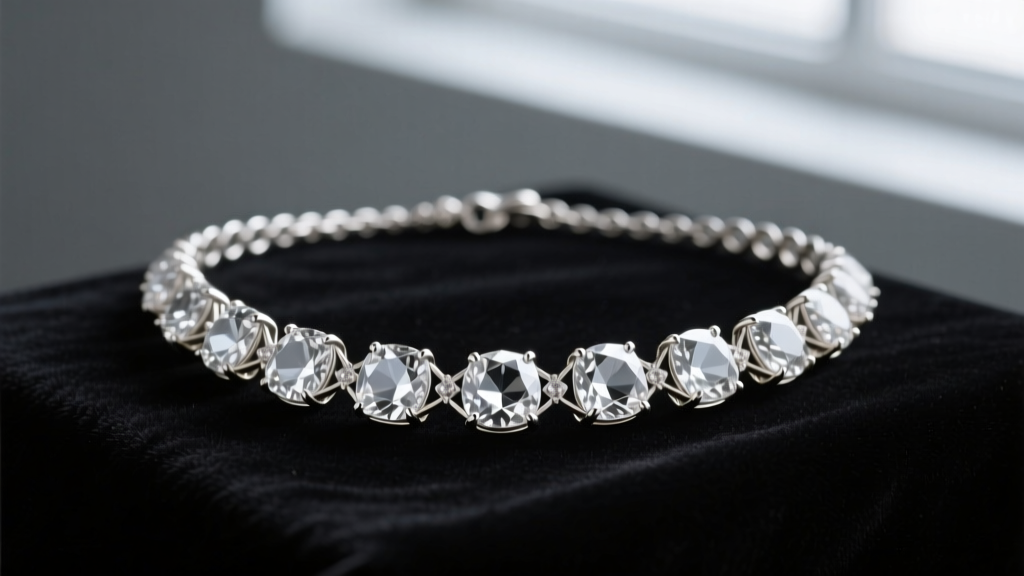
Published in 1884, Guy de Maupassant’s masterpiece La Parure (The Necklace) remains one of the most famous short stories in literary history. While literature students focus on the themes of pride, deception, and class struggle, gemologists and antique jewelry collectors see something entirely different: a catastrophic failure of material authentication and jewelry maintenance. The tragic irony of Mathilde Loisel, who spent a decade in grinding poverty to replace what she believed was a 40,000-franc diamond necklace—only to discover the original was a 500-franc paste imitation—serves as a profound cautionary tale. When analyzing the necklace by guy de maupassant characters, we uncover vital, real-world lessons about antique jewelry care, the fragility of 19th-century paste stones, and the absolute necessity of gemological verification.
The Material Reality: Deconstructing Madame Forestier’s 'Diamonds'
To understand how to care for a necklace like the one Madame Forestier lent to Mathilde, we must first understand its composition. In the late 19th century, high-end costume jewelry was dominated by 'paste'—a specialized type of leaded glass invented by Georges Frédéric Strass in the 1730s. By the 1880s, Parisian jewelers had perfected the art of cutting and setting paste to closely mimic the brilliance of old-mine and old-European cut diamonds.
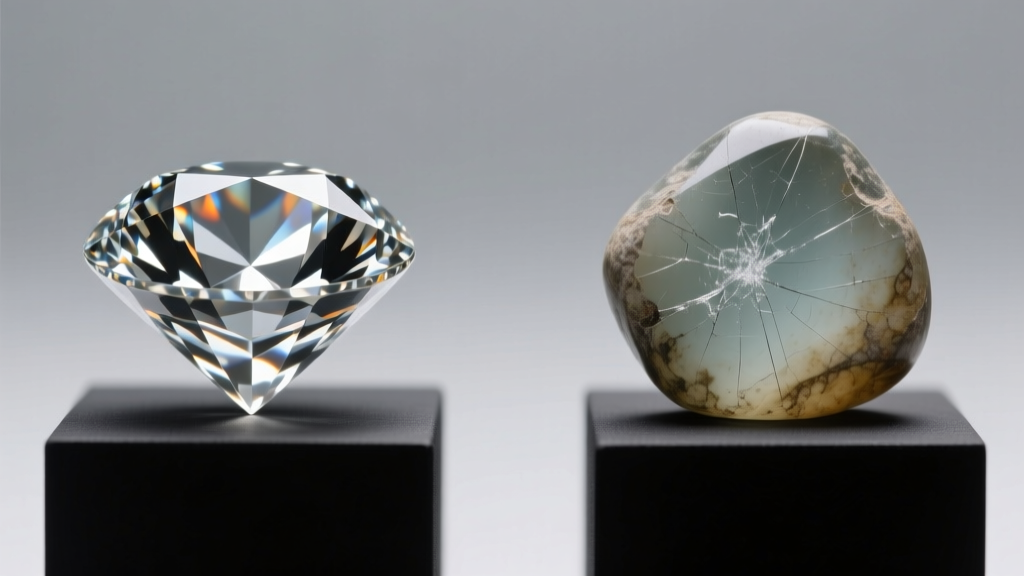
However, from a material science perspective, paste and diamond are worlds apart. Natural diamond is pure carbon, ranking a 10 on the Mohs hardness scale with a refractive index (RI) of 2.42. Nineteenth-century paste, conversely, is a high-lead oxide glass (often containing 20% to 40% lead oxide) that ranks a mere 5 to 6 on the Mohs scale, with an RI of roughly 1.70. This extreme softness means that antique paste stones are highly susceptible to abrasion, facet wear, and permanent scratching if stored or cleaned improperly.

The Foil-Back Vulnerability: A Critical Failure Mode
Because lead glass lacks the natural light-dispersion of a diamond, 19th-century jewelers employed a technique called 'foil backing.' A thin sheet of silver, gold, or tinted metallic leaf was placed behind the stone in a closed-back setting to reflect light and simulate brilliance. This is the single greatest vulnerability in antique paste jewelry. If water, ultrasonic vibrations, or harsh chemicals penetrate the setting, the foil oxidizes, turns black, and permanently ruins the stone's optical performance. Many collectors unknowingly destroy the value of their antique necklaces by attempting to clean them with modern liquid solutions.
Care & Maintenance Protocol for 19th-Century Paste Jewelry
If you own an antique closed-back paste necklace similar to the style described in Maupassant's era, you must abandon modern cleaning habits. Ammonia-based cleaners, ultrasonic machines, and steamers will instantly degrade the metallic foil and loosen the delicate silver collets holding the stones. Follow this strict, museum-grade maintenance protocol:
- Dry Dusting: Use a clean, ultra-soft makeup brush or a specialized gem-duster to remove surface oils and particulate matter. Never use a toothbrush, as the bristles can scratch the soft lead glass.
- Targeted Surface Cleaning: Dampen a microfiber cloth with a tiny amount of distilled water mixed with a drop of pH-neutral dish soap. Gently wipe the top of the stones only. Avoid the edges where the setting meets the glass.
- Moisture Avoidance: Never submerge a foil-backed necklace. If moisture seeps into the collet, use a hairdryer on the 'cool' setting to gently evaporate it before it causes oxidation.
- Silver Setting Care: The silver settings will naturally tarnish due to sulfur in the air. Use a treated Pacific Silvercloth to gently buff the metal. Avoid liquid silver dips, which will strip the antique patina and damage the glass.
Gemological Comparison: Diamond vs. Paste vs. Modern CZ
Monsieur Loisel’s fatal mistake was assuming that a diamond necklace and a paste necklace were functionally identical in value and material integrity. The table below highlights the critical differences that modern collectors and appraisers use to identify and maintain these distinct materials.
| Material Property | Natural Diamond (1880s) | 19th-Century Paste (Lead Glass) | Modern Cubic Zirconia (CZ) |
|---|---|---|---|
| Mohs Hardness | 10 (Scratch-proof) | 5 - 6 (Easily scratched) | 8.5 (Durable but brittle) |
| Refractive Index | 2.42 (Exceptional brilliance) | ~1.70 (Requires foil backing) | 2.15 - 2.18 (High brilliance) |
| Ultrasonic Cleaning | Generally Safe | NEVER (Destroys foil) | Safe, but may loosen settings |
| Ammonia Cleaners | Safe | NEVER (Corrodes backing) | Safe |
| Estimated 1884 Value | 36,000+ Francs | ~500 Francs | N/A (Invented in 1976) |
What the necklace by guy de maupassant characters Teach Us About Appraisal
The most devastating aspect of the story is the Loisel's failure to seek a professional gemological appraisal before purchasing the replacement. Today, identifying paste is straightforward for a trained gemologist. According to the Gemological Institute of America (GIA), paste stones exhibit several telltale signs under a standard 10x triplet loupe: rounded facet edges (due to the softness of the glass molding), internal gas bubbles, and a lack of natural inclusions. Furthermore, modern jewelers use thermal conductivity testers; diamonds conduct heat rapidly, while glass acts as an insulator.
Had Mathilde or her husband taken Madame Forestier’s necklace to a reputable appraiser in the Palais-Royal district before replacing it, a simple loupe inspection would have revealed the molded edges and foil backing of the glass stones. Instead, they operated on assumption and social anxiety, a psychological trap that cost them ten years of their lives. For modern collectors, the lesson is clear: never insure, replace, or attempt to repair a high-value antique piece without independent, third-party laboratory verification.
Structural Maintenance: Clasps and Chains
Beyond the stones themselves, the structural integrity of 19th-century necklaces requires specialized attention. The necklace Mathilde lost likely featured a closed-back silver or gold setting on a delicate chain, secured by an antique clasp. During the 1880s, the modern spring-ring clasp was in its infancy; most necklaces utilized a 'C-clasp' with a push-pin or a simple barrel clasp.
These antique clasps are notorious failure points. Over decades of wear, the metal pins bend, and the tension in the C-clasp weakens. If you acquire an antique paste necklace, your first step should be having a master jeweler inspect the clasp and solder joints. Many collectors opt to add a modern, discrete 18k gold lobster clasp or a figure-eight safety catch to the back of the chain to prevent catastrophic loss, preserving the original antique clasp as a historical artifact attached to the chain's terminus.
Proper Storage and Environmental Control
Mathilde Loisel returned the replacement necklace in a plain box, likely subjecting it to the abrasive friction of unprotected storage. Paste stones, being relatively soft, will scratch each other if jumbled in a jewelry box. Furthermore, the silver settings are highly reactive to humidity and airborne sulfur compounds.
For optimal preservation in 2026, antique paste necklaces should be stored individually in acid-free, unbleached cotton pouches or lined jewelry boxes. Including a 3M anti-tarnish strip inside the storage environment will absorb ambient sulfur, significantly slowing the formation of silver sulfide (tarnish) on the delicate prongs and collets. As noted by the antique jewelry experts at Lang Antiques, preserving the original patina and structural foil of these pieces requires a gentle, conservation-first mindset rather than an aggressive 'polish and shine' approach.
"Oh, my poor Mathilde! Mine was false. It was worth at most five hundred francs!" — Madame Forestier. A devastating revelation that underscores the eternal importance of gemological authentication.
Ultimately, the tragedy found within the text of Project Gutenberg's archive of the story is not just a literary device; it is a foundational case study in jewelry valuation. By understanding the delicate chemistry of leaded glass, the extreme fragility of foil backing, and the absolute necessity of professional appraisal, modern collectors can ensure their antique treasures remain brilliant, intact, and accurately valued for generations to come.


