Necklace Carabiner Materials: Titanium, Steel & Aluminum Compared
Compare titanium, steel, and aluminum necklace carabiner clasps. Learn about tensile strength, failure modes, and the best material for your chain.

The Evolution of the Necklace Carabiner in Modern Jewelry
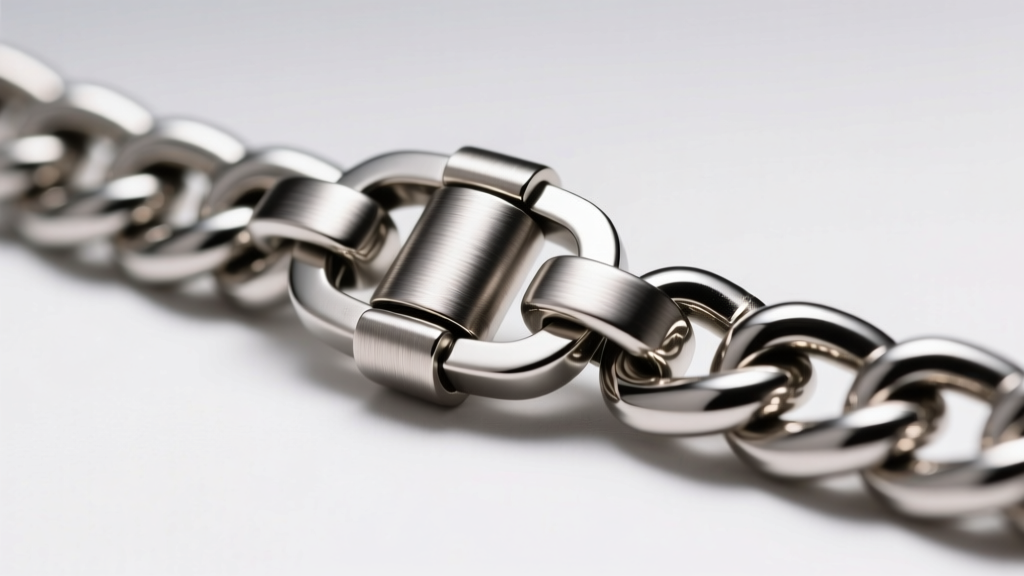
As modular jewelry and heavy streetwear chains continue to dominate style trends in 2026, the necklace carabiner has transitioned from a niche hardware component to a central focal point of personal adornment. Originally adapted from climbing and tactical gear, carabiner clasps offer a rugged, industrial aesthetic while providing superior security for heavy pendants and thick Cuban link chains. However, not all carabiners are created equal. The structural integrity, weight, and skin compatibility of a necklace carabiner are entirely dictated by its base metallurgy. Choosing the wrong alloy can result in a clasp that is either uncomfortably heavy, prone to galvanic corrosion, or susceptible to catastrophic shear failure under the dynamic loads of daily wear.
In this comprehensive material comparison, we dissect the three most common alloys used in premium jewelry carabiners: 316L Surgical Stainless Steel, Grade 5 Titanium, and 7075-T6 Aerospace Aluminum. By examining yield strengths, failure modes, and chain-pairing dynamics, you can make an informed decision that balances aesthetic preference with mechanical reliability.
Metallurgical Breakdown: 3 Dominant Alloys
316L Surgical Stainless Steel: The Heavyweight Standard
316L stainless steel is the undisputed workhorse of contemporary jewelry hardware. The "L" denotes low carbon content, while the addition of 2-3% molybdenum drastically increases resistance to pitting corrosion from chlorides and acidic sweat. With a density of 8.0 g/cm³, steel carabiners carry a satisfying, premium heft that pairs exceptionally well with heavyweight chains (10mm to 14mm widths).
However, 316L is not without its drawbacks. Its yield strength sits at approximately 290 MPa, which is more than adequate for jewelry but lower than aerospace alloys. More importantly, steel carabiners are prone to surface scratching. Over time, the friction between the steel carabiner and a steel or silver chain will result in micro-abrasions, dulling the mirror polish. For those with severe nickel sensitivities, even the trace amounts of nickel in 316L can cause contact dermatitis during prolonged, sweaty wear.
Grade 5 Titanium (Ti-6Al-4V): The Hypoallergenic Premium
Grade 5 Titanium, alloyed with 6% aluminum and 4% vanadium, represents the pinnacle of jewelry carabiner engineering. Compliant with ASTM F136 standards for surgical implants, Ti-6Al-4V is entirely hypoallergenic and biocompatible. It boasts an impressive yield strength of roughly 880 MPa—nearly three times that of 316L steel—while possessing a density of just 4.43 g/cm³.
This exceptional strength-to-weight ratio allows manufacturers to machine titanium carabiners with thinner stock diameters (e.g., 3mm to 4mm) without sacrificing load-bearing capacity, resulting in a sleek, minimalist clasp that won't drag down delicate chains. The primary barrier to titanium is cost; CNC-machining Grade 5 Ti requires specialized tooling due to the metal's low thermal conductivity and high galling tendency, pushing retail prices for authentic titanium carabiners into the $80–$150 range.
7075-T6 Aerospace Aluminum: The Lightweight Liability
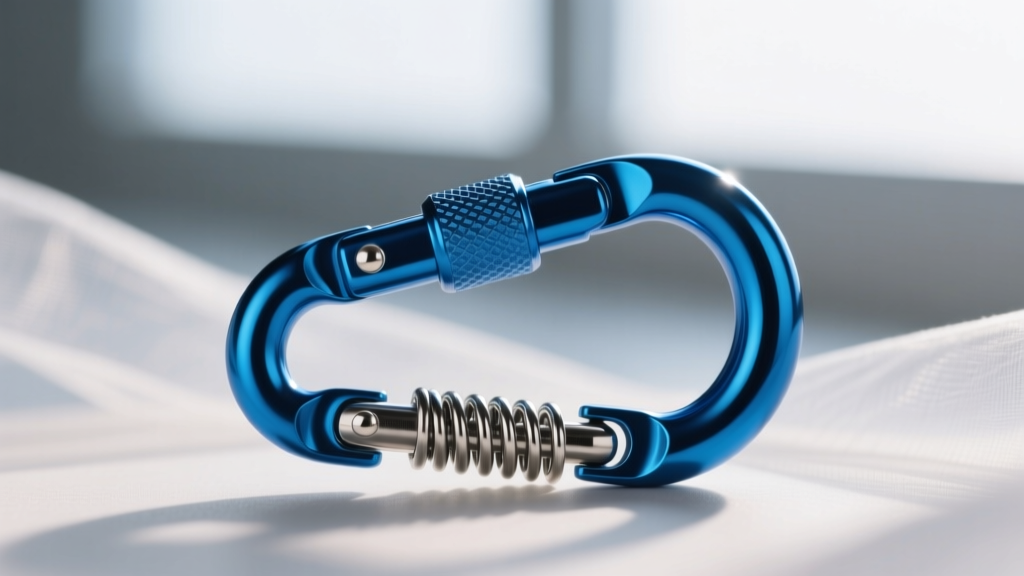
7075-T6 aluminum is heavily utilized in climbing gear and tactical accessories due to its high strength and ultra-low density (2.81 g/cm³). In the jewelry space, it is prized for its ability to be anodized into vibrant, permanent colors without the use of surface paints. According to MatWeb material data, 7075-T6 offers a yield strength of around 500 MPa, making it theoretically strong enough for jewelry.
Yet, aluminum carabiners harbor a hidden danger: galvanic corrosion and shear vulnerability. When an aluminum clasp is exposed to the saline environment of human sweat and placed in direct contact with dissimilar metals (like copper, brass, or sterling silver chains), it acts as a sacrificial anode. This rapid oxidation can pit the metal and seize the hinge mechanism. Furthermore, aluminum's lower shear strength makes the hinge pin a critical failure point if the chain is subjected to lateral, off-axis yanking.
Material Properties & Performance Matrix
To visualize how these alloys perform under real-world jewelry conditions, refer to the comparison matrix below:
| Material | Density (g/cm³) | Yield Strength | Corrosion Resistance | Best Chain Pairing |
|---|---|---|---|---|
| 316L Stainless Steel | 8.00 | ~290 MPa | Excellent (Resists sweat/tarnish) | Heavy Cuban Links, Steel Rope Chains |
| Grade 5 Titanium | 4.43 | ~880 MPa | Superior (Impervious to oxidation) | Mid-weight Chains, Delicate Pendants |
| 7075-T6 Aluminum | 2.81 | ~500 MPa | Poor (Prone to galvanic corrosion) | Paracord, Titanium chains only |
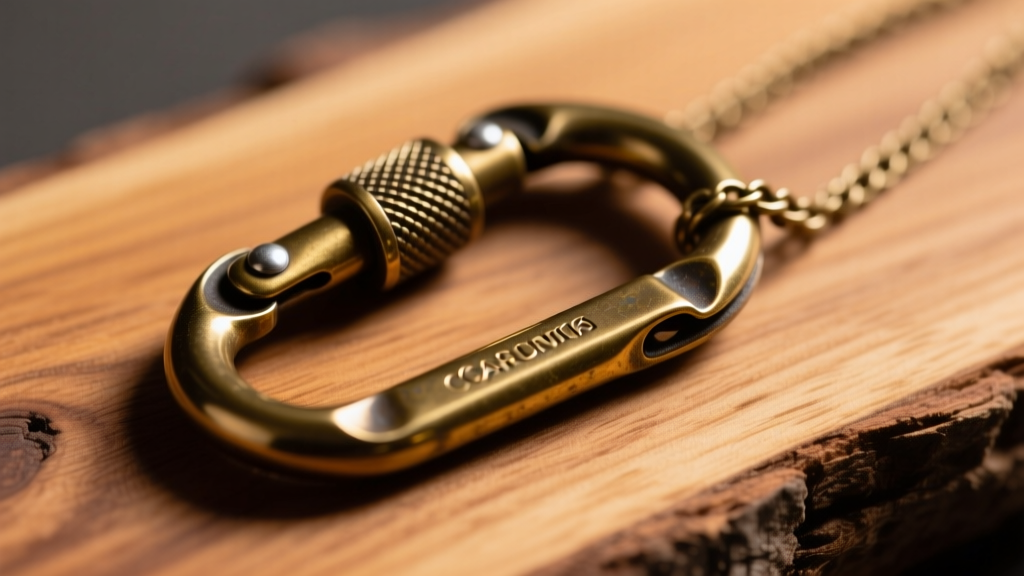
| Solid Brass/Bronze | 8.50 | ~250 MPa | Moderate (Develops natural patina) | Heritage Leather, Brass Curb Chains |
Mechanical Failure Modes in Carabiner Clasps
Understanding material properties is only half the equation; the mechanical design of the necklace carabiner dictates its lifespan. When evaluating a clasp, be aware of these three common failure modes:
- Spring Fatigue and Gate Flutter: The internal torsion spring is usually made of hardened steel, even in titanium or aluminum bodies. Over thousands of articulation cycles, cheap springs lose their temper, resulting in "gate flutter" where the clasp fails to snap shut securely. Always look for carabiners with replaceable springs or high-carbon steel internal components.
- Hinge Pin Shear: The hinge pin bears the brunt of lateral forces. In 7075 aluminum carabiners, a sudden 45-degree yank on a heavy chain can shear the aluminum pin cleanly in half. Premium steel and titanium carabiners utilize press-fitted, hardened steel hinge pins to eliminate this risk.
- Thread Stripping (Screw-Lock Models): For maximum security, many opt for screw-lock carabiners. However, if the threads are cut directly into soft aluminum or brass, repeated overtightening will strip the male threads, rendering the locking mechanism useless. Titanium and steel offer vastly superior thread durability.
Sizing, Gate Clearance, and Chain Pairing
A carabiner is useless if it cannot properly accommodate your chain's end caps or jump rings. Gate clearance—the maximum width of an object that can pass through the open gate—is a critical specification. Standard jewelry carabiners typically offer gate clearances between 6mm and 10mm. If you are wearing a thick 12mm Cuban link chain with a large soldered end-ring, a standard 8mm gate clearance will not suffice, forcing you to rely on an awkward adapter link that compromises the necklace's drape.
Additionally, consider the stock diameter (the thickness of the carabiner's main body). A 4mm stock diameter provides a sleek profile for chains under 5mm in width, but will look visually unbalanced and proportionally weak when attached to a heavy 10mm chain. As a general rule of thumb, the carabiner's stock diameter should be at least 40% to 50% of the chain's width to maintain visual harmony and structural parity.
Final Verdict: Matching Material to Wardrobe
The ideal necklace carabiner depends entirely on your lifestyle, skin chemistry, and the specific chains in your collection. If you favor heavy, oversized streetwear chains and prioritize long-term durability over weight, 316L Stainless Steel remains the most cost-effective and robust choice. For those with active lifestyles, sensitive skin, or a preference for minimalist, mid-weight chains, investing in a Grade 5 Titanium carabiner is a non-negotiable upgrade that offers unmatched strength and biocompatibility. Conversely, 7075-T6 Aluminum should generally be avoided for fine jewelry applications due to its susceptibility to galvanic corrosion and shear failure, reserving its use strictly for lightweight, non-metallic cords or specialized anodized color-matching.
By prioritizing metallurgical integrity and mechanical design over superficial aesthetics, you ensure that your modular jewelry setups remain secure, comfortable, and visually cohesive for years to come.


