Amber Baltic Necklace Guide: How to Spot Fakes and Buy Authentic Resin
Discover how to choose an authentic amber baltic necklace. Learn expert grading, UV and saltwater fake tests, inclusion values, and pricing.

The Allure and Reality of Baltic Succinite
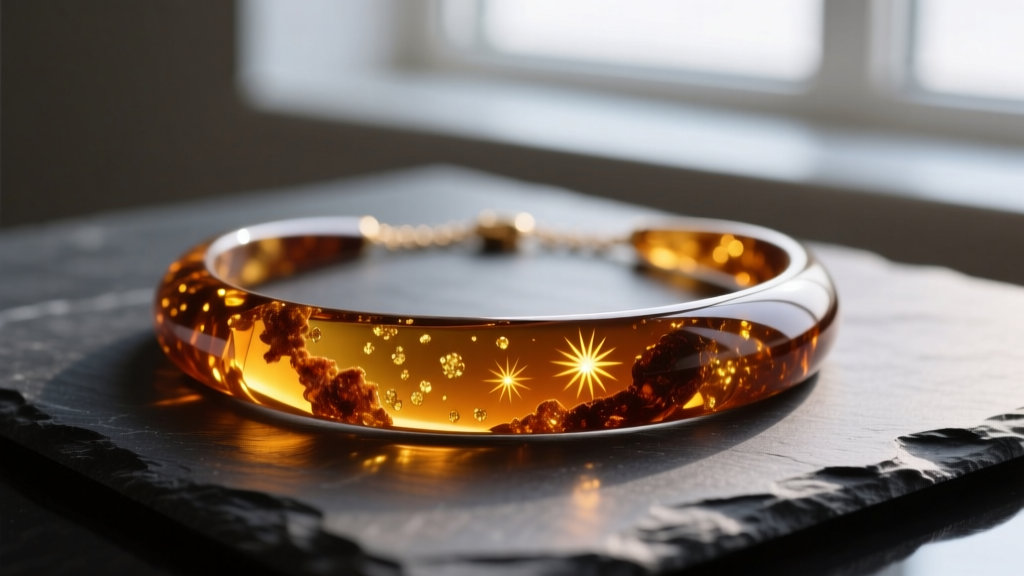
When shopping for an amber baltic necklace, you are not just buying jewelry; you are acquiring a 40-million-year-old piece of Earth's history. Genuine Baltic amber, scientifically known as succinite, is fossilized tree resin originating from the Eocene epoch. It is uniquely characterized by its 3% to 8% succinic acid content, a compound not found in other global amber deposits like Dominican or Mexican amber. However, the surging popularity of these organic gemstones has flooded the market with imitations, including copal (immature resin), glass, and synthetic phenolic resins like Bakelite. As a buyer, relying on visual appeal alone is a guaranteed way to get scammed. This comprehensive guide will equip you with the gemological frameworks and practical tests needed to authenticate, grade, and select a high-quality Baltic amber necklace.
Understanding Baltic Amber Grades and Colors
Unlike diamonds, amber is not graded by a universal gemological scale, but rather by color, clarity, and treatment. The color of Baltic amber is dictated by the microscopic gas bubbles trapped within the resin during its formation. The smaller and more numerous the bubbles, the lighter and more opaque the amber appears. According to the Gemological Institute of America (GIA), heat treatment is frequently used to clarify cloudy amber or induce 'sun spangles' (lustrous internal fractures), which is an accepted industry practice provided it is disclosed.
| Color Grade | Appearance | Rarity & Market Value | Common Treatments |
|---|---|---|---|
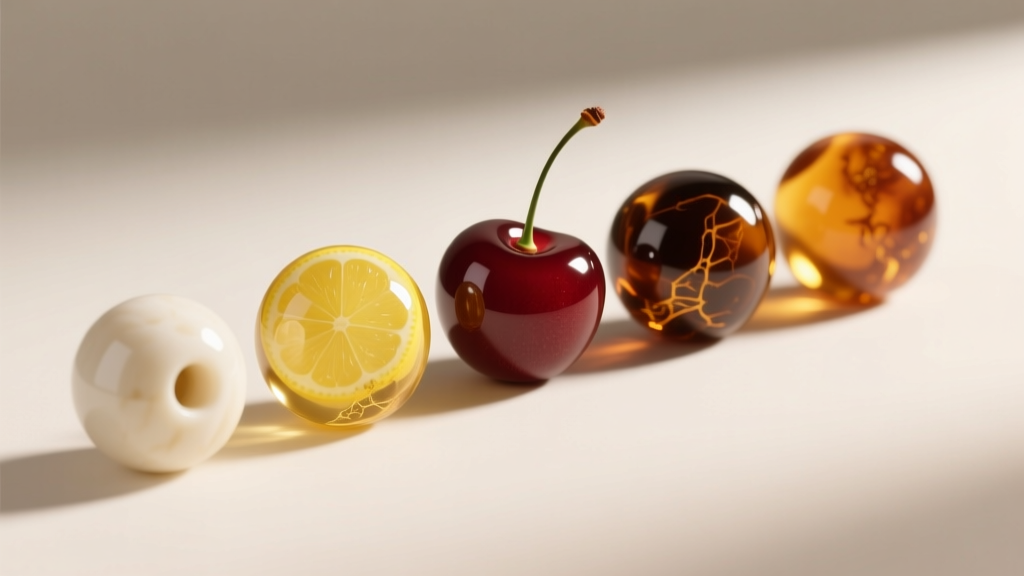
| Bone / White | Opaque, ivory to chalky white | Highest rarity; commands premium prices | Rarely treated; usually natural |
| Butter / Lemon | Cloudy to semi-translucent yellow | Highly sought after; mid-to-high tier | Autoclave heating for clarity |
| Cognac / Honey | Translucent, warm golden-brown | Most common; accessible entry-level | Clarified to remove cloudiness |
| Cherry / Red | Deep reddish-brown to dark garnet | Moderate rarity; often oxidized | Surface oxidation or baking |
| Green | Olive to mossy green hues | Extremely rare in true Baltic amber | Often dyed or heat-pressed copal |
The 4 Definitive Tests to Authenticate Baltic Amber
To separate genuine succinite from copal or plastic, you must perform non-destructive (and occasionally destructive) tests. Never rely on a single method; cross-reference at least two.
1. The Saturated Saltwater Test (Specific Gravity)
Baltic amber has a specific gravity of 1.05 to 1.09, meaning it is incredibly light. In plain water, it will sink. However, in a saturated saltwater solution, it will float. Mix 1 part table salt to 2 parts warm water until the salt completely dissolves. Drop your necklace beads into the solution. Genuine Baltic amber and copal will float, while glass and most plastics will sink. Note: Remove any silver or gold clasps before testing, as metal hardware will cause the strand to sink.
2. The UV Fluorescence Test
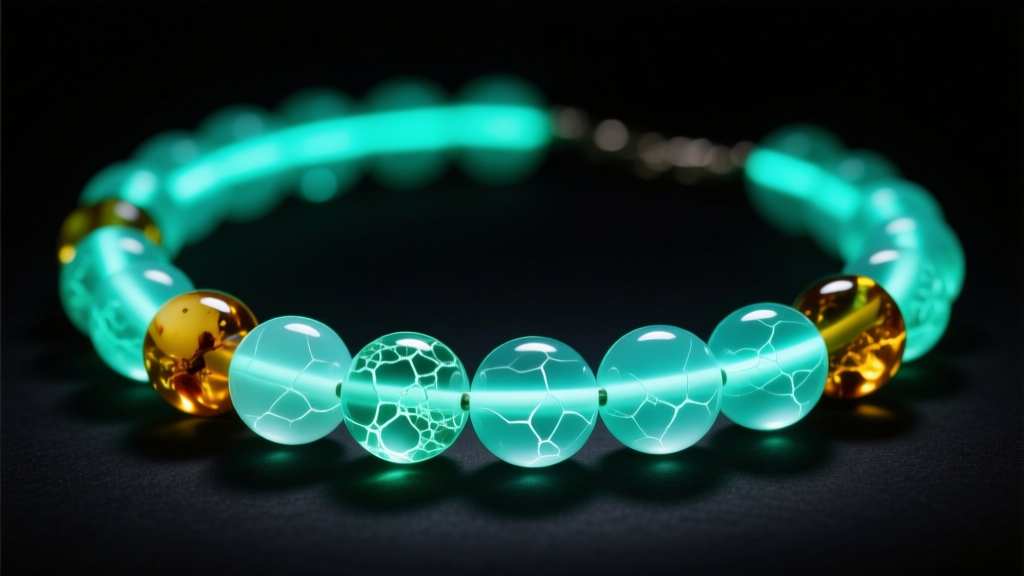
This is the most reliable non-destructive test. Under a 365nm longwave UV flashlight, genuine Baltic amber will fluoresce a pale, milky blue or greenish-blue. Copal (the most common fake, which is just young, unpolymerized resin) will glow a stark, bright white or fail to fluoresce properly. Plastics will generally absorb the light and remain dark.
3. The Electrostatic Rub Test
Amber is famous for its electrostatic properties (the word elektron is Greek for amber). Vigorously rub a bead against a soft wool cloth for 10 seconds. Bring it close to a strand of hair or small torn pieces of tissue paper. Genuine amber will generate enough static charge to attract the paper. While copal also exhibits this trait, glass and heavy plastics do not.
4. The Hot Needle Test (Destructive)
Heat a sewing needle until it is red hot and carefully touch it to an inconspicuous area of a bead (near the drill hole). Genuine Baltic amber will emit a pleasant, piney, resinous smoke and leave a small white mark. Copal will melt quickly, feel sticky, and smell sweet. Plastic will melt instantly, emit a harsh chemical odor, and stick to the needle. Warning: This test damages the bead and should only be used as a last resort on chip-necklaces or hidden areas.
Inclusions: Flora, Fauna, and Value Multipliers
An amber baltic necklace featuring natural inclusions can exponentially increase in value, but it also attracts sophisticated forgers. The American Museum of Natural History notes that while pop culture depicts amber preserving massive prehistoric insects, genuine Baltic inclusions are typically microscopic or very small. Expect to see tiny midges, gnats, springtails, or plant debris like oak leaf hairs and pine needles.
Red Flags for Fake Inclusions:
- Perfect Positioning: Real insects struggled and trapped air bubbles while drowning in resin. If an insect is perfectly centered with its legs neatly folded, it was likely placed in mold and filled with modern copal.
- Modern Species: If the insect resembles a modern housefly or a large, easily recognizable beetle, be highly suspicious. Baltic inclusions are mostly extinct species of forest-dwelling arthropods.
- Carved Drills: Forgers will drill a hole into cheap amber, insert a modern bug, and seal it with melted resin. Look for a distinct 'plug' or a perfectly circular drill line leading directly to the insect.
Stringing, Knotting, and Clasp Hardware
The structural integrity of your necklace is just as important as the beads. Because Baltic amber is soft (2.0 to 2.5 on the Mohs scale), beads rubbing against each other will slowly grind away the resin, decreasing the necklace's weight and value over time.
The Golden Rule of Stringing: Always insist on hand-knotted silk or high-grade nylon thread between every single bead. This prevents bead-on-bead friction and ensures that if the strand breaks, you only lose one bead rather than the entire necklace scattering across the floor.
Clasp Mechanics: Avoid traditional screw-barrel clasps. The repetitive twisting motion required to open and close them puts immense torsional stress on the silk thread at the clasp loop, leading to premature snapping. Instead, opt for a magnetic clasp with a secondary safety chain, or a secure bayonet-style push-clasp that requires a simple pull-and-release mechanism.
2026 Pricing Tiers: What to Expect
The global supply of Baltic amber is heavily centralized, with over 80% of the world's supply originating from the Kaliningrad region. Recent export regulations and mining quotas have shifted the pricing landscape. Here is a realistic breakdown of what you should expect to pay for a standard 18-inch necklace in the current market:
- Baroque Chip Strands ($30 - $60): Irregular, unpolished chunks. Great for casual wear or teething necklaces (though safety warnings apply for infants).
- 6mm - 8mm Round Cognac ($80 - $150): The classic, translucent honey-colored strand. Widely available and heavily treated for clarity.
- 10mm - 12mm Round Lemon/Butter ($200 - $450): Larger beads in opaque or semi-opaque yellow hues command a steep premium due to the rarity of large, unfractured rough pieces.
- 14mm+ Bone White ($600 - $1,500+): Large, opaque white beads are the pinnacle of Baltic amber collecting. Prices scale exponentially with bead diameter and lack of surface blemishes.
Care and Maintenance for Organic Resin
Baltic amber is an organic gemstone, meaning it is highly susceptible to chemical damage. Never wear your necklace while applying perfume, hairspray, or lotions, as the alcohols and solvents will permanently cloud the surface polish. Store your amber separately from diamonds, sapphires, or metal chains in a soft velvet pouch to prevent severe scratching. To clean, simply wipe the beads with a soft, damp microfiber cloth and dry immediately. Never use ultrasonic cleaners or steamers, as the heat and vibrations will shatter the fossilized resin.
Final Buying Checklist
Before finalizing your purchase, ensure the seller provides a certificate of authenticity from a recognized gemological lab or a reputable Baltic amber guild. Ask specifically if the amber has been heat-treated, pressed, or reconstructed (ambroid). By understanding the specific gravity, UV reactions, and structural requirements of an authentic amber baltic necklace, you can confidently invest in a piece of prehistory that will last a lifetime.


