The Necklace Characters by Guy de Maupassant: Paste vs Diamond
Explore the gemology behind the necklace characters by Guy de Maupassant, comparing 19th-century paste simulants to real diamonds and modern alternatives.

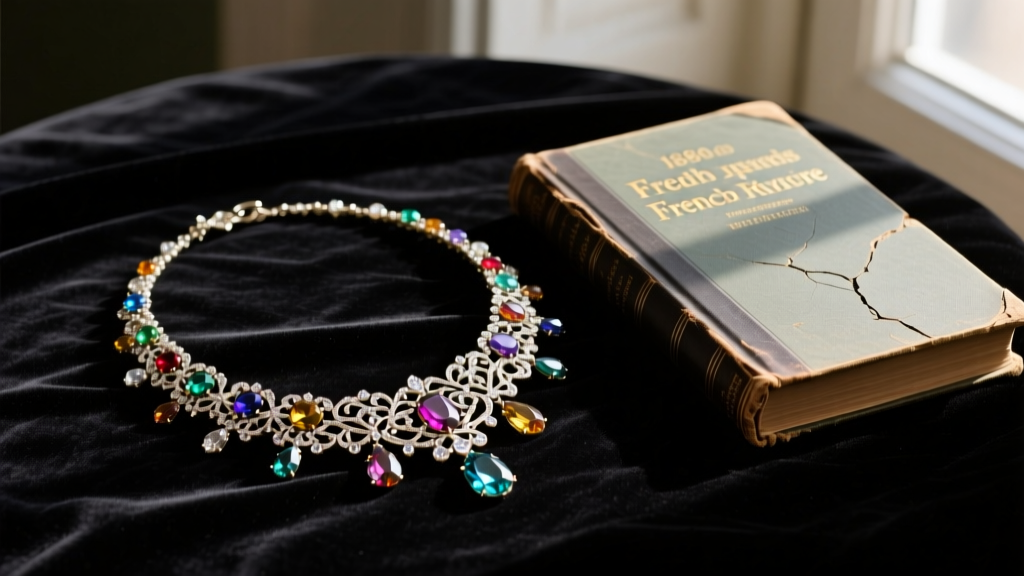
Literary scholars and jewelry historians alike have long been fascinated by the tragic plot of La Parure (The Necklace). When analyzing the necklace characters by Guy de Maupassant in his seminal 1884 short story, we are not just looking at a critique of 19th-century French bourgeois vanity; we are looking at a profound failure of material identification. Mathilde Loisel’s decade-long descent into poverty was driven by a single, devastating gemological misunderstanding: the inability to distinguish between a natural carbon diamond and a high-lead-content glass simulant.
As jewelry material science has evolved dramatically by 2026, revisiting this classic tale offers a masterclass in the physical properties of diamond simulants. By deconstructing the materials worn by Mathilde and her wealthy friend, Madame Forestier, we can understand the exact optical and physical properties that separate genuine gemstones from historical paste, and how modern alternatives compare today.
The Gemology of Deception: 19th-Century Paste vs. Natural Diamond
Madame Forestier’s borrowed necklace was described as a superb diamond rivière. However, the revelation at the story's climax—that the piece was merely "paste" worth only 500 francs—anchors the tragedy. In the late 19th century, "paste" did not mean plastic or cheap resin. It referred to a specialized type of lead glass pioneered by Georges Frédéric Strass in the 1730s. According to the Victoria and Albert Museum's archives on paste jewellery, Strass achieved diamond-like brilliance by adding up to 35% lead oxide (PbO) to the glass mixture.
The optical properties of this historical material are fascinating when compared to natural diamond. A natural diamond possesses a Refractive Index (RI) of 2.42, which allows it to bend light sharply and create total internal reflection. Historical lead glass paste, by contrast, maxes out at an RI of roughly 1.70 to 1.90. While the high lead content increased the glass's dispersion (the "fire" or rainbow flashes), it could never replicate the deep, mirror-like brilliance of a well-cut diamond. To compensate for this lower RI, 19th-century jewelers often backed paste stones with metallic foil to artificially reflect light back through the crown of the stone.
Mohs Hardness and the Physical Vulnerability of Simulants
One of the most critical differences between the necklace Mathilde thought she was wearing and the one she actually lost lies in structural durability. The Mohs scale of mineral hardness dictates how a material withstands abrasion over time. Natural diamond sits at a perfect 10, making it impervious to everyday scratches. Lead glass paste, however, ranks between 5 and 6.
If Mathilde had closely examined the borrowed necklace after a night of rigorous dancing at the Ministry ball, she might have noticed micro-abrasions on the facet junctions or a slight dulling of the culet. To illustrate the vast material disparities, consider this comparison of a 50-carat total weight (TCW) rivière necklace across different eras and materials:
| Material | Mohs Hardness | Refractive Index (RI) | Specific Gravity | Estimated 2026 Value (50ct TCW) |
|---|---|---|---|---|
| Natural Earth-Mined Diamond | 10 | 2.42 | 3.52 | $400,000 - $800,000+ |
| 19th-Century Lead Paste (Strass) | 5 - 6 | 1.70 - 1.90 | 3.00 - 3.50 | $800 - $2,500 (Antique) |
| Cubic Zirconia (CZ) | 8 - 8.5 | 2.15 - 2.18 | 5.60 - 6.00 | $150 - $400 |
| Moissanite | 9.25 | 2.65 | 3.21 | $6,000 - $10,000 |
| CVD Lab-Grown Diamond | 10 | 2.42 | 3.52 | $15,000 - $25,000 |
How Mathilde Could Have Authenticated the Jewelry
The tragedy of the necklace characters by Guy de Maupassant hinges on the assumption of value based on social status rather than empirical testing. Mathilde assumed the necklace was real because it belonged to a wealthy friend. Had she applied basic gemological principles, the decade of ruin could have been avoided. According to the Gemological Institute of America (GIA), identifying diamond simulants relies on testing thermal, optical, and physical properties.
The Thermal Conductivity (Fog) Test
Diamonds are exceptional heat sinks. If Mathilde had breathed heavily onto the stones, a natural diamond would have dispersed the heat instantly, remaining clear. Lead glass paste is a thermal insulator; the moisture from her breath would have condensed, leaving a visible fog on the surface for several seconds.
The Loupe Test: Examining Facet Junctions
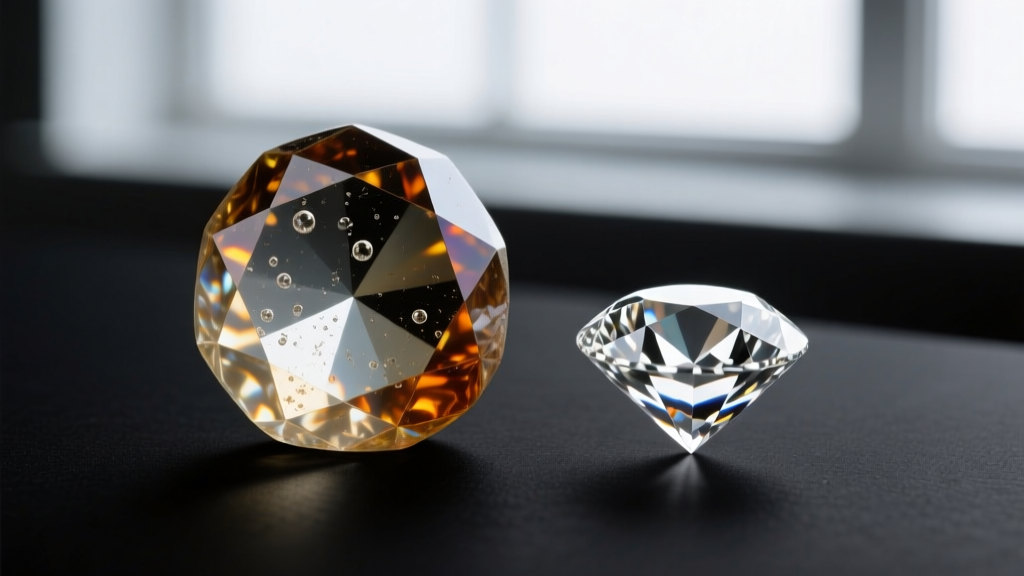
Using a standard 10x triplet loupe, the differences in cutting and polishing become glaringly apparent. Because diamond is the hardest known natural material, it takes a supreme polish. Under magnification, a diamond's facet junctions are razor-sharp and crisp. Paste glass, being much softer, often exhibits rounded facet edges, surface scratches, and sometimes even flow lines or tiny gas bubbles trapped within the stone during the molding process.
The Weight Discrepancy (Specific Gravity)
While lead glass is heavy, a 50-carat necklace made of Cubic Zirconia (a modern simulant) would feel noticeably heavier than a diamond necklace of the exact same dimensions due to CZ's high specific gravity (up to 6.0). While Mathilde's 19th-century paste was closer in weight to diamond, a trained jeweler holding the piece could often detect the subtle heft discrepancies of simulants.
"She had no dresses, no jewels, nothing. And these were the only things she loved." — Guy de Maupassant. A poignant reminder that perceived value in jewelry is often entirely psychological, disconnected from the actual geological or chemical reality of the materials.
2026 Material Science: The Modern "Forestier" Necklace
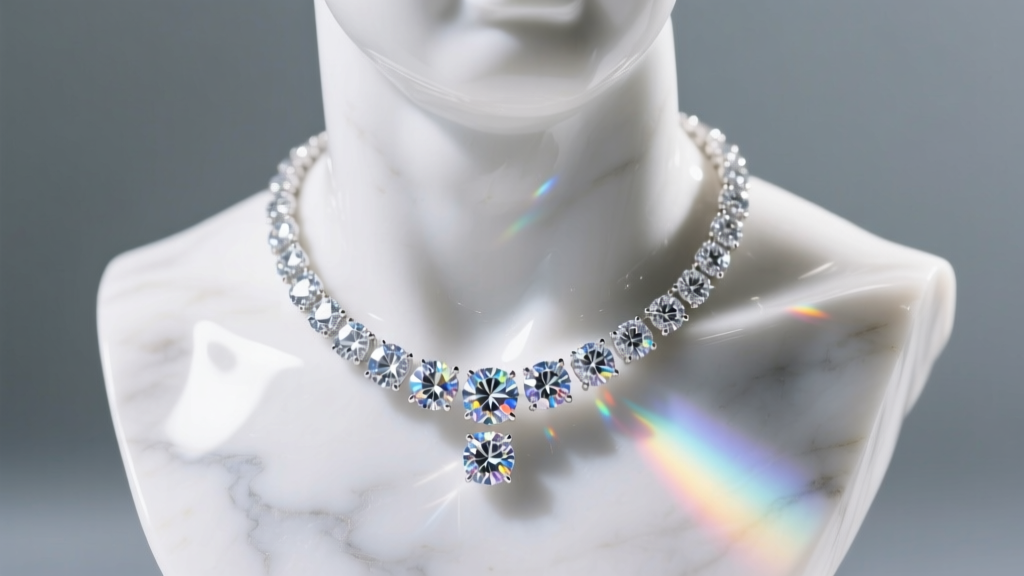
If Madame Forestier were acquiring her jewelry collection today, the landscape of diamond simulants and alternatives has shifted dramatically. The GIA's comprehensive diamond guides now heavily feature lab-grown diamonds, which have disrupted the traditional market.
In 2026, a high-net-worth individual like Madame Forestier might opt for a Chemical Vapor Deposition (CVD) lab-grown diamond rivière necklace. Unlike the deceptive paste of the 1880s, CVD diamonds are not simulants; they are optically, physically, and chemically identical to earth-mined diamonds. They possess the exact same 2.42 RI, the same Mohs 10 hardness, and the same thermal conductivity. The only difference is their origin and their price point, which has stabilized to roughly 10-15% of the cost of natural equivalents.
Alternatively, if she wanted maximum visual impact without the diamond price tag, she might choose Moissanite (Silicon Carbide). With an RI of 2.65, Moissanite is actually more brilliant and exhibits more than double the fire (dispersion) of a natural diamond. While a trained eye can spot Moissanite's slight double-refraction and yellowish undertones in larger stones, it remains a highly durable (9.25 Mohs) and luxurious alternative that would easily pass the casual visual inspection that doomed Mathilde Loisel.
Final Thoughts on Value and Authentication
The story of The Necklace remains a staple of literary analysis, but for jewelry professionals, it serves as an eternal cautionary tale about the dangers of skipping authentication. The necklace characters by Guy de Maupassant remind us that social proof is not a substitute for gemological verification. Whether you are evaluating an antique estate piece featuring 19th-century Strass paste, or investing in a modern 2026 lab-grown diamond tennis necklace, always rely on measurable material properties—Refractive Index, Mohs hardness, and thermal conductivity—rather than the perceived status of the previous owner.
Before purchasing or borrowing any high-value diamond jewelry, insist on a certified grading report from a reputable laboratory, or bring a portable diamond tester that measures thermal and electrical conductivity. It is a small step that ensures your own jewelry story ends in joy, rather than a decade of unnecessary hardship.